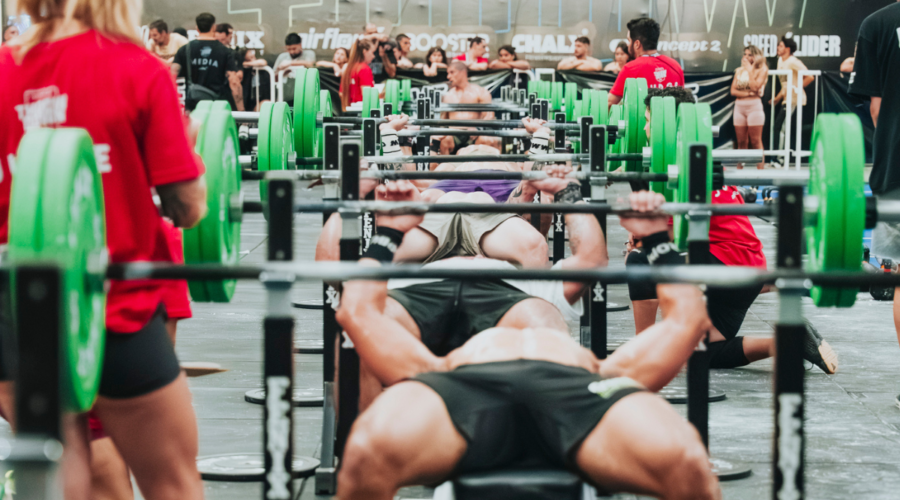


The bench press is one of the most recognizable strength exercises in the world. Whether you train for muscle growth, athletic performance, or general fitness, the amount of weight you can press often becomes a benchmark for progress. It is also one of the lifts that people compare most often, especially in commercial gyms and online fitness communities.
But how much should you actually be able to bench at your age? The answer is more complicated than a single number. Your bench press depends on factors including your training experience, body weight, muscle mass, sex, technique, and recovery habits. Age also plays a significant role because strength tends to increase through early adulthood, plateau during middle age for many trained individuals, and gradually decline later in life unless it is maintained with resistance training.


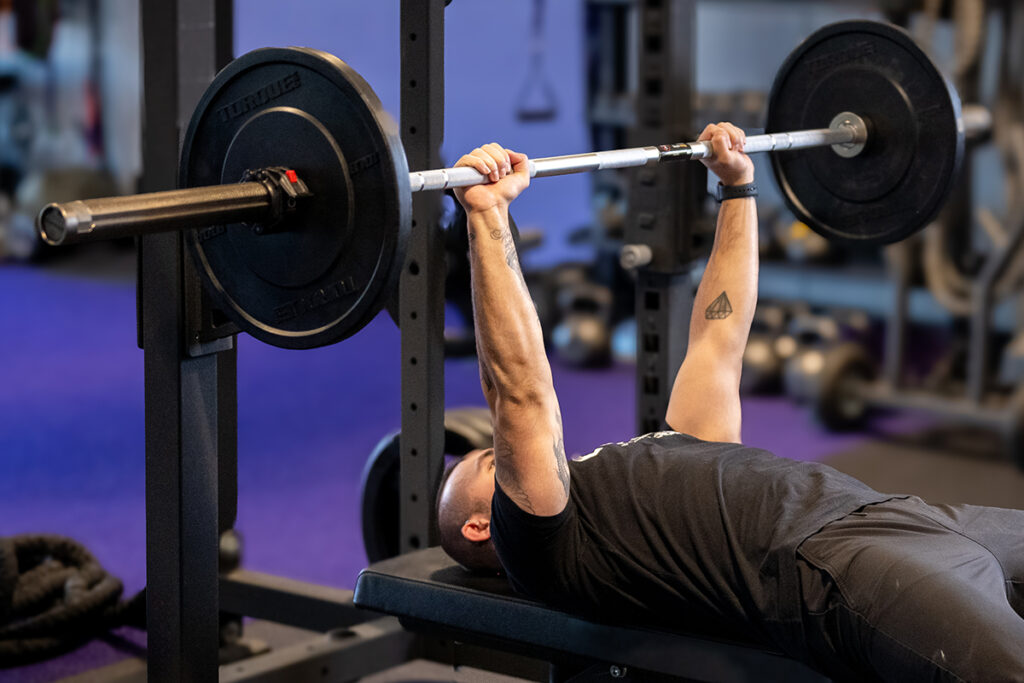
Understanding where your bench press stands compared to other lifters can provide useful perspective. More importantly, it can help you set realistic goals and focus on long term strength rather than arbitrary numbers.
Why Age Matters for Strength
Strength is not static throughout life. Humans experience predictable changes in muscle mass, nervous system function, hormone levels, and recovery capacity as they age.
Muscle strength generally increases throughout adolescence and early adulthood as muscle mass and neuromuscular coordination improve. Most individuals reach their highest levels of absolute strength somewhere between their late twenties and late thirties, although experienced strength athletes may continue improving into their forties because years of technical practice and progressive overload compensate for gradual physiological changes.
10 Signs You Are Healthier and Fitter than You Think
After about the age of 40, muscle mass begins to decline slowly. This process, known as sarcopenia, accelerates after age 60 if resistance training is not maintained. Fortunately, numerous studies have shown that consistent strength training significantly slows this decline and allows many older adults to maintain impressive levels of strength.
This means that age influences performance, but lifestyle and training habits often matter much more than the number of birthdays you have celebrated.
What Counts as a Good Bench Press?
There is no universal answer because body weight dramatically influences how much weight someone can lift. A 150 pound lifter and a 240 pound lifter should not expect identical numbers.
For this reason, strength coaches often compare lifts relative to body weight or use large databases of performance from trained lifters.
For healthy men who have been lifting consistently, the following general standards provide a reasonable comparison.
| Experience Level | Bench Press Relative to Body Weight |
|---|---|
| Beginner | Around 0.75 times body weight |
| Novice | About 1.0 times body weight |
| Intermediate | About 1.25 to 1.5 times body weight |
| Advanced | About 1.75 times body weight |
| Elite | 2.0 times body weight or more |
For women, relative strength standards are naturally lower because of differences in upper body muscle mass, but highly trained women can still achieve exceptional performance.
| Experience Level | Bench Press Relative to Body Weight |
|---|---|
| Beginner | Around 0.40 times body weight |
| Novice | Around 0.60 times body weight |
| Intermediate | About 0.80 to 1.0 times body weight |
| Advanced | Around 1.1 to 1.3 times body weight |
| Elite | Around 1.5 times body weight or more |
These numbers assume good technique and a full range of motion.
Average Bench Press by Age
Age influences average strength primarily because training history changes across the lifespan. Someone who begins lifting at age 18 and continues for decades may be considerably stronger at age 45 than they were at age 25.
Still, population data and strength databases provide useful estimates.
Ages 18 to 29
Most lifters experience rapid improvements during this period. Testosterone levels are generally high in men, recovery is typically excellent, and muscle protein synthesis responds strongly to resistance training.
Many recreational male lifters who train consistently can eventually bench press their body weight or more within the first couple of years of structured training.
Women also make substantial progress during this period, although improvements depend heavily on consistent programming and nutritional support.
Ages 30 to 39
For many experienced lifters, this decade represents peak strength.
Although recovery may require slightly more attention than during the twenties, years of accumulated training often outweigh small physiological declines.
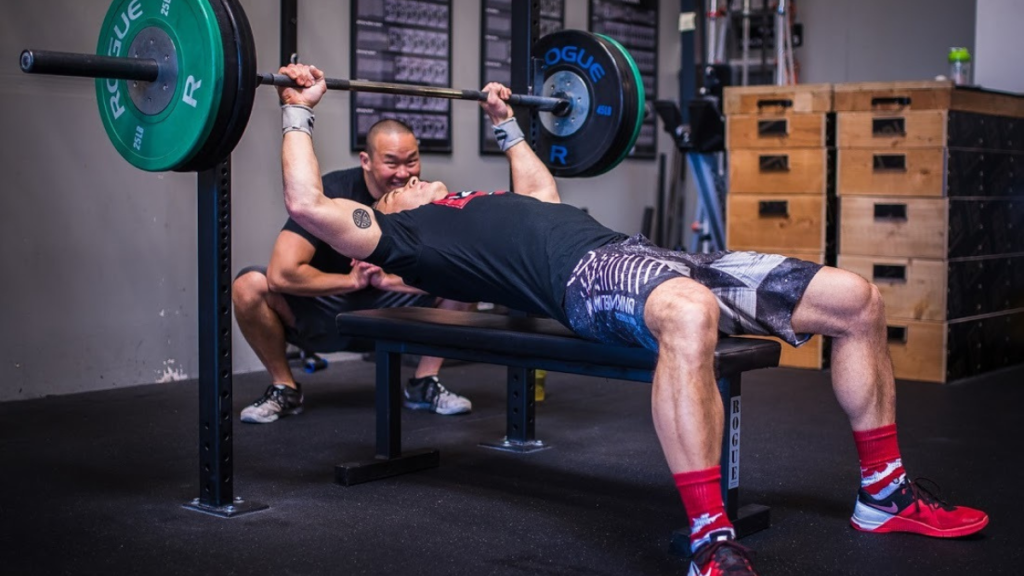
Many competitive powerlifters produce their best bench press performances during this age range because they have developed efficient technique alongside years of muscle growth.
Ages 40 to 49
Strength can remain remarkably high if resistance training continues consistently.
Hormonal changes begin affecting recovery and muscle maintenance, but progressive overload still works extremely well. Many master powerlifters continue setting personal records well into their forties.
Individuals who stop resistance training during this period often notice faster declines than those who continue lifting.
Ages 50 to 59
Natural muscle loss becomes more noticeable, but it is far from inevitable.
Research consistently shows that adults in their fifties can gain substantial muscle and strength through properly designed resistance training programs. Improvements in bench press performance remain achievable even after years of inactivity.
Ages 60 and Beyond
Older adults generally lift less weight than younger adults, but regular resistance training dramatically changes the picture.
Many adults in their sixties, seventies, and even eighties continue building strength. Maintaining upper body strength during these years supports daily function, bone health, balance, and independence.
Rather than comparing yourself to your younger self, comparing your performance to age matched lifters provides a much more meaningful benchmark.
Why Training Experience Matters More Than Age
One of the biggest mistakes people make is assuming that age alone determines strength. A 50 year old who has trained consistently for twenty years will almost always outperform a sedentary 25 year old.
Strength depends on adaptations in the nervous system as much as muscle size. Experienced lifters recruit muscle fibers more efficiently, stabilize heavy loads better, and perform each repetition with superior technique.

Studies show that neural adaptations account for much of the rapid strength improvement seen during the first months of resistance training before large increases in muscle size occur. This explains why beginners often increase their bench press quickly despite only modest gains in muscle mass.
Factors That Affect Your Bench Press
Your age is only one piece of the puzzle. Body weight strongly influences performance because larger individuals usually possess more muscle mass. Limb length also matters. Lifters with shorter arms generally move the bar through a shorter range of motion, which can provide a mechanical advantage.
Training frequency is another major factor. Research suggests that training a muscle group at least twice per week generally produces greater strength gains than once weekly when overall training volume is matched.
Nutrition also plays an essential role. Consuming enough dietary protein supports muscle protein synthesis and recovery. Current evidence suggests that active adults aiming to maximize strength benefit from consuming approximately 1.6 to 2.2 grams of protein per kilogram of body weight each day.
Sleep should not be overlooked. Chronic sleep restriction reduces recovery, decreases training quality, and may impair muscle growth over time.

Finally, technique can dramatically influence performance. Proper shoulder positioning, leg drive, controlled bar path, and consistent setup can add significant weight to the bar without any increase in muscle size.
Should You Compare Yourself to Others?
Comparisons can be motivating, but they can also become misleading. Social media often highlights extraordinary lifters while ignoring the millions of recreational gym members training consistently with more modest numbers.
Comparing yourself with competitive powerlifters is rarely helpful unless you compete yourself. Elite athletes represent a tiny percentage of the lifting population and often dedicate years to highly specialized training. A better comparison is your own progress over time. If your bench press increases steadily over months and years while your technique improves and you remain injury free, you are succeeding regardless of what someone else lifts.
How to Improve Your Bench Press at Any Age
The principles of strength development remain remarkably consistent across the lifespan. Progressive overload is the foundation. Gradually increasing the load, repetitions, or training volume forces the body to adapt. Training with compound pushing movements such as incline presses, overhead presses, dips, and close grip bench presses helps develop supporting muscles that contribute to a stronger bench press.

Upper back strength is equally important. Rows, pull ups, and face pulls improve shoulder stability and provide a stronger foundation for pressing heavy weights.
Older adults may benefit from slightly longer recovery periods between heavy sessions, but they should not avoid challenging resistance training. Research consistently demonstrates that heavy resistance exercise remains both safe and highly effective for healthy older adults when performed with proper supervision and technique. Deload weeks can also help maintain long term progress by reducing accumulated fatigue while preserving strength adaptations.
When Does Strength Actually Decline?
Many people believe strength inevitably falls apart after age 40, but the evidence tells a different story. The largest declines usually occur because people become less physically active rather than because aging itself makes strength impossible to maintain.
Longitudinal studies show that adults who continue resistance training preserve far more muscle mass and strength than inactive individuals.
Even when some decline eventually occurs, it is often much smaller than expected. Regular strength training delays many age related changes in muscle function and helps preserve power, coordination, and bone density. This means your future bench press depends far more on what you do consistently than on the date on your birth certificate.
Bench Press Is Only One Measure of Fitness
Although the bench press is an excellent indicator of upper body pushing strength, it should never become the only measure of your fitness.

Overall health depends on a combination of muscular strength, cardiovascular fitness, mobility, balance, body composition, and consistent physical activity.
Someone with a modest bench press who trains regularly, eats well, sleeps adequately, and remains physically active throughout life will generally enjoy far greater health benefits than someone who chases an impressive one repetition maximum while neglecting other aspects of fitness.
The bench press is a valuable tool, but it is only one piece of a much larger picture.
Final Thoughts
Your bench press tells an interesting story, but it should not define your success as a lifter. Age certainly influences strength, yet it is only one variable among many. Training consistency, experience, nutrition, recovery, body weight, and technique all contribute to how much weight you can press.
Most healthy adults can continue building strength well into middle age, while older adults can preserve remarkable levels of performance through regular resistance training. Rather than worrying about how your numbers compare with the strongest people in your gym or on social media, compare yourself with your past performance and aim for gradual, sustainable improvement.
If your bench press continues moving upward, your technique becomes more efficient, and your body stays healthy enough to keep training year after year, you are already ahead of the curve.
Key Takeaways
| Topic | Key Insight |
|---|---|
| Peak strength | Many trained lifters reach peak bench press performance between their late twenties and late thirties, although experience can extend peak performance into the forties. |
| Age and strength | Strength declines much more slowly in people who continue regular resistance training. |
| Best comparison | Compare your bench press relative to body weight and training experience rather than age alone. |
| Most important factor | Training consistency over many years has a greater impact than chronological age. |
| Nutrition | Consuming enough daily protein supports strength gains and recovery. |
| Technique | Efficient bench press mechanics can significantly improve performance without increasing muscle mass. |
| Long term goal | Focus on steady progress and healthy training rather than chasing arbitrary numbers. |
References
- American College of Sports Medicine. (2009). Progression models in resistance training for healthy adults. Medicine & Science in Sports & Exercise, 41(3), 687 to 708.
- Cruz Jentoft, A.J., Bahat, G., Bauer, J., Boirie, Y., Bruyère, O., Cederholm, T., Cooper, C., Landi, F., Rolland, Y., Sayer, A.A., Schneider, S.M., Sieber, C.C., Topinkova, E., Vandewoude, M. and Visser, M. (2019). Sarcopenia. Revised European consensus on definition and diagnosis. Age and Ageing, 48(1), 16 to 31.
- Grgic, J., Schoenfeld, B.J., Davies, T.B., Lazinica, B., Krieger, J.W. and Pedisic, Z. (2018). Effect of resistance training frequency on gains in muscular strength. Sports Medicine, 48(5), 1207 to 1220.
- Morton, R.W., Murphy, K.T., McKellar, S.R., Schoenfeld, B.J., Henselmans, M., Helms, E., Aragon, A.A., Devries, M.C., Banfield, L., Krieger, J.W. and Phillips, S.M. (2018). A systematic review, meta analysis and meta regression of protein supplementation on resistance training induced gains in muscle mass and strength in healthy adults. British Journal of Sports Medicine, 52(6), 376 to 384.
- Peterson, M.D., Rhea, M.R. and Alvar, B.A. (2004). Maximizing strength development in athletes. A meta analysis to determine the dose response relationship. Journal of Strength and Conditioning Research, 18(2), 377 to 382.
- Ratamess, N.A., Alvar, B.A., Evetoch, T.K., Housh, T.J., Kibler, W.B., Kraemer, W.J. and Triplett, N.T. (2009). American College of Sports Medicine position stand. Progression models in resistance training for healthy adults. Medicine & Science in Sports & Exercise, 41(3), 687 to 708.
- Sale, D.G. (1988). Neural adaptation to resistance training. Medicine & Science in Sports & Exercise, 20(5 Suppl), S135 to S145.
- Schoenfeld, B.J. (2010). The mechanisms of muscle hypertrophy and their application to resistance training. Journal of Strength and Conditioning Research, 24(10), 2857 to 2872.
- Seguin, R. and Nelson, M.E. (2003). The benefits of strength training for older adults. American Journal of Preventive Medicine, 25(3 Suppl 2), 141 to 149.
- Westcott, W.L. (2012). Resistance training is medicine. Effects of strength training on health. Current Sports Medicine Reports, 11(4), 209 to 216.