A strong back is not built by avoiding movement. It is built by gradually exposing the body to movement and load that it can handle. After 30, this matters because work, family responsibilities, sport, training history, sleep, and recovery can all affect how well your body tolerates physical stress.
No exercise can guarantee an injury free back. Back pain and injury are complex, and they are influenced by previous episodes of pain, general health, physical activity, stress, work demands, and sudden increases in training load. However, regular exercise has been shown to reduce the risk of future low back pain, while progressive strength training can improve muscle strength and physical function.



The best back exercises are not necessarily the ones that create the most fatigue. They are exercises that build useful strength while teaching you to control your trunk under different demands. For most beginners over 30, the deadlift, side plank, and bird dog are an excellent starting point.
These three exercises train your back from different angles. The deadlift develops strength through the hips, legs, and back muscles. The side plank improves your ability to resist unwanted sideways movement. The bird dog teaches the trunk to remain controlled while the arms and legs move. Together, they form a practical foundation for a stronger and more capable body.
Why Your Back Benefits From Strength Training
The back is not simply a collection of muscles that should stay rigid all day. Your spine is designed to move, and your trunk muscles work together to control movement and transfer force. When you walk, lift, carry, climb, run, or play sport, the back helps connect your upper and lower body.
The muscles around the trunk include the spinal erectors, obliques, rectus abdominis, deep abdominal muscles, glutes, and muscles of the upper back. Each contributes differently depending on the task. Some muscles create movement, while others resist movement and help maintain balance.
Research shows that exercise can lower the risk of low back pain episodes. Strength training is particularly useful because it improves the amount of force your muscles can produce. Greater strength creates more physical reserve. When an everyday task requires less of your maximum capacity, the task is usually easier to perform and recover from.
For example, carrying a bag, lifting a box, or moving furniture may not feel demanding when you have trained consistently. The same tasks may feel much harder when you are deconditioned or returning to activity after a long break.
The goal is not to brace your trunk as hard as possible during every movement. The goal is to develop enough strength and control to move confidently through a wide range of normal activities.
1. Deadlift
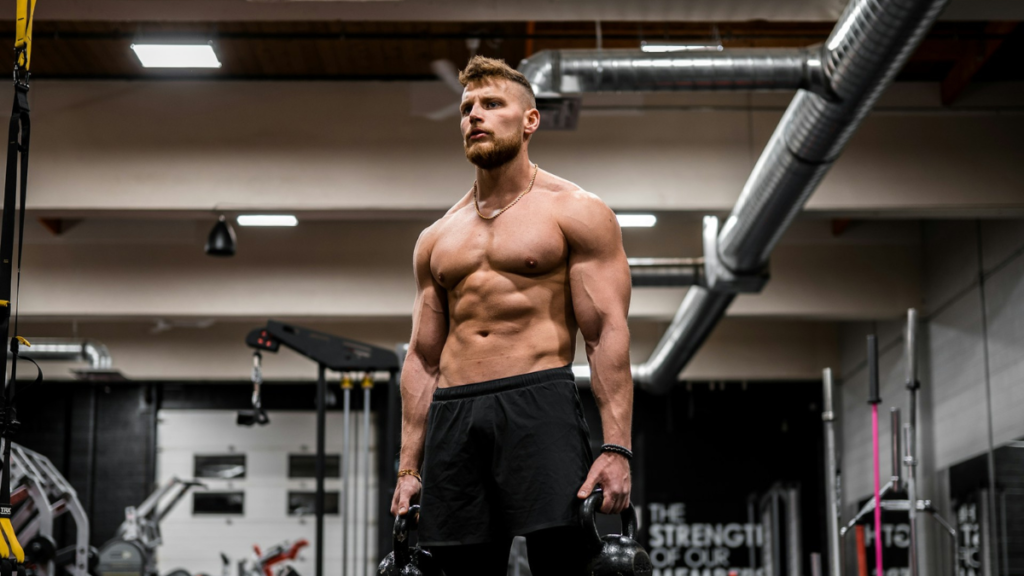
The deadlift is one of the most effective exercises for developing total body strength. It trains the glutes, hamstrings, quadriceps, spinal erectors, upper back, forearms, and trunk. It also teaches an important skill: lifting a load from the floor by using the hips and legs while keeping the object close to the body.
For most beginners, the kettlebell deadlift or trap bar deadlift is an accessible place to begin. Both options position the load close to the body and make it easier to learn a controlled lifting pattern. A conventional barbell deadlift can also be useful, but it may require more practice before it feels natural.
Stand with the load close to your feet. Push your hips backward while allowing your knees to bend enough for your hands to reach the handle or bar. Before lifting, create tension through your arms, upper back, and trunk. Then press your feet into the floor and stand up by extending your hips and knees together.
A good deadlift should look controlled from beginning to end. The load should stay close to your body, and your torso should remain organized as you stand. You do not need to force an exaggerated arch in your lower back. Instead, aim for a stable position that feels strong and comfortable.
Research suggests that carefully progressed deadlift training can improve pain and function in certain people with low back pain. That does not mean that everyone with back pain should immediately begin heavy lifting. It means that loaded strength training can be helpful when it is introduced gradually and matched to the person’s current ability.
How to Start With the Deadlift
Begin with two or three sets of five to eight repetitions. Use a weight that feels moderately difficult, but never so heavy that you lose control of the movement. Rest for one to two minutes between sets so you can perform each set with consistent technique.
Start by increasing repetitions before adding more load. When you can complete all sets at the top of your repetition range with good control, add a small amount of weight. This gradual approach allows muscles, tendons, and coordination to adapt over time.
Common Deadlift Errors
Many beginners let the load drift away from the body. This increases the demand on the back and makes the lift harder than necessary. Keep the kettlebell, trap bar handles, or barbell close throughout the repetition.
Another common mistake is trying to move too quickly. The deadlift is not a race. Use a deliberate lowering phase and reset your position between repetitions when needed. High quality repetitions are more useful than rushed repetitions.
2. Side Plank
The side plank is one of the best exercises for building trunk endurance without repeated bending or twisting of the spine. It trains the obliques, quadratus lumborum, glutes, and other muscles that help resist sideways bending and unwanted rotation.
This matters because many daily activities involve uneven loading. You might carry groceries in one hand, hold a bag on one shoulder, pick up an object from one side, or change direction while walking or playing sport. Your body needs to manage these side to side forces without collapsing or overcompensating.
To perform the side plank, lie on your side with your elbow directly beneath your shoulder. Keep your legs straight and stack your feet if you can maintain control. Lift your hips from the floor and create a straight line from your shoulders to your ankles. Keep your chest open, your hips level, and your breathing steady.
If the full version is too challenging, bend your knees and support yourself on the lower knee. This reduces the lever length while still training the same basic pattern. It is a sensible starting option, not a lesser exercise.
Research on trunk stabilization exercise shows that it can improve pain and disability in many people with chronic nonspecific low back pain. The side plank is not a treatment for every cause of back pain, but it is a simple and useful way to build the endurance needed to maintain an organized trunk position.
How to Start With the Side Plank
Perform two or three holds of fifteen to thirty seconds on each side. Stop before your hips sag, your shoulder becomes uncomfortable, or your torso begins rotating. Your goal is to hold a clean position, not to set a record for discomfort.
As you improve, build toward holds of thirty to forty five seconds. You can then increase the challenge by raising the top leg, extending the hold slightly, or holding a light object across the hip. Use only one progression at a time so you can maintain good form.
Common Side Plank Errors
The most common error is letting the hips drop toward the floor. This reduces the exercise demand on the intended muscles and can make the shoulder position less comfortable. Think about lifting your underside waist away from the floor as you hold the position.
Another error is holding your breath. A stable trunk should still allow steady breathing. If you can only maintain the position by holding your breath, shorten the hold and build up gradually.
3. Bird Dog
The bird dog is a trunk control exercise that teaches you to keep your torso stable while the arms and legs move. It trains the back muscles, abdominal muscles, glutes, and shoulder stabilizers. Although the movement uses little external load, it can be challenging when performed with patience and precision.
Start on your hands and knees with your hands under your shoulders and knees under your hips. Gently tighten your trunk as if preparing to absorb a light push. Slowly extend one arm forward and the opposite leg backward. Reach long through the arm and leg without allowing your hips or lower back to twist.
Pause briefly in the extended position, then return to the starting position with control. Repeat on the other side. Your goal is to move the arm and leg while keeping your rib cage and pelvis as quiet as possible.
The bird dog is useful because real life often requires movement through the limbs while the trunk remains controlled. Walking, running, lifting, throwing, and reaching all require some form of coordination between moving limbs and a stable torso.
Research on motor control exercise indicates that it can improve pain and function in people with chronic nonspecific low back pain. For healthy adults, the bird dog is also a practical low risk way to practice trunk control and identify differences between sides.
How to Start With the Bird Dog
Perform two or three sets of six to ten repetitions per side. Hold each repetition for two or three slow breaths. If you struggle to stay level, begin by moving only one arm or one leg at a time.
As your control improves, extend the pause at the top or slow the return phase. You can also add a light resistance band, but only after you can perform the bodyweight version without shifting or rotating.
Common Bird Dog Errors
The most common mistake is lifting the leg too high. The goal is not to create a large back arch. Reach the leg behind you until it is roughly in line with your torso, then hold that position with control.
Another common problem is rotating the hips toward the lifted leg. Imagine that you have a glass of water balanced on your lower back. Keep your hips level enough that the glass would not spill.
A Simple Weekly Plan
Perform these exercises two or three times each week on nonconsecutive days. Start each session with deadlifts while you are fresh. Follow with side planks and bird dogs as controlled trunk training.
3 Best Standing Core Exercises for Beginners that Want a Stronger Six Pack
A beginner session could include two sets of six deadlifts, two side plank holds per side, and two sets of six bird dogs per side. This is enough work to start building strength without overwhelming recovery.
As you become stronger, increase one variable at a time. You can add a repetition, a small amount of load, a longer hold, or an additional set. Research on resistance training supports gradual progression because it gives the body time to adapt to increasing demands.
You do not need to train to complete exhaustion. Leaving one to three repetitions in reserve during most strength sets can help you maintain technique while still creating a useful training stimulus. Consistency, progressive loading, and good movement quality are more important than occasional extreme sessions.
Final Thoughts
Deadlifts, side planks, and bird dogs are three of the best exercises for adults over 30 who want to build a stronger and more resilient back. The deadlift teaches you to lift through the hips and legs. The side plank builds resistance to sideways movement. The bird dog improves trunk control during limb movement.
No routine can promise complete protection from back injury. These exercises can, however, help build strength, muscular endurance, coordination, and confidence when you perform them consistently and progress them gradually.
Key Takeaways
| Exercise | Main benefit | Starting recommendation | Key coaching point |
|---|---|---|---|
| Deadlift | Builds strength for lifting and hip extension | Two to three sets of five to eight repetitions | Keep the load close and move with control |
| Side plank | Builds trunk endurance against sideways bending | Two or three holds of fifteen to thirty seconds per side | Keep shoulders, hips, and ankles aligned |
| Bird dog | Improves trunk control while limbs move | Two or three sets of six to ten repetitions per side | Keep the hips level and reach slowly |
| Weekly training | Builds physical capacity over time | Two or three sessions per week | Increase one training variable at a time |
References
- Berglund, L., Aasa, B., Hellqvist, J., Michaelson, P. and Aasa, U. (2015) ‘Which patients with low back pain benefit from deadlift training?’, Journal of Strength and Conditioning Research, 29(7), pp. 1803 to 1811.
- Gomes Neto, M., Lopes, J.M., Conceicao, C.S., Araujo, A., Brasileiro, A., Sousa, C., Carvalho, V.O. and Arcanjo, F.L. (2017) ‘Stabilization exercise compared to general exercises or manual therapy for the management of low back pain: A systematic review and meta analysis’, Physical Therapy in Sport, 23, pp. 136 to 142.
- Lauersen, J.B., Bertelsen, D.M. and Andersen, L.B. (2014) ‘The effectiveness of exercise interventions to prevent sports injuries: A systematic review and meta analysis of randomised controlled trials’, British Journal of Sports Medicine, 48(11), pp. 871 to 877.
- Saragiotto, B.T., Maher, C.G., Yamato, T.P., Costa, L.O.P., Menezes Costa, L.C., Ostelo, R.W.J.G. and Macedo, L.G. (2016) ‘Motor control exercise for chronic nonspecific low back pain’, Cochrane Database of Systematic Reviews, 1, CD012004.
- Steffens, D., Maher, C.G., Pereira, L.S.M., Stevens, M.L., Oliveira, V.C., Chapple, M., Teixeira Silva, F.G., Hancock, M.J. and Herbert, R.D. (2016) ‘Prevention of low back pain: A systematic review and meta analysis’, JAMA Internal Medicine, 176(2), pp. 199 to 208.
- Westcott, W.L. (2012) ‘Resistance training is medicine: Effects of strength training on health’, Current Sports Medicine Reports, 11(4), pp. 209 to 216.