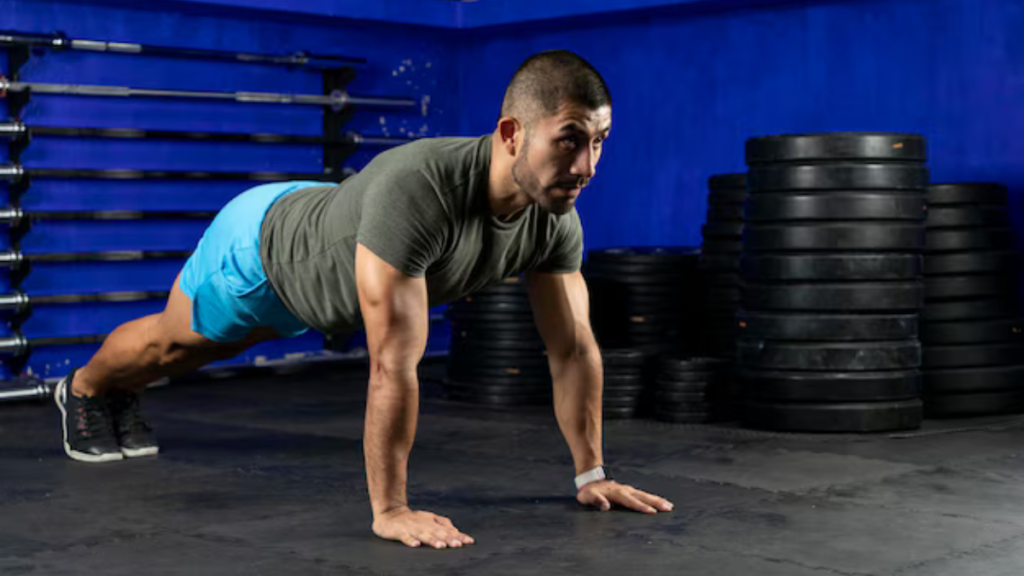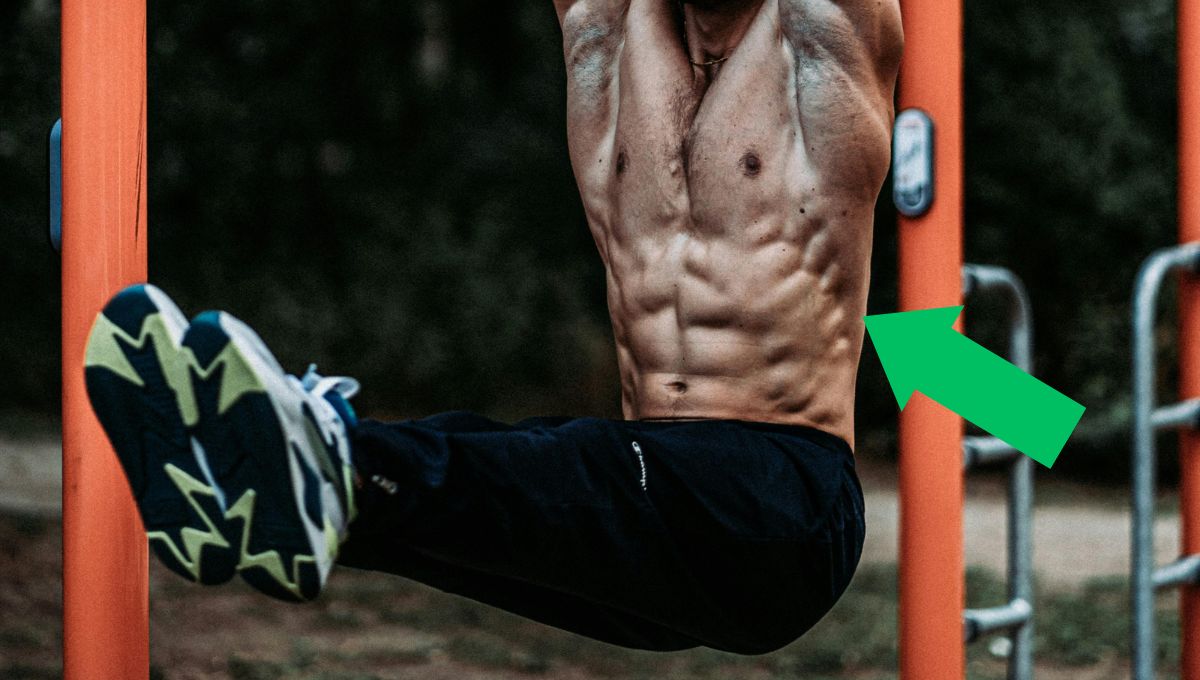


Visible abs are built through two related goals: developing the abdominal muscles and reducing enough body fat for those muscles to show. No ab exercise can remove fat from one specific area of the body. Training your abs makes them stronger and can increase their size, but your nutrition, total physical activity, and overall energy balance have the biggest influence on whether your abdominal definition is visible.
The good news is that you do not need machines to train your midsection effectively. Bodyweight exercises and free weight carries can create plenty of tension through the rectus abdominis, obliques, and deeper trunk muscles. The key is choosing exercises that challenge the abs in ways that match their actual role.



Your abdominal muscles do more than flex your spine. They also resist extension, rotation, and sideways bending. Training each of these functions helps build a stronger, more athletic looking midsection. For visible oblique definition, you need exercises that challenge the muscles along the sides of your waist while also building the central abdominal wall.
The three exercises in this article are the hanging knee raise, side plank, and suitcase carry. Together, they train abdominal flexion, resistance to sideways bending, and stability during loaded walking. They require no machines and can fit into almost any training plan.
What Creates Visible Abs
The classic six pack comes from the rectus abdominis. This is the long muscle that runs from the ribs toward the pelvis. Tendinous intersections divide it into visible sections, which is why a lean and well developed abdomen can appear to have separate blocks.
The obliques sit on the sides of the waist. The external obliques are closer to the surface, while the internal obliques sit beneath them. These muscles help rotate and bend the trunk, but they also work hard to resist movement when your body needs to stay stable.
Genetics influence the shape of your abs, the symmetry of the visible blocks, and where your body tends to store fat. Training can build the muscles, but it cannot change the basic arrangement of your abdominal tendons or guarantee that everyone will develop the same look.
Research shows that abdominal exercise alone does not significantly reduce abdominal fat. This is important because it prevents wasted effort. Hundreds of crunches will not reveal your abs if body fat remains above the level where they can be seen.
A sustainable approach combines resistance training, regular physical activity, nutrition that supports an appropriate energy intake, and direct abdominal work. Direct ab training helps build the muscles. Your broader lifestyle determines whether those muscles become visible.
1. Hanging Knee Raise
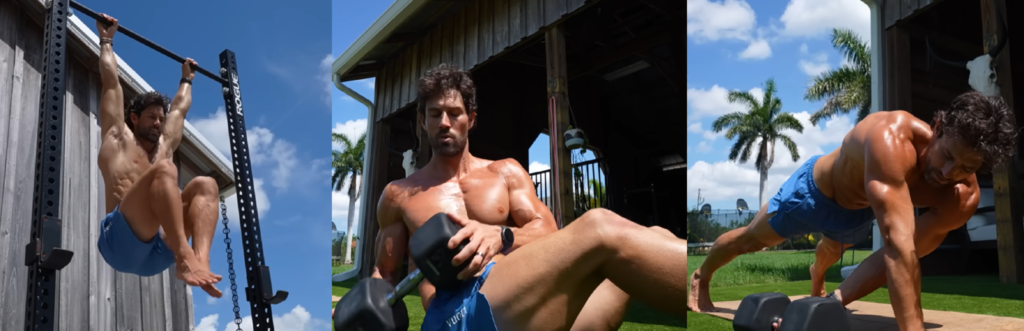
The hanging knee raise is one of the best bodyweight exercises for developing the rectus abdominis and training the lower portion of the abdominal wall. It also challenges grip strength, shoulders, and upper back because you must hang from a bar while controlling your pelvis.
Hang from a pullup bar with your hands about shoulder width apart. Start with your legs straight and your body still. Before lifting your knees, gently brace your abdomen and draw your ribs down toward your pelvis. Then bring your knees upward by curling the pelvis toward your ribs.
The key is to avoid turning the movement into a simple hip flexor exercise. If you only lift your thighs without allowing the pelvis to curl, the hip flexors do most of the work. To emphasize the abs, focus on bringing your pelvis upward at the top of each repetition.
Lower your knees slowly until your legs are straight and your body is under control again. Avoid swinging. If your body moves back and forth, pause at the bottom until the motion settles before beginning the next repetition.
Research using muscle activity measurements shows that exercises involving trunk flexion and pelvic movement can produce substantial activation of the rectus abdominis. Hanging variations also add a demanding stabilization challenge because the trunk must resist excessive movement while suspended.
How to Progress the Hanging Knee Raise
Start with two or three sets of six to ten repetitions. If you cannot hang comfortably yet, begin with captain chair knee raises, lying reverse crunches, or bent knee raises from a supported position. The movement pattern remains similar while the grip and shoulder demands are reduced.
Once you can complete ten controlled repetitions, increase the challenge by slowing the lowering phase, pausing at the top, or gradually extending the knees. Straight leg raises require much more control and should be introduced only when the bent knee version is solid.
Common Hanging Knee Raise Errors
The most common error is swinging the legs to create momentum. This reduces the work done by the abs and places more stress on the shoulders. Keep the movement slow enough that you can stop at any point.
Another common mistake is lifting the knees high without curling the pelvis. Think about drawing your belt buckle toward your ribs as you reach the top position. That small pelvic motion is what makes the exercise more effective for the abdominal muscles.
2. Side Plank
The side plank is one of the best exercises for training the obliques without machines. It challenges the muscles of the waist to resist sideways bending while also training the shoulders, glutes, and trunk stabilizers.
Lie on your side with your elbow below your shoulder. Stack your feet and lift your hips from the floor until your body forms a straight line from your shoulders to your ankles. Keep your chest open and avoid letting your hips rotate toward the floor.
The side plank is an isometric exercise, meaning the muscles produce tension without creating visible movement. That does not make it less useful for building strength. Research shows that isometric resistance training can increase strength, especially when it is performed progressively and at challenging effort levels.
For the obliques, the main task is to prevent your torso from folding toward the floor. This is a realistic function because your obliques often work to resist unwanted movement when you carry loads, run, change direction, or lift uneven objects.
How to Progress the Side Plank
Start with two or three holds of fifteen to thirty seconds per side. Use the bent knee version if the full side plank causes your hips to sag or makes your shoulder uncomfortable. Supporting yourself from the lower knee reduces the difficulty while allowing you to learn the position.
When you can maintain a full side plank for thirty to forty five seconds with steady breathing, progress by raising the top leg, placing the top foot in front of the bottom foot, or holding a light weight across your hip. Increase only one variable at a time.
Common Side Plank Errors
The most common problem is allowing the hips to sink toward the floor. This often happens when people focus only on surviving the hold. Instead, think about lifting the underside of your waist away from the floor and keeping your hips directly below your shoulders.
Avoid holding your breath. A strong trunk should allow you to breathe normally while keeping the body stable. If you can only maintain the position while holding your breath, shorten the hold and build up over time.
3. Suitcase Carry
The suitcase carry is a simple but highly effective loaded exercise for the obliques. Hold one dumbbell, kettlebell, or loaded bag in one hand and walk under control. The uneven load pulls your torso toward one side, and your obliques must resist that pull.
Stand tall with a weight at one side. Keep your shoulders level and your ribs stacked over your pelvis. Walk forward slowly with natural steps, keeping the weight close to your leg. Do not lean away from the load or let the shoulder on the loaded side rise toward your ear.
The suitcase carry trains the obliques in a way that is highly relevant to everyday movement. Uneven carries occur often outside the gym, whether you are carrying groceries, luggage, tools, or a child. The exercise also trains grip strength and improves your ability to maintain posture while moving under load.
Research on trunk muscle function supports exercises that challenge stability through different planes of movement. The suitcase carry is especially useful because the trunk must resist side bending while the legs create motion. This makes it a practical addition to a complete abdominal program.
How to Progress the Suitcase Carry
Begin with two or three carries of twenty to forty seconds per side. Choose a weight that feels challenging but allows you to walk normally and keep your shoulders level. Rest long enough between carries to regain a strong grip and upright posture.
Progress by using a slightly heavier weight, walking for a longer duration, or increasing the distance. Do not progress if you have to lean dramatically away from the load. The exercise works best when your body stays tall and controlled.
Common Suitcase Carry Errors
The most common error is using a load that is too heavy. If the kettlebell or dumbbell pulls your torso out of position, you are no longer training controlled resistance to sideways bending. You are simply compensating.
Another mistake is walking too quickly. Slow and deliberate steps make it easier to maintain alignment and feel the trunk muscles working. The goal is quality loaded movement, not speed.
How to Program These Exercises
Train your abs two or three times per week. You can place the exercises after your main strength workout or perform them as a short standalone session. The hanging knee raise is more demanding on grip and shoulders, so perform it early in your abdominal work if it is a priority.
A simple session can include two or three sets of hanging knee raises, two or three side plank holds per side, and two or three suitcase carries per side. This provides enough direct work for most beginners and intermediate lifters without creating excessive fatigue.
3 Best Beginner Exercises for Wider and More Attractive Shoulders
For muscle growth, gradually increase the training stimulus over time. You can add repetitions, increase hold duration, use more load, or add an additional set. Research on resistance training consistently shows that progressive overload and sufficient weekly training volume support muscular development.
Do not train your abs to exhaustion every day. Abdominal muscles recover well, but hard training still creates fatigue. A few challenging and controlled sessions each week are more productive than daily high repetition work with poor form.
Nutrition and the Ripped Ab Look
A strong abdominal training program can build the muscles, but visible abs require a body fat level that allows those muscles to show. The exact level differs between individuals because fat distribution is influenced by genetics and sex.

Energy balance remains important. If you consistently consume more energy than you use, losing body fat becomes difficult. A modest and sustainable calorie deficit, combined with adequate protein intake and resistance training, is generally more effective than extreme dieting.
Resistance training is especially valuable during fat loss because it helps preserve lean mass. Maintaining muscle can improve body composition and help your abs look more defined as body fat declines.
Avoid chasing rapid changes. Extreme dieting can reduce training performance, increase fatigue, and make it harder to maintain results. A slower approach that supports good training, adequate sleep, and consistent nutrition is more likely to produce lasting progress.
Final Thoughts
The hanging knee raise, side plank, and suitcase carry are three highly effective exercises for building stronger abs and more developed obliques without machines. The hanging knee raise trains the rectus abdominis through controlled pelvic movement. The side plank trains the obliques to resist sideways bending. The suitcase carry builds oblique strength while you walk under an uneven load.
These exercises can build the muscles that create a more defined midsection. Visible abs still depend on overall body fat levels, which are influenced by nutrition, physical activity, and long term consistency.
Key Takeaways
| Exercise | Primary focus | Starting recommendation | Main technique priority |
|---|---|---|---|
| Hanging knee raise | Rectus abdominis, hip flexors, grip | Two to three sets of six to ten repetitions | Curl the pelvis upward without swinging |
| Side plank | Obliques, trunk stabilizers, glutes | Two or three holds of fifteen to thirty seconds per side | Keep shoulders, hips, and ankles aligned |
| Suitcase carry | Obliques, grip, trunk stabilizers | Two or three carries of twenty to forty seconds per side | Walk tall without leaning away from the weight |
| Overall strategy | Abdominal muscle development and visible definition | Train abs two or three times weekly | Combine ab training with sustainable nutrition and activity |
References
- American College of Sports Medicine (2009) ‘American College of Sports Medicine position stand: Progression models in resistance training for healthy adults’, Medicine and Science in Sports and Exercise, 41(3), pp. 687 to 708.
- Escamilla, R.F., Babb, E., DeWitt, R., Jew, P., Kelleher, P., Burnham, T., Busch, J., D Anna, K. and Montalvo, S. (2006) ‘Electromyographic analysis of traditional and nontraditional abdominal exercises: Implications for rehabilitation and training’, Physical Therapy, 86(5), pp. 656 to 671.
- Schoenfeld, B.J., Ogborn, D. and Krieger, J.W. (2017) ‘Dose response relationship between weekly resistance training volume and increases in muscle mass: A systematic review and meta analysis’, Journal of Sports Sciences, 35(11), pp. 1073 to 1082.
- Schoenfeld, B.J., Aragon, A.A., Wilborn, C.D., Krieger, J.W. and Sonmez, G.T. (2013) ‘Pre to post exercise protein intake has similar effects on muscular adaptations’, PeerJ, 1, e282.
- Vispute, S.S., Smith, J.D., LeCheminant, J.D. and Hurley, K.S. (2011) ‘The effect of abdominal exercise on abdominal fat’, Journal of Strength and Conditioning Research, 25(9), pp. 2559 to 2564.
- Youdas, J.W., Guck, B.R., Hebrink, R.C., Rugotzke, J.D., Madson, T.J. and Hollman, J.H. (2008) ‘An electromyographic analysis of the abdominals, external obliques, and erector spinae during traditional and nontraditional abdominal exercises’, Spine, 33(22), pp. 2456 to 2461.