Most biceps training revolves around standard dumbbell curls, barbell curls, and machine curls. Those exercises work, but repeating the same curl pattern can make progress slow when loading, range of motion, or grip position no longer provides a new challenge. A better approach is not to chase novelty for its own sake. It is to use exercises that create a meaningful training stimulus while keeping technique controlled and repeatable.
The biceps brachii crosses both the elbow and shoulder joints, which means shoulder position changes its length during curls. The brachialis sits underneath the biceps and contributes strongly to elbow flexion regardless of forearm position. The brachioradialis, a prominent muscle of the upper forearm, also assists with elbow flexion and becomes more relevant when the hand is neutral or pronated. This anatomy gives you useful options beyond the usual standing curl.


Muscle growth is driven primarily by sufficient hard training volume, progressive overload, and sets performed close enough to failure to recruit a large share of available motor units. Exercise selection still matters because it determines where resistance is hardest, which muscles are emphasized, and whether you can train hard without joint irritation. The three exercises below offer practical variety while remaining grounded in these principles.
Why Unusual Curl Variations Can Be Useful
Research shows that resistance training builds muscle effectively across a wide range of loads when sets are taken sufficiently close to muscular failure. This means a curl does not need to be extremely heavy to be productive. Moderate and lighter loads can work well when form remains strict and the target muscles are challenged through a meaningful range of motion.
The Best Chest Exercise You Can Do Without a Bench
Training a muscle at longer lengths may provide an additional hypertrophy advantage in some circumstances. Evidence across resistance training research suggests that exercises emphasizing longer muscle lengths, or training that includes the stretched portion of a movement, can produce favorable muscle growth outcomes. This does not mean every set must be difficult at the deepest stretch, and it does not make conventional curls ineffective. It does mean that shoulder position and cable angle can be useful tools when selecting biceps exercises.
Grip position also changes the contribution of the elbow flexors. Supinated curls generally place the biceps brachii in a favorable role, while neutral and pronated grips can shift more work toward the brachialis and brachioradialis. Building these muscles can make the arm look thicker from the front and side, while improving strength in pulling movements that require a secure grip and powerful elbow flexion.
How to Use These Exercises
Use one or two of these movements after your heavier pulling or curling work, or make one the main curl of a session if it feels comfortable and easy to progress. Most lifters will do well with two to four hard sets per exercise. Choose a load that allows controlled repetitions, then finish each set with roughly zero to three repetitions left in reserve.
Keep the shoulder, elbow, and wrist positions stable. If pain appears in the front of the shoulder, elbow, or wrist, reduce the range of motion, lower the load, change the handle, or choose another variation. Productive training involves effort and fatigue, but it should not require pushing through joint pain.
1. Bayesian Cable Curl
The Bayesian cable curl is performed with the cable set low and behind your body. You face away from the machine, hold a single handle, and begin with the arm slightly behind the torso. From there, curl the handle toward your shoulder while keeping the upper arm relatively still.
This setup is unusual because the shoulder is extended rather than positioned in front of the body. Since the biceps crosses the shoulder joint, placing the arm behind the torso lengthens the biceps before elbow flexion begins. The cable also maintains tension more consistently than a dumbbell in portions of the curl where gravity provides less resistance.
How to Perform It
Set the pulley close to ankle height and attach a single handle. Step forward until the cable has tension with your arm slightly behind your torso. Use a staggered stance, brace your trunk, and keep your shoulder from drifting forward as you curl. Supinate your hand if the handle allows it, then squeeze the biceps near the top without turning the movement into a shoulder flexion exercise.
Lower the handle slowly until the elbow is straight or nearly straight, provided the shoulder feels comfortable. The lower position is the part of the repetition that deserves the most attention. Do not rush it, bounce out of it, or let the shoulder roll excessively forward.
Why It Can Build Bigger Arms
The Bayesian curl gives the biceps a long starting length while allowing continuous resistance from the cable. Research on resistance exercise supports the value of training through a full range of motion, and research examining muscle length suggests that loading muscles in lengthened positions can be useful for hypertrophy. The exercise is therefore a sensible option for lifters who want a curl that challenges the biceps away from the conventional standing position.
Use a moderate load and aim for eight to fifteen controlled repetitions. The cable makes small load increases easy, which is helpful because progressive overload can occur through additional repetitions, better control, or small increases in resistance.
2. Reverse Cable Curl
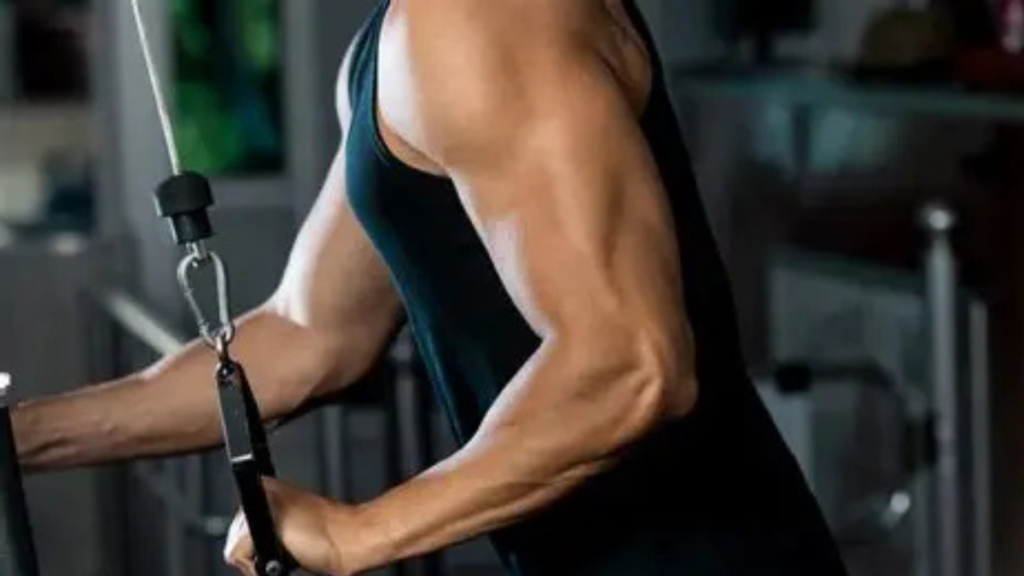
The reverse cable curl uses a pronated grip, meaning the palms face down. It can be performed with a straight bar attachment, an EZ style attachment, or two individual handles. The movement looks simple, but the grip changes the experience immediately. The biceps brachii is less advantaged than in a fully supinated curl, while the brachialis and brachioradialis become important elbow flexors.
This is not a replacement for supinated curls. It is a complementary movement that can help build a fuller upper arm and stronger forearms. The brachialis lies beneath the biceps, so adding size to it can contribute to arm thickness even though it is not as visible as the biceps.
How to Perform It
Set the cable at its lowest position and stand close enough that the stack does not rest between repetitions. Take an overhand grip around shoulder width. Start with your ribs down, wrists straight, and elbows near your sides. Curl the attachment until your forearms approach vertical, then lower under control.
Keep the wrists neutral instead of letting them bend backward. A very heavy load often turns this exercise into a swinging movement that stresses the wrists and elbows more than the elbow flexors. A slower repetition with a lighter load is usually more productive.
Why It Can Build Bigger and Stronger Arms
Electromyography research has shown that forearm position affects activation patterns among the elbow flexors. The brachioradialis is especially relevant during neutral and pronated grip elbow flexion, while the brachialis remains an important contributor across different grips. In practical terms, the reverse curl provides direct work for muscles that standard supinated curls may not emphasize to the same degree.
This exercise also has a clear strength carryover for rows, pull ups, loaded carries, and many athletic tasks that combine gripping with elbow flexion. Keep expectations realistic, however. Strength is specific to the movement and range of motion trained. Reverse curls improve reverse curl strength particularly well, while broader carryover depends on the rest of your program.
Perform ten to twenty repetitions per set. Higher repetitions tend to suit this exercise because the wrists and elbows often tolerate smooth, moderate loading better than maximal weight.
3. Zottman Curl
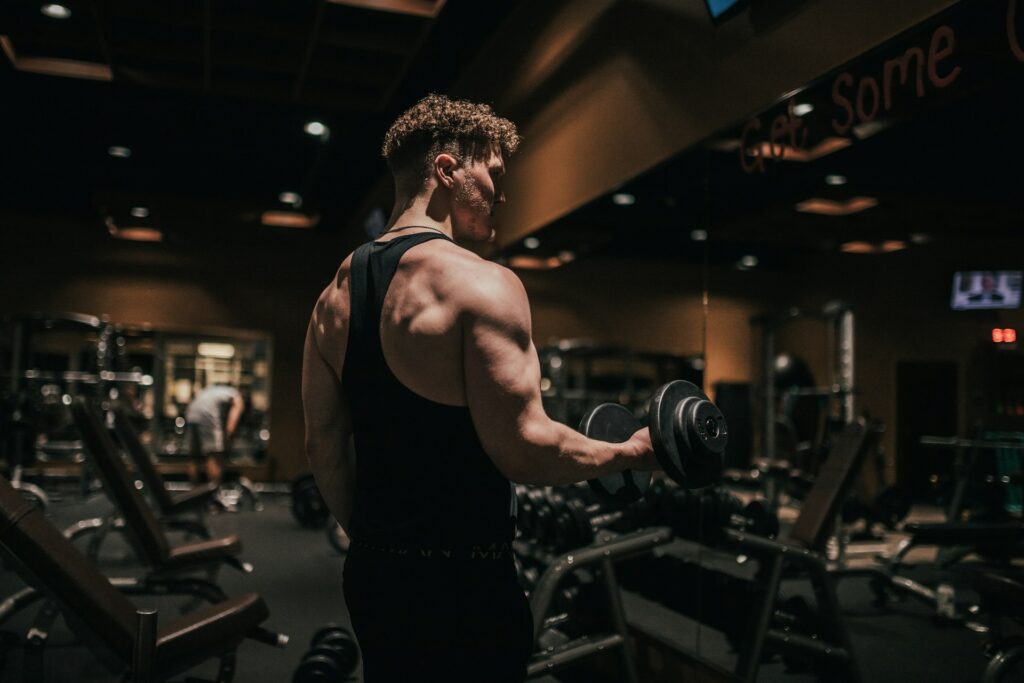
The Zottman curl begins like a conventional dumbbell curl with the palms facing up. At the top, rotate the hands so the palms face down, then lower the dumbbells with a pronated grip. Rotate back to a palms up position at the bottom and repeat.
It is unusual because the concentric and eccentric portions use different grip positions. The lifting phase allows strong biceps involvement, while the lowering phase increases the role of the brachioradialis and challenges the forearm muscles that control the dumbbell. The rotation also encourages deliberate tempo because rushing it makes the movement awkward and unstable.
How to Perform It
Stand tall with a dumbbell in each hand and begin with the arms by your sides. Curl both dumbbells with a supinated grip while keeping the elbows close to the body. At the top, pause briefly and rotate the hands until the palms face down. Lower for two to four seconds, then rotate back to a palms up position only after the dumbbells reach the bottom.
Use less weight than you would for standard dumbbell curls. The purpose is not to make the rotation difficult. The purpose is to make the elbow flexion and controlled lowering difficult for the muscles that matter.
Why It Can Build Bigger and Stronger Arms
Eccentric muscle actions can produce high forces with a lower energy cost than concentric actions, and resistance training that includes controlled eccentric work is effective for strength and hypertrophy. The Zottman curl gives you a straightforward way to emphasize the lowering phase without needing a training partner or specialized equipment.
The exercise also combines a supinated curl pattern with a pronated lowering pattern in one set. That makes it time efficient for people who want to train the biceps, brachialis, brachioradialis, and grip related forearm musculature without adding many separate exercises. The movement should remain smooth throughout. If the dumbbells pull your shoulders forward or your wrists lose position, the load is too heavy.
Aim for eight to twelve repetitions with a controlled eccentric phase. Because eccentric focused training can create substantial soreness when it is new, begin with fewer sets and increase volume gradually over several weeks.
Building Arms Without Wasting Effort
These exercises work best inside a broader program that includes enough weekly hard sets for the elbow flexors, steady progression, and recovery. Research indicates that higher weekly resistance training volumes generally produce greater hypertrophy than very low volumes, although more is not always better. Your best volume is the amount you can perform with good technique, recover from, and gradually improve.
For most people, spread biceps work across two or three sessions each week instead of trying to do everything in one workout. Include a mix of pulling exercises and direct curls. Track repetitions, load, and technique. When you reach the top of your planned repetition range on every set without form breaking down, add a small amount of resistance or make the movement more controlled.
Do not confuse soreness with growth. A new exercise can create soreness because it is unfamiliar, especially when it emphasizes a lengthened or eccentric position. Soreness is not a reliable measure of a productive program. Consistent performance improvement, adequate recovery, and gradual increases in training demand are more useful signs.
Key Takeaways
| Exercise | Main emphasis | Practical prescription | Key technique point |
|---|---|---|---|
| Bayesian cable curl | Biceps trained from a lengthened shoulder position | Two to four sets of eight to fifteen repetitions | Keep the upper arm slightly behind the torso |
| Reverse cable curl | Brachialis and brachioradialis contribution with elbow flexion | Two to four sets of ten to twenty repetitions | Maintain neutral wrists and avoid swinging |
| Zottman curl | Supinated lifting with controlled pronated lowering | Two to four sets of eight to twelve repetitions | Use a slow, stable eccentric phase |
| Overall programming | Sufficient hard volume and progression | Train biceps two to three times weekly when recovery allows | Add load or repetitions only when form stays controlled |
References
- American College of Sports Medicine (2009) ‘American College of Sports Medicine position stand. Progression models in resistance training for healthy adults’, Medicine and Science in Sports and Exercise, 41(3), pp. 687–708.
- Douglas, J., Pearson, S., Ross, A. and McGuigan, M. (2017) ‘Eccentric exercise: Physiological characteristics and acute responses’, Sports Medicine, 47(4), pp. 663–675.
- Krieger, J.W. (2010) ‘Single versus multiple sets of resistance exercise for muscle hypertrophy: A meta analysis’, Journal of Strength and Conditioning Research, 24(4), pp. 1150–1159.
- Leite, R.D., Prestes, J., Rosa, C., De Salles, B.F., Maior, A., Miranda, H. and Simão, R. (2011) ‘Acute effect of the order of exercises in the performance of maximum repetitions in trained men’, Journal of Strength and Conditioning Research, 25(8), pp. 2187–2191.
- Maeo, S., Saito, A., Otsuka, S., Shan, X. and Isaka, T. (2021) ‘Localized muscle hypertrophy and strength adaptations to lengthened versus shortened position resistance training in the calf muscles’, Physiological Reports, 9(9), e14840.
- Ribeiro, A.S., Schoenfeld, B.J., Fleck, S.J., Pina, F.L.C., Nascimento, M.A., Cyrino, E.S. and others (2015) ‘Effects of traditional and pyramidal resistance training systems on muscular strength, muscle mass, and hormonal responses in older women: A randomized crossover trial’, Journal of Strength and Conditioning Research, 29(1), pp. 30–36.
- Schoenfeld, B.J., Ogborn, D. and Krieger, J.W. (2017) ‘Dose response relationship between weekly resistance training volume and increases in muscle mass: A systematic review and meta analysis’, Journal of Sports Sciences, 35(11), pp. 1073–1082.