

Biceps training often gets reduced to a simple question: which curl is best? Preacher curls and incline curls are both excellent isolation exercises, but they challenge the elbow flexors in meaningfully different ways. The most useful answer is not that one exercise is universally superior. Instead, each variation appears to favor muscle growth in a different region of the upper arm.
Recent direct research gives this comparison far more clarity than gym lore. Both preacher curls and incline curls can build the biceps effectively when they are trained hard and progressed over time. The choice comes down to how you want to emphasize your training, which exercise you can perform comfortably, and whether you need variety to keep progressing.


What Makes These Exercises Different?
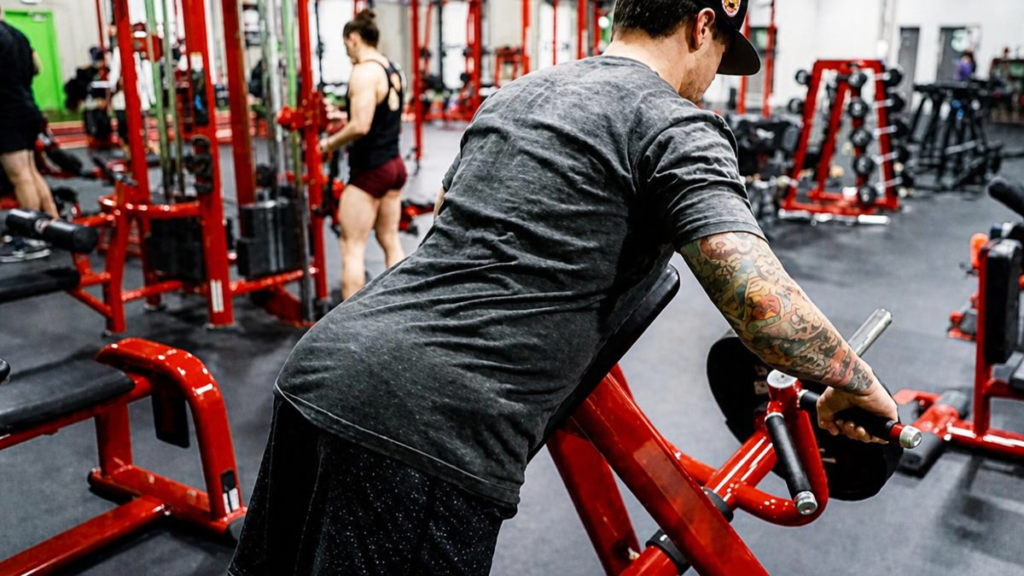
The preacher curl position
A preacher curl places the upper arm on a pad with the shoulder flexed in front of the torso. This shortens the long head of the biceps at the shoulder before you even begin curling. The pad also limits shoulder movement, which makes it harder to use body English or swing the weight upward.
With a dumbbell preacher curl, the resistance is usually most demanding near the bottom of the movement, when the elbow is relatively extended. As the dumbbell rises and approaches the top, the line of gravity moves closer to the elbow joint, so the external torque becomes smaller. In practical terms, the bottom portion is usually the hard part.
The incline curl position
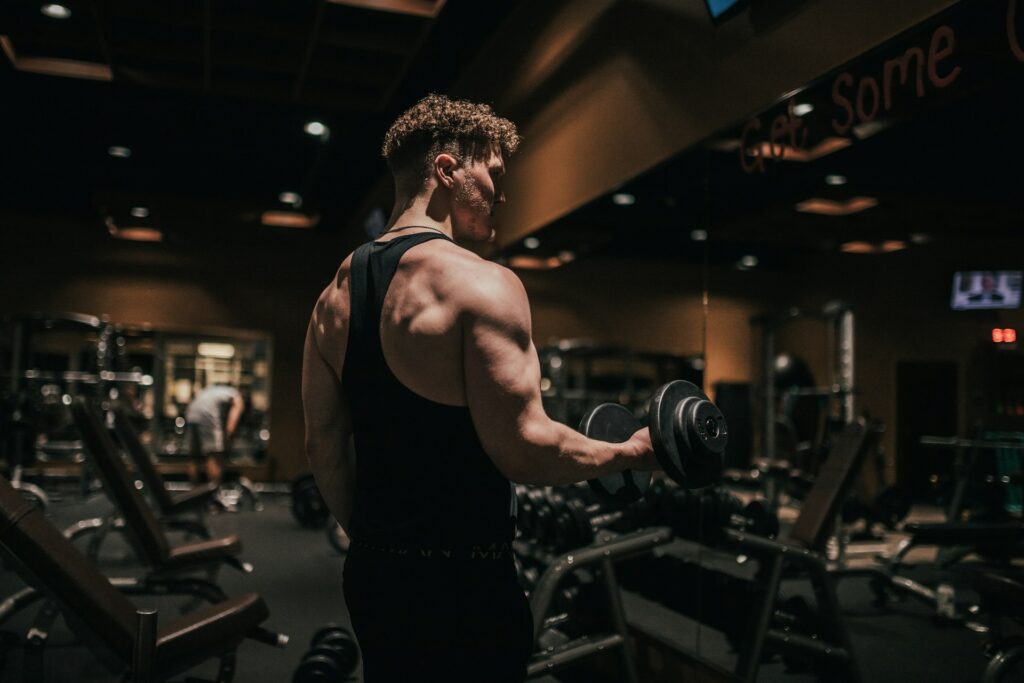
An incline curl is performed while seated on an inclined bench with the upper arms behind the torso. This places the shoulder in extension, which lengthens the biceps before the curl starts. The long head of the biceps crosses both the shoulder and elbow joints, so shoulder position changes its operating length.
Unlike a preacher curl, the arms are not supported on a pad. That means the lifter must control the shoulder and keep the upper arm reasonably still. The incline position can make it tempting to let the elbows drift forward as fatigue rises, which reduces the stretched position that defines the exercise.
What the Direct Research Found
The strongest evidence comes from an eight week randomized trial comparing preacher curls with incline curls in 63 untrained young women. Participants trained their assigned exercise twice per week, performing three sets of eight to 12 repetitions to momentary concentric failure. Both groups increased elbow flexor muscle thickness at the proximal, middle, and distal measurement sites.
However, the distribution of growth differed. Incline curls produced a greater increase in proximal elbow flexor thickness, which is the area closer to the shoulder. Preacher curls produced a greater increase in distal elbow flexor thickness, which is the area closer to the elbow. The groups had similar growth at the middle measurement site.
3 Best Beginner Quad Exercises for Jacked and Muscular Legs
This is an important result because it answers the question more accurately than a generic claim that one curl “hits the long head” and the other “hits the short head.” The study measured the whole elbow flexor region with ultrasound, including biceps brachii and brachialis rather than separating individual muscles or biceps heads. Therefore, it supports regional differences in upper arm growth, but it does not prove that one exercise selectively enlarged a specific biceps head.
The incline curl group increased proximal muscle thickness by 11.2 percent, compared with 8.3 percent in the preacher curl group. The preacher curl group increased distal muscle thickness by 10.3 percent, compared with 6.4 percent in the incline curl group. These differences were statistically significant, while middle upper arm growth was similar between exercises.
Which Exercise Is Better for Overall Biceps Growth?
The honest answer
Neither exercise clearly wins for overall biceps development. Both exercises increased elbow flexor size, and the direct comparison found a tradeoff in where growth was greatest rather than one movement producing superior growth everywhere.
If your goal is the most complete development possible, using both exercises over time is the most evidence based strategy. You can train one as your main curl for a training block, then rotate to the other later. You can also include both in the same week, provided your total biceps volume and recovery are appropriate.
This approach makes sense because resistance training adaptations are specific to the movements performed. The same trial found that preacher curl strength improved more in the preacher curl group, while incline curl strength improved more in the incline curl group. Getting stronger in a curl variation matters because progressive overload is easier when the movement becomes more efficient and familiar.
If you must choose one
Choose incline curls if you want to emphasize the upper portion of the elbow flexors near the shoulder, enjoy training in a lengthened position, and can maintain strict shoulder control. Choose preacher curls if you want to emphasize the lower portion of the elbow flexors near the elbow, prefer more stability, or find that unsupported curls make it difficult to avoid swinging.
The right choice is also the one you can load progressively without pain. A curl that causes persistent elbow, shoulder, or wrist discomfort is not automatically better because it feels intense. Muscle growth requires repeated high quality training sessions, so tolerability is a major part of exercise selection.
What Biomechanics Can and Cannot Tell You
An earlier electromyography study compared incline dumbbell curls, preacher curls, and standing dumbbell curls. All three movements produced substantial biceps brachii activity. Incline curls and standing curls showed a more sustained activation pattern across the range of motion, while preacher curls produced higher activation early in the concentric phase and lower activation later in the curl.
This helps explain why preacher curls feel hardest near the bottom. It does not, by itself, prove that incline curls build more muscle. Surface electromyography measures electrical activity near the electrodes under specific conditions. It does not directly measure mechanical tension in every muscle fiber, nor can it reliably predict long term hypertrophy on its own.
The direct training study is therefore more valuable for deciding which exercise builds muscle. Biomechanics and electromyography are still useful for understanding how the exercises feel and where their challenge occurs, but actual training outcomes deserve greater weight.
How to Perform Preacher Curls Well
Set the preacher pad so your armpits sit comfortably near the top edge and your upper arms remain supported. Start with the elbows close to extension, but avoid aggressively snapping them straight at the bottom. Keep your wrists neutral or only slightly extended, and curl the weight under control without allowing the shoulder to lift off the pad.
Use a full comfortable range of motion. The study comparing preacher and incline curls used a movement from full elbow extension to about 120 degrees of elbow flexion. You do not need to force the dumbbell all the way to the shoulder if doing so removes tension or makes your position unstable.
Because the early part of the curl is demanding, select a load that allows clean repetitions from the bottom. Lower the dumbbell slowly and maintain control. The eccentric phase is not merely the return to the start position. It is a loaded portion of the repetition that contributes to the overall training stimulus.
How to Perform Incline Curls Well
Use an incline bench that lets your arms hang behind your torso without forcing an extreme shoulder position. The direct study used a 45 degree bench angle and approximately 30 degrees of shoulder extension. For most lifters, a moderate incline is a sensible starting point.
Keep your upper arms behind or close to the line of your torso throughout the curl. If your elbows travel substantially forward, the exercise gradually becomes more like a standard seated curl. Fully supinate the hand if comfortable, because the biceps brachii is also a powerful forearm supinator. Then lower the dumbbells under control until the elbows are comfortably extended.
Use less weight than you would for standing curls. The stretched position and reduced ability to use momentum can make incline curls challenging with modest loads. That is not a weakness of the exercise. It is simply a reason to judge progress by clean reps, control, and gradual loading rather than by comparing dumbbell numbers with another curl variation.
Programming Preacher and Incline Curls
For hypertrophy, either exercise can be performed two times per week as part of a balanced upper body program. The direct comparison used three sets of eight to 12 repetitions to momentary concentric failure, with two minutes of rest between sets, and both groups built muscle.
You do not need to train to failure on every set to make progress, but sets should be challenging enough that you are close to failure. The best practical method is to use a load that allows you to stay within a planned repetition range with consistent technique. Add repetitions first, then increase the load once you can reach the upper end of the range without form breaking down.
A simple approach is to make incline curls your first biceps isolation movement when proximal upper arm development is the priority. Make preacher curls your first isolation movement when you want more work near the bottom of elbow flexion and a stable setup. If you use both, begin with the exercise that matches your priority and perform the other with fewer sets afterward.
The Verdict
Incline curls and preacher curls both build the elbow flexors, but they are not identical. Current direct evidence suggests that incline curls favor greater growth in the proximal upper arm, while preacher curls favor greater growth in the distal upper arm. Neither movement showed a clear advantage for the middle portion of the elbow flexors.
For most lifters, the best long term answer is to use both. Rotate them across training blocks or include each one in your weekly program. The most productive curl is the one you can perform through a controlled range of motion, progress over time, and recover from consistently.
Key Takeaways
| Factor | Preacher curl | Incline curl |
|---|---|---|
| Shoulder position | Flexed in front of the torso | Extended behind the torso |
| Upper arm support | Supported by a preacher pad | Unsupported against an incline bench |
| Most demanding part | Usually near the bottom of the curl | Demanding through a broader portion of the curl when performed strictly |
| Regional growth finding | Greater distal elbow flexor growth in the direct trial | Greater proximal elbow flexor growth in the direct trial |
| Strength specificity | Greater improvement in preacher curl strength | Greater improvement in incline curl strength |
| Best practical use | Stable, strict curling with distal upper arm emphasis | Training the biceps in a lengthened shoulder position with proximal upper arm emphasis |
| Overall recommendation | Use when it feels comfortable and fits your priority | Use when it feels comfortable and fits your priority |
References
- Kassiano, W., Costa, B., Kunevaliki, G., Lisboa, F., Stavinski, N., Prado, A., Tricoli, I., Francsuel, J., Alves, L., Nunes, J.P., Ribeiro, A.S. and Cyrino, E.S. (2025) ‘Distinct muscle growth and strength adaptations after preacher and incline biceps curls’, International Journal of Sports Medicine, 46(5), pp. 334 to 343.
- Oliveira, L.F., Matta, T.T., Alves, D.S., Garcia, M.A.C. and Vieira, T.M.M. (2009) ‘Effect of the shoulder position on the biceps brachii EMG in different dumbbell curls’, Journal of Sports Science and Medicine, 8(1), pp. 24 to 29.
- Vigotsky, A.D., Halperin, I., Lehman, G.J., Trajano, G.S. and Vieira, T.M. (2018) ‘Interpreting signal amplitudes in surface electromyography studies in sport and rehabilitation sciences’, Frontiers in Physiology, 8, article 985.