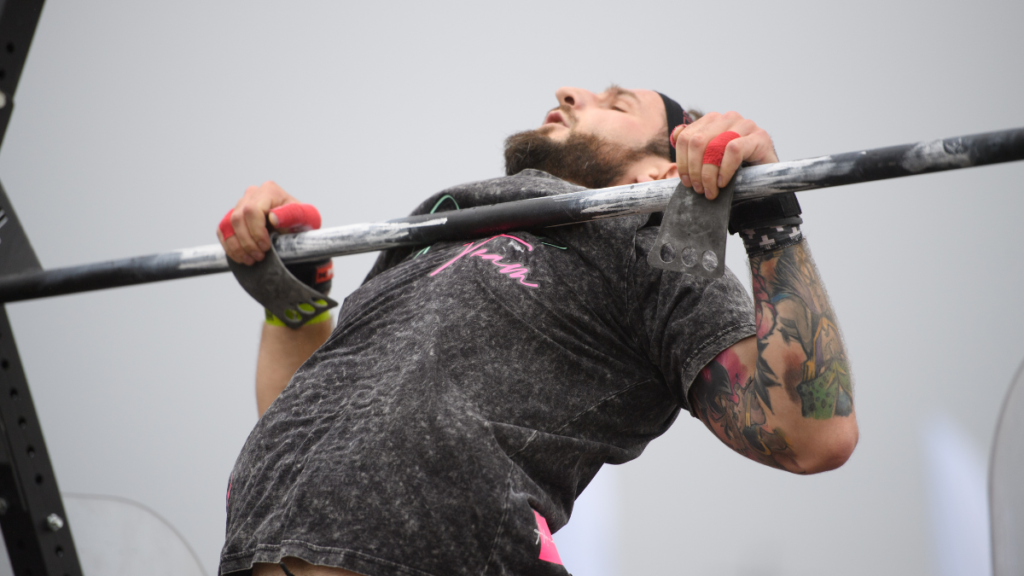
A wider, more muscular back changes the look of your entire upper body. It creates more contrast between your shoulders, waist, and hips, which is why it is such an important part of building an attractive V shaped torso. Strong back muscles also contribute to pulling strength, shoulder function, and the ability to control your posture during training and daily life.
The latissimus dorsi, usually called the lats, are the largest muscles in the upper body. They run from the lower back and pelvis up toward the upper arm. When developed, they create much of the width visible from the front and back. Your upper back muscles, including the middle and lower trapezius, rhomboids, rear deltoids, and teres major, add thickness, detail, and support around the shoulder blades.


Cable training is an excellent way to train these muscles. Unlike free weights, cables create resistance through a consistent line of pull, and the pulley height can be adjusted to suit the movement. This makes it easier to use both vertical pulls, where the arms move down toward the body, and horizontal pulls, where the elbows travel behind the torso. Both patterns have a place in a complete back program.
The three exercises below offer a practical cable based route to a wider and more complete back. Each exercise emphasizes a slightly different function, and together they provide the kind of productive training volume that research links with muscle growth.
Why Cables Work So Well for Back Development
Resistance training increases muscle size when it provides enough mechanical tension, effort, and repeated exposure over time. Research consistently shows that training volume has a dose response relationship with hypertrophy, meaning that adding productive sets tends to improve muscle growth, although the ideal amount differs between individuals. Cables make it easier to add those high quality sets without relying on momentum or awkward body positions.
A cable machine also allows you to adjust the direction of resistance. That matters because the back is not a single muscle with one job. The lats help pull the upper arm down and back toward the torso. The muscles around the shoulder blades help control and move the scapulae during rows and pulling movements. Using both vertical and horizontal pulling patterns gives your back a broader training stimulus.
Are Bar Facing Burpees the Perfect Exercise for Burning Body Fat?
You do not need to use a single perfect grip to make your lats grow. Research comparing lat pulldown grip variations has found that differences in lat activation are often small or inconsistent. A grip that feels stable, comfortable, and allows you to train hard with a full range of motion is usually the best choice. The goal is not to chase a magic hand position. The goal is to use a movement you can progressively overload and perform well.
Muscle growth can occur with a broad range of loads when sets are sufficiently challenging. Heavier loads are particularly useful for improving maximal strength, while moderate and lighter loads can still build muscle when performed with controlled technique and enough effort. For most cable back work, sets of roughly 8 to 15 repetitions are a useful starting point, although some exercises work very well with higher repetitions.
The 3 Best Cable Back Exercises
1. Cable Lat Pulldown
The cable lat pulldown should be a staple for anyone who wants a wider back. It trains the vertical pulling pattern that directly involves the lats, while also challenging the biceps, teres major, rear deltoids, and muscles that stabilize the shoulder blades. It is accessible for beginners, easy to load progressively, and far easier to scale than bodyweight pull ups.
Set the thigh pad so that you are held securely in place without feeling trapped. Take a grip just outside shoulder width, sit tall, and allow the bar to rise until your arms are fully extended overhead. Keep your chest comfortably lifted and your ribs controlled. Pull the bar down toward the upper chest by driving your elbows down and slightly toward your sides.
Think about moving your elbows rather than forcing the bar down with your hands. This cue can help reduce the temptation to turn the exercise into a biceps curl. Pause briefly at the bottom when your elbows are close to your torso, then return the bar upward under control. The upward phase is not empty time. It is part of the repetition and should be performed with deliberate control.
Avoid leaning far backward and turning the movement into a row. A small natural lean is fine if it helps you maintain a comfortable shoulder position, but excessive body movement shifts the work away from a clean vertical pull. You also do not need an extremely wide grip. A comfortable medium grip often allows a strong range of motion and repeatable technique.
Use two to four hard sets of 6 to 12 repetitions. Begin with a load that lets you reach the bottom position without swinging or losing control at the top. Once you can complete the top end of your chosen repetition range with clean form, increase the weight slightly.
2. Single Arm Cable Lat Pulldown
The single arm cable lat pulldown is one of the best exercises for learning how to feel and load each lat independently. Unilateral training allows each side to work through its own range of motion and may help you identify meaningful differences in strength, coordination, or control between sides. It also makes it easier to find a line of pull that suits your shoulder structure.
Set a pulley high and attach a single handle. You can kneel, half kneel, or stand slightly away from the machine, depending on the setup and your comfort. Reach up with one arm and allow the shoulder blade to elevate naturally at the top. Brace your trunk so that you are not twisting or leaning dramatically toward the working side.
Pull the handle down toward the outside of your rib cage. Let the elbow travel down and in rather than directly backward. At the bottom, your upper arm should be close to your side and your torso should still look stable. Slowly return to the fully lengthened position, allowing your arm to travel overhead again.
This exercise is especially useful because it can provide a long, controlled range of motion without the restriction of a fixed bar. Do not use a load that forces you to bend and rotate through the spine. The back muscle should create the movement, while the torso provides a solid base.
Perform two to three sets of 10 to 15 repetitions on each side. Start with the weaker or less coordinated side, then match the same repetitions and load on the other side. Training each side equally is a simple way to keep the program balanced.
3. Seated Cable Row
The seated cable row builds the thickness that makes a wide back look more complete. While pulldowns are excellent for vertical pulling, rows train the muscles that pull the upper arm back and help control the shoulder blades. The lats contribute, but the middle trapezius, rhomboids, rear deltoids, and elbow flexors also play important roles.
Use a close neutral handle if it feels comfortable, although a straight bar or wider attachment can also work well. Sit tall with your feet firmly planted and your knees slightly bent. Start with your arms extended and your shoulders relaxed but not completely collapsed forward. Brace your abdomen before initiating the pull.
Drive your elbows back toward your hips and pull the handle toward your lower ribs or upper abdomen. Your torso should remain relatively still. A small amount of natural movement is not a problem, but do not use a large backward lean to complete the repetition. Pause when the elbows are behind the torso and your shoulder blades have moved back in a controlled way.
Return the handle slowly until your arms are extended again. Allow the shoulder blades to move forward naturally, but keep the motion controlled and avoid rounding aggressively through the lower back. A full and comfortable range of motion is more valuable than using extra weight with shortened reps.
Research on rowing movements shows that shoulder blade position and the way an exercise is performed can alter activity across the muscles of the back and shoulder region. This is a good reason to use a controlled, repeatable technique rather than rushing through the movement. You do not need to squeeze your shoulder blades as hard as possible on every rep, but you should feel that the shoulder blades are moving smoothly as the elbows travel backward.
Perform three to four sets of 8 to 15 repetitions. Use a load that makes the final few repetitions demanding while preserving a stable torso and full range of motion.
How to Program These Exercises for V Shaped Results
Train your back at least once or twice each week, depending on your overall program and recovery. A useful starting point is 10 to 14 challenging weekly sets for the back, spread across vertical and horizontal pulling exercises. More advanced lifters may benefit from additional volume, but only if they can recover and maintain performance.
You could perform the cable lat pulldown first when you are fresh, follow it with the seated cable row, and finish with the single arm cable lat pulldown. This order lets you load the bigger bilateral movements first, then use the unilateral movement to add focused work without needing very heavy weight.

Progression is essential. Keep a simple record of your weight, repetitions, and sets. If you complete more repetitions with the same technique, you have progressed. If you add a small amount of load while staying within your target repetition range, you have progressed. These small improvements accumulate over months and are far more important than changing exercises every week.
Train with purpose, but do not take every set to absolute failure. Evidence suggests that muscular growth can occur when sets are performed close to failure, while constant failure training is not necessary for good results. Leave roughly one to three repetitions in reserve on most sets, especially on bigger movements such as pulldowns and rows. You can work closer to failure on the final set of a more controlled exercise if your technique remains strong.
Your V shaped appearance also depends on the contrast created by your waist, shoulders, and body composition. Building a wider back will improve upper body shape, but no single exercise can control where your body stores fat. Pair consistent back training with sufficient protein intake, sleep, and a nutrition approach that fits your goal.
Build Width, Then Build Consistency
A more attractive V shaped torso is built through consistent training rather than exercise novelty. The cable lat pulldown gives you a dependable vertical pull for lat width. The single arm cable lat pulldown adds focused unilateral work and a comfortable long range of motion. The seated cable row develops the upper back thickness and shoulder blade control that makes the whole physique look stronger.
Choose weights you can control, train each movement through a comfortable full range of motion, and make gradual progress over time. Those principles are simple, but they are also the ones that reliably turn cable work into a bigger, wider, more athletic looking back.
References
- Buonsenso, A., Di Fonza, D., Di Claudio, G., Carangelo, M., Centorbi, M., di Cagno, A., Calcagno, G. and Fiorilli, G., 2025. Electromyographic analysis of back muscle activation during lat pulldown exercise: effects of grip variations and forearm orientation. Journal of Functional Morphology and Kinesiology, 10(3), 345.
- Fink, J., Kikuchi, N. and Nakazato, K., 2018. Effects of rest intervals and training loads on metabolic stress and muscle hypertrophy. Clinical Physiology and Functional Imaging, 38(2), pp.261–268.
- Grgic, J., Schoenfeld, B.J., Skrepnik, M. and Davies, T.B., 2021. Effects of resistance training performed to repetition failure or non failure on muscular strength and hypertrophy: a systematic review and meta analysis. Journal of Sport and Health Science, 11(2), pp.202–211.
- Lusk, S.J., Hale, B.D. and Russell, D.M., 2010. A comparison of electromyographical activity of the latissimus dorsi during the traditional lat pull down and three alternative exercises. Journal of Strength and Conditioning Research, 24(9), pp.2484–2488.
- Refalo, M.C., Hamilton, D.L., Paval, D.R., Gallagher, I.J., Feros, S.A. and Fyfe, J.J., 2021. Influence of resistance training load on measures of skeletal muscle hypertrophy and improvements in maximal strength and neuromuscular task performance: a systematic review and meta analysis. Journal of Sports Sciences, 39(15), pp.1723–1745.
- Schoenfeld, B.J., Ogborn, D. and Krieger, J.W., 2017. Dose response relationship between weekly resistance training volume and increases in muscle mass: a systematic review and meta analysis. Journal of Sports Sciences, 35(11), pp.1073–1082.
- Signorile, J.F., Zink, A.J. and Szwed, S.P., 2002. A comparative electromyographical investigation of muscle utilization patterns using various hand positions during the lat pull down. Journal of Strength and Conditioning Research, 16(4), pp.539–546.
- Vigotsky, A.D., Halperin, I., Lehman, G.J., Trajano, G.S. and Vieira, T.M., 2018. Interpreting signal amplitudes in surface electromyography studies in sport and rehabilitation sciences. Frontiers in Physiology, 8, 985.
Key Takeaways
Key takeaways
| Exercise | Main role | Practical target |
|---|---|---|
| Cable lat pulldown | Builds vertical pulling strength and lat width | 2 to 4 sets of 6 to 12 repetitions |
| Single arm cable lat pulldown | Trains each lat independently through a long range of motion | 2 to 3 sets of 10 to 15 repetitions per side |
| Seated cable row | Adds upper back thickness and controlled shoulder blade movement | 3 to 4 sets of 8 to 15 repetitions |
| Weekly approach | Combines vertical and horizontal pulls for complete back development | 10 to 14 challenging back sets per week |
| Progression | Creates the repeated training stimulus needed for muscle growth | Add repetitions or small load increases while keeping clean form |