

When many gym-rats decide to build bigger arms, their instinct is almost always the same. They head straight for the dumbbell rack or grab an EZ-bar to pump out set after set of curls. Concentrated isolation work feels like the obvious path to peak biceps, yet many lifters often hit a frustrating plateau where their arms will simply not grow.
The issue with relying exclusively on isolation movements is that they limit the total amount of mechanical tension you can apply to the muscle tissue.
While curls certainly isolate the front of the upper arm, they fail to recruit the surrounding pulling muscles that allow you to overload the arms with massive resistance.
So if you’re stuck, here’s what you should do instead.
The Hidden Power of Closed-Kinetic Upper Body Pulling
To understand why traditional arm isolation often falls short, it helps to examine how muscles contract under heavy loads. Free-weight isolation movements like standing barbell curls allow for very high targeted tension, but they quickly become limited by localized fatigue and wrist or elbow strain.
When you perform open-kinetic exercises where your hands move freely through space around a fixed body, your nervous system limits total muscle recruitment to protect small stabilizing joints.
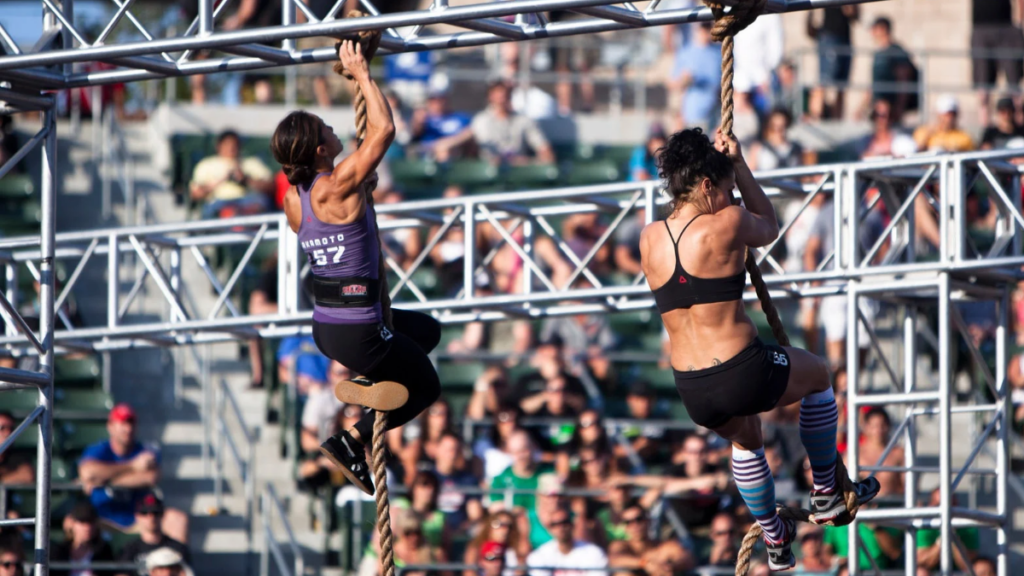
Closed-kinetic exercises operate differently. In a closed-kinetic chain movement, your hands remain anchored to an immovable object while your body mass moves through space. This spatial orientation allows your central nervous system to recruit a vastly higher number of motor units, enabling your upper body flexors to handle load progression that standard dumbbell variations cannot match.
Unveiling the Ultimate Bicep Builder
The movement that triggers exceptional bicep hypertrophy while overloading the back is the chin up. Executed with a supinated grip where your palms face toward your face, this bodyweight movement transforms a classic back exercise into an absolute powerhouse for upper arm hypertrophy.
Many lifters make the mistake of grouping chin ups together with overhand pull ups. While overhand pull ups rely heavily on the latissimus dorsi and brachioradialis, rotating your forearms into a supinated position fundamentally changes the elbow joint mechanics. Because the biceps brachii functions as both an elbow flexor and a powerful forearm supinator, placing the wrists in full supination puts the biceps in an optimal mechanical advantage to pull your entire bodyweight up to the bar.
Surface EMG Activation Across Pulling Exercises
Scientific research confirms that chin ups generate equal or higher bicep activation compared to traditional curl variations and lat pulldowns. Electromyography measures the electrical activity inside muscle fibers during contraction. When researchers measure peak motor unit recruitment, the supinated chin up consistently matches or exceeds the peak activation achieved during heavy curls while allowing for significantly higher total workload.
| Exercise Variation | Primary Forearm Position | Biceps Brachii Activation (% MVIC) | Latissimus Dorsi Activation (% MVIC) |
|---|---|---|---|
| Supinated Chin Up | Underhand (Supinated) | Very High (95% to 105%) | High (110% to 120%) |
| Pronated Pull Up | Overhand (Pronated) | Moderate (40% to 60%) | Very High (120% to 130%) |
| EZ-Bar Bicep Curl | Semi-Supinated | High (80% to 95%) | Negligible (0% to 5%) |
| Neutral Grip Cable Curl | Neutral (Palms Facing) | Moderate-High (70% to 85%) | Negligible (0% to 5%) |
The Mechanical Advantage of Progressive Overload
Muscle hypertrophy relies primarily on progressive mechanical tension over time. While you might gradually increase a bicep curl from thirty pounds to forty pounds over several months, the absolute load placed across the elbow joint remains relatively small.
Chin ups force your biceps to flex the elbow against your total body mass. A one-hundred-and-eighty-pound lifter performing a chin up is moving far more total mass across the elbow joint than they could ever handle on a preacher bench. Even when accounting for the assistance of the latissimus dorsi and teres major, the absolute force generated by the biceps brachii during a heavy chin up exceeds what is possible during isolated movements.
Adding a dip belt loaded with weight plates allows you to apply linear progressive overload for years without reaching a movement ceiling. As your weighted chin up strength increases, your upper arms are forced to grow to support that massive increase in force production.
Optimizing Chin Up Form for Maximum Arm Recruitment
To shift the primary stimulus from your back toward your front upper arms, subtle adjustments in execution make a dramatic difference. Standard back-focused execution emphasizes driving the elbows down and back to maximize lat contraction. Arm-focused execution requires a slightly different approach.
Start by gripping the bar with a shoulder-width or slightly narrower supinated grip. As you initiate the pull, focus on pulling your chest directly toward your hands rather than arching your spine away from the bar. Maintain a slight forward hollow-body tilt in your torso rather than an extreme thoracic extension.
Initiate the flex by driving your wrists toward your shoulders and actively flexing at the elbow joint. Pause briefly at the top when your chin clears the bar, squeezing your biceps hard at full contraction. Control the lowering phase for a deliberate two to three seconds, allowing your biceps to experience intense mechanical tension during the eccentric lengthening phase.
Key Biomechanical Differences Between Variations
Understanding how joint angles influence muscle recruitment helps you program chin ups correctly for your specific arm growth goals.
| Movement Feature | Standard Lat-Focused Chin Up | Bicep-Targeted Chin Up |
|---|---|---|
| Grip Width | Slightly Wider Than Shoulder-Width | Shoulder-Width or Slightly Narrower |
| Torso Position | Moderate Arching with Chest Up | Hollow-Body Core with Slight Forward Angle |
| Primary Line of Pull | Driving Elbows Down into Sides | Flexing Elbows to Pull Forearms to Upper Arms |
| Movement Range | Stopping at Chest-to-Bar Contact | Full Elbow Range from Dead Hang to Full Flexion |
Integrating Chin Ups Into Your Workout Routine
Replacing a portion of your traditional isolation work with heavy chin ups creates a powerful stimulus for faster muscle growth. Because chin ups recruit large muscle groups across multiple joints, they should be performed at the start of your workout when your nervous system is completely fresh.
3 Massive Benefits of Dumbbell Lateral Raises for Beginners That Want Wider Shoulders
Begin your upper body or pulling sessions with three to four heavy sets of chin ups in the five to eight repetition range. Once you can comfortably complete all reps with clean form using your bodyweight, add external load using a weight belt or dumbbell between your feet.
After completing your heavy compound sets of chin ups, you can finish your session with two to three sets of lighter isolation curls to target any remaining fatigue in the muscle fibers. This combination of heavy compound overload followed by targeted isolation provides the ideal stimulus for maximum arm hypertrophy.
Key Takeaways
| Focus Area | Core Insight | Practical Action |
|---|---|---|
| Mechanical Overload | Chin ups expose the biceps to much higher total resistance than curls. | Use bodyweight or added load to apply progressive tension. |
| Muscle Activation | Supinated grip maximizes motor unit recruitment in the biceps brachii. | Keep palms facing directly toward your face throughout the pull. |
| Form Execution | A shoulder-width grip and controlled eccentric phase increase bicep focus. | Lower your body smoothly over two to three seconds on every rep. |
| Program Structure | Closed-kinetic compound pulling creates a superior strength foundation. | Perform chin ups at the start of your workout before isolation exercises. |
References
- Doma, K., Deakin, G.B. and Ness, K.F., 2013. Kinematic and electromyographic comparisons between chin-ups and lat-pull down exercises. Sports Biomechanics, 12(3), pp.302-313.
- Youdas, J.W., Amundson, C.L., Cicero, K.S., Hahn, J.J., Harezlak, D.T. and Hollman, J.H., 2010. Surface electromyographic activation patterns and elbow joint motion during a pull-up, chin-up, or Perfect-Pullup rotational exercise. Journal of Strength and Conditioning Research, 24(12), pp.3404-3414.
- Marcolin, G., Panizzolo, F.A., Petrone, N., Moro, T., Grigoletto, D., Piccolo, D. and Paoli, A., 2018. Differences in electromyographic activity of biceps brachii and brachioradialis while performing three variants of curl. PeerJ, 6, p.e5165.