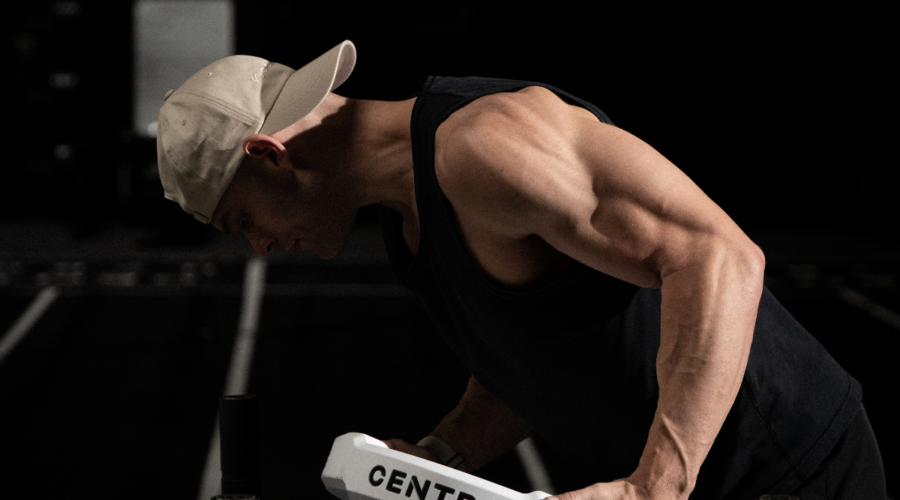


Wanting wider biceps usually means wanting arms that look thicker from the front, side, and when relaxed. The biceps brachii is important, but it is not the only muscle that creates this effect. The brachialis sits underneath the biceps, while the brachioradialis runs along the upper forearm. Building all three can make the upper arm look more substantial.
There is no exercise that can reshape your muscle insertions or alter your bone structure. Genetics influence the length and appearance of the biceps muscle. However, beginners can make noticeable progress by using exercises that train the elbow flexors through a controlled range of motion, applying enough resistance, and gradually adding repetitions or load over time.


The three exercises below cover the major muscles involved in elbow flexion. They are simple enough for beginners, yet effective enough to remain useful as your strength and muscle mass improve.
What Makes Biceps Look Wider?
The biceps brachii has two heads, commonly called the long head and short head. Its main functions include bending the elbow and rotating the palm upward. The brachialis also bends the elbow, but it lies beneath the biceps. As it grows, it can push the biceps upward and outward, contributing to a thicker upper arm appearance.
The brachioradialis is a large forearm muscle that is particularly active when the hands are held in a neutral position, with the palms facing each other. Developing this muscle can make the transition from upper arm to forearm look stronger and more athletic.

For beginners, the fastest route to visible change is not constantly searching for new exercises. It is performing a small number of useful movements well, training consistently, and making the workouts slightly harder over time. Resistance training increases muscle size when sufficient weekly volume, effort, and progressive overload are present.
Nutrition also matters. Muscle growth is supported by enough dietary protein and energy intake, particularly when training is challenging. Sleep and recovery are equally important because adaptation happens between sessions, not while lifting.
Exercise 1: Hammer Curl
The hammer curl is one of the best beginner exercises for building a wider looking arm because it trains the brachialis and brachioradialis alongside the biceps. The neutral hand position makes it a practical option for people who find standard dumbbell curls uncomfortable on the wrists.
Unlike a traditional curl, where the palm turns upward, the hammer curl keeps the thumb facing toward the ceiling throughout the repetition. This reduces the emphasis on forearm supination and allows the brachialis to contribute strongly to elbow flexion.
How to Perform the Hammer Curl
Stand upright with a dumbbell in each hand. Hold the dumbbells at your sides with your palms facing each other. Set your feet about hip width apart and gently brace your trunk.
Curl the dumbbells upward while keeping your upper arms close to your torso. Stop when the dumbbells reach roughly shoulder height, then lower them under control until your arms are straight again. Avoid swinging the weights with your hips or leaning backward to complete the lift.
A controlled lowering phase is useful because the elbow flexors produce force while lengthening during this portion of the movement. Resistance training that includes controlled concentric and eccentric actions is effective for increasing muscle size and strength.
Why It Helps Build Wider Biceps
Hammer curls are valuable because they train more than the visible biceps muscle. The brachialis is a powerful elbow flexor and sits beneath the biceps. Increasing its size can contribute to a thicker appearance through the middle of the upper arm.
3 Best Beginner Cable Exercises For More Muscular Arms
The brachioradialis also receives substantial work during neutral grip curling. This can improve the look of the upper forearm and create a fuller arm profile when viewed from the side.
Beginners should start with a weight they can lift for eight to 15 smooth repetitions. Two or three hard sets per arm is enough to begin with. Aim to finish each set with one to three repetitions still possible using good form.
Exercise 2: Incline Dumbbell Curl
The incline dumbbell curl is excellent for training the biceps through a long range of motion. Sitting on an incline bench places the arms behind the torso, creating a stretched position at the bottom of the movement. This makes it harder to use momentum and encourages the biceps to do more of the work.
Recent evidence suggests that exercises which train a muscle at longer lengths may provide a useful hypertrophy stimulus. This does not mean every set must involve an extreme stretch, but it does show why full range training deserves a place in a beginner program.
How to Perform the Incline Dumbbell Curl
Set an adjustable bench to a moderate incline. Sit back with a dumbbell in each hand and let your arms hang toward the floor. Your shoulders should remain slightly behind your torso.
Begin with your palms facing forward or gradually rotate them upward as you curl. Keep your elbows in the same position rather than allowing them to drift forward. Lift the dumbbells until your biceps are fully contracted, then lower slowly until the elbows are straight and the biceps feel stretched.
Use a lighter weight than you would for standing curls. The exercise is demanding because your body position limits cheating. It is better to use a manageable dumbbell and a full range of motion than a heavier dumbbell with poor control.
Why It Helps Build Bigger Biceps
The biceps crosses both the elbow and shoulder joints. Changing shoulder position changes the length of the muscle during a curl. With the upper arm positioned behind the torso, the biceps begins each repetition at a longer length than it does during many standing curl variations.
Training through a large and controlled range of motion can help beginners learn to load the biceps effectively. It also provides a different stimulus from hammer curls, which are more focused on neutral grip elbow flexion.
Perform two or three sets of eight to 12 repetitions. Rest for at least one minute between sets, and take longer if your form begins to break down. As you become stronger, increase the dumbbell weight only when you can complete all repetitions with control.
Exercise 3: Reverse Curl
The reverse curl uses an overhand grip, with the palms facing the floor. This grip variation shifts more work toward the brachioradialis and other forearm muscles while still training elbow flexion. It is a particularly useful addition for beginners who want their arms to look broader and more complete rather than only chasing a biceps peak.
You can perform reverse curls with a straight bar, curl bar, cable attachment, or dumbbells. Dumbbells are often the most comfortable option because they allow the wrists to move naturally.
How to Perform the Reverse Curl
Stand tall with dumbbells or a bar held in front of your thighs. Your palms should face toward your body or the floor, depending on the equipment. Keep your chest lifted and your upper arms close to your sides.
Curl the weight upward without moving your elbows forward. Your grip will likely feel weaker than it does during a regular curl, so start light. Pause briefly near the top, then lower the weight slowly until your elbows are fully extended.
Avoid bending your wrists backward as you lift. Keep them in a neutral and stable position. If your wrists feel uncomfortable, switch to dumbbells or use a cable attachment that allows a more natural hand position.
Why It Helps Build a More Complete Arm
The overhand grip reduces the mechanical advantage of the biceps in its strongest palm up position. As a result, the brachioradialis becomes more important during the curl. This muscle is highly visible along the thumb side of the upper forearm and can make the lower part of the arm look thicker.
Reverse curls also build grip strength and forearm endurance, which can support pulling exercises such as rows, pull ups, and deadlifts. Stronger grip and forearms will not replace direct biceps work, but they can improve your ability to train the whole upper body consistently.
For most beginners, two sets of 10 to 15 repetitions after hammer curls or incline curls is enough. Focus on steady repetitions rather than chasing heavy weights. The smaller forearm muscles can become sore when first exposed to reverse curling, so allow enough recovery before repeating the movement.
How to Train These Exercises for Faster Results
You do not need to train biceps every day. Muscle protein synthesis rises after resistance exercise, but muscles also need time to recover and adapt. Training the biceps directly two or three times per week is a practical approach for beginners, especially when paired with rows, pulldowns, and other pulling exercises.
A simple beginner structure is to select two of the exercises in one workout and use the third in the next workout. This gives you variety without making the plan unnecessarily complicated. Aim for six to 10 challenging direct sets per week at first. You can add more later if recovery, elbow comfort, and performance remain good.
Progressive overload is essential. This can mean adding one repetition, using a slightly heavier dumbbell, improving your range of motion, or completing the same workload with better control. Small improvements repeated over months create the visible changes most beginners want.
Technique should remain the priority. If you swing your torso, lift your shoulders, or shorten the lowering phase to make a weight move, the target muscles receive less useful tension. Use a weight that lets you feel the elbow flexors working from the bottom to the top of every repetition.
Nutrition and Recovery Matter Too
Resistance training provides the signal for muscle growth, but food supplies the raw materials. Research supports daily protein intakes around 1.4 to 2.0 grams per kilogram of body mass for physically active people seeking to support training adaptation. Spreading protein across meals can make it easier to consistently reach this target.

If your body weight is stable and you struggle to gain muscle, a modest calorie surplus may help. You do not need to gain weight rapidly. A gradual approach helps support muscle gain while limiting unnecessary fat gain.
Sleep should also be taken seriously. Inadequate sleep can impair recovery, training performance, appetite regulation, and muscle protein synthesis. Aim for a consistent sleep routine and give sore muscles at least 48 hours before training them hard again.
Conclusion
The quickest way for beginners to build wider looking biceps is to train the entire elbow flexor group with consistency. Hammer curls build the brachialis and brachioradialis, incline dumbbell curls load the biceps through a long range of motion, and reverse curls develop the forearms and outer arm profile.
Do these movements with controlled form, gradually make them harder, eat enough protein, and stay patient. Your arms will not transform after one workout, but regular progress over several months can produce a genuinely noticeable difference in size, strength, and shape.
Key Takeaways
| Focus | What to do | Why it matters |
|---|---|---|
| Build a wider arm appearance | Train the biceps, brachialis, and brachioradialis | Arm thickness depends on more than the biceps brachii alone |
| Use hammer curls | Perform two or three sets of eight to 15 controlled repetitions | The neutral grip strongly trains the brachialis and brachioradialis |
| Use incline dumbbell curls | Perform two or three sets of eight to 12 repetitions | The exercise trains the biceps through a long range of motion |
| Use reverse curls | Perform two sets of 10 to 15 repetitions | The overhand grip develops the brachioradialis and forearms |
| Train consistently | Train biceps directly two or three times each week | Regular training and recovery support muscle growth |
| Progress gradually | Add repetitions, load, range of motion, or control over time | Progressive overload is necessary for continued adaptation |
| Support training with nutrition | Consume sufficient protein and total calories | Nutrition helps provide the resources required for muscle repair and growth |
References
- American College of Sports Medicine (2009) ‘American College of Sports Medicine position stand: Progression models in resistance training for healthy adults’, Medicine and Science in Sports and Exercise, 41(3), pp. 687–708.
- Grgic, J., Schoenfeld, B.J., Skrepnik, M., Davies, T.B. and Mikulic, P. (2021) ‘Effects of rest interval duration in resistance training on measures of muscular strength: A systematic review’, Sports Medicine, 51(8), pp. 1623–1639.
- Helms, E.R., Zinn, C., Rowlands, D.S. and Brown, S.R. (2014) ‘A systematic review of dietary protein during caloric restriction in resistance trained lean athletes: A case for higher intakes’, International Journal of Sport Nutrition and Exercise Metabolism, 24(2), pp. 127–138.
- Maeo, S., Yoshitake, Y., Takai, Y., Fukunaga, T. and Kanehisa, H. (2021) ‘Greater muscle hypertrophy following different resistance training volumes in trained men: A systematic review and meta analysis’, Sports Medicine, 51(11), pp. 2461–2476.
- Schoenfeld, B.J., Ogborn, D. and Krieger, J.W. (2017) ‘Dose response relationship between weekly resistance training volume and increases in muscle mass: A systematic review and meta analysis’, Journal of Sports Sciences, 35(11), pp. 1073–1082.
- Schoenfeld, B.J., Grgic, J., Ogborn, D. and Krieger, J.W. (2017) ‘Strength and hypertrophy adaptations between low versus high load resistance training: A systematic review and meta analysis’, Journal of Strength and Conditioning Research, 31(12), pp. 3508–3523.
- Schoenfeld, B.J., Grgic, J., Van Every, D.W. and Plotkin, D.L. (2021) ‘Loading recommendations for muscle strength, hypertrophy, and local endurance: A re examination of the repetition continuum’, Sports, 9(2), 32.