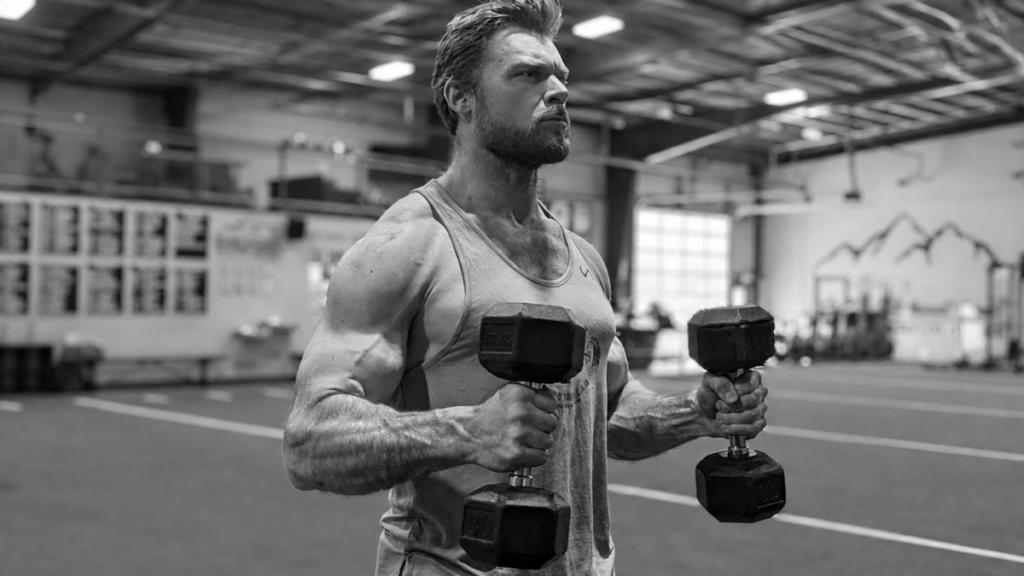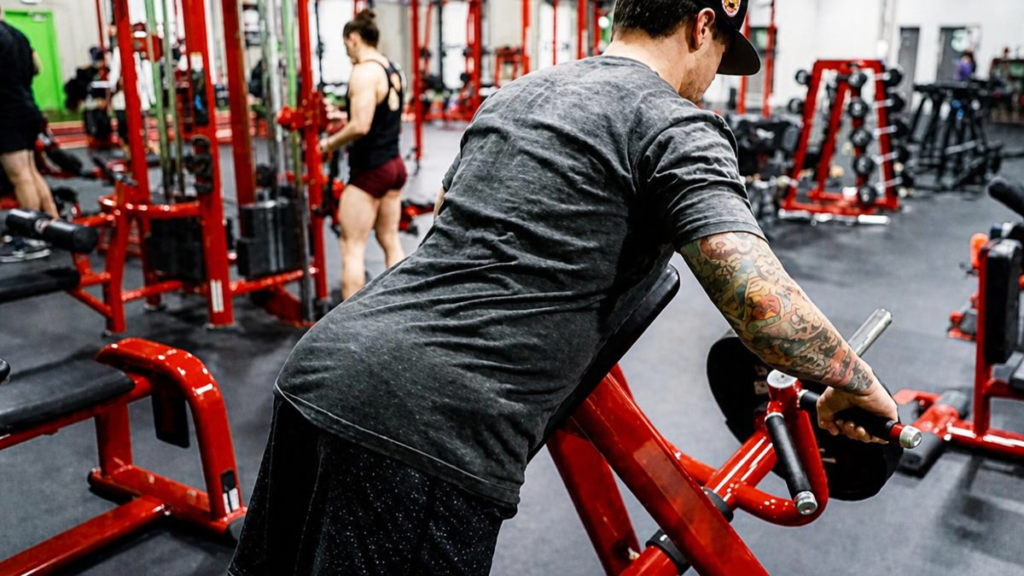


Building serious muscle after 30 is absolutely possible. In many ways, you may be better positioned than you were in your twenties because you are more disciplined, have a clearer goal, and are less likely to chase every new training trend. The challenge is that life is usually fuller now. Work, family, poor sleep, and stress can all make it harder to recover from a routine that is too demanding or poorly organized.
That is why a four day upper and lower body split is such a strong choice. It gives you enough training volume to stimulate meaningful muscle growth while giving each muscle group time to recover before you train it again. You can train hard, progress consistently, and still have three nonlifting days to manage the rest of your life.



This plan is built for men over 30 who want to add visible size, get stronger, and create a muscular physique without spending six days per week in the gym. It is not a shortcut, but it is an efficient structure that helps you apply the principles that matter most for hypertrophy: enough hard sets, progressive overload, good exercise selection, and recovery you can actually sustain.
Why a 4 Day Upper and Lower Split Works So Well
A four day split lets you train every major muscle group twice per week. This is useful because it spreads your weekly work across multiple sessions rather than forcing you to do everything for one body part in a single long workout.
Training a muscle twice weekly is not inherently magical. When total training volume is equal, frequency itself appears to have a smaller effect on muscle growth. However, dividing your work between two sessions can improve workout quality. You are less likely to take every set into a state of extreme fatigue, and you can use better loads, cleaner form, and greater focus on the exercises that matter most.
For example, trying to complete 14 hard chest sets in one session can leave the later sets weak and sloppy. Splitting that work between two upper body sessions often makes those sets more productive. You can push hard on the bench press early in the week, then use dumbbells, cables, or machines later in the week to train the chest through a slightly different challenge.
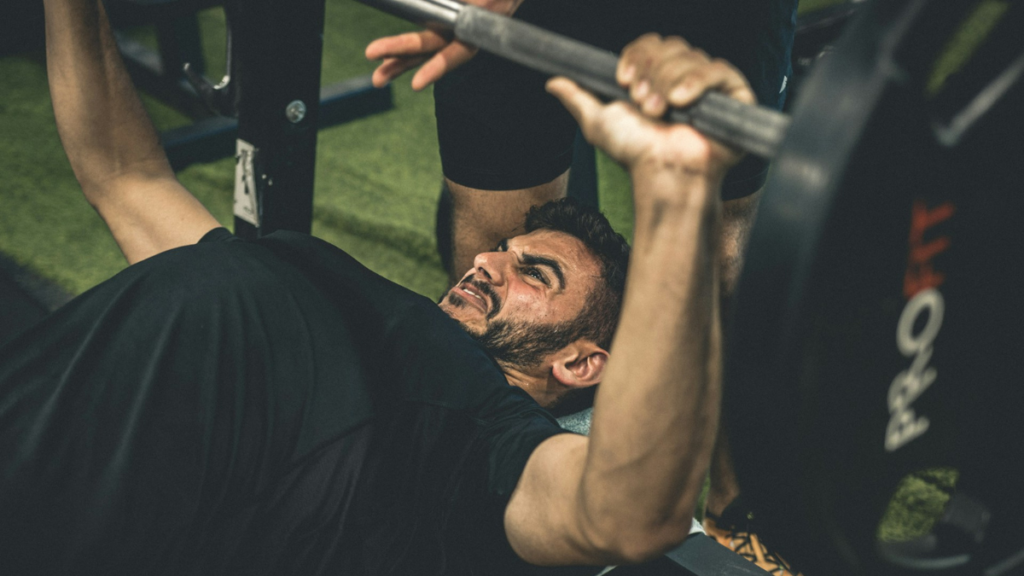
Research consistently shows that higher weekly resistance training volume is associated with greater muscle growth, up to a point. For most experienced recreational lifters, roughly 10 to 20 challenging sets per muscle group per week is a useful broad target. The correct number depends on your training age, exercise choices, recovery, sleep, nutrition, and how close you take your sets to failure.
The goal is not to do as much work as possible. The goal is to do enough high quality work that you can recover from it and improve it over time.
The Weekly Layout
This routine can fit neatly into a Monday, Tuesday, Thursday, Friday schedule. That arrangement gives you a rest day after two consecutive training days and a full weekend to recover, walk, play sport, or simply enjoy not being in the gym.
Monday: Upper Body A
This is your heavier upper body session. The focus is on compound pushing and pulling movements, with enough direct arm work to build your biceps and triceps.
Tuesday: Lower Body A
This session prioritizes squatting strength, quad development, hamstrings, and calves. It includes a moderate amount of abdominal training that does not interfere with recovery.
Thursday: Upper Body B
This is a second upper body session with slightly different angles and rep ranges. It gives extra attention to your back, shoulders, chest, and arms without simply repeating Monday.
Friday: Lower Body B
This session prioritizes hip hinging, glutes, hamstrings, and unilateral leg work. It balances the week by developing the muscles that a squat focused day does not fully emphasize.
The Complete 4 Day Muscle Building Routine
Use the listed rep ranges as a target. Start with a weight you can lift with controlled technique and finish most working sets with roughly one to three good repetitions still possible. This is often called repetitions in reserve.

You do not need to take every set to complete muscular failure to grow. Training close to failure can provide a strong hypertrophy stimulus, while leaving a small amount in reserve may help you maintain technique and manage fatigue across the week.
Upper Body A
- Barbell Bench Press: 4 sets of 5 to 8 repetitions
- Chest Supported Row: 4 sets of 6 to 10 repetitions
- Seated Dumbbell Shoulder Press: 3 sets of 8 to 12 repetitions
- Lat Pulldown or Assisted Pull Up: 3 sets of 8 to 12 repetitions
- Cable Chest Fly: 2 sets of 10 to 15 repetitions
- Dumbbell Lateral Raise: 3 sets of 12 to 20 repetitions
- Cable Triceps Pressdown: 3 sets of 10 to 15 repetitions
- Incline Dumbbell Curl: 3 sets of 10 to 15 repetitions
The bench press and row form the foundation of this session. They train large amounts of upper body muscle and make it easier to add measurable strength over time. The shoulder press adds direct work for the deltoids and triceps, while the pulldown gives the lats a vertical pulling pattern.
The smaller isolation exercises should not be treated as optional if your goal is a visibly muscular body. Lateral raises help build shoulder width, chest flyes add more work for the pecs in a stretched position, and direct arm training ensures that your biceps and triceps get enough quality volume.
Lower Body A
- Back Squat: 4 sets of 5 to 8 repetitions
- Romanian Deadlift: 3 sets of 6 to 10 repetitions
- Leg Press: 3 sets of 10 to 15 repetitions
- Seated Leg Curl: 3 sets of 10 to 15 repetitions
- Standing Calf Raise: 4 sets of 8 to 15 repetitions
- Cable Crunch: 3 sets of 10 to 15 repetitions
The back squat is a highly effective choice for training the quads, glutes, and adductors while also improving lower body strength. The Romanian deadlift then brings more direct work to the hamstrings and glutes, using a hip hinge rather than a squat pattern.
Do not rush the leg press. It lets you add hard quad focused work with less balance demand than a free weight movement. Use a controlled lowering phase, keep your lower back firmly against the pad, and work through as much pain free range of motion as your mobility allows.
Upper Body B
- Incline Dumbbell Bench Press: 4 sets of 8 to 12 repetitions
- Pull Up or Neutral Grip Lat Pulldown: 4 sets of 6 to 10 repetitions
- Machine Chest Press: 3 sets of 10 to 15 repetitions
- One Arm Cable Row: 3 sets of 10 to 15 repetitions per side
- Rear Delt Cable Fly: 3 sets of 12 to 20 repetitions
- Dumbbell Lateral Raise: 3 sets of 12 to 20 repetitions
- Overhead Cable Triceps Extension: 3 sets of 10 to 15 repetitions
- Cable Curl or Preacher Curl: 3 sets of 10 to 15 repetitions
This session uses moderate to higher rep work, which is easier on the joints for many lifters while still being highly effective for hypertrophy. Muscle can grow across a wide range of loads when sets are performed with sufficient effort. Heavier sets remain useful for gaining strength, but you do not need to turn every exercise into a low repetition test.
The incline dumbbell press brings more attention to the upper chest and shoulders. The pull up or pulldown balances that pressing with a strong vertical pulling movement. Machine presses and cable rows are particularly useful when you want to train hard without the same stabilization demands of a barbell lift.
Lower Body B
- Trap Bar Deadlift or Conventional Deadlift: 3 sets of 4 to 6 repetitions
- Bulgarian Split Squat: 3 sets of 8 to 12 repetitions per leg
- Hip Thrust: 3 sets of 8 to 12 repetitions
- Leg Extension: 3 sets of 12 to 15 repetitions
- Lying Leg Curl: 3 sets of 10 to 15 repetitions
- Seated Calf Raise: 4 sets of 10 to 15 repetitions
- Hanging Knee Raise: 3 sets of 10 to 15 repetitions
The trap bar deadlift is an excellent option for many men over 30 because it can train the legs, glutes, back, and grip while allowing a more upright torso position than a conventional deadlift. If you strongly prefer conventional deadlifts and can perform them with good form, they can also fit well here.
Bulgarian split squats are demanding, but they are worth learning. They train each leg independently, challenge the quads and glutes, and can reveal left to right strength differences that are easy to hide during bilateral lifts. Start conservatively, focus on stability, and add load gradually.
How to Progress and Keep Gaining
The program only works if your training improves over time. Progressive overload does not mean you need to add weight every single week. It means that, over months, you gradually ask your body to do more productive work.
A simple double progression method works very well. If an exercise calls for 8 to 12 repetitions, choose a weight you can perform for around eight good repetitions on every set. Over subsequent sessions, aim to add repetitions while keeping your technique consistent. Once you reach 12 repetitions on all prescribed sets, increase the weight slightly and begin again nearer the bottom of the range.
For compound exercises, a small increase may be 2.5 to 5 pounds. For cables and dumbbells, use the smallest available increment. Slow progression is still progression. Adding 25 pounds to your bench press over a year while maintaining good technique is a meaningful gain.
Keep a training log. Record the exercise, load, repetitions, and how hard each set felt. This gives you objective feedback and prevents the common mistake of assuming you are progressing when you are simply repeating the same workout.
Recovery Matters More After 30
Being over 30 does not mean you are fragile or unable to train hard. It does mean that recovery becomes a major part of successful programming. The heavier your work commitments, family responsibilities, and stress levels, the more important it is to avoid a routine that leaves you exhausted all week.
Sleep is especially important. Short sleep can impair recovery, reduce training quality, and make it harder to maintain the behaviors that support muscle gain. Aim for a consistent sleep schedule and give yourself enough time in bed to regularly achieve seven or more hours of sleep.
Nutrition also matters. Resistance training provides the signal to build muscle, but your body needs sufficient energy and protein to support that process. A large meta analysis found that protein supplementation can enhance gains in lean mass and strength during resistance training, particularly when total daily protein intake is adequate.
A practical target for active men trying to gain muscle is around 1.6 grams of protein per kilogram of body weight per day. Spread that protein across three to five meals, include high quality protein sources, and eat enough total calories to support training. A small calorie surplus is generally more useful for muscle gain than trying to build maximum size while aggressively dieting.
When to Reduce Volume
More training is not always better. If performance is dropping for several weeks, your joints are constantly sore, your sleep is worsening, or you feel no enthusiasm to train, reduce your volume before assuming you need a completely new program.
A useful approach is to take a lighter week every six to 10 weeks, depending on your fatigue. Keep the exercises but reduce your working sets by around one third to one half and stop farther from failure. This gives your body and mind a chance to recover without losing your routine.
You should also adjust volume based on the muscles that respond best. If your chest grows easily but your arms lag behind, maintain chest volume and add a few extra direct sets for biceps and triceps. If your legs are already strong from sport or physical work, you may need fewer sets than someone whose lower body has always been a weakness.
The Bottom Line
The best four day gym split is one you can perform consistently, recover from, and progress for months. This upper and lower body structure provides enough weekly muscle building work without demanding that the gym takes over your life.
Train each major muscle group twice weekly, perform hard sets with good technique, keep most sets close to failure without turning every exercise into a grind, and aim to improve your performance gradually. Pair that with adequate protein, calories, sleep, and patience, and you will give yourself an excellent chance of building the muscular physique you want after 30.
References
- Grgic, J., Schoenfeld, B.J., Davies, T.B., Lazinica, B., Krieger, J.W. and Pedisic, Z. (2018) ‘Effect of resistance training frequency on gains in muscular strength: A systematic review and meta analysis’, Sports Medicine, 48(5), pp. 1207 to 1220.
- Krieger, J.W. (2010) ‘Single versus multiple sets of resistance exercise for muscle hypertrophy: A meta analysis’, Journal of Strength and Conditioning Research, 24(4), pp. 1150 to 1159.
- Morton, R.W., Murphy, K.T., McKellar, S.R., Schoenfeld, B.J., Henselmans, M., Helms, E., Aragon, A.A., Devries, M.C., Banfield, L., Krieger, J.W. and Phillips, S.M. (2018) ‘A systematic review, meta analysis and meta regression of the effect of protein supplementation on resistance training induced gains in muscle mass and strength in healthy adults’, British Journal of Sports Medicine, 52(6), pp. 376 to 384.
- Refalo, M.C., Helms, E.R., Trexler, E.T., Hamilton, D.L. and Fyfe, J.J. (2023) ‘Influence of resistance training proximity to failure on skeletal muscle hypertrophy: A systematic review with meta analysis’, Sports Medicine, 53(3), pp. 649 to 665.
- Schoenfeld, B.J., Grgic, J., Ogborn, D. and Krieger, J.W. (2017) ‘Strength and hypertrophy adaptations between low versus high load resistance training: A systematic review and meta analysis’, Journal of Strength and Conditioning Research, 31(12), pp. 3508 to 3523.
- Schoenfeld, B.J., Ogborn, D. and Krieger, J.W. (2016) ‘Effects of resistance training frequency on measures of muscle hypertrophy: A systematic review and meta analysis’, Sports Medicine, 46(11), pp. 1689 to 1697.
- Schoenfeld, B.J., Ogborn, D. and Krieger, J.W. (2017) ‘Dose response relationship between weekly resistance training volume and increases in muscle mass: A systematic review and meta analysis’, Journal of Sports Sciences, 35(11), pp. 1073 to 1082.
Key Takeaways
| Focus | What to do | Why it matters |
|---|---|---|
| Weekly schedule | Train upper body twice and lower body twice each week | It distributes productive training volume across manageable sessions |
| Weekly volume | Start with roughly 10 to 16 hard sets per muscle group weekly | This is a productive range for many lifters seeking hypertrophy |
| Training effort | Finish most sets with one to three repetitions in reserve | You can train hard while managing fatigue and preserving technique |
| Progression | Add repetitions first, then add small amounts of weight | Gradual overload is the driver of long term muscle and strength gains |
| Recovery | Prioritize sleep, protein, and sustainable training volume | Muscle growth happens between workouts, not only during them |