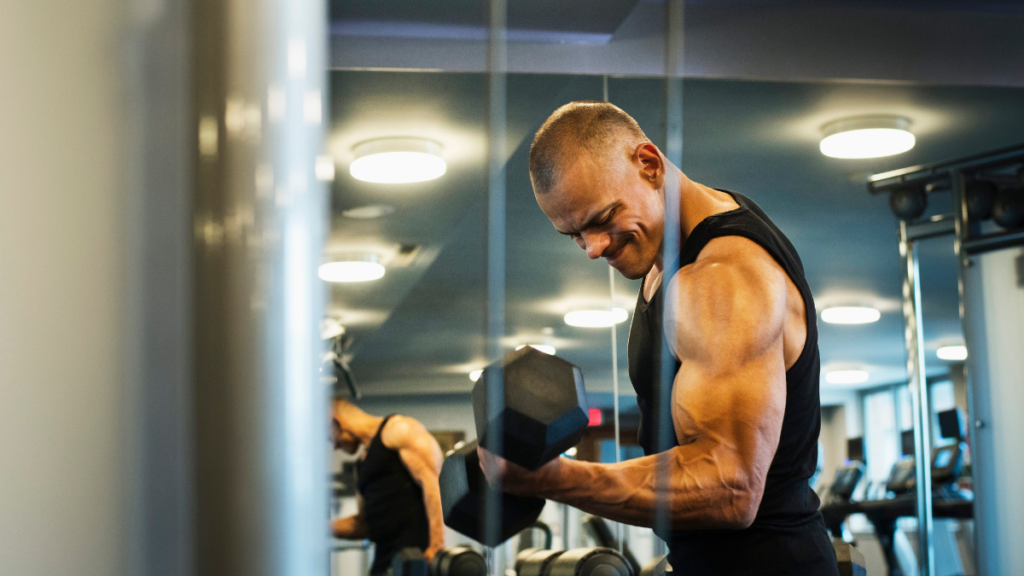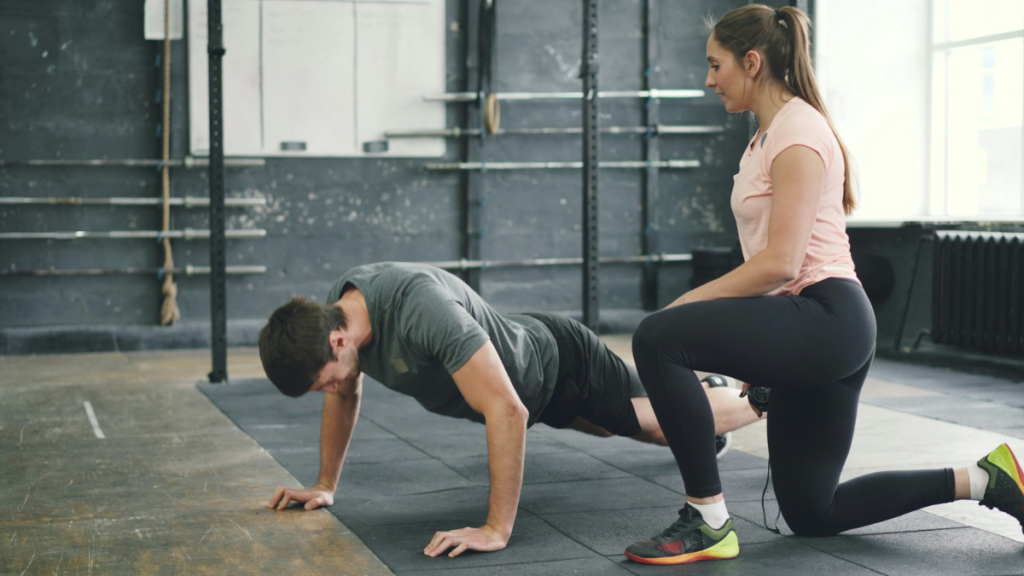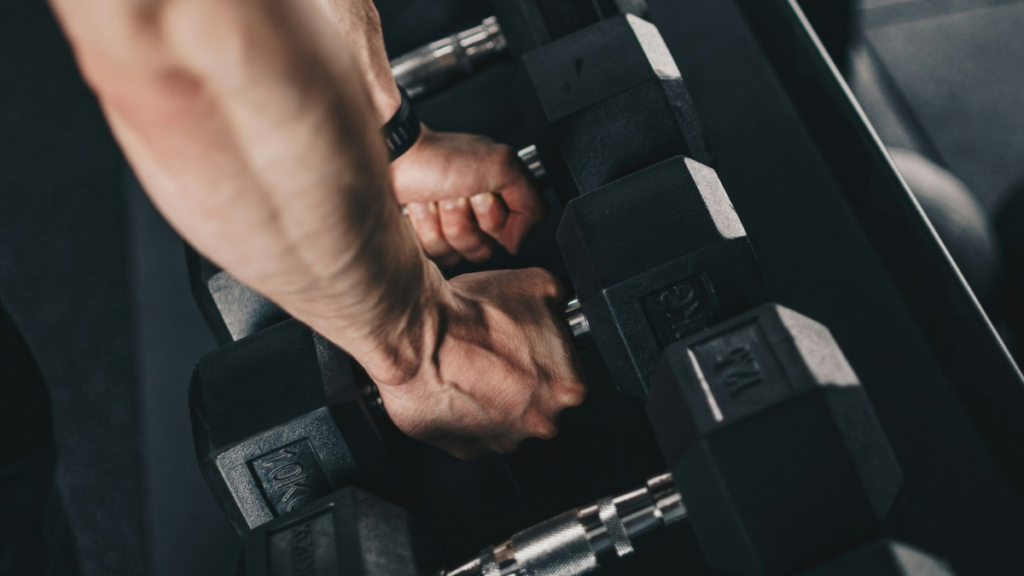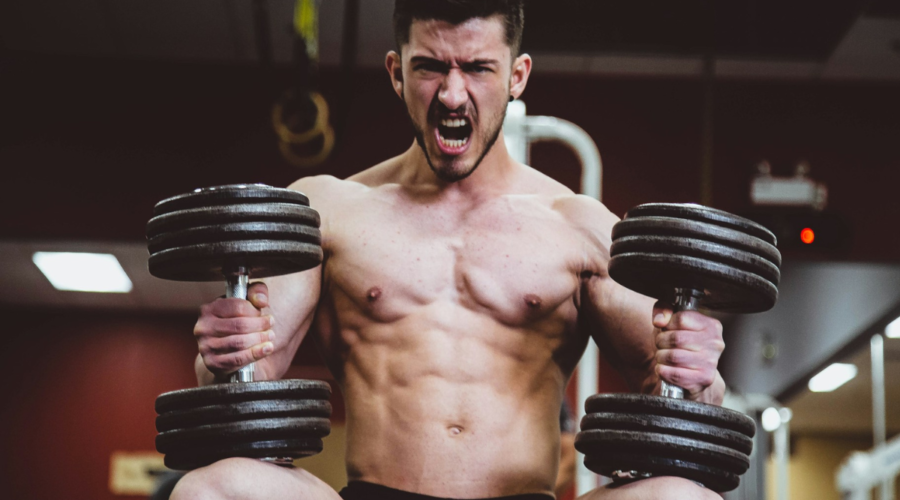


If you are new to training and want to build a bigger chest, the dumbbell bench press and push-ups are two of the best places to start. Both train the pectoralis major, triceps, and front of the shoulders. Both can build strength. Both can add muscle when you perform them consistently and make them progressively harder over time.

The simple answer is that neither exercise automatically builds more chest muscle. Research suggests that push-ups can produce chest growth comparable to a low load bench press when the resistance is similar and the sets are challenging. However, dumbbell bench presses usually give beginners a clearer and more practical path for continually adding resistance. That makes them the stronger long term choice for chest hypertrophy in most gym based programs.


Push-ups are still highly effective, particularly at the beginning. They are accessible, easy to learn, and surprisingly demanding when performed with a controlled range of motion. The best choice depends on your current strength, training environment, and ability to progress each movement.
What Your Chest Needs to Grow
Muscle growth happens when training provides a sufficiently challenging and repeated stimulus, followed by recovery and adequate nutrition. The exercise you choose matters, but the effort, training volume, range of motion, and progression matter just as much.
Your chest does not know whether resistance comes from dumbbells, a barbell, a machine, or your body weight. It responds to tension created while the muscle works through a meaningful range of motion. A set of push-ups that brings you close to the point where you cannot complete another controlled repetition can be highly productive. A set of dumbbell presses performed with a weight that is far too light will not be as effective simply because dumbbells are involved.

Research comparing different resistance training loads shows that both lighter and heavier resistance can stimulate similar hypertrophy when sets are performed with a high level of effort. Heavier loading tends to produce greater improvements in maximal strength, but muscle growth can occur across a broad range of repetitions. This is useful for beginners because push-ups often involve more repetitions, while dumbbell presses can be loaded more heavily.
The key is to make your working sets difficult enough. You do not need to reach absolute failure on every set, but the final repetitions should feel demanding while your technique remains controlled. Stopping each set with roughly one to three good repetitions left is a practical target for many beginners.
How Push-Ups Build Chest Muscle
The push-up is a horizontal pressing exercise. As you lower your chest toward the floor and press your body back up, your pectoralis major helps move the upper arm toward the midline of your body. Your triceps straighten the elbows, while your shoulders and core work to keep your body stable.
Push-Ups Can Create a Strong Chest Stimulus
Push-ups are often dismissed as a beginner exercise, but that description misses their value. A standard push-up requires you to move a substantial proportion of your body mass. For many beginners, this is enough resistance to make even a modest number of repetitions difficult.
3 Best Beginner Exercises for Great Looking Arms
An eight week study comparing push-up training with low load bench press training found similar increases in chest and triceps muscle thickness when the load was comparable. The push-up group also improved their pressing strength. This does not mean every style of push-up is identical to every style of bench press. It does show that body weight pressing can build muscle when the exercise is hard enough and training is structured well.
Studies measuring muscle activation also show that push-ups can produce high pectoralis major activity, particularly when their load is comparable to the bench press. Muscle activation measurements do not directly prove muscle growth, but they support the practical observation that a properly performed push-up is a legitimate chest exercise rather than just a conditioning drill.
Push-Ups Are Easy to Start and Easy to Practice
One major advantage of push-ups is accessibility. You do not need a gym membership, bench, dumbbells, or spotter. You can practice them almost anywhere, which makes consistent training easier.
They also teach useful full body control. A push-up requires you to maintain a straight and stable position from your shoulders through your hips and legs. This may help a new lifter learn how to create whole body tension during pressing exercises.
For a complete beginner, elevated push-ups using a sturdy bench, bar, or countertop can be an excellent entry point. Raising your hands reduces the amount of body weight you must press. As you become stronger, you can gradually lower the height of the surface until you are ready for floor push-ups.
The Limitation of Push-Ups Is Progression
The main drawback is not that push-ups are ineffective. It is that they can become harder to load precisely once you are able to perform many repetitions.
If you can already do 25 or 30 strict push-ups, a normal set may become more about muscular endurance than delivering a highly efficient hypertrophy stimulus. You can continue progressing by adding a weighted vest, resistance band, feet elevation, pauses, slower lowering phases, or more difficult variations. However, these methods can be less convenient and less measurable than simply choosing a heavier pair of dumbbells.
A beginner who cannot yet perform standard push-ups has the opposite problem. The full movement can be too difficult, leading to shortened range of motion, sagging hips, or shoulders moving forward excessively. Regressing the movement with an elevated hand position is usually more useful than forcing poor quality floor repetitions.
How the Dumbbell Bench Press Builds Chest Muscle
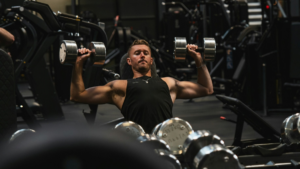
The dumbbell bench press uses the same broad pressing pattern as a push-up, but it offers more direct control over the resistance. Lying on a bench reduces the core stability requirement, allowing you to focus more attention on pressing the dumbbells through a controlled path.
Your chest remains a major contributor, while the triceps and front delts assist. The exercise also allows each arm to work independently, which can make it easier to identify major differences in strength or control from side to side.
Dumbbells Make Progressive Overload Simple
The biggest advantage of the dumbbell bench press is the ease of progression. If you can perform three sets of ten repetitions with good form, you can use slightly heavier dumbbells at the next session. This is a clear, repeatable way to increase the challenge placed on the chest.
Research on resistance training consistently shows that greater weekly training volume can support greater hypertrophy, although more is not always better and recovery still matters. Dumbbells make it easy to use a range of repetitions and accumulate quality pressing volume without needing complex body weight variations.
For example, you could begin with a load that allows eight to twelve controlled repetitions. Once you can reach the upper end of that range for all planned sets, increase the weight by the smallest practical amount. This is often easier to track than deciding exactly how much harder a push-up variation has become.
The dumbbell bench press may also remain useful for much longer in your training life. As your chest and triceps become stronger, you can keep increasing the load gradually. With basic push-ups, the resistance stays roughly the same unless you intentionally modify the exercise.
Dumbbells Allow a Natural Arm Path
Unlike a barbell, dumbbells are not fixed to one straight object. You can move each hand in a path that feels comfortable for your shoulders, while keeping the dumbbells balanced over your wrists and elbows. For many people, this feels more natural than a barbell press.
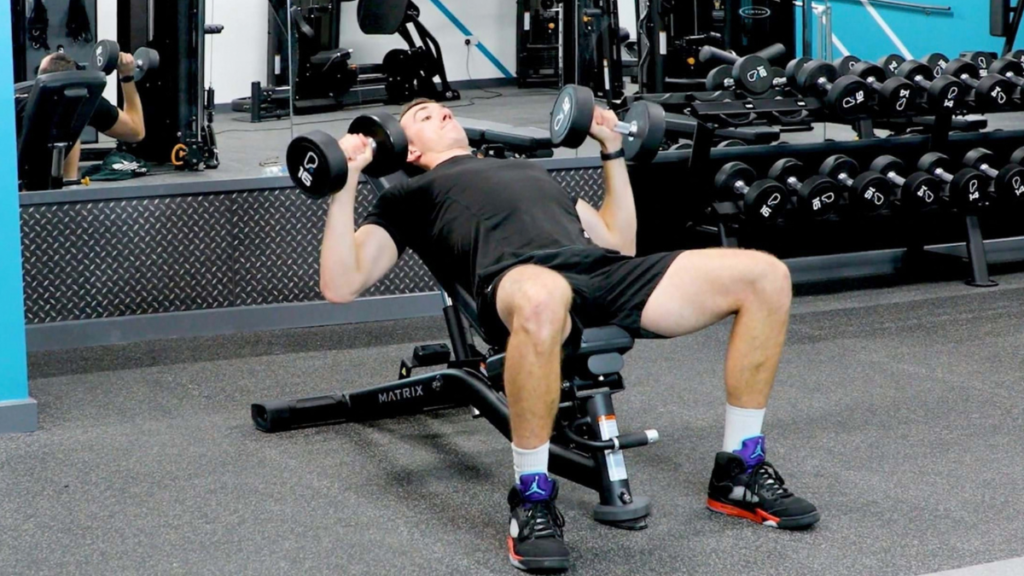
A good starting position is to lie with your feet planted firmly on the floor and your upper back in contact with the bench. Hold the dumbbells over the middle of your chest with your palms facing generally forward. Lower them under control until your upper arms are slightly below parallel to the floor or until you reach a comfortable depth. Press upward while keeping your shoulder blades stable against the bench.

The exact depth should be individualized. A full and controlled range of motion is generally a sensible target for hypertrophy, provided it does not cause shoulder pain. Do not chase extra depth by allowing the shoulders to roll aggressively forward at the bottom of each repetition.
Dumbbell Presses Require Equipment and Good Setup
The dumbbell bench press does have practical limitations. You need dumbbells and a suitable bench, and getting heavier dumbbells into position can be awkward for a novice. A very heavy dumbbell press can also be less convenient to set up than a push-up.
Start conservatively. Use a load you can control through the entire repetition without twisting, bouncing, or changing the path of the dumbbells. It is better to begin lighter, master the movement, and progress steadily than to choose a weight that forces poor form.
If you train at home with only one light pair of dumbbells, the exercise may eventually become too easy. In that situation, push-up variations could be the better way to keep training your chest hard until you have access to heavier resistance.
Which Exercise Builds More Chest Muscle for Beginners?
For a true beginner, push-ups and dumbbell bench presses can both build chest muscle very effectively. The research does not support the claim that push-ups are useless for hypertrophy or that a bench press must always produce better chest development.
If the resistance is matched and the sets are challenging, push-ups can create similar improvements in chest muscle thickness to low load bench pressing. For someone who has no equipment or is learning to train at home, that is excellent news. Elevated push-ups can build initial strength, standard push-ups can provide a meaningful challenge, and harder variations can extend progress.
However, dumbbell bench presses generally win as the more efficient long term chest building option for beginners who have access to equipment. The reason is progression. You can increase resistance in small, predictable steps, stay in an effective repetition range, and continue training the chest hard as your strength improves.
That does not mean you need to choose one exercise forever. The most productive answer for many beginners is to use both. Dumbbell presses can serve as the main progressive strength movement, while push-ups can provide additional chest volume, practice, or a convenient home workout option.
How to Program Both Exercises
You do not need an advanced chest specialization routine to make progress. Two chest focused sessions per week is a useful starting point for most beginners, especially if you are also training your back, legs, and other muscle groups.
On one day, perform the dumbbell bench press for three sets of eight to twelve repetitions. Rest long enough between sets that you can keep your form stable, usually around two minutes. Choose a load that leaves you with a small number of repetitions in reserve.
On another day, perform push-ups for three sets. Select a variation that allows roughly six to 20 controlled repetitions. If standard floor push-ups are too hard, elevate your hands. If they become too easy, add a small amount of external load, elevate your feet, or use a resistance band.

You can also finish dumbbell bench press sessions with one or two sets of push-ups. This can be a straightforward way to add chest training volume without needing more equipment. Keep the repetitions controlled and stop when form begins to deteriorate.
Progress does not need to happen every workout. Some weeks you may add one repetition. Other weeks you may improve your depth, control, or confidence. Over months, those small improvements add up.
Technique Mistakes That Reduce Chest Growth
The most common push-up mistake is turning the movement into a partial repetition. Lower your chest toward the floor under control, maintain a solid body line, and press until your elbows are straight without losing shoulder position. Allowing the hips to sag or rise high in the air changes the exercise and usually makes it easier in the wrong way.
With dumbbell bench presses, beginners often rush the lowering phase or let the dumbbells drift too far toward the shoulders. Lowering under control gives you a more consistent movement and makes it easier to train through a useful range of motion. Keep your feet planted, upper back stable, and wrists stacked over the forearms.
Neither exercise should cause sharp pain. Muscular effort and fatigue are normal. Pinching, catching, or persistent joint pain is not. Reduce the range of motion, use a lighter variation, review your technique, and seek qualified medical advice if symptoms continue.
The Verdict
Push-ups can absolutely build chest muscle for beginners. They are evidence based, accessible, and effective when you choose an appropriate variation and make your sets challenging. They are especially useful if you train at home, cannot yet use a bench, or want an exercise you can practice frequently.
The dumbbell bench press is likely the better primary chest builder for most beginners with gym access because it makes progressive overload much easier. You can increase the load gradually, control the repetitions, and keep the exercise challenging as you get stronger.
Use the dumbbell bench press as your main progressive movement, and do not underestimate push-ups as a valuable companion exercise. Consistent training, hard but controlled sets, sufficient recovery, and gradual progression will matter far more than declaring one movement universally superior.
References
- Baz-Valle, E., Balsalobre-Fernández, C., Alix-Fages, C. and Santos-Concejero, J. (2022) ‘A systematic review of the effects of different resistance training volumes on muscle hypertrophy’, Journal of Human Kinetics, 81, pp. 199–210.
- Calatayud, J., Borreani, S., Colado, J.C., Martin, F., Flandez, J., Page, P. and Andersen, L.L. (2015) ‘Bench press and push-up at comparable levels of muscle activity results in similar strength gains’, Journal of Strength and Conditioning Research, 29(1), pp. 246–253.
- Grgic, J., Schoenfeld, B.J., Orazem, J. and Sabol, F. (2022) ‘Effects of resistance training performed to repetition failure or non-failure on muscular strength and hypertrophy: A systematic review and meta-analysis’, Journal of Sport and Health Science, 11(2), pp. 202–211.
- Kikuchi, N. and Nakazato, K. (2017) ‘Low-load bench press and push-up induce similar muscle hypertrophy and strength gain’, Journal of Exercise Science & Fitness, 15(1), pp. 37–42.
- López-Vivancos, A., González-Gálvez, N., Orquín-Castrillón, F.J., Vale, R.G.S. and Pardo, P.J.M. (2023) ‘Electromyographic activity of the pectoralis major muscle during traditional bench press and other variants of pectoral exercises: A systematic review and meta-analysis’, Applied Sciences, 13(8), 5203.
- Schoenfeld, B.J., Grgic, J., Ogborn, D. and Krieger, J.W. (2017) ‘Strength and hypertrophy adaptations between low versus high-load resistance training: A systematic review and meta-analysis’, Journal of Strength and Conditioning Research, 31(12), pp. 3508–3523.
- Schoenfeld, B.J., Grgic, J., Van Every, D.W. and Plotkin, D.L. (2021) ‘Loading recommendations for muscle strength, hypertrophy, and local endurance: A re-examination of the repetition continuum’, Sports, 9(2), 32.
- Wilk, M., Gepfert, M., Krzysztofik, M., Golas, A., Mostowik, A., Maszczyk, A. and Zajac, A. (2021) ‘The influence of grip width on training volume during the bench press with different movement tempos’, Journal of Human Kinetics, 77, pp. 133–143.
Key Takeaways
| Question | Practical answer |
|---|---|
| Can push-ups build chest muscle? | Yes. Challenging push-ups can stimulate chest growth and have produced similar results to low load bench pressing in research when resistance is comparable. |
| Which is better for most beginners with gym access? | The dumbbell bench press is usually the stronger long term primary exercise because adding resistance is simple and measurable. |
| What if standard push-ups are too hard? | Begin with elevated push-ups and gradually use lower surfaces as your strength improves. |
| What if normal push-ups are too easy? | Add load with a vest or band, elevate your feet, slow the lowering phase, or use dumbbell presses as the main progressive movement. |
| How close should sets be to failure? | Finish most working sets with roughly one to three controlled repetitions still possible. |
| Is it useful to do both exercises? | Yes. Dumbbell presses can be the main progression lift, while push-ups add useful chest volume and convenient practice. |