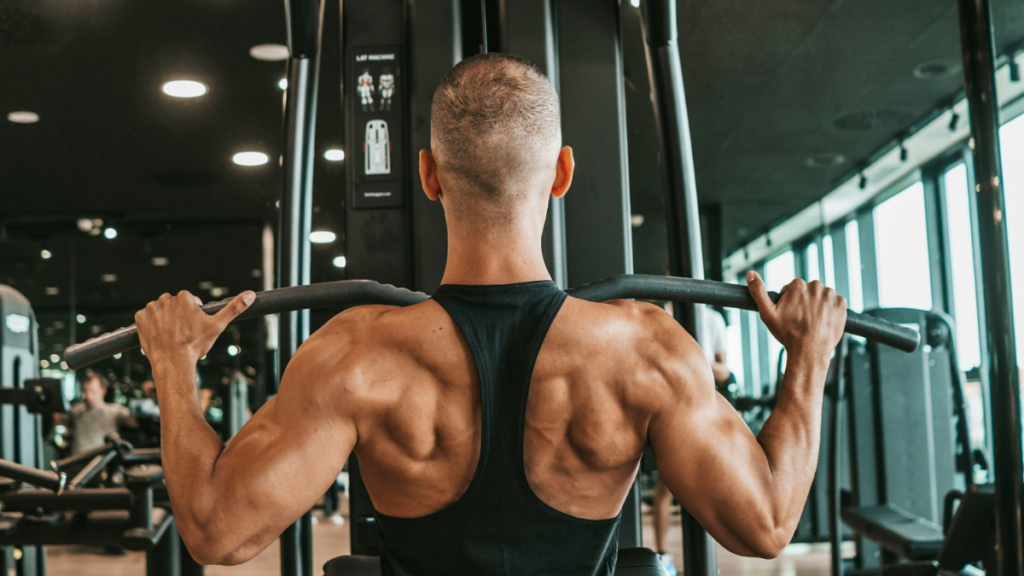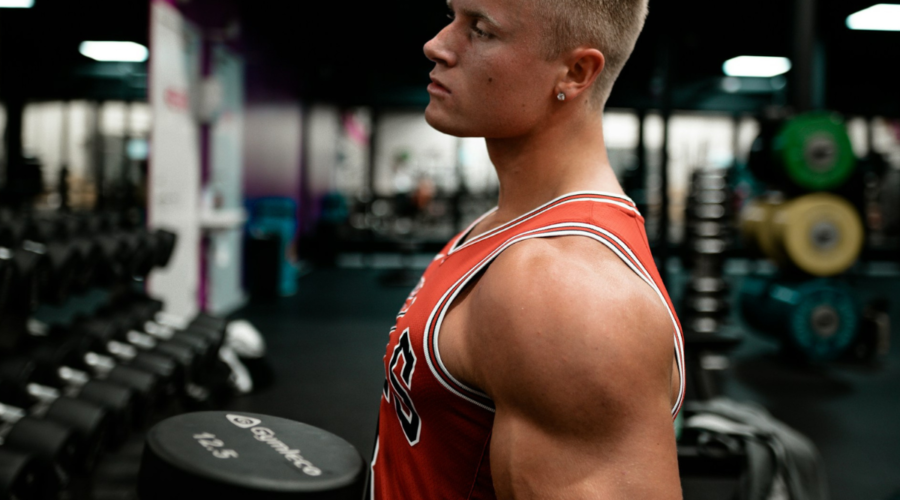


Round and defined shoulders are built by developing all three portions of the deltoid muscle: the anterior deltoid at the front, the lateral deltoid on the outside, and the posterior deltoid at the rear. The lateral deltoid creates most of the shoulder width that makes the upper body look broader, while the front and rear portions help create a complete, three dimensional shape.
Many lifters give most of their shoulder training attention to pressing. Presses are useful, but they already involve the triceps, upper chest, and front deltoids. For a more balanced and visibly rounder look, you also need direct work for the lateral and rear delts. That is especially important if your training already includes bench presses, push ups, dips, and other chest focused exercises.



Muscle definition also depends on overall body fat levels, nutrition, sleep, and training consistency. No shoulder exercise can selectively remove fat from the area. However, adding muscle to the deltoids can make the shoulders look more capped and prominent at a wide range of body compositions.
These three exercises give you a simple and effective way to train the shoulder muscles through different movement patterns. They can be used together in the same workout or distributed across the week.
What Creates Rounder Shoulders?
The deltoid is a large muscle with three main sections. The anterior deltoid contributes strongly to lifting the arm in front of the body and is heavily involved in pressing movements. The lateral deltoid raises the arm out to the side and contributes most directly to the appearance of shoulder width. The posterior deltoid helps move the upper arm backward and out to the side, while also assisting with shoulder stability during pulling movements.
A good shoulder routine should not rely entirely on one movement pattern. Pressing movements can effectively train the front deltoid, but lateral raises offer a more direct challenge to the side delts. Rear delt isolation work can then help provide a more balanced stimulus for the back of the shoulder.
Building muscle requires sufficient resistance, repeated hard efforts, progressive overload, and enough weekly training volume. Research consistently shows that resistance training increases muscle size, while performing more challenging weekly sets usually produces greater hypertrophy up to the point that recovery becomes limiting. Training close to muscular failure can also be effective when the load, technique, and total workload are appropriately managed.
The goal is not to make every set painful or sloppy. It is to perform controlled repetitions with enough effort that the target muscles have a reason to adapt.
1. Cable Lateral Raise
The cable lateral raise is one of the best exercises for developing the lateral deltoid. It places the arm in the movement pattern most associated with the side delt: lifting the arm away from the body. Unlike a dumbbell, a cable can keep resistance on the muscle through a larger part of the range of motion.
This makes the exercise particularly useful for lifters who struggle to feel their side delts working during dumbbell lateral raises. The cable pulls from the side rather than only downward, which can create meaningful tension from the bottom portion of the movement onward.
How to Perform the Cable Lateral Raise
Set a cable pulley around ankle height and attach a single handle. Stand side on to the machine, then hold the handle with the hand furthest away from the pulley. You can either stand directly beside the cable or take a small step away from it to create a little more room.
Start with your arm close to your side and a slight bend in the elbow. Raise the arm out and slightly forward until it reaches around shoulder height. Lower it under control, allowing the side delt to lengthen without letting the stack slam down.
Your torso should remain stable throughout the set. A small natural lean can be comfortable, but avoid turning the repetition into a full body swing. If you need to use momentum to get the weight moving, the load is probably too heavy for the target muscle.
Why It Works
The lateral raise directly trains shoulder abduction, which is a major function of the lateral deltoid. Research using muscle activity measurements has shown that shoulder exercises can emphasize different areas of the deltoid depending on arm position and movement pattern. This supports the practical value of including an exercise specifically designed around raising the arm to the side.
3 Squat Milestones Every Man 30+ Should Aim For
Cable lateral raises are also easy to progress. You can add a small amount of weight, perform more repetitions with the same load, improve your control, or use a slightly longer range of motion over time. These small improvements are more realistic and sustainable than trying to make large jumps in weight.
For most people, moderate to high repetitions work very well here. Aim for 10 to 20 controlled repetitions and stop when you feel you could only complete a few more repetitions with good form. The side delts do not need extremely heavy loading to grow, provided the sets are challenging and performed consistently.
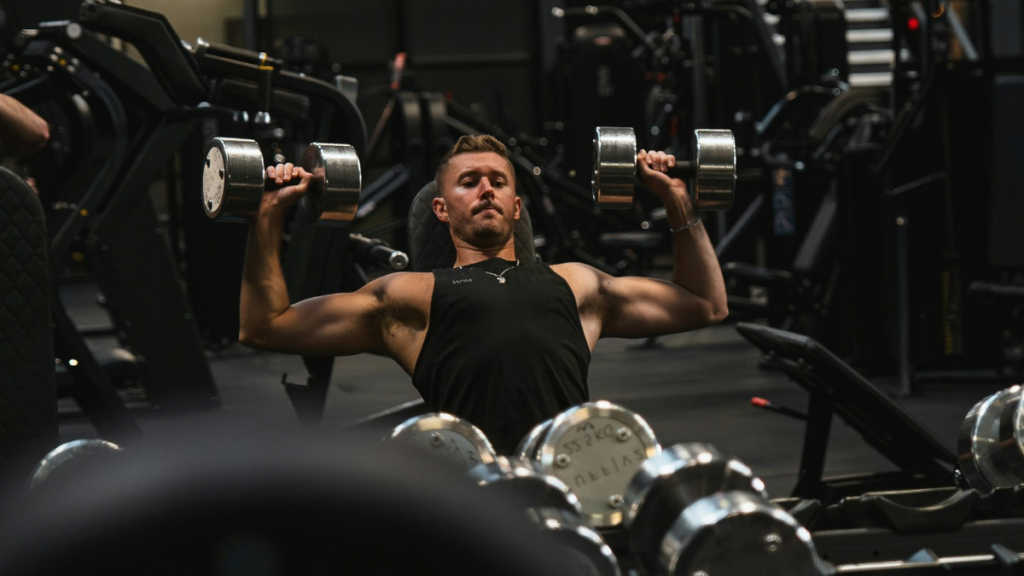
2. Seated Dumbbell Shoulder Press
The seated dumbbell shoulder press is an excellent compound exercise for building fuller shoulders, especially through the front delts. It also trains the triceps and upper chest, making it a highly efficient choice for anyone who wants to build pressing strength alongside shoulder size.
Using dumbbells allows each arm to move independently. This can make the exercise more comfortable for some lifters than a barbell press, because the hands and elbows can follow a natural path. It also prevents the stronger side from doing all the work.
How to Perform the Seated Dumbbell Shoulder Press
Set an adjustable bench to a near upright angle and sit with your feet firmly on the floor. Hold a dumbbell in each hand around shoulder level, with the elbows slightly in front of the body rather than forced directly out to the sides.
Press the dumbbells upward until your arms are almost straight overhead. You do not need to forcefully lock out the elbows if doing so causes discomfort. Lower the weights steadily until they return to a position around shoulder height.
Keep your ribs controlled and avoid leaning excessively backward. A small degree of natural spinal extension is normal, but turning the exercise into a steep incline press shifts more emphasis toward the chest and can make it harder to train the shoulders effectively.
Why It Works
Pressing movements place substantial demand on the anterior deltoid because the muscle helps flex and elevate the arm. Studies comparing upper body resistance exercises have found meaningful anterior deltoid involvement during pressing movements, which is why presses remain a valuable part of shoulder development programs.
The seated position reduces the opportunity to generate momentum with the legs. That makes it easier to keep the load on the pressing muscles and assess your progress from session to session. If you enjoy standing presses, they are also a strong option, but the seated version can be simpler to learn and easier to control when the goal is hypertrophy.
Use a load that allows approximately 6 to 12 quality repetitions. Compound movements can be trained with heavier weights than lateral raises, but technique should still determine the load. When your lower back begins arching dramatically or your elbows move into an uncomfortable position, end the set or reduce the weight.
If you already do a high amount of bench pressing, consider using fewer shoulder press sets. Your front delts may already receive significant training volume from chest work. In that situation, the lateral raise and rear delt exercise become even more important for creating a balanced shoulder shape.
3. Reverse Pec Deck
The reverse pec deck is a highly effective choice for training the posterior deltoids. Rear delts are often undertrained because they are less visible in the mirror and do not receive as much direct work from pressing exercises. However, developing them can make the shoulders look rounder from the side and back while also improving the visual balance of the upper body.
The machine setup makes this exercise particularly accessible. It provides stability, limits unnecessary body movement, and allows you to focus on moving the upper arms rather than swinging the torso.
How to Perform the Reverse Pec Deck
Sit facing into the machine with your chest supported against the pad. Adjust the seat so the handles are close to shoulder height. Hold the handles with a comfortable grip and begin with your arms in front of you.
Move your arms outward and backward in a wide arc until your upper arms are roughly in line with your torso. Focus on driving the elbows back and out rather than squeezing the handles as hard as possible. Return slowly to the starting position and repeat.
Keep your shoulders away from your ears. If your upper traps dominate the movement, lower the weight and think about keeping your neck relaxed. Your rear delts should do most of the work, while the muscles of the upper back provide support.
Why It Works
The posterior deltoid contributes to horizontal abduction, which is the action of moving the upper arm away from the front of the body and toward the rear. The reverse pec deck trains this movement directly with a stable resistance path.
Direct rear delt work can complement rows, pull ups, and pulldowns. These pulling exercises are valuable for back development, but their primary target is not always the posterior deltoid. Adding a dedicated movement helps ensure that the rear shoulder receives enough direct training volume.

As with lateral raises, the reverse pec deck is usually best performed with controlled moderate to high repetitions. Sets of 10 to 20 repetitions allow you to focus on position and avoid turning the exercise into a heavy upper trap movement. Pause briefly when your arms reach the fully open position, then lower the handles slowly.
How to Program These Exercises
You do not need an overly complicated shoulder plan. Start by training each exercise for two to four challenging sets per week. Beginners can begin at the lower end of that range, while more experienced lifters may benefit from more volume if they can recover well.
A practical approach is to perform the dumbbell shoulder press earlier in a workout, when you are fresh enough to use good technique with a challenging load. Follow it with cable lateral raises, then finish with reverse pec deck work. This order allows you to prioritize the compound movement while still giving direct attention to the side and rear delts.
Train shoulders two or three times each week if your schedule allows. Spreading the work across the week can make it easier to maintain high quality repetitions and recover between sessions. For example, you could perform shoulder presses and lateral raises on one upper body day, then use lateral raises and reverse pec deck work on another.
Progression should be gradual. Add repetitions before adding weight whenever possible. When you can complete the top of your chosen repetition range with clean technique for every set, increase the resistance slightly and repeat the process.
Common Mistakes That Limit Shoulder Growth
The most common mistake is using too much weight on isolation exercises. Heavy lateral raises often become a swing involving the legs, lower back, and upper traps. Heavy reverse pec deck repetitions can turn into a shrugging movement that reduces the contribution of the rear delts.
Another mistake is only training the front delts. Bench presses, push ups, incline presses, dips, and overhead presses can already provide plenty of front delt work. If your shoulders look flat rather than round, the answer is often more direct work for the lateral and posterior delts, not simply adding more pressing.
Finally, avoid changing exercises every workout before you have given yourself enough time to improve. Use a few reliable movements, track your sets and repetitions, and make steady progress over several weeks. Consistency is more important than finding a supposedly perfect exercise.
Key Takeaways
| Focus | What to do |
|---|---|
| Build shoulder width | Use cable lateral raises to directly challenge the lateral delts with controlled repetitions. |
| Add shoulder fullness | Perform seated dumbbell shoulder presses to train the anterior delts and build pressing strength. |
| Create balanced development | Include reverse pec deck work to directly train the posterior delts. |
| Choose the right load | Use weights that allow controlled form and finish most sets with only a few good repetitions left. |
| Make definition visible | Combine shoulder training with suitable nutrition, regular activity, and sufficient recovery to manage body fat levels. |
| Progress consistently | Add repetitions, load, control, or weekly sets gradually over time. |
References
- American College of Sports Medicine (2009) ‘American College of Sports Medicine position stand: Progression models in resistance training for healthy adults’, Medicine and Science in Sports and Exercise, 41(3), pp. 687 to 708.
- Botton, C.E., Ughini, C.C., Marchetti, P.H., Pancotte, J., Arent, S.M. and Cargas, D. (2013) ‘Electromyographical analysis of the deltoid muscle between different strength training exercises’, Journal of Strength and Conditioning Research, 27(5), pp. 1274 to 1278.
- Grgic, J., Schoenfeld, B.J., Skrepnik, M. and Davies, T.B. (2022) ‘Effects of resistance training performed to repetition failure or non failure on muscular strength and hypertrophy: A systematic review and meta analysis’, Journal of Sport and Health Science, 11(2), pp. 202 to 211.
- Schoenfeld, B.J., Ogborn, D. and Krieger, J.W. (2017) ‘Dose response relationship between weekly resistance training volume and increases in muscle mass: A systematic review and meta analysis’, Journal of Sports Sciences, 35(11), pp. 1073 to 1082.
- Schoenfeld, B.J., Grgic, J., Van Every, D.W. and Plotkin, D.L. (2021) ‘Loading recommendations for muscle strength, hypertrophy, and local endurance: A re examination of the repetition continuum’, Sports, 9(2), 32.
- Simão, R., Spineti, J., Salles, B.F., Matta, T., Fernandes, L., Fleck, S.J., Rhea, M.R. and Strom O.M. (2012) ‘Influence of exercise order on maximum strength and muscle thickness in untrained men’, Journal of Sports Science and Medicine, 11(2), pp. 324 to 331.
- Welsch, E.A., Bird, M. and Mayhew, J.L. (2005) ‘Electromyographic activity of the pectoralis major and anterior deltoid muscles during three upper body lifts’, Journal of Strength and Conditioning Research, 19(2), pp. 449 to 452.