

If bigger triceps are your goal, both overhead triceps extensions and pushdowns can help. They train the same main muscle group, are easy to progress, and fit well into almost any upper body or arm workout. However, they do not challenge the triceps in exactly the same way.
The most important difference is arm position. In an overhead extension, your upper arm is raised beside your head. In a pushdown, your upper arm stays close to your torso. That change affects the length of the triceps, particularly the long head, and may influence how much muscle you gain over time.


Current research suggests that overhead extensions have an advantage for overall triceps growth, especially when the goal is maximum hypertrophy. Pushdowns are still highly useful, though. They are often more comfortable, easier to control, and a very practical way to add high quality triceps volume.
Understanding Your Triceps
The triceps brachii sits on the back of the upper arm and is made up of three heads: the long head, lateral head, and medial head. Together, they straighten the elbow. This is why the triceps contribute to pressing exercises such as the bench press, push up, overhead press, and dip.
The long head is different from the other two heads because it crosses both the shoulder and elbow joints. It helps extend the elbow, but its length also changes depending on where your upper arm is positioned. When your arm is raised overhead, the long head is placed under a greater stretch. When your upper arm is by your sides, it is relatively shorter.
This matters because resistance training performed at longer muscle lengths can create a strong hypertrophy stimulus. The exact reasons are still being explored, but training a muscle in a stretched position may increase mechanical tension across more of its working range.
What Is an Overhead Triceps Extension?
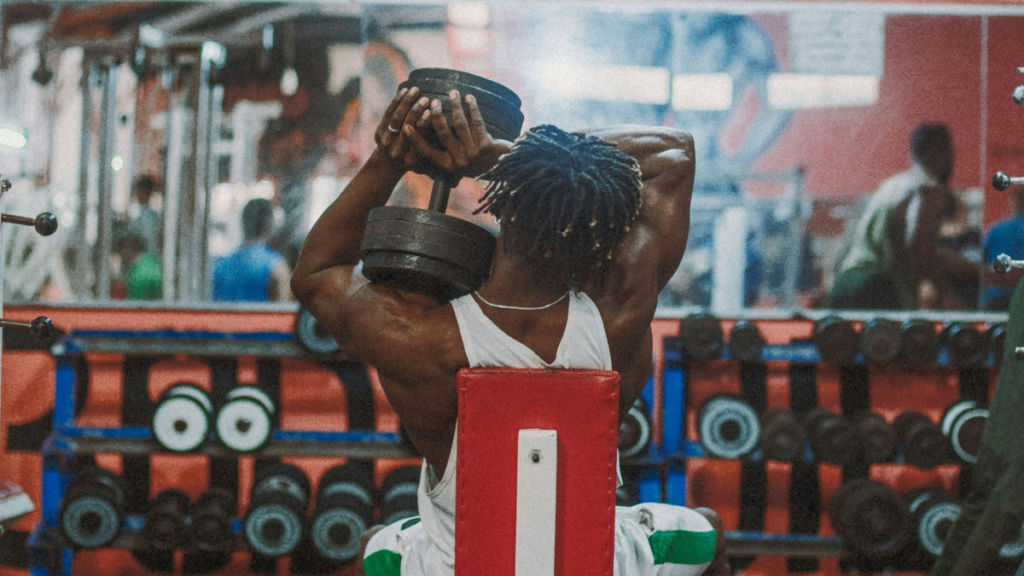
An overhead triceps extension is any elbow extension exercise performed with the upper arms raised overhead. You can use a dumbbell, cable, barbell, resistance band, or machine.
A common version involves holding one dumbbell with both hands, lowering it behind the head by bending the elbows, then extending the elbows to raise the weight again. Cable variations can also work very well because they keep tension on the triceps throughout the movement.
The key feature is not the equipment. It is the shoulder position. Your elbows should remain pointed generally upward, with the upper arms elevated as you bend and straighten the elbows.
Why Overhead Extensions May Build More Muscle
A controlled training study comparing overhead triceps extensions with triceps extensions performed with the arms in a neutral position found greater triceps growth from the overhead position. The difference was especially notable in the long head of the triceps.
This is a useful finding because it compares two movements with the same basic elbow extension action. The major difference was the position of the upper arm. The overhead variation placed the long head under greater stretch, and that appears to have contributed to greater muscle growth.
3 Top Exercises for a More Muscular Upper Body Without Barbells
Other research on resistance training also supports the wider principle that working muscles at longer lengths can produce equal or superior hypertrophy compared with training them at shorter lengths. That does not mean every exercise must feel like a deep stretch. It does mean that a full, controlled range of motion is usually valuable when it is comfortable and technically sound.
Who Should Use Overhead Extensions?
Overhead extensions are an excellent choice for lifters who want to prioritize triceps size. They are particularly useful if your upper arms look less developed from the side or if you want to target the long head more directly.
They can also complement compound presses. Bench pressing and push ups train the triceps, but they do not usually put the long head through the same stretched position as an overhead extension. Adding this movement can therefore make an arm program more complete.
The main limitation is comfort. Some people find that overhead extensions irritate their elbows or shoulders, especially when they use too much weight, rush the lowering phase, or allow the elbows to flare excessively. If that happens, switching to a cable, using one arm at a time, or reducing the range slightly can make the exercise more manageable.
What Is a Triceps Pushdown?
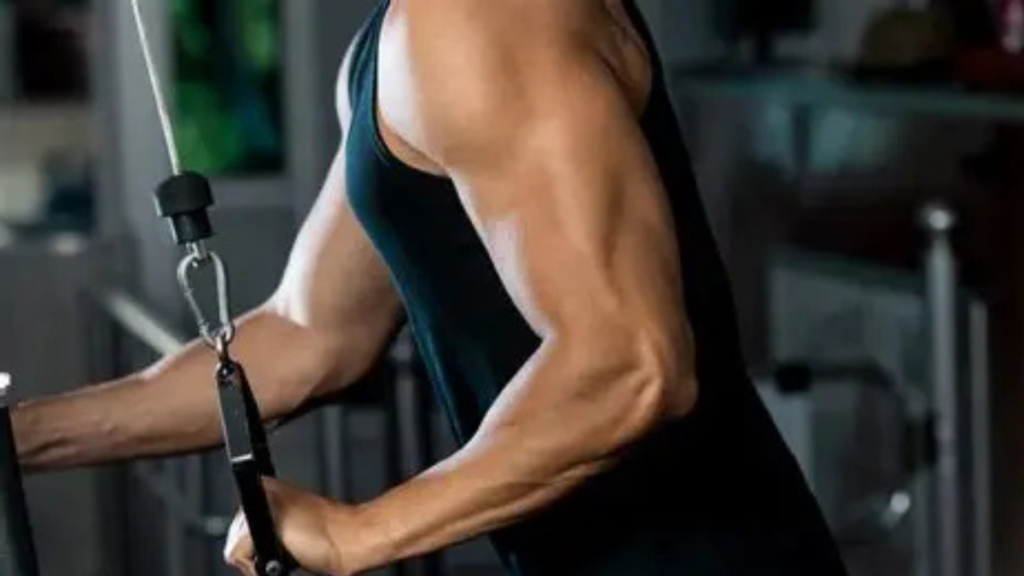
A triceps pushdown is performed using a high cable attachment. You begin with your elbows bent and close to your sides, then straighten your arms to push the handle, rope, or bar downward.
Pushdowns are one of the most popular triceps exercises for good reason. They are stable, simple to learn, and easy to load gradually. The cable also provides consistent resistance, which makes it easier to keep tension on the triceps without needing to balance a free weight overhead.
Most pushdown variations keep the upper arms close to the torso. This means the long head is not placed under as much stretch as it is during an overhead extension. However, the lateral and medial heads still work hard to extend the elbow.
Why Pushdowns Still Work
Pushdowns can absolutely build bigger triceps when they are trained with enough effort, volume, and progression. Muscle growth does not depend on finding one magical exercise. It comes from repeatedly challenging the target muscle and gradually improving your training over time.
A pushdown is also easier to perform with consistent technique than many overhead variations. You can keep your torso still, control the eccentric phase, and take the set close to muscular failure without worrying much about balance.
This makes pushdowns especially valuable near the end of a workout. After heavy pressing, squats, deadlifts, or demanding upper body work, a stable cable exercise can be an effective way to add triceps volume without placing excessive demands on the rest of the body.
Pushdown Technique Matters
To get more from a pushdown, keep your upper arms relatively still and avoid turning the exercise into a full body movement. Start with your elbows bent, press the handle down by straightening the elbows, and finish with a strong but controlled contraction.
Do not force your elbows far behind your body at the bottom. That usually adds little to the exercise and can make it harder to maintain tension where you want it. A smooth range of motion, a controlled return, and enough resistance to make the final repetitions challenging are more important than using the heaviest stack in the gym.
Which Exercise Is Better for Bigger Triceps?
For pure hypertrophy, overhead triceps extensions are likely the better single choice. The available direct evidence favors training the triceps with the arms overhead, and the broader research on long muscle length training supports that conclusion.
However, pushdowns are not inferior in every practical sense. They are often more comfortable, easier to set up, and simpler to train hard with good technique. A movement you can perform consistently for months is more useful than a theoretically ideal movement that aggravates your joints.

For most people, the best answer is to use both. Overhead extensions can provide the stretched position that may help maximize long head growth. Pushdowns can provide stable, repeatable volume with a different resistance profile and less shoulder involvement.
If you can only choose one exercise, choose the overhead extension if it is pain free and you can perform it with control. If overhead work bothers your shoulders or elbows, use pushdowns and focus on progressive overload. You can still build impressive triceps.
How to Program Both Exercises
A practical approach is to perform one overhead extension and one pushdown variation each week. You might place overhead extensions earlier in the session, when you have more focus and energy for controlled technique. Pushdowns work well later, when you want to accumulate additional repetitions safely.
Research shows that a broad range of loads can build muscle when sets are taken close enough to muscular failure. This gives you flexibility. Heavier sets can work well for cable pushdowns, while moderate to higher repetition sets are often more comfortable for overhead extensions.
For many lifters, two to four triceps focused sets per exercise is enough to start. Your compound pressing also contributes to total triceps volume, so there is no need to add endless isolation work. Watch your elbow comfort, training performance, and recovery before increasing volume.
A Simple Triceps Growth Setup
Start with overhead cable extensions for three sets of eight to fifteen repetitions. Use a load that allows a controlled stretch behind the head without losing your shoulder position.
Then perform rope pushdowns for two or three sets of ten to twenty repetitions. Keep the repetitions smooth and stop only when another repetition would noticeably compromise your form.
Over time, aim to add repetitions, improve control, or increase load gradually. The most productive program is one you can repeat consistently while getting stronger or more capable in the target rep ranges.
The Bottom Line
Overhead triceps extensions are probably the better choice if your only goal is maximizing triceps size, particularly long head development. Their advantage comes from training the triceps in a more lengthened position, which current evidence suggests can enhance hypertrophy.
Pushdowns remain an excellent exercise for building triceps. They are stable, easy to learn, and highly effective for adding quality volume. Rather than treating this as an either or decision, use overhead extensions as your main growth focused movement and pushdowns as a reliable companion exercise.
References
- Franchi, M.V., Reeves, N.D. and Narici, M.V. (2017) ‘Skeletal muscle remodeling in response to eccentric versus concentric loading: Morphological, molecular, and metabolic adaptations’, Frontiers in Physiology, 8, 447.
- Maeo, S., Ando, A., Kanehisa, H. and Kawakami, Y. (2023) ‘Triceps brachii hypertrophy is substantially greater after elbow extension training performed in the overhead versus neutral arm position’, European Journal of Sport Science, 23, pp. 1015 to 1024.
- Morton, R.W., Oikawa, S.Y., Wavell, C.G. et al. (2016) ‘Neither load nor systemic hormones determine resistance training mediated hypertrophy or strength gains in resistance trained young men’, Journal of Applied Physiology, 121, pp. 129 to 138.
- Schoenfeld, B.J., Ogborn, D. and Krieger, J.W. (2017) ‘Dose response relationship between weekly resistance training volume and increases in muscle mass: A systematic review and meta analysis’, Journal of Sports Sciences, 35, pp. 1073 to 1082.
- Schoenfeld, B.J., Grgic, J., Ogborn, D. and Krieger, J.W. (2017) ‘Strength and hypertrophy adaptations between low versus high load resistance training: A systematic review and meta analysis’, Journal of Strength and Conditioning Research, 31, pp. 3508 to 3523.
- Wolf, M., Fragala, M.S., Smaira, F.I. et al. (2023) ‘The effects of resistance training performed at different muscle lengths on muscle hypertrophy: A systematic review and meta analysis’, Sports Medicine, 53, pp. 2063 to 2082.
Key Takeaways
| Exercise | Best use | Main advantage |
|---|---|---|
| Overhead triceps extension | Maximizing overall triceps hypertrophy | Places the long head under a greater stretch and has direct evidence supporting greater growth |
| Triceps pushdown | Adding stable, comfortable triceps volume | Easy to control, progress, and train close to muscular failure |
| Using both exercises | Long term arm development | Covers different arm positions and makes it easier to accumulate productive training volume |