

Building bigger triceps is not only about choosing an exercise that creates a strong burn. Your triceps need enough challenging resistance, good technique, regular progression, and enough weekly training volume to grow. Both the close grip bench press and parallel bar dip can deliver that, but they do it in different ways.
For most beginners, the close grip bench press is the more practical primary choice. It is easier to scale, easier to load gradually, and usually easier to learn while keeping the shoulders in a controlled position. Dips can be extremely effective for the triceps, chest, and shoulders, but they demand a greater starting level of upper body strength and control. If you cannot yet perform them smoothly with your bodyweight, they can become more of a shoulder challenge than a triceps builder.



The best exercise is ultimately the one you can perform safely, consistently, and progressively. Here is how the close grip bench press and dips compare for beginners who want bigger triceps.
What the Triceps Need to Grow
The triceps brachii sits on the back of your upper arm and consists of three heads: the long head, lateral head, and medial head. Its main job is elbow extension, which means straightening your arm. The long head also crosses the shoulder joint, so its position can influence how it contributes during pressing movements.
Muscle growth occurs when training provides sufficient mechanical tension over time. Resistance training research consistently shows that muscle can grow across a wide range of loads when sets are challenging and effort is high enough. Heavier loads are useful for building strength, while moderate and lighter loads can also support hypertrophy when they are performed close to muscular failure.
Weekly training volume also matters. Research indicates a dose response relationship between the number of challenging resistance training sets performed and gains in muscle size. This does not mean beginners need endless triceps workouts. It means that a small amount of hard, repeatable work performed consistently is more useful than occasionally destroying your arms with a high volume session.
Both close grip bench presses and dips are compound exercises. They train the triceps alongside the chest and front deltoids. That is an advantage for beginners because compound lifts allow you to train several major upper body muscles efficiently while building useful pressing strength.
Close Grip Bench Press: The Beginner Friendly Option
The close grip bench press is a barbell bench press performed with your hands placed narrower than in a conventional bench press. Your grip should not be extremely narrow. Placing the hands roughly shoulder width apart, or slightly inside shoulder width, is usually enough to increase the contribution from the triceps while maintaining a stable bar path.
As you lower the bar, your elbows should stay relatively close to your torso rather than flaring far out to the sides. The bar can touch the lower part of the chest or upper abdomen, depending on your arm length and comfort. From there, press the bar upward while extending the elbows fully under control.
Why It Trains the Triceps Well
The triceps have to work hard during the pressing phase of any bench press, particularly as the elbows extend near the top of the repetition. A narrower grip generally changes the movement so that the elbows travel closer to the body, increasing the demand for elbow extension compared with a wider grip.
Research examining bench press variations and muscle activity supports the idea that grip width changes muscular contribution. However, muscle activation research should be interpreted carefully. A higher electrical signal during an exercise does not automatically prove that it will produce more long term hypertrophy. Growth is determined by repeated exposure to quality training over weeks and months, not by one muscle activity measurement.
The practical advantage is that the close grip bench press allows you to use meaningful resistance and track progression clearly. You can add small amounts of weight, perform more repetitions with the same weight, or improve the control and range of motion of each repetition. These are all useful forms of progressive overload.
Why Beginners Often Progress Faster With It
A barbell and bench create a relatively stable training environment. The bench supports your torso and the bar follows a predictable path. That makes it easier for a beginner to focus on controlling the elbows and pressing with the triceps instead of trying to stabilize the whole body in space.
The exercise is also easy to regress. You can start with an unloaded barbell, light dumbbells, a Smith machine, or a machine chest press with a close hand position. This gives beginners a route to build pressing strength without requiring them to lift their entire bodyweight.
Close grip bench presses also make it easier to stop a set safely when technique starts to decline. Use a spotter when possible, or set the safety pins in a rack at an appropriate height. Avoid pressing to complete failure when you are learning, especially if you do not have a spotter.
Dips: A Powerful but More Demanding Triceps Exercise
A parallel bar dip involves supporting your bodyweight with straight arms, lowering your body by bending the elbows and shoulders, then pressing back to the starting position. The movement trains the triceps, chest, and front deltoids at the same time.
Dips can be an excellent exercise for building upper body muscle and pressing strength. They can also become very challenging quickly because you are moving a large percentage of your body mass. For someone who weighs 90 kilograms, a bodyweight dip is not a light beginner exercise. It is a substantial loaded pressing movement.
Why Dips Can Build Bigger Triceps
The triceps work forcefully to extend the elbows as you press out of the bottom position. Studies comparing different dip variations show meaningful triceps activity during bar dips, alongside significant contributions from the chest and shoulder muscles.
The range of motion can also be useful for muscle development. A controlled dip moves the elbow through substantial flexion and extension while your arms support a meaningful load. When the movement is comfortable and technically sound, this can provide a strong hypertrophy stimulus.
A more upright torso typically makes the dip feel more triceps focused, while leaning farther forward often increases the contribution from the chest. This is not an absolute switch. The triceps still work hard in both styles, but body position can change the feeling and emphasis of the movement.
Why Dips Can Be Difficult for Beginners
The main issue is not that dips are bad. The issue is that a beginner may not yet have the pressing strength, shoulder control, or tolerance for the movement. If you drop quickly into the bottom position, shrug the shoulders toward your ears, or struggle to press out smoothly, the exercise may be beyond your current level.
Dips also place the shoulder into a deep extension position. Some people tolerate this very well, while others experience discomfort at the front of the shoulder or chest. Discomfort is not something to push through simply because an exercise is popular. If a movement causes sharp pain, pinching, or pain that persists after training, stop and choose a more comfortable variation.
Bench dips are often suggested as an easier alternative, but they are not always the best choice. Research comparing bench, bar, and ring dips found that the bench dip used the greatest shoulder extension. For many beginners, an assisted parallel bar dip, a close grip push up, or a close grip bench press is a more sensible progression.
Which Exercise Is Better for Triceps Growth?
There is no direct long term hypertrophy study showing that close grip bench presses build more triceps than parallel bar dips, or the reverse. It would be inaccurate to claim that one has been scientifically proven superior in every situation.
Instead, the evidence supports a more useful conclusion: both exercises can contribute to triceps growth when they provide enough effort, volume, and progressive overload. The better choice depends on what allows you to train hard with good form and recover well.
For a beginner, close grip bench presses usually win because they are easier to scale and progress. You can select a load that lets you perform controlled repetitions, then increase it gradually as your strength improves. The technique is not effortless, but it is generally less demanding than holding and pressing your full bodyweight on parallel bars.
Dips may become the better option for you once you can perform them with smooth control and no shoulder discomfort. They are especially useful if you enjoy calisthenics, want to build bodyweight pressing strength, or have limited access to barbells. If you are already strong enough to perform several controlled bodyweight dips, they can be a valuable part of your triceps training.
How to Use Close Grip Bench Presses for Bigger Triceps
Start with two sessions per week, allowing at least two days between sessions. Perform two or three working sets of six to 12 repetitions. Choose a weight that feels challenging while allowing you to keep your wrists stacked over your forearms and your elbows relatively close to your torso.
Lower the bar under control. A controlled lowering phase helps you maintain position and gives you useful practice with the movement. Pause briefly if needed, then press without bouncing the bar from your chest.
When you can perform the top end of your repetition range for all sets with solid technique, add a small amount of weight at the next session. The goal is not to add weight every workout forever. The goal is to make gradual progress without sacrificing form.
You can train close grip bench presses first in an upper body session, especially if triceps growth is a priority. If chest strength is your main goal, you may prefer to perform your standard bench press first and use close grip presses later in the workout.
How to Progress Toward Full Dips
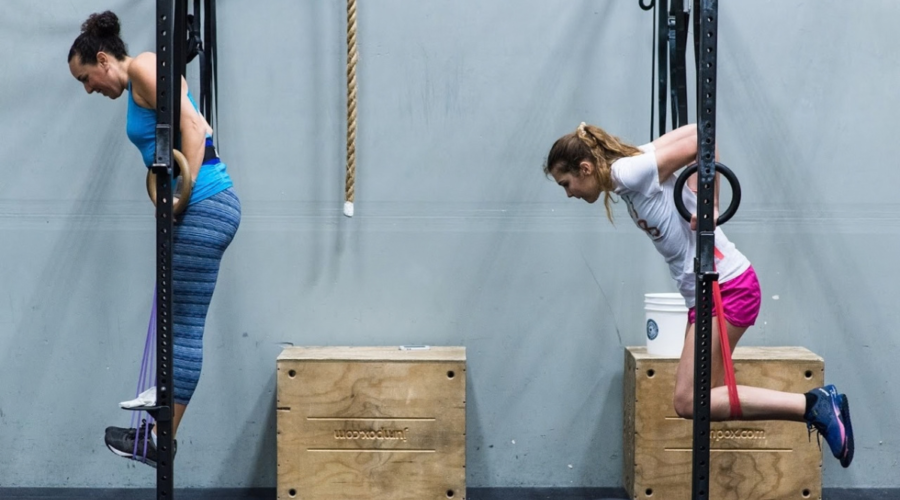
If full dips are currently too difficult, use assistance rather than forcing poor repetitions. An assisted dip machine is a useful option because it reduces the effective load while allowing you to practice the same movement pattern. Band assisted dips can also work, although the assistance is greatest at the bottom and decreases as you approach the top.

Start with a range of motion you can control. Lower only as far as you can while keeping the shoulders stable and avoiding discomfort. Over time, gradually increase your range of motion as your strength and confidence improve.
Another useful approach is the eccentric dip. Step or jump to the top position, then lower slowly for several seconds. Eccentric training can build strength, but it should be introduced conservatively because it can create significant muscle soreness. Keep the total volume low at first.
Once you can perform sets of six to 10 smooth bodyweight dips, you can begin adding external load with a dip belt if your goal is continued muscle and strength development. There is no rush to add weight. Bodyweight dips can remain challenging for a long time.
Common Mistakes That Limit Triceps Growth
With close grip bench presses, the most common mistake is using a grip that is excessively narrow. Placing the hands almost together can make the wrists uncomfortable and reduce your ability to press efficiently. A moderately narrow grip is generally more productive and more sustainable.
3 Best Exercises for Rounder and More Defined Shoulders
Another mistake is letting the elbows flare sharply away from the body. This can turn the exercise into a less stable press and may make it harder to feel the triceps doing their work. Keep the elbows controlled, but do not force them into an unnaturally tight position.
With dips, avoid dropping too fast into the bottom position. Control the descent, keep your shoulders from rising toward your ears, and press smoothly rather than bouncing out of the bottom. A smaller range of motion performed well is more valuable than a deep range of motion performed with pain or loss of control.
Finally, do not judge an exercise only by soreness. Soreness can happen after a new exercise, but it is not a reliable measure of whether a muscle is growing. Better indicators are improving technique, more repetitions with the same load, greater load with the same repetitions, and steady measurements over time.
The Verdict
For most beginners, the close grip bench press is the better starting exercise for building bigger triceps. It offers a clear path for progressive overload, can be adjusted to almost any strength level, and usually requires less shoulder stability than a full bodyweight dip.
Dips are still an excellent triceps builder, but they are best introduced when you have enough pressing strength to control your body through the entire movement. If you can perform them smoothly and without shoulder discomfort, they can be a highly effective addition to your program.
You do not need to choose one forever. Start with the close grip bench press, develop strength and confidence, then add dips when your body is ready. That combination can give you both practical barbell strength and impressive bodyweight pressing ability while providing the repeated challenge your triceps need to grow.
References
- American College of Sports Medicine (2009) ‘American College of Sports Medicine position stand: Progression models in resistance training for healthy adults’, Medicine & Science in Sports & Exercise, 41(3), pp. 687–708.
- Barnett, C., Kippers, V. and Turner, P. (1995) ‘Effects of variations of the bench press exercise on the EMG activity of five shoulder muscles’, Journal of Strength and Conditioning Research, 9(4), pp. 222–227.
- Kipp, K., Redden, J., Sabick, M. and Harris, C. (2018) ‘Loading range for the development of peak power in the close grip bench press’, Journal of Strength and Conditioning Research, 32(10), pp. 2786–2792.
- Serafini, P.R., Feito, Y., Mangine, G.T., Selfe, J. and Mangine, G. (2022) ‘Bench, bar, and ring dips: Do kinematics and muscle activity differ?’, International Journal of Environmental Research and Public Health, 19(20), 13211.
- Schoenfeld, B.J., Grgic, J., Ogborn, D. and Krieger, J.W. (2017) ‘Strength and hypertrophy adaptations between low versus high load resistance training: A systematic review and meta analysis’, Journal of Strength and Conditioning Research, 31(12), pp. 3508–3523.
- Schoenfeld, B.J., Ogborn, D. and Krieger, J.W. (2017) ‘Dose response relationship between weekly resistance training volume and increases in muscle mass: A systematic review and meta analysis’, Journal of Sports Sciences, 35(11), pp. 1073–1082.
Key Takeaways
| Exercise | Best use for beginners | Main advantage | Main consideration |
|---|---|---|---|
| Close grip bench press | Primary triceps building exercise | Easy to load, track, and progress gradually | Requires access to a bench and barbell or suitable variation |
| Parallel bar dip | Progression after basic pressing strength is established | Trains triceps with a challenging bodyweight load | Demands shoulder control and may be too difficult initially |
| Best overall choice | Close grip bench press for most beginners | Builds pressing strength while allowing controlled progression | Add dips later if they feel strong, smooth, and pain free |