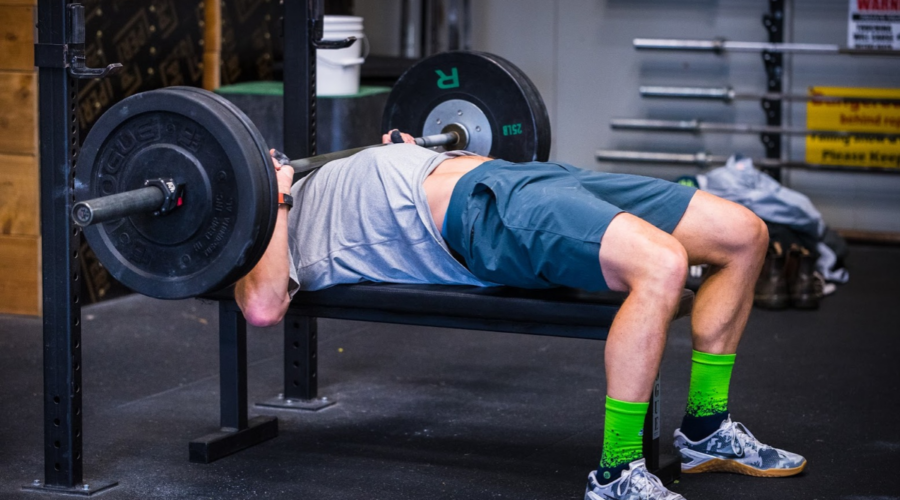


A heavy bench press looks like the obvious choice for building a bigger chest. Push-ups can seem too easy to compete, especially when someone can perform set after set. But muscle growth depends on more than the equipment or the number of repetitions. The amount of resistance, how challenging the set is, and whether you can keep progressing all matter.
The research does not show that one movement automatically builds bigger pecs. A small study directly comparing push-ups with bench pressing found similar chest growth when participants trained both exercises hard at a matched load. Broader research also suggests that a range of loads can build muscle. Heavy bench pressing has a clearer advantage for improving your one-rep max, while push-ups can be an effective option when you make them difficult enough and continue to increase the challenge.


What makes the pecs grow?
The pectoralis major, commonly called the pecs, helps move the upper arm across the front of the body and contributes to pressing movements. Both the bench press and the push-up train the pecs, along with the triceps and the front of the shoulders. The exercises differ in how you position your body and how you add resistance, but both can provide a useful training stimulus.
Muscle growth requires training that challenges the working muscles. A set of push-ups that ends while you still have many good repetitions left may not be as demanding as a heavy bench press set. But a set that brings you close to the point where you cannot complete another repetition with good form can be challenging, even if it uses only your body weight.
Load and effort are related, but they are not the same thing. A heavy weight makes each repetition demanding from the start. A lighter resistance usually requires more repetitions before the set becomes similarly challenging. Systematic reviews comparing resistance training loads have found that lower and higher loads can produce similar muscle growth when the sets are performed with sufficient effort. Higher loads tend to produce greater improvements in one-rep maximum strength, because that outcome is more specific to lifting heavy.
What the direct push-up and bench press study found
A small randomized study by Kikuchi and Nakazato directly compared push-ups with bench pressing. The researchers recruited 18 young men who were not trained in resistance exercise. Nine performed bench presses at 40 percent of their one-rep maximum, and nine performed push-ups adjusted to create a similar load. Both groups trained twice a week for eight weeks, taking their sets to failure.
Both groups increased pectoral muscle thickness, and the researchers found no meaningful difference between the groups in chest growth. This suggests that push-ups can build the pecs when the difficulty is matched to the lifter and sets are sufficiently challenging.
The result needs context. The study was small, lasted only eight weeks, and involved young, untrained men. It compared push-ups with a light bench press load, not with a conventional heavy bench press program. The push-up variation was adjusted to match the target load, so the findings do not prove that ordinary floor push-ups performed for many easy repetitions will match heavy bench presses for every trainee.
A second study compared progressive push-up variations with bench press training in moderately trained men. After four weeks of training three times a week, both groups improved bench press strength, and the researchers did not find significant differences in measured muscle thickness. However, the study was also small and brief. Taken together, these trials show that progressive push-up training can be productive, while leaving open the question of how it compares with longer-term heavy bench press training in experienced lifters.
Why heavy bench pressing has an advantage
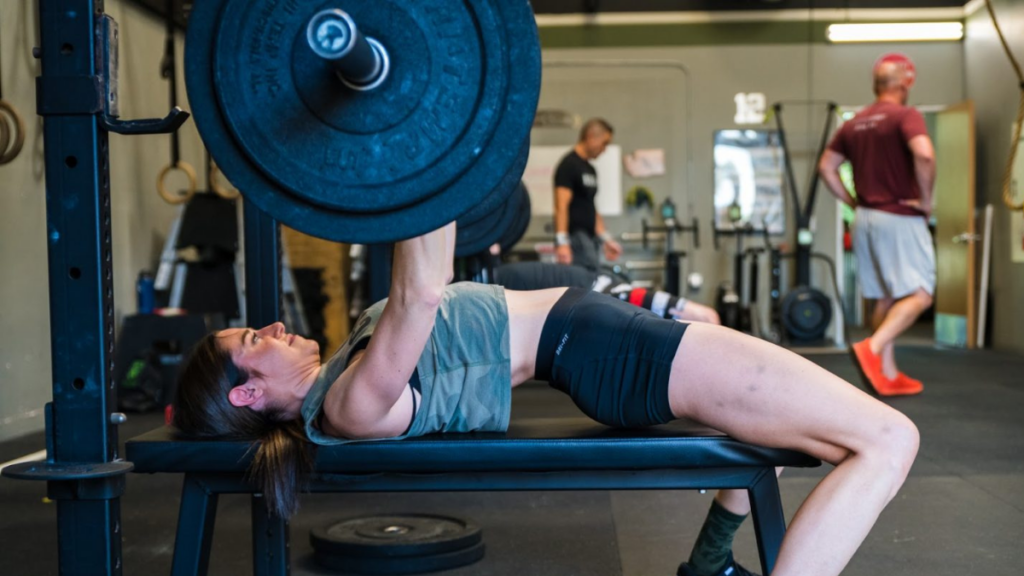
The bench press makes it straightforward to choose and increase resistance. You can add small amounts of weight to the bar as you become stronger, which helps maintain a challenging stimulus without needing to perform an extremely high number of repetitions. You can also select a load that makes a set challenging within a moderate repetition range.
That adjustability is useful for progressive overload. If you can bench a weight for more repetitions than before, you can increase the load and continue training hard. With a barbell, it is also easier to track the weight and repetitions from one session to the next.
Heavy bench pressing is especially useful if your goal includes a stronger one-rep max. Reviews comparing higher and lower training loads find that heavier training produces larger gains in maximal strength, even when muscle growth is similar. The skill of pressing a heavy bar is specific to practicing that lift, so push-ups are not a complete substitute for bench press strength.
The bench press also offers several ways to adjust the exercise. You can alter grip width, use dumbbells, or choose an incline bench to change the movement. These options may help you find a pressing variation that feels comfortable and fits your training, although no single variation guarantees greater pec growth for everyone.
When high-rep push-ups can build muscle
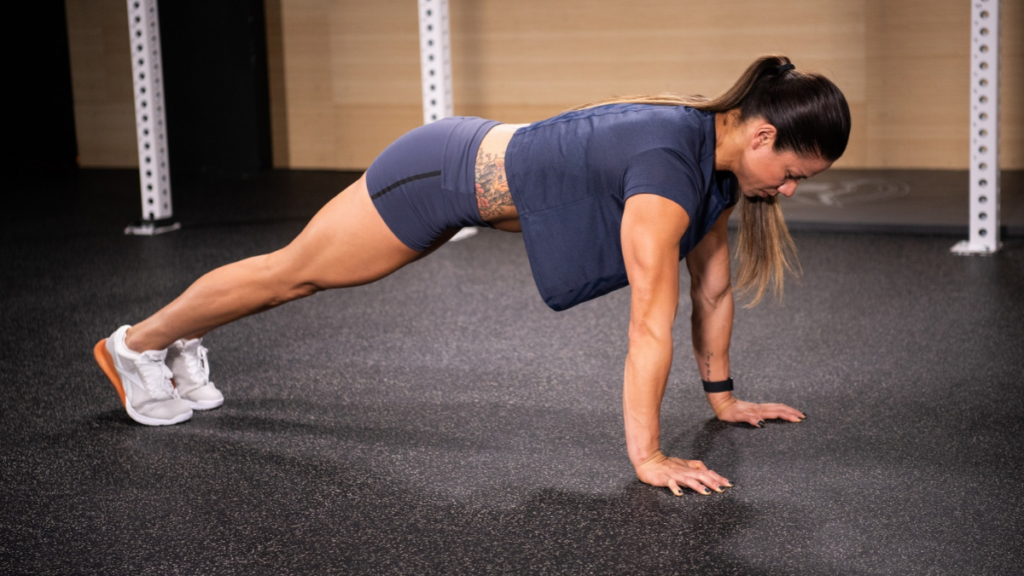
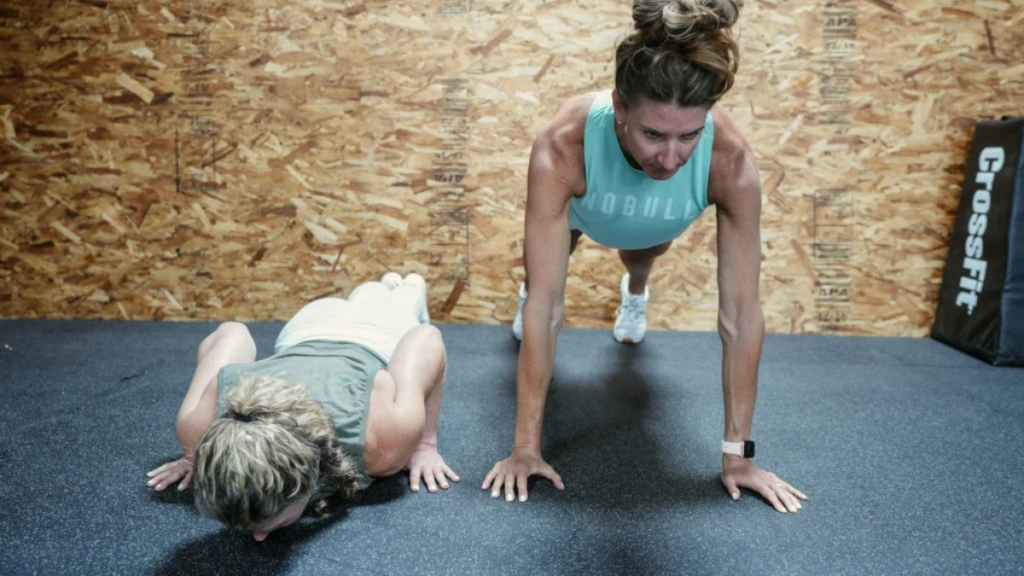
High-rep push-ups can work when the set is difficult enough. If you can complete many repetitions and stop well before your pecs or triceps are challenged, the set may not provide much stimulus for continued growth. In that case, you can make the movement harder by using a lower hand position, slowing the lowering phase, adding a resistance band, or placing a securely positioned weight vest on your torso.
You can also progress through variations. If standard push-ups are too difficult, perform them with your hands elevated on a stable surface. As you get stronger, lower the surface gradually until you can perform floor push-ups with controlled technique. If floor push-ups become easy, use a harder variation or external resistance rather than relying indefinitely on longer sets.
The end of a set should be demanding while your technique remains controlled. You do not need to take every set to the point where you physically cannot move. Research on proximity to failure suggests that training to failure may offer only a small advantage for muscle growth compared with stopping short, and taking every set to failure can add fatigue. For push-ups, a practical target is to finish most sets with roughly one to three good repetitions still possible, then occasionally push closer to failure if you can maintain form.
High-repetition sets can also become uncomfortable for reasons other than pec fatigue. Your breathing, wrists, shoulders, or ability to hold a rigid body position may limit the set first. If that happens, the pecs may not be receiving the main challenge. Choose a variation that lets you perform controlled repetitions while the chest muscles remain a limiting factor.
Which is better for building bigger pecs?
For a beginner, either exercise can build chest muscle. Push-ups are accessible and require little equipment, while the bench press makes it easier to adjust resistance precisely. The best choice is the one you can perform with good technique, recover from, and progressively make more challenging.
For a lifter who can perform dozens of standard push-ups without getting close to muscular fatigue, adding resistance or selecting a harder variation is likely more practical than simply adding repetitions. Bench pressing provides a convenient way to increase load in small increments. It also makes sense for anyone whose goal includes improving the bench press itself.
4 Best Beginner Exercises for Stronger and More Defined Six Pack Abs Without Sit Ups
For a person who cannot yet perform challenging floor push-ups, an elevated version can provide a useful starting point. The hands can be placed on a stable bench or bar set at a height that allows controlled repetitions. As strength improves, lower the hand position over time. This creates a clear progression without requiring a barbell.
The most useful answer is not that heavy bench presses always win or that high-rep push-ups are automatically equal. Both can build pecs when they provide a hard, repeatable stimulus and progress over time. Heavy bench presses offer a practical advantage for increasing resistance and building maximal pressing strength. Push-ups remain a strong chest exercise when you select a variation that is challenging enough.
If you enjoy both, you can include both in your program. Use the bench press for measurable loading and strength practice, then use push-ups as additional chest work. Keep track of sets, repetitions, resistance, and variation so you can tell whether the training is becoming more demanding. Consistency and progressive challenge matter more than whether your hands are holding a bar or pressing against the floor.
Key Takeaways
| Question | Takeaway |
|---|---|
| Can push-ups build pecs? | Yes. Challenging push-ups can build chest muscle, especially when you progress the difficulty. |
| Does heavy bench pressing build more muscle? | Research does not establish that it always produces more pec growth than demanding push-up training. |
| What does the bench press do better? | It makes resistance easier to measure and increase, and it is more specific to improving a heavy bench press. |
| How should push-ups progress? | Use a harder variation, add resistance, or adjust the movement when standard repetitions become too easy. |
| What matters most? | Choose a challenging version, use controlled technique, and increase the training demand over time. |
References
- Kikuchi, N. and Nakazato, K. (2017) ‘Low-load bench press and push-up induce similar muscle hypertrophy and strength gain’, Journal of Exercise Science & Fitness, 15(1), pp. 37–42.
- Kotarsky, C.J., Christensen, B.K., Miller, J.S. and Hackney, K.J. (2018) ‘Effect of progressive calisthenic push-up training on muscle strength and thickness’, Journal of Strength and Conditioning Research, 32(3), pp. 651–659.
- Refalo, M.C., Helms, E.R., Trexler, E.T., Hamilton, D.L. and Fyfe, J.J. (2023) ‘Influence of resistance training proximity-to-failure on skeletal muscle hypertrophy: A systematic review with meta-analysis’, Sports Medicine, 53(3), pp. 649–665.
- Refalo, M.C., Hamilton, D.L., Paval, D.R., Gallagher, I.J., Feros, S.A. and Fyfe, J.J. (2021) ‘Influence of resistance training load on measures of skeletal muscle hypertrophy and improvements in maximal strength and neuromuscular task performance: A systematic review and meta-analysis’, Journal of Sports Sciences, 39(15), pp. 1723–1745.
- Schoenfeld, B.J., Grgic, J., Ogborn, D. and Krieger, J.W. (2017) ‘Strength and hypertrophy adaptations between low- vs. high-load resistance training: A systematic review and meta-analysis’, Journal of Strength and Conditioning Research, 31(12), pp. 3508–3523.