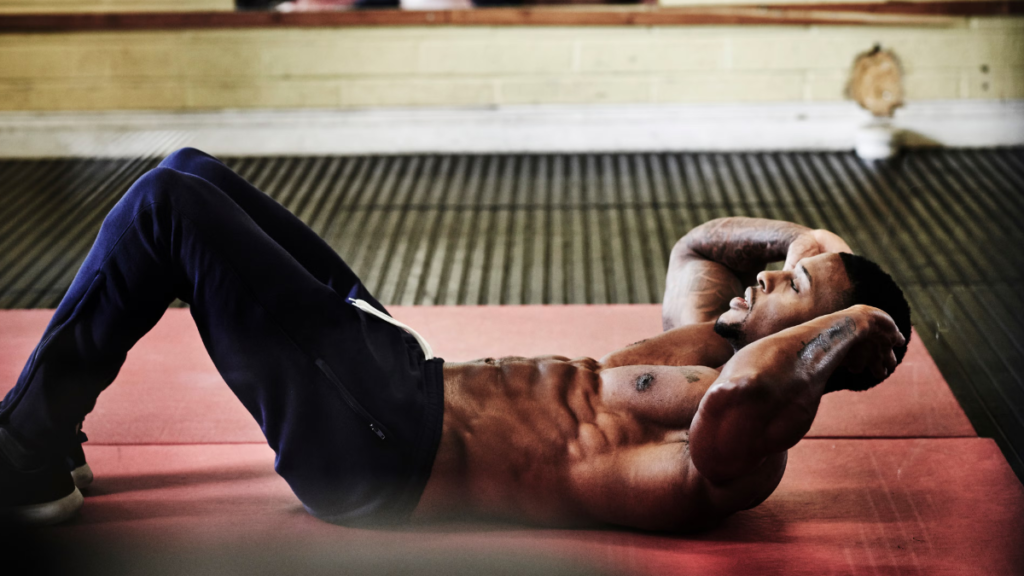


Standing ab exercises are performed on your feet. They can include controlled marches, standing knee raises, side bends, rotations, or pressing a band away from your body. Floor ab exercises are performed lying down or supporting yourself on the floor. Examples include dead bugs, bird dogs, crunches, and planks.
Both groups can train the muscles around your midsection. These muscles help control your trunk as you bend, rotate, brace, and move your limbs. The exercises do not all train the same movements or create the same challenge, though. A standing march asks you to stay balanced as one leg moves. A floor crunch involves lifting your upper body. A plank asks you to resist movement while holding a position.
But which type of exercises are better for you?
What the research can tell us
Some studies measure abdominal muscle activity using electromyography, or EMG. EMG records electrical signals associated with muscle activity during an exercise. It can help researchers compare how much a particular muscle is working in a specific position, but it does not show which exercise will produce the greatest long term strength or muscle growth. A research review of core exercises also found that studies used varied methods, and that some muscles were studied less often than others.
One small study compared a single abdominal draw in exercise in standing and lying positions. In 20 healthy women, the standing version produced higher measured activity in four abdominal muscles than the lying version. This offers a useful clue about that exercise, but it does not prove that all standing ab exercises are harder, better, or more effective than all floor exercises. The study tested one movement, in a small group, during a short laboratory session.
The wider evidence on resistance training supports a flexible approach. An American College of Sports Medicine review of 137 systematic reviews found that resistance training improves strength and other measures of physical function in healthy adults. Its findings support regular, progressive training, while allowing people to use different types of exercises and equipment. For a beginner, the practical aim is to choose a movement you can perform consistently and gradually make more challenging.
Why floor exercises can suit beginners
Floor exercises can make it easier to focus on one task at a time. When you are lying on your back, your body has a broad area of support. That can make a slow, controlled movement easier to learn than a standing variation that also asks you to balance. This is a practical coaching consideration, not proof that floor exercises are universally easier for every person.
A dead bug is one useful starting point. Lie on your back with your knees bent and lifted, then slowly lower one heel toward the floor while keeping your trunk steady. Return to the starting position and switch sides. Make the range of motion smaller if your lower back arches or you struggle to control the movement. A bird dog offers another option: start on your hands and knees, then extend one arm and the opposite leg without letting your trunk twist or sag.
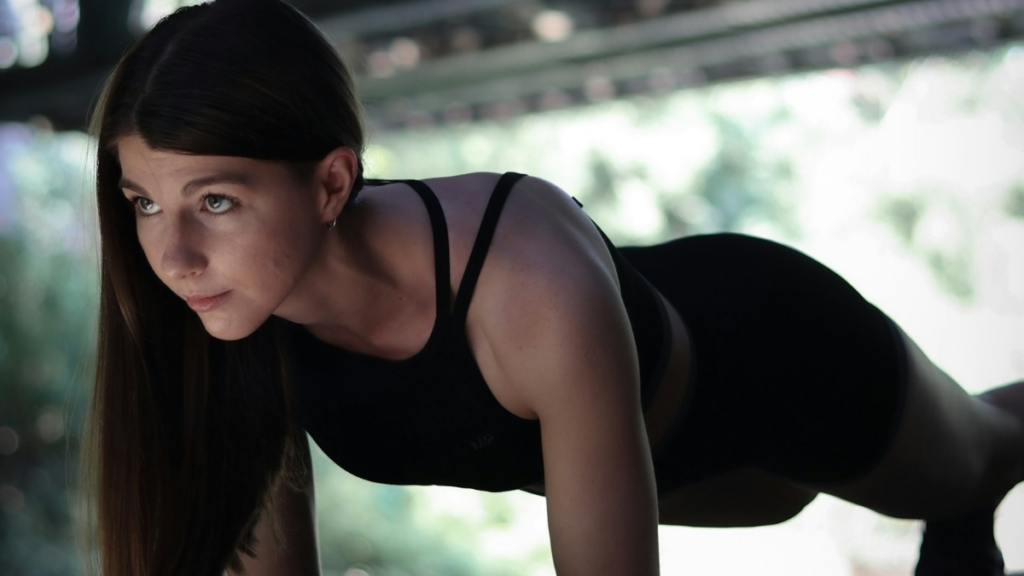
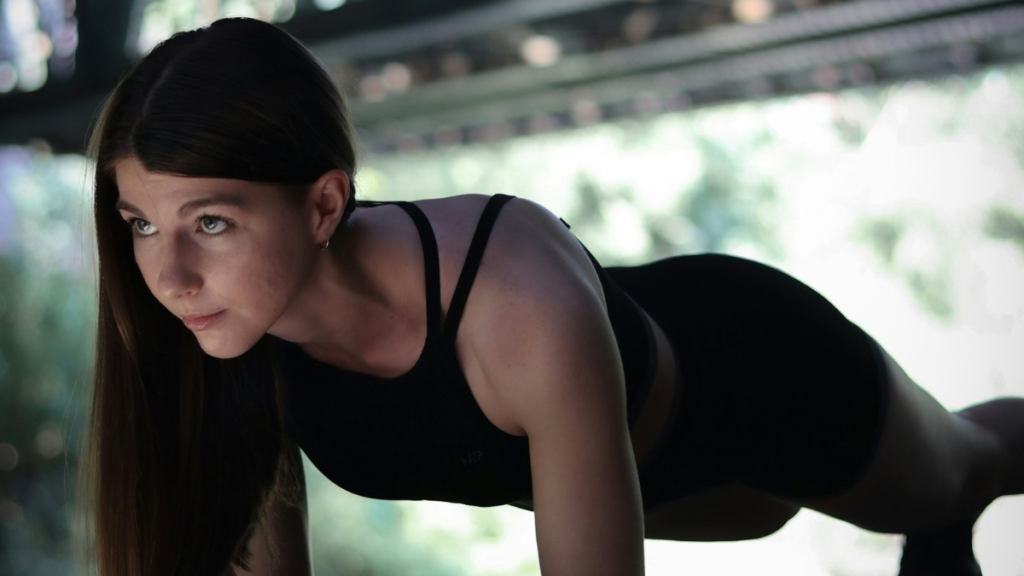
Planks can also train the trunk, but they do not have to begin with a long hold from your toes. A beginner can place their forearms on a wall or a sturdy counter, then hold a straight body position while breathing normally. As that becomes comfortable, they can move to a lower surface. A floor plank from the knees is another step between an elevated hold and a full plank.
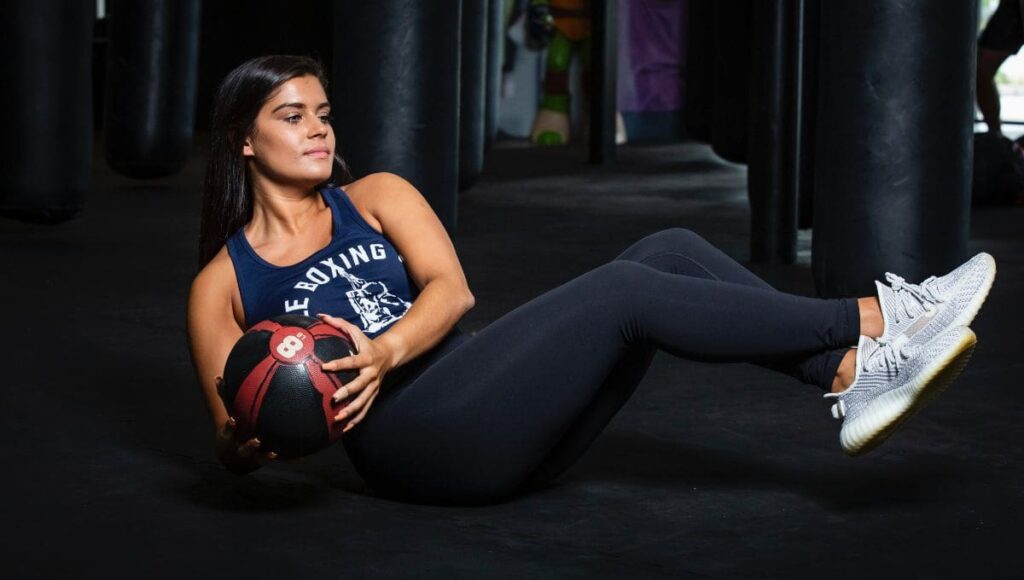
Crunches are a familiar floor exercise, but they are not required for a beginner to train the abs. If you choose them, use a small, controlled lift rather than pulling on your head or trying to sit all the way up. A study that measured trunk muscle activity found differences between exercises, but those short term readings do not establish that one exercise produces better long term results for all beginners.
Why standing exercises can suit beginners
Standing exercises may feel familiar because they use an upright position common in daily activities. They can also train balance and coordination at the same time as the trunk. That combination may be useful if your goal is to practice controlling your torso while moving your arms or legs.
Try a standing march by lifting one knee at a time while keeping your torso tall and steady. You can hold a wall or chair for support while learning the movement. To train resistance to rotation, stand with a resistance band anchored to one side and press it forward with both hands, pausing before it pulls your trunk around. This type of movement is often called a Pallof press. Begin with light resistance and a comfortable range.
Standing exercises are not automatically easier because you stay on your feet. A movement that combines balance, resistance, and coordination may be more demanding than a supported floor exercise. If you find yourself leaning, twisting, or holding your breath to complete a repetition, reduce the resistance or use support. The goal is controlled movement, not making the exercise look advanced.
Which is better for beginners?
For many beginners, neither position wins outright. Floor exercises can be a good place to learn controlled movement with extra support. Standing exercises can be useful for practicing trunk control while upright and moving. The research does not show that one entire category is superior for every beginner, and findings from muscle activity tests should not be treated as a ranking of long term results.

Start with the version you can perform with steady breathing and good control. If you are new to exercise or unsure how to move, begin with a supported standing march, a dead bug with a small range, or a wall plank. Try one or two exercises from each position over time, then keep the ones you can do consistently and comfortably.
Triceps Dips vs Push-Ups: Which Builds Bigger Arms for Beginners?
You do not need to train your abs every day or perform a large number of different movements. A few sets of controlled repetitions or short holds can be a sensible start. The latest ACSM review supports progressive resistance training for healthy adults, but it does not prescribe a special standing or floor routine for beginners. Build up gradually by adding a few repetitions, holding a position slightly longer, using a lower support, or adding light resistance when your current version feels controlled.
A simple beginner session
Try this short session two or three times a week, leaving time between sessions if your trunk muscles are still sore or tired. Start with a standing march for 8 to 10 repetitions on each side. Next, do a dead bug for 6 to 8 repetitions on each side, moving slowly. Finish with a wall or counter plank for 15 to 25 seconds. Rest as needed and repeat the session once if your form remains steady.
These numbers are starting points, not targets you have to hit. If the last repetitions become difficult to control, stop the set and use an easier version next time. Over several sessions, add a few repetitions or a few seconds only when the current amount feels manageable.
A useful beginner workout can include both standing and floor movements because they offer different challenges. For example, a standing march practices control while upright, while a dead bug gives you a supported way to practice moving your limbs without your trunk shifting. There is no need to choose one category forever.
Key takeaways
| Question | Practical takeaway |
|---|---|
| Are standing abs better? | One small study found higher abdominal muscle activity during a standing draw in, but it did not compare every exercise or measure long term results. |
| Are floor abs better? | Floor exercises can offer more support while you learn control, but they are not automatically easier for everyone. |
| Where should I start? | Choose a supported movement you can perform while breathing and keeping your trunk steady. |
| How should I progress? | Add a few repetitions, a little time, or light resistance when your current version feels controlled. |
| Do I need to pick one position? | No. Standing and floor exercises can be combined because they challenge movement in different ways. |
References
- Currier, B.S., D’Souza, A.C., Fiatarone Singh, M.A., Lowisz, C.V., Rawson, E.S., Schoenfeld, B.J., Smith-Ryan, A.E., Steen, J.P., Thomas, G.A., Triplett, N.T., Washington, T.A., Werner, T.J. and Phillips, S.M. (2026) ‘American College of Sports Medicine position stand. Resistance training prescription for muscle function, hypertrophy, and physical performance in healthy adults: An overview of reviews’, Medicine & Science in Sports & Exercise, 58(4), pp. 851–872.
- Jung, D., Kim, K. and Lee, S. (2014) ‘Comparison of muscle activities using a pressure biofeedback unit during abdominal muscle training performed by normal adults in the standing and supine positions’, Journal of Physical Therapy Science, 26(2), pp. 191–193.
- Oliva-Lozano, J.M. and Muyor, J.M. (2020) ‘Core muscle activity during physical fitness exercises: A systematic review’, International Journal of Environmental Research and Public Health, 17(12), article 4306.