

A plank looks simple. You get into position, hold your body off the floor, and wait for the clock to move. But the longer the hold goes on, the more small details start to matter. Your hips may sag, your shoulders may creep toward your ears, and a test of core endurance can turn into a test of how long you are willing to tolerate discomfort.
So what is a good goal for you to aim for?
Time to find out.
What counts as a good plank?
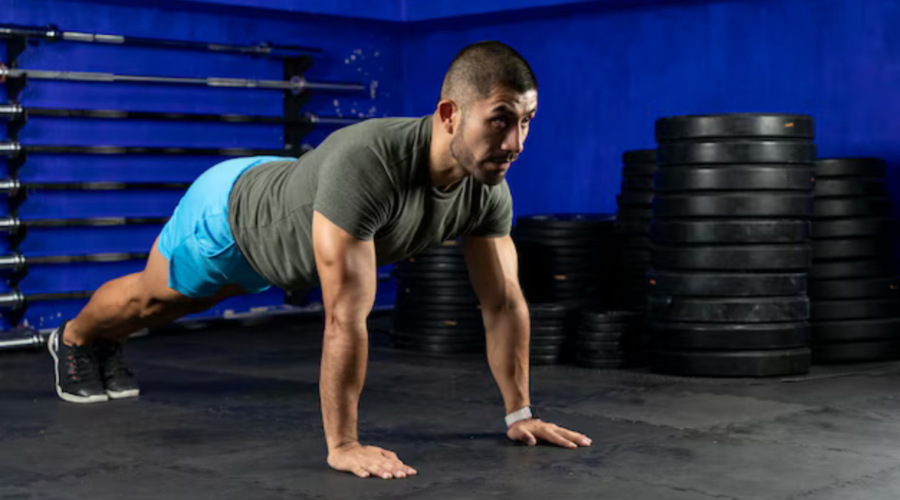
For this article, a plank means a standard forearm plank, sometimes called a front plank. You support your body on your forearms and toes while keeping your trunk and legs in a straight line. Your elbows sit beneath your shoulders, and your head stays in line with your body.
A plank is an isometric exercise. That means your muscles produce force while staying in roughly the same position, rather than repeatedly shortening and lengthening as they do during a situp or a squat. The exercise challenges muscles around the trunk, including the abdominal muscles and muscles that help stabilize the spine and pelvis. Research reviews of core exercises find that planks can recruit several of these muscles, although the exact amount of activity varies with the version of the exercise and how it is performed.
The timer is only useful if your position stays consistent. If your hips drop toward the floor, your lower back arches, or you shift your weight far forward, the hold has changed. Continuing to count after your form has broken down makes the number less useful as a measure of your plank endurance.
Why there is no universal beginner score
A study of 471 college students measured how long participants could hold a forearm plank before fatigue or technique failure.
The median hold was 83 seconds for nonathletes and 104 seconds for varsity athletes. Scores varied widely, however, and the study was limited to college aged adults. Its results should not be treated as a universal standard for people of every age and training background.
A beginner could be starting exercise for the first time, returning after a long break, or simply new to core training. Those people may have very different abilities, even if they are the same age. A plank score is best treated as a personal starting point, not a pass or fail mark.
The goal ranges below are practical training targets, not official fitness standards. They are meant to help you choose a manageable starting point and see what to work toward. Your set ends when your form breaks down, even if you have not reached the time listed.
Practical plank goals for beginners
| Stage | Goal for a clean hold | What to focus on |
|---|---|---|
| Starting point | 10 to 20 seconds | Find a stable position and breathe steadily |
| Early goal | 20 to 30 seconds | Keep the same body position from start to finish |
| Next goal | 30 to 45 seconds | Repeat controlled holds across several sets |
| Longer term goal | 45 to 60 seconds | Maintain form without straining or holding your breath |
If you cannot yet hold a forearm plank for 10 seconds, start with your knees on the floor or your forearms on a stable elevated surface. If you can already hold a clean plank for 60 seconds, you do not need to keep extending the time indefinitely. You can maintain shorter holds or progress to another suitable exercise.
What the research numbers mean
In the college student study, the median score for nonathletes was 83 seconds. That means half of the nonathletes tested held the plank for longer and half held it for less time. It does not mean that a beginner should be able to hold a plank for 83 seconds. The researchers noted that more research would be needed to apply their results to other age groups and populations.
The table below gives some context for those study results. These are sample medians, not minimum requirements. The researchers also reported that individual scores varied considerably within each group.
Median plank times in one college student study
| Group tested | Median hold |
|---|---|
| Nonathletes | 83 seconds |
| Varsity athletes | 104 seconds |
| All male participants | 110 seconds |
| All female participants | 72 seconds |
The numbers describe this study sample, not a guaranteed difference between every man and woman or every athlete and nonathlete. They are useful for showing that plank times vary, but they should not be used to judge someone’s health or potential.
How to test your plank fairly
Choose a flat, comfortable surface and use the same setup each time you test. Place your elbows beneath your shoulders and your forearms on the floor. Extend your legs behind you and support yourself on your toes. Keep your body in a straight line from your head through your shoulders, hips, and heels.
Before starting the timer, gently tighten your abdominal muscles and glutes. Keep your neck relaxed and look at the floor a short distance in front of your hands. Breathe normally rather than holding your breath. End the test when you can no longer maintain the position, not when you reach an arbitrary target time.
For a useful comparison, repeat the test under similar conditions. Use the same plank version, surface, and form standard. Do not compare a forearm plank with a high plank on straight arms as if they were identical tests. Small changes in body position or technique can change how demanding the exercise feels.
Plank form checklist
| Check | What to look for |
|---|---|
| Elbows | Directly beneath your shoulders |
| Head and neck | In line with your body, with eyes on the floor |
| Trunk and hips | A steady line without your hips sagging or rising |
| Legs | Extended with your glutes gently tightened |
| Breathing | Steady breathing throughout the hold |
| End of set | Stop when you cannot maintain the same position |
How to build your hold
Start with a version that lets you keep good form. If a plank from your toes is too difficult, place your knees on the floor while keeping a straight line from your head to your knees. You can also place your forearms on a sturdy bench or other stable elevated surface. These adjustments make the exercise easier, which can help you practice the position with control.
Try two or three sets of a comfortable hold, resting between sets. For example, if you can hold a good position for 15 seconds, do a few sets of 10 to 15 seconds rather than forcing one maximum effort attempt. When all your sets feel steady, add a few seconds to each hold.
The sample progression below is a flexible way to organize your practice. You can repeat a week or stay at the same target until you can complete each set with good form. You do not need to progress every week.
Example four week plank progression
| Week | Sets | Hold per set | Main goal |
|---|---|---|---|
| 1 | 3 | 10 to 15 seconds | Learn the position and breathe normally |
| 2 | 3 | 15 to 20 seconds | Keep each repetition consistent |
| 3 | 3 | 20 to 25 seconds | Finish each set before form changes |
| 4 | 3 | 25 to 30 seconds | Build control across all three sets |
These are example targets, not a promise that everyone will progress at the same pace. If your form changes before the suggested time, shorten the hold or use an easier version. If the holds feel controlled, you can move forward gradually.
What your plank time can and cannot tell you
A plank test gives you a rough measure of how long you can sustain that particular position. It can help you notice progress when you repeat the same test over time. For example, moving from a controlled 15 second hold to a controlled 25 second hold suggests that your ability to maintain the position has improved.
However, a longer plank does not automatically mean you have stronger abdominal muscles in every way, better athletic performance, or a healthier back. The test measures performance in one specific task. A research review found that muscle activity differs across core exercises, and comparisons between studies can be difficult because researchers do not always use the same methods. A plank is one useful exercise, but it does not measure every part of core strength or function.
Once you can hold a basic plank for a reasonable amount of time, adding more seconds may not be the most useful way to progress. You can instead use shorter, well controlled holds or choose another appropriate exercise that challenges your trunk in a different way. Studies of plank variations show that changing the exercise can alter muscle activity, although that does not mean a harder variation is automatically better for every beginner.
When should you stop the test?
Stop when you can no longer hold a stable position. Common signs include your hips dropping, your lower back arching, your shoulders shifting away from their position over your elbows, or your body rotating. You may also need to stop if you are holding your breath or if discomfort is making it difficult to stay in control.
Standing Abs vs Floor Abs Exercises: Which Is Better for Beginners?
Muscle effort and shaking can happen as a set becomes difficult, but they should not be a reason to ignore technique. The plank endurance study counted technique failure as a reason to end the test, which is a useful reminder that position matters as much as the clock. Stop if you feel sharp pain. If back or joint pain persists, speak with a qualified health professional.
The takeaway
A beginner does not need to meet a universal plank time. Start with the longest hold you can perform while keeping a steady position and breathing normally. A controlled hold of 10 to 30 seconds is a practical starting goal for many beginners, while a shorter hold is still a useful baseline. Track your own progress using the same setup, and let good form decide when the set ends.
References
- Behm, D.G., Alizadeh, S., Daneshjoo, A., Pike, N. and Konrad, A. (2022) ‘Core muscle activation with foam rolling and static planks’, Frontiers in Physiology, 13, 852094.
- Oliva-Lozano, J.M. and Muyor, J.M. (2020) ‘Core muscle activity during physical fitness exercises: A systematic review’, International Journal of Environmental Research and Public Health, 17(12), 4306.
- Tong, T.K., Wu, S. and Nie, J. (2014) ‘Norms for an isometric muscle endurance test’, Journal of Human Kinetics, 40, pp. 93–101.
Key Takeaways
| Topic | Takeaway |
|---|---|
| Starting goal | Try a controlled hold of 10 to 20 seconds |
| Next milestone | Build toward 30 seconds with steady form |
| Longer term goal | Work toward 45 to 60 seconds if the position stays controlled |
| Form | End the set when you cannot keep a stable position |
| Score meaning | A plank time measures one task, not your overall fitness or health |