

A hard workout can leave you gasping for air, but that does not automatically mean your VO2 max is improving. The number is shaped by more than how uncomfortable a session feels, and the training that helps one person may not produce the same result for someone else.
The good news is that you do not need a complicated plan or an all out effort every day. A mix of purposeful hard sessions and steady aerobic work can help you build your fitness over time. Here are five practical ways to approach it, along with what the research can and cannot tell us.
1. Add one well planned interval session
High intensity interval training is one of the most direct ways to challenge the systems involved in delivering and using oxygen during exercise. Research reviews have found that interval training can improve VO2 max, with longer intervals and programs lasting several weeks often producing meaningful changes. That does not mean every interval workout needs to be a maximal sprint session.
A manageable starting session could be four repetitions of three minutes at a hard but controlled effort, with two to three minutes of easy movement between them. You should be working hard enough that conversation is difficult, while still being able to maintain a similar pace or power across the repetitions. Treat the first interval as a controlled effort rather than a test of how much discomfort you can tolerate.

The exact workout is less important than making the effort repeatable. A meta analysis of training studies found that several interval formats improved VO2 max, while the best results varied with factors such as interval length, total work, and how long the training program lasted. A separate randomized study in healthy adults found improvements after both continuous running and sprint interval training, with no statistically significant difference between the groups. In other words, intervals are a useful option, but they are not the only route.
Start with one interval workout per week if you are new to structured training. Give yourself enough recovery to do the session well, and avoid turning every run, bike ride, or class into another hard day. If you already train regularly, consider how the interval session fits with the rest of your week before adding more intensity.
2. Build your easy aerobic training
Hard sessions get much of the attention, but easier training gives you a way to accumulate aerobic work without making every workout exhausting. In a systematic review, low intensity endurance training improved aerobic fitness in working age adults compared with a control condition. A review comparing interval training with continuous endurance training also found that both approaches can improve VO2 max.
Easy training should feel genuinely manageable. You might be able to speak in full sentences, breathe steadily, and finish feeling that you could have continued longer. Pace is not a reliable guide on its own because hills, heat, fatigue, terrain, and your current fitness can all change how hard the same speed feels. Use effort as your guide, or follow heart rate zones if you have a reliable way to set them.

Begin by adding a short easy session, or by making one existing session slightly longer. For example, if you currently run for 25 minutes, adding a few minutes at a comfortable pace is a more sensible first step than doubling the duration. You can also use cycling, rowing, swimming, or another activity that lets you maintain a steady effort.
More training is not automatically better. Increase your total work gradually and pay attention to how you feel between sessions. Easy aerobic work should support your training, not leave you too tired to complete your quality workouts consistently.
3. Use sustained efforts to improve your ability to hold a hard pace
Intervals are not the only way to train at a challenging intensity. A sustained tempo effort can help you practice maintaining a strong, controlled pace for longer. This is useful for running, cycling, rowing, and other endurance activities where your ability to keep working matters alongside your maximum oxygen uptake.
For a simple version, warm up, then do 15 to 20 minutes at an effort that feels comfortably hard. You should be able to get out a few words at a time, but a relaxed conversation would be difficult. Finish with an easy cooldown. If you are new to tempo work, start with a shorter block or divide it into two efforts with a brief easy recovery.
Do not treat tempo pace as a race. The goal is to remain in control and hold a steady effort, not to finish completely spent. A randomized study of recreational cyclists found that the training response differed depending on the intensity and total duration of interval work, supporting the idea that the hardest possible effort is not always the most productive choice.

Tempo sessions can be demanding, so introduce them carefully. If you are already doing a hard interval session each week, you may not need another challenging workout right away. Try alternating the focus from week to week, or use a short tempo block in place of another intense session.
4. Train in a way that matches your goal
Your VO2 max test reflects the activity and testing protocol used to measure it. If you want to improve your running fitness, running workouts are a direct way to practice the movement and effort demands of running. If you want better cycling fitness, a bike can provide specific practice. That does not mean you must use only one activity. Cross training can help you build aerobic work, especially if another mode feels more comfortable or lets you train consistently.
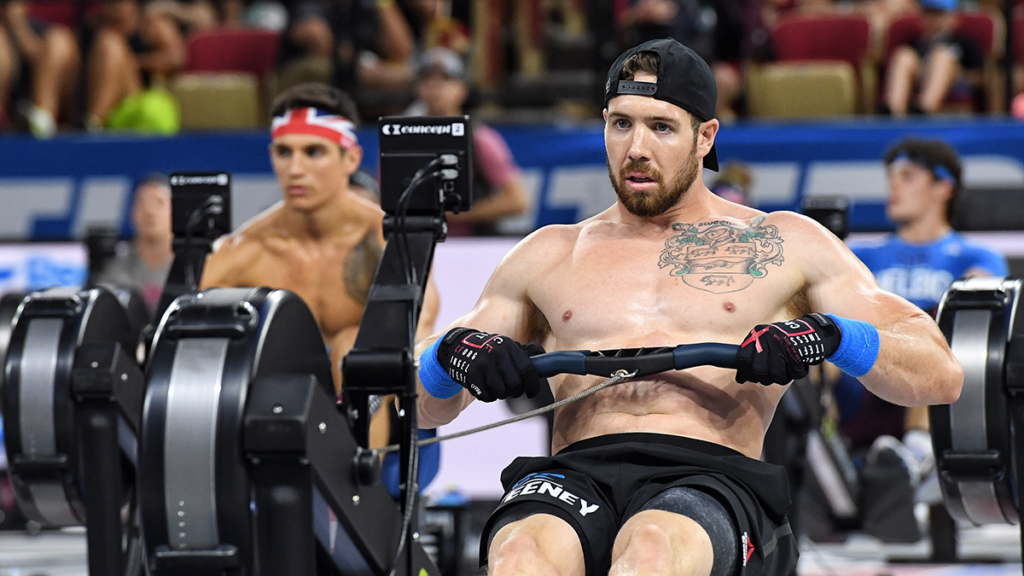
Choose a mode that lets you work at the intended intensity with good control. Running is convenient, but it can be tough on the legs for some people. A stationary bike or rowing machine may be a more suitable option if you want to do intervals with less impact. The best choice is the one that fits your body, equipment, experience, and goal.
It is also useful to know what your VO2 max number actually represents. Relative VO2 max is usually reported as milliliters of oxygen per kilogram of body weight per minute. Because body weight is part of that calculation, the relative score can change when body weight changes, even if absolute oxygen use does not change in the same way. This is one reason to interpret the number alongside your training, performance, and the conditions of the test.
If you repeat a fitness test, use the same protocol and similar conditions where possible. A treadmill result and a cycling result are not interchangeable, and consumer watch estimates are not the same as a direct laboratory measurement. Look for a trend over time instead of treating one reading as a final verdict on your fitness.
5. Be consistent, and give your training time to work
A few punishing workouts cannot replace a routine you can sustain. Training studies commonly run for multiple weeks, and changes in VO2 max differ from person to person. In the HERITAGE Family Study, adults followed a standardized exercise program for 20 weeks. Average VO2 max increased, but individual responses varied widely, with some participants gaining little and others improving substantially.
That variation is a reason to be patient, not a reason to assume training is pointless. If your number barely changes after a short block, your fitness may still be improving in ways the test does not capture. You might hold a faster pace at the same effort, recover more quickly between intervals, or feel more comfortable during a session. Keep a simple record of workout duration, effort, pace or power, and how you felt.
Standing Abs vs Floor Abs Exercises: Which Is Better for Beginners?
Plan hard workouts around the rest of your life and training. Sleep, food, illness, stress, and other demanding sessions can affect how well you perform, so do not expect every interval day to feel identical. If you are struggling to complete workouts, feeling unusually run down, or developing pain, reduce the load and reassess before pushing harder.
For many people, a sensible week could include one interval session, one tempo or steady moderate effort, and one or two easy aerobic sessions. That is an example, not a required formula. Start from your current training, add only what you can recover from, and build gradually.
How to put the five tips together
You do not need to use every training method at full volume at once. Pick one hard session that suits your experience, keep easy training easy, and add volume in small steps. After several weeks of consistent training, assess how you are responding using both a repeatable fitness test and practical signs such as pace, power, and perceived effort.
There is no single workout that guarantees a higher VO2 max. Interval training, steady aerobic work, and controlled sustained efforts can each contribute, but the best plan is one you can follow and recover from. Consistency gives the training a chance to add up.
Key Takeaways
| Tip | What to do |
|---|---|
| Add intervals | Start with one controlled interval workout each week. |
| Build easy aerobic work | Add manageable time at a pace where you can speak in full sentences. |
| Practice sustained efforts | Use tempo work at a strong, controlled pace, not an all out effort. |
| Match training to your goal | Choose an activity that fits your goal, body, and ability to train consistently. |
| Be patient and consistent | Follow a sustainable routine for several weeks and track more than one measure of progress. |
References
- Litleskare, S., Enoksen, E., Sandvei, M., Støen, L., Stensrud, T., Johansen, E. and Jensen, J. (2020) ‘Sprint interval running and continuous running produce training specific adaptations, despite a similar improvement of aerobic endurance capacity: a randomized trial of healthy adults’, International Journal of Environmental Research and Public Health, 17(11), p. 3865.
- Milanović, Z., Sporiš, G. and Weston, M. (2015) ‘Effectiveness of high-intensity interval training (HIT) and continuous endurance training for VO2max improvements: a systematic review and meta-analysis of controlled trials’, Sports Medicine, 45(10), pp. 1469–1481.
- Seiler, S., Jøranson, K., Olesen, B.V. and Hetlelid, K.J. (2013) ‘Adaptations to aerobic interval training: interactive effects of exercise intensity and total work duration’, Scandinavian Journal of Medicine & Science in Sports, 23(1), pp. 74–83.
- Wen, D., Utesch, T., Wu, J., Robertson, S., Liu, J., Hu, G. and Chen, H. (2019) ‘Effects of different protocols of high intensity interval training for VO2max improvements in adults: a meta-analysis of randomised controlled trials’, Journal of Science and Medicine in Sport, 22(8), pp. 941–947.
- Zhou, N. (2021) ‘Assessment of aerobic exercise capacity in obesity, which expression of oxygen uptake is the best?’, Sports Medicine and Health Science, 3(3), pp. 138–147.
- Bouchard, C., An, P., Rice, T., Skinner, J.S., Wilmore, J.H., Gagnon, J., Pérusse, L., Leon, A.S. and Rao, D.C. (1999) ‘Familial aggregation of VO2max response to exercise training: results from the HERITAGE Family Study’, Journal of Applied Physiology, 87(3), pp. 1003–1008.