

Your resting pulse rate is the number of times your heart beats per minute when you are calm and not exercising. It is often called your resting heart rate, and it can offer a useful snapshot of your health and fitness.

For most adults, a resting pulse between 60 and 100 beats per minute is considered typical. That range does not change into a new official target for every decade of adulthood. Your age, fitness, medications, stress, and other factors can influence your reading, so the number is most useful when you compare it with your own usual level.
A lower pulse can be normal for someone who exercises regularly, including some endurance athletes. But a low reading is not automatically a sign of excellent fitness, just as a reading within the typical range does not prove that someone is healthy. The pattern over time, how you feel, and your wider health picture matter.
What Is a Typical Resting Pulse Rate for Adults?
For most adults, a resting pulse rate of 60 to 100 beats per minute is considered typical when they are calm and sitting or lying down. This is a broad clinical range, not a fitness score or a goal everyone should try to reach.
A large US survey found that the average resting pulse rate in adulthood was about 72 beats per minute. That average is useful for describing a population, but it cannot tell you exactly what your own pulse should be. Individual readings varied, and a person’s age, sex, health, and medications can influence the result.
A resting pulse below 60 beats per minute is often described as bradycardia. That label alone does not mean there is a problem. Some active people have a low resting pulse without symptoms, and heart rate also slows during sleep. Certain medications can lower it, too. On the other hand, a low pulse accompanied by dizziness, fainting, unusual fatigue, or shortness of breath should be discussed with a health care professional.

A resting pulse above 100 beats per minute is commonly described as tachycardia. A single reading above that level does not establish a diagnosis, particularly if you have just moved around, feel anxious, or are unwell. A repeatedly high reading while you are calm and resting is worth discussing with a health care professional.
Does Your Resting Pulse Rate Change With Age?
Resting pulse rate changes considerably from infancy through childhood. In the US population data, the average pulse was much higher in infants than in adults, then declined through childhood and adolescence. By adulthood, the average was around 72 beats per minute and tended to plateau.
This means children and teenagers should not use adult ranges to judge their pulse. They have different age-related reference patterns, and a pediatrician can interpret their readings using age-appropriate information.
10 Quick Tips for Beginners To Build More Muscle
For adults, however, there is no widely accepted chart that assigns a separate healthy resting pulse range to every decade. The standard range of 60 to 100 beats per minute is generally used for adults across age groups. Age can still influence an individual’s resting pulse, but it does not produce a simple rule such as “your pulse should be five beats lower after age 50.”
Population studies show that average resting pulse can differ across age groups, but those averages are not individual targets. Two healthy adults of the same age can have different resting rates because of fitness, medication, body size, sleep, and other factors. The most useful reference is often your own pattern, measured consistently over time.
How Does Fitness Level Affect Resting Pulse Rate?
Regular physical activity and better cardiorespiratory fitness are generally associated with a lower resting heart rate. When the heart can pump more blood with each beat, it may not need to beat as often to meet the body’s needs at rest.
Research from the Fenland Study found that people with higher cardiorespiratory fitness tended to have lower resting heart rates. The study measured fitness directly and found the relationship across several resting positions. It also found that physical activity and body composition affected the association, which shows why resting pulse is only one part of the fitness picture.

Some well-trained athletes and highly active people have resting rates below 60 beats per minute, and readings near 40 can occur in some athletes. These numbers are not necessary goals for recreational exercisers. A person can improve fitness without reaching an unusually low pulse, and trying to force the number down is not a useful training objective.
Fitness cannot be judged from resting pulse alone. A lower number may reflect regular endurance training, but it can also be influenced by medication or an underlying health issue. Likewise, a resting pulse in the 60s, 70s, or 80s does not tell you by itself whether you have good or poor cardiovascular fitness.
A Practical Guide by Age and Fitness Level
For adults aged 18 to 39, 40 to 59, and 60 or older, the broad clinical reference range remains 60 to 100 beats per minute. An active adult in any of these groups may have a resting pulse below 60, while an adult who is less active may have a reading within the typical range or toward its upper end.
These age groups are a practical way to think about adult life stages, not separate medical categories with unique target values. The same pulse rate can mean different things for different people. For example, a steady reading in the low 50s may be normal for an endurance-trained person who feels well, while the same reading in someone taking a heart rate lowering medication needs to be interpreted in that context.
A resting pulse closer to the lower end of the adult range is often associated with better fitness at a population level. Yet lower is not always better, and no single cutoff can determine whether your heart is healthy. A new change from your usual baseline can be more informative than a one-time comparison with someone else’s number.
How to Measure Your Resting Pulse
The American Heart Association recommends checking your resting heart rate in the morning after a good night’s sleep, before getting out of bed or having coffee. The important part is to measure under similar conditions each time so you can compare readings.
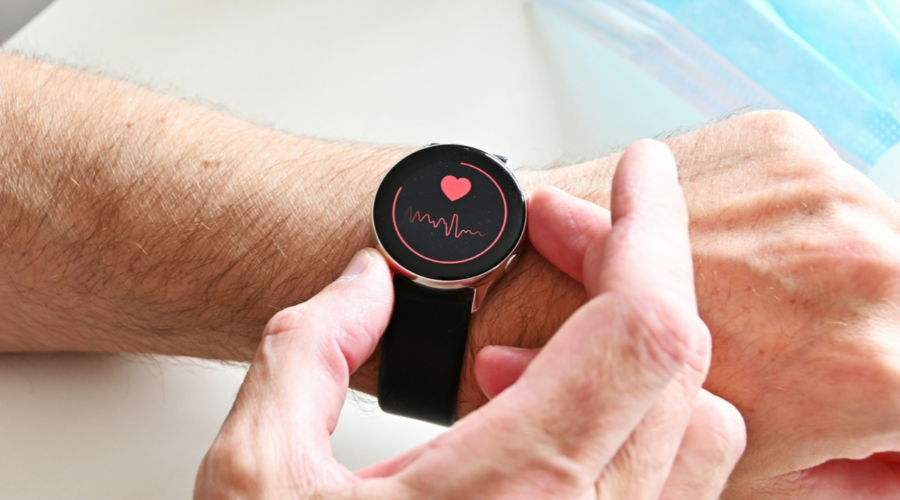
To check manually, place your index and middle fingers on the inside of your wrist below the base of your thumb. Count the beats for a full 60 seconds. You can also use a reliable heart rate monitor or wearable device, but occasional differences between devices and manual readings are possible. If a number seems unexpected, check it again while calm.
A single measurement can be affected by stress, anxiety, hormones, medication, and how physically active you are. That is one reason to look at a pattern across several mornings instead of treating one reading as a verdict. If you track your pulse, note whether the reading is close to your normal level and whether you have symptoms.
When Should You Talk With a Health Care Professional?
Consider contacting a health care professional if your resting pulse is repeatedly above 100 beats per minute while you are calm, or if it is below 60 and you are not an active person or you have concerning symptoms. The number alone does not establish a diagnosis, but a persistent change can be a reason to get medical advice.
Seek urgent help if an abnormal pulse occurs with severe chest pain, fainting, severe shortness of breath, or another serious symptom. If you take medication that affects heart rate, such as a beta blocker, ask your prescriber what range is appropriate for you. Do not change or stop prescribed medication based only on a pulse reading.
A higher resting heart rate has been associated with greater cardiovascular and all-cause mortality risk in large population studies. These studies describe statistical associations across groups. They do not mean that a particular reading predicts what will happen to an individual, or that lowering your pulse on its own will prevent disease. Blood pressure, smoking, cholesterol, activity, medical history, and other factors also matter.
What to Remember
For most adults, a resting pulse between 60 and 100 beats per minute is considered typical, regardless of whether they are in their 20s, 40s, or 70s. More active people may have lower readings, but there is no need to chase an especially low number. Measure consistently, pay attention to changes from your usual pattern, and consider symptoms and medication when interpreting the result.
Key Takeaways
| Point | What to know |
|---|---|
| Typical adult range | 60 to 100 beats per minute is considered typical for most adults. |
| Age | Adults do not have a separate official target range for every decade. |
| Fitness | Regular activity and better cardiorespiratory fitness are often associated with a lower resting pulse. |
| Low readings | A rate below 60 can be normal for some active people, but symptoms and medications matter. |
| Tracking | Measure under similar conditions, ideally in the morning, and look at your pattern over time. |
References
- American Heart Association (n.d.) ‘All About Heart Rate’. American Heart Association.
- American Heart Association (n.d.) ‘Target Heart Rates Chart’. American Heart Association.
- Gonzales, T.I. et al. (2023) ‘Resting heart rate is a population-level biomarker of cardiorespiratory fitness: The Fenland Study’, PLOS ONE, 18(5), e0285272.
- Ostchega, Y., Porter, K.S., Hughes, J., Dillon, C.F. and Nwankwo, T. (2011) ‘Resting pulse rate reference data for children, adolescents, and adults: United States, 1999–2008’, National Health Statistics Reports, 41, pp. 1–16.
- Woodward, M. et al. (2014) ‘The association between resting heart rate, cardiovascular disease and mortality: evidence from 112,680 men and women in 12 cohorts’, European Journal of Preventive Cardiology, 21(6), pp. 719–726.