


Your body can store fat in several places, and the number on a scale does not tell you where it is. Two people with the same weight and body mass index can have different amounts of fat around their waists, and that difference can matter for health.
That raises a practical question: how do you know whether you have too much visceral fat? The answer is less straightforward than a single number on a bathroom scale. Some measurements can help estimate risk, while others can show visceral fat more directly. Each has limits, and the number that counts as “healthy” depends on more than one factor.
What is visceral fat?
Visceral fat is stored deep inside the abdomen, around organs such as the liver, pancreas and intestines. It is different from subcutaneous fat, which lies just under the skin and can often be pinched.
Some visceral fat is normal. The concern is excess accumulation, which is associated with a higher risk of problems such as type 2 diabetes and cardiovascular disease. Visceral fat is one part of a person’s overall health picture, though. A measurement of it cannot diagnose a health condition on its own.
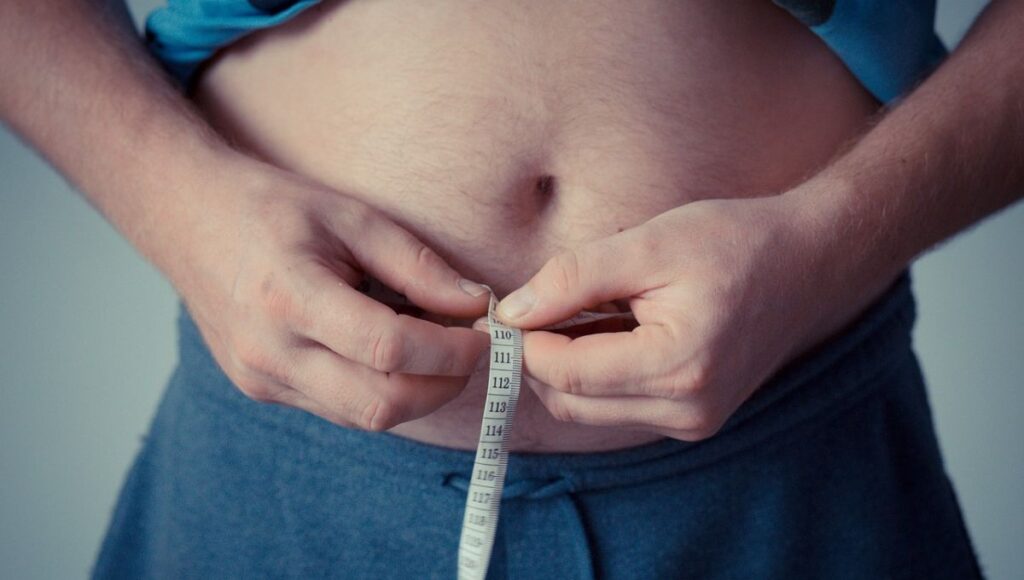
It can also be difficult to judge by appearance. A person’s waist size may provide a useful clue about abdominal fat, but it cannot show exactly how much of that fat is visceral and how much is under the skin.
Is there a healthy visceral fat level?
There is no single visceral fat number that applies to everyone. Research thresholds vary depending on how fat was measured, the population studied, and factors such as sex, age and ethnicity. A systematic review of 52 studies found no universal visceral fat threshold that reliably indicated increased metabolic syndrome risk across all groups.
Some studies report visceral fat area in square centimeters, usually based on imaging. Figures around 100 cm² are sometimes used as a threshold in particular populations or settings, but that should not be treated as a universal definition of a healthy level. The measurement method and the person’s characteristics matter.
What Is a Good Zone 2 Heart Rate Based on Your Age and Fitness Level?
For most adults, a practical first step is to measure waist circumference and consider waist size relative to height. These are indirect estimates of central fat, not direct readings of visceral fat. They can still help identify when it may be useful to discuss cardiometabolic risk with a health professional.
Waist-to-height ratio
The waist-to-height ratio is calculated by dividing your waist circumference by your height, using the same units for both. For example, if your waist is 80 cm and your height is 170 cm, divide 80 by 170. The result is about 0.47.
The National Institute for Health and Care Excellence (NICE) uses the following categories for adults with a body mass index below 35 kg/m²:
Waist-to-height ratio categories
| Waist-to-height ratio | Category | Interpretation |
|---|---|---|
| 0.40 to 0.49 | Healthy central adiposity | No increased health risk indicated by this measure |
| 0.50 to 0.59 | Increased central adiposity | Increased health risk indicated |
| 0.60 or higher | High central adiposity | Further increased health risk indicated |
A memorable guide is to keep your waist circumference below half your height. This is a screening guideline, not a guarantee of health or a direct measurement of visceral fat. A result at or above 0.5 is a reason to consider the rest of your health picture, not a diagnosis.
How to measure your waist
For a useful comparison over time, measure consistently. Stand upright and place a flexible tape around your middle, roughly halfway between the bottom of your ribs and the top of your hips. Keep the tape level, snug but not digging into your skin, and measure after a normal breath out. Do not pull your stomach in.

Some clinical protocols measure at a different waist landmark, such as just above the hip bones. Different protocols can still be useful, but use the same one each time so that changes are easier to interpret. If you are unsure about the location or technique, ask a health professional to show you.
To calculate the ratio, divide your waist measurement by your height. If both are measured in centimeters, the units cancel out. For example, a 90 cm waist divided by a height of 180 cm gives a ratio of 0.50.
Waist circumference can add information that body mass index misses because BMI does not show where fat is stored. It is also not a perfect measure: waist size includes both visceral and subcutaneous abdominal fat, and can be influenced by factors such as body shape and muscle.
How else can visceral fat be measured?
CT and MRI scans
Computed tomography (CT) and magnetic resonance imaging (MRI) can show visceral and subcutaneous fat separately, which makes them more direct ways to assess fat distribution. CT uses ionizing radiation, so it is not generally a sensible scan to request solely to check your visceral fat. MRI does not use ionizing radiation, but it is costly and is not routinely used for this purpose.
These scans may be used when there is a clinical reason or as part of research. They are not usually necessary for someone looking for a general health check.
DXA scans
Dual-energy X-ray absorptiometry, often called DXA or DEXA, is commonly used to assess bone density and can also estimate body composition. Some systems estimate abdominal visceral fat, but not every scan or machine reports it in the same way. It is best to ask what the result measures and how it should be interpreted.
Smart scales and bioelectrical impedance
Many home body-composition scales use bioelectrical impedance analysis (BIA). They send a small electrical current through the body and use the result, along with information such as height, weight and age, to estimate body composition.
A “visceral fat” score from a scale is an estimate generated by that device. It is not a direct image or a standardized medical measurement, and scores from different brands may not be comparable. In one study comparing BIA with CT in adults, the BIA estimate had limited accuracy for identifying visceral obesity. Hydration, recent exercise, food and fluid intake can also affect body-composition readings.

If you use a scale, treat the result as a rough tracking measure. Weigh under similar conditions each time and focus on the trend from the same device, rather than reacting to one reading or comparing it with another person’s score.
What should you do with the result?
A waist-to-height ratio at or above 0.5, a larger waist, or a rising trend in waist size can be a reason to look at your health more broadly. It may help to discuss the result with a health professional, especially if you have concerns about blood pressure, blood sugar or cholesterol, or a family history of metabolic disease.
A single measure cannot tell you whether you have a condition or predict exactly what will happen to your health. Clinicians may consider your medical history, blood pressure, laboratory results, weight and other risk factors together. If you are very muscular, pregnant, have a condition that affects fluid levels, or have other circumstances that make standard measurements harder to interpret, seek individualized advice.
You do not need a CT or MRI just to get a useful starting point. For many adults, a carefully measured waist and a waist-to-height ratio offer a practical way to keep track of central adiposity. If a result concerns you, a health professional can help decide whether any further assessment is appropriate.
References
- Bennett, J.P., Prado, C.M., Heymsfield, S.B. and Shepherd, J.A. (2024) ‘Evaluation of visceral adipose tissue thresholds for elevated metabolic syndrome risk across diverse populations: a systematic review’, Obesity Reviews, 25(9), e13767.
- National Institute for Health and Care Excellence (2025) Overweight and obesity management: identifying and assessing overweight, obesity and central adiposity. London: NICE.
- Naboush, A. and Hamdy, O. (2013) ‘Measuring visceral and hepatic fat in clinical practice and clinical research’, Endocrine Practice, 19(4), pp. 587–589.
- Koskinas, K.C. et al. (2024) ‘Obesity and cardiovascular disease: an ESC clinical consensus statement’, European Heart Journal, 45(38), pp. 4063–4098.
- Zhang, S. et al. (2021) ‘Measurement of visceral fat and abdominal obesity by single-frequency bioelectrical impedance and CT: a cross-sectional study’, BMJ Open, 11, e ಹೆಚ್ಚ?
Key Takeaways
| Topic | Key point |
|---|---|
| Healthy visceral fat level | There is no universal cutoff that applies to everyone. |
| Practical estimate | Waist-to-height ratio is a useful screening measure, but it does not directly measure visceral fat. |
| Simple guide | Aim to keep your waist below half your height. |
| Home body-composition scales | Treat visceral fat scores as rough estimates, not medical measurements. |
| When to seek advice | Discuss concerning measurements or other health risks with a health professional. |