


If you ask ten experienced lifters whether beginners should start with the bench press or push ups, you will probably get ten different answers. Some argue that the bench press is the king of chest building because it allows heavy loading and progressive overload. Others believe push ups are the perfect beginner exercise because they teach body control while reducing injury risk.
The truth is more nuanced. Both exercises are excellent for building the chest. They activate many of the same muscles and both can stimulate significant muscle growth when performed correctly. However, they each have strengths and weaknesses that make them more suitable in different situations.


Science has spent years comparing resistance training methods, muscle activation, and training loads. The evidence provides a clear picture of how beginners can get the best results.
Understanding How Muscle Growth Happens
Before comparing exercises, it helps to understand what actually causes muscles to grow.
Muscle hypertrophy occurs when resistance training creates enough mechanical tension within muscle fibers. This tension triggers cellular signaling pathways that stimulate protein synthesis, leading to larger and stronger muscles over time.
Research shows that muscle growth is influenced by three primary factors. Mechanical tension is the most important. Training close to muscular failure also plays a major role. Progressive overload ensures the muscles continue adapting as they become stronger.
Both the bench press and push ups can provide these stimuli. The difference lies in how easily beginners can apply progressive overload and maintain proper technique.
The Muscles Worked by Both Exercises
Although people often think of them as chest exercises, both movements involve multiple muscle groups.
- The primary muscle is the pectoralis major, which produces horizontal pressing force.
- The anterior deltoids assist with shoulder flexion while the triceps brachii extend the elbows during the pressing motion.
- Several stabilizing muscles also become active, including the serratus anterior, rotator cuff muscles, abdominals, glutes, and spinal stabilizers.
Electromyography studies consistently show high activation of the pectoralis major during both bench pressing and standard push ups when similar relative loads are used. For beginners, this means either exercise can effectively stimulate chest development.
The Bench Press
Why It Works So Well
The barbell bench press has been one of the most researched resistance exercises for decades.
Its greatest advantage is the ability to apply precise progressive overload. Beginners can gradually increase the weight by as little as 2.5 pounds or 5 pounds whenever they become stronger. This steady increase in resistance provides a powerful stimulus for long term muscle growth.
The bench press also allows higher absolute loading than push ups. A beginner who starts with an empty bar can eventually lift well over their body weight after years of consistent training. This ability to continually increase resistance makes the exercise exceptionally effective for building both strength and muscle.
Muscle Activation
Studies comparing chest muscle activation during pressing exercises consistently report high activation of the pectoralis major during the bench press. Grip width and bench angle can slightly change which fibers receive the greatest emphasis, but the entire chest contributes significantly during every repetition.
The triceps and shoulders also receive substantial training, making the exercise highly efficient for upper body development.
Advantages for Beginners
- The biggest benefit is measurable progression.
- Each week beginners can add small amounts of weight while keeping repetition ranges relatively constant.
- This objective progression is motivating because improvements are easy to track.
- The bench press also develops confidence with barbells, making future strength training easier.
Potential Drawbacks
- The biggest limitation is equipment.
- A bench press requires a bench, a barbell, weight plates, and ideally a spotter or safety arms.
- Technique also matters. Poor shoulder positioning, excessive elbow flare, or bouncing the bar from the chest can increase injury risk.
- Some beginners also lack the shoulder mobility needed for comfortable barbell pressing.
Push Ups
Why Push Ups Are So Effective
Many beginners underestimate push ups because they use body weight instead of external resistance. In reality, standard push ups can be surprisingly challenging.
During a standard push up, a person presses roughly 60 to 70 percent of their body weight depending on body position. For many beginners, this represents a significant resistance challenge. Push ups also require coordination between the upper body and core. Unlike the bench press, the torso is unsupported, forcing the abdominals, glutes, and spinal muscles to stabilize the entire body throughout every repetition.
Muscle Activation
Research comparing weighted push ups with bench pressing has found remarkably similar activation of the chest and triceps when resistance is matched. This suggests that the muscles respond primarily to the amount of tension rather than the specific exercise itself. As long as the exercise is challenging enough, both movements can produce comparable muscle building signals.
Advantages for Beginners
- Accessibility is the biggest strength.
- Push ups require no equipment and can be performed almost anywhere.
- They also teach excellent body awareness and shoulder stability.
- Because the shoulder blades move naturally during push ups, many coaches believe they feel more comfortable for people with minor shoulder discomfort.
Beginners who cannot complete full push ups can start with incline push ups or knee push ups before progressing to standard repetitions.
Potential Drawbacks
- Progressive overload is less straightforward.
- Eventually body weight alone becomes too easy.
- Once someone can perform thirty or forty repetitions, the exercise becomes more endurance focused than hypertrophy focused.
Resistance can be increased using weighted vests, resistance bands, elevated feet, rings, or weight plates, but these methods require additional equipment or creativity.
Which Builds More Muscle?
This is the question most beginners care about. The evidence suggests there is surprisingly little difference when both exercises are performed with similar effort. One study comparing low load push ups with high load bench pressing found similar increases in muscle thickness and strength when participants trained close to muscular failure.
The key factor was not the exercise itself but the effort applied. This supports growing evidence that muscles respond similarly across a wide range of loads provided the sets are taken sufficiently close to failure.
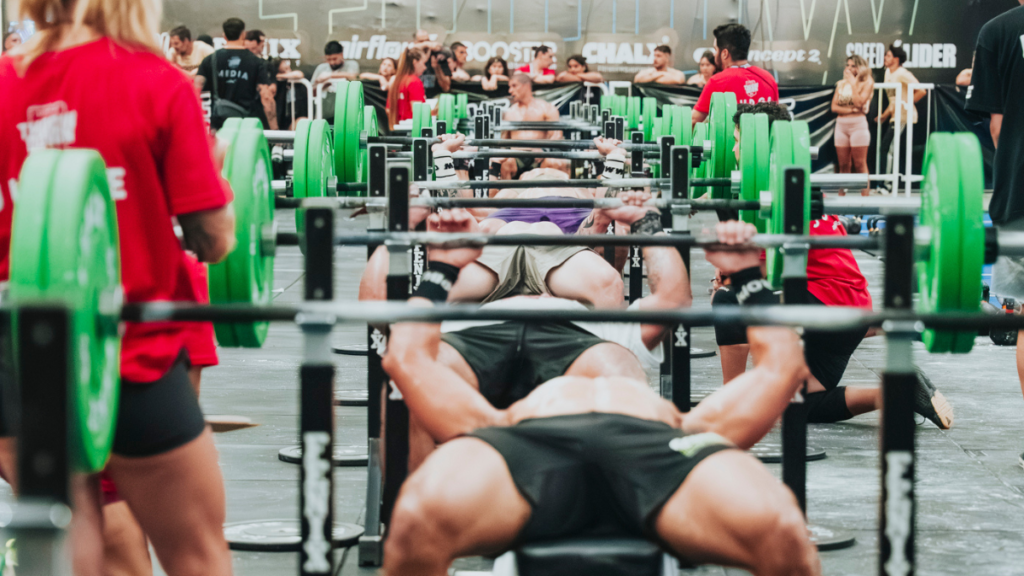
For beginners, this means a difficult set of push ups can stimulate chest growth just as effectively as a set of bench presses. The limiting factor becomes progression over months and years. The bench press makes long term progression much easier.
Which Exercise Builds More Strength?
When the goal is maximal upper body strength, the bench press clearly wins. Strength is highly specific to the movement being trained. Heavy bench pressing improves neural efficiency, coordination, and force production under high loads.
Push ups certainly increase pressing strength, especially in beginners, but they eventually become limited by body weight. Someone aiming to develop an impressive bench press will eventually need to practice bench pressing.
Which Is Safer?
Both exercises are generally safe when performed correctly. Push ups may have a slight advantage for complete beginners because the shoulders move more naturally and there is no risk of becoming trapped under a heavy barbell.
Bench pressing performed without safety equipment or proper technique carries greater potential risk. However, using appropriate weights, safety pins, and good coaching makes the exercise very safe. Large reviews of resistance training consistently show that injury rates during supervised strength training remain very low.
Which Exercise Is Better for Shoulder Health?
The answer depends largely on technique.
- Push ups encourage free movement of the shoulder blades, which may promote healthy shoulder mechanics.
- Bench pressing fixes the upper back against the bench, limiting scapular movement during the exercise.
Neither movement is inherently dangerous. Problems usually occur when excessive volume, poor technique, or inadequate recovery accumulate over time. Maintaining balanced upper back strength with rowing exercises also helps keep the shoulders healthy regardless of which pressing movement is used.
Which Exercise Is Better for Complete Beginners?
For someone who has never trained before, push ups often provide the better starting point.
They require no equipment. They teach body control. They improve core stability alongside upper body strength. They can easily be modified using incline variations. Once beginners can perform around fifteen to twenty technically sound push ups, adding bench pressing often becomes an excellent next step.
Those who already have gym access and proper instruction can safely begin with bench pressing from day one. The deciding factor is usually equipment availability rather than effectiveness.
Can You Combine Both?
Absolutely. In fact, combining them may produce the best overall results. Bench pressing develops maximal pressing strength through progressively heavier loading.
Push ups increase training volume without placing additional heavy stress on the joints. They also improve muscular endurance and reinforce good movement patterns. Many successful hypertrophy programs include both exercises.
For example, a workout might begin with three sets of bench presses followed by two or three challenging sets of push ups performed close to failure. This combination provides heavy mechanical loading along with additional muscle stimulating volume.
The Verdict
Choosing between the bench press and push ups is not an either or decision. Both exercises are scientifically proven to build chest muscle when performed with sufficient intensity and progressive overload.
For complete beginners training at home, push ups are often the ideal starting exercise because they require no equipment, improve whole body stability, and effectively build strength. For beginners with access to a gym, the bench press offers superior long term progression because resistance can be increased gradually over many months and years.
Is the Reverse Nordic Curl the Perfect Exercise for Stronger Quads?
Ultimately, the best exercise is the one you can perform consistently with good technique while steadily increasing the challenge. If possible, use both. The bench press provides unmatched opportunities for strength progression, while push ups add valuable training volume, shoulder stability, and muscular endurance.
Instead of arguing about which exercise is superior, beginners should focus on mastering both. Together they create a complete foundation for building a stronger, larger, and healthier chest.
Key Takeaways
| Goal | Better Choice | Why |
|---|---|---|
| Build chest muscle | Both | Both stimulate similar chest activation when performed close to failure |
| Build maximum strength | Bench Press | Allows precise progressive overload with heavier loads |
| Train without equipment | Push Ups | Requires only body weight and can be done anywhere |
| Learn body control | Push Ups | Improves coordination and core stability |
| Long term progression | Bench Press | Weight can be increased gradually for years |
| Shoulder friendly option | Push Ups | Allows more natural movement of the shoulder blades |
| Best overall strategy | Combine Both | Maximizes strength, muscle growth, and movement quality |
References
- Calatayud, J., Borreani, S., Colado, J.C., Martin, F., Rogers, M.E., Behm, D.G. and Andersen, L.L. (2015). Bench press and push up at comparable levels of muscle activity results in similar strength gains. Journal of Strength and Conditioning Research.
- Gentil, P., Fisher, J. and Steele, J. (2017). A review of the acute effects and long term adaptations of single and multi joint exercises during resistance training. Sports Medicine.
- Grgic, J., Schoenfeld, B.J., Orazem, J. and Sabol, F. (2022). Effects of resistance training performed to repetition failure or non failure on muscular strength and hypertrophy. Scandinavian Journal of Medicine and Science in Sports.
- Kubo, K., Ikebukuro, T., Yata, H., Tomita, M. and Okada, M. (2019). Effects of low load resistance training with slow movement on muscle hypertrophy and strength. European Journal of Applied Physiology.
- Schoenfeld, B.J. (2010). The mechanisms of muscle hypertrophy and their application to resistance training. Journal of Strength and Conditioning Research.
- Schoenfeld, B.J., Grgic, J., Ogborn, D. and Krieger, J.W. (2017). Strength and hypertrophy adaptations between low load and high load resistance training. Journal of Strength and Conditioning Research.
- Wernbom, M., Augustsson, J. and Thomeé, R. (2007). The influence of frequency, intensity, volume and mode of strength training on whole muscle cross sectional area in humans. Sports Medicine.