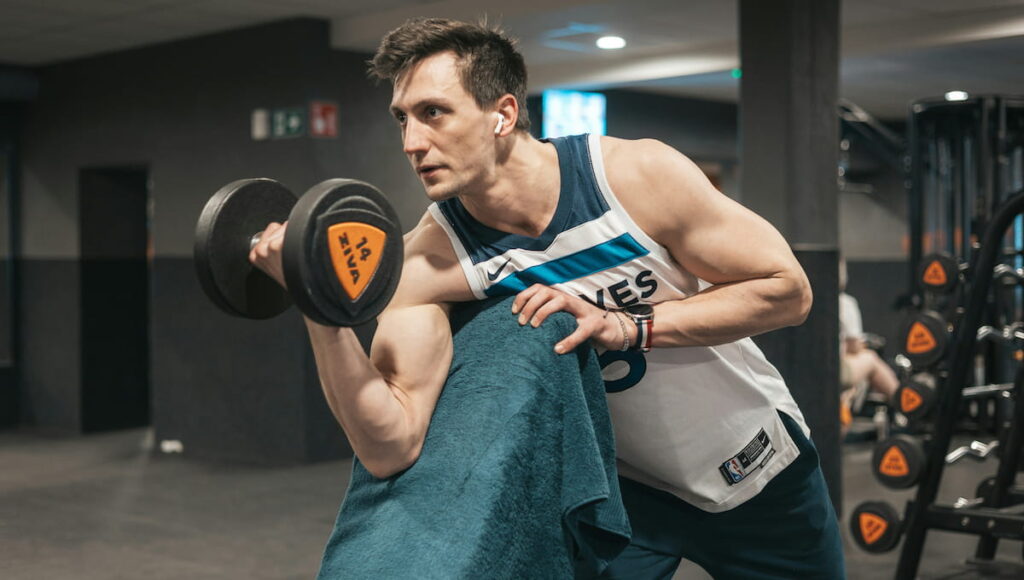
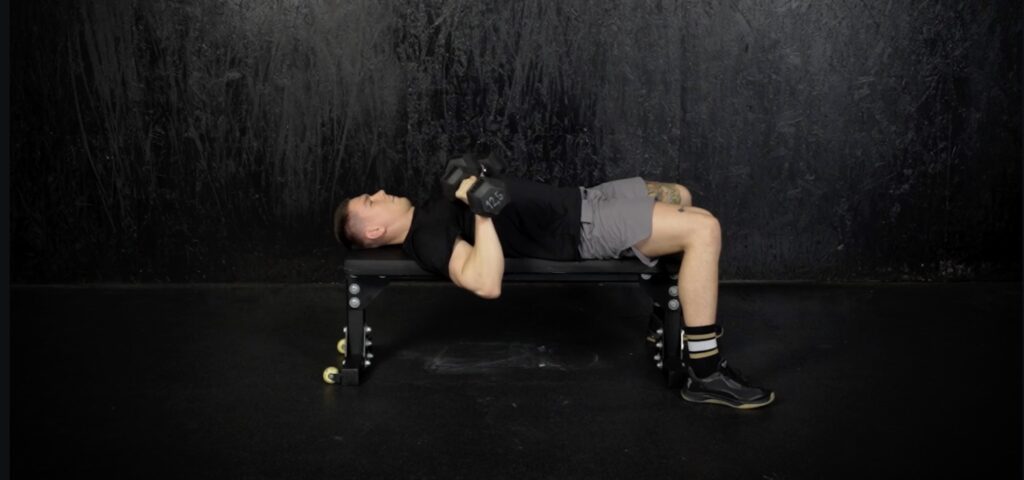
The dumbbell bench press is one of the best exercises for building upper body strength, muscle mass, and shoulder stability. Unlike the barbell bench press, dumbbells force each arm to work independently, improving muscular balance while demanding greater control from the stabilizing muscles around the shoulders.
One of the most common questions lifters ask is how much they should be able to dumbbell bench press. The answer depends on several factors, including training experience, body weight, sex, and overall health. Age also plays a significant role because strength naturally changes throughout life.


That does not mean getting older automatically means becoming weak. Research consistently shows that resistance training can preserve, and often increase, muscle strength well into older adulthood. Many people continue setting personal records in their forties, fifties, and beyond. Here is what science says about dumbbell bench press strength across different age groups, what influences your performance, and how to improve your numbers safely.
Why the Dumbbell Bench Press Is Different
Although the barbell bench press often receives more attention, dumbbells offer several unique advantages. Each arm moves independently, preventing the stronger side from compensating for the weaker side. This encourages more balanced muscular development while increasing activation of stabilizing muscles in the shoulders and upper back.
Studies comparing free weights with machines have shown that free weight exercises generally require greater muscle activation because they demand more stabilization. The dumbbell bench press also allows a greater range of motion than a standard barbell bench press, potentially providing a larger stretch through the chest muscles. For these reasons, many strength coaches recommend using both barbell and dumbbell pressing within a well designed training program.
How Age Affects Strength
Strength follows a predictable pattern across the lifespan. Most people gradually build muscle and strength throughout adolescence and early adulthood as hormones, muscle mass, and neuromuscular coordination improve.
Peak absolute strength usually occurs between approximately 25 and 35 years of age, although well trained athletes often continue improving into their late thirties. After around age 40, muscle mass gradually declines through a process known as sarcopenia. Unless people continue resistance training, both muscle size and strength decrease progressively with age.

Fortunately, this decline is far from inevitable. Numerous studies have shown that older adults who lift weights consistently retain significantly more muscle and strength than sedentary individuals. Resistance training remains one of the most effective interventions for preserving physical function during aging.
Estimated Dumbbell Bench Press Standards by Age
The following recommendations assume good lifting technique and represent the weight used in each dumbbell for a single repetition. These estimates are intended for healthy adults with regular resistance training experience.
Ages 18 to 29
This is typically the period of greatest strength development.
- Beginner: 25 to 40 pounds
- Intermediate: 45 to 70 pounds
- Advanced: 75 to 100 pounds
- Elite: More than 100 pounds
Many athletes continue improving rapidly during these years because muscle protein synthesis, recovery capacity, and hormone levels are generally favorable.
Ages 30 to 39
Strength generally remains very close to peak levels.
- Beginner: 25 to 40 pounds
- Intermediate: 45 to 70 pounds
- Advanced: 70 to 95 pounds
- Elite: More than 100 pounds
Most healthy adults should not expect meaningful declines if they continue training consistently, sleep well, and maintain adequate nutrition.
Ages 40 to 49
Small reductions in recovery ability may begin to appear, although strength remains highly trainable.
- Beginner: 20 to 35 pounds
- Intermediate: 40 to 65 pounds
- Advanced: 65 to 90 pounds
- Elite: More than 95 pounds
Many experienced lifters actually reach lifetime best performances during this decade because years of technical practice compensate for modest biological changes.
Ages 50 to 59
Muscle loss accelerates slightly without resistance training.
- Beginner: 15 to 30 pounds
- Intermediate: 35 to 55 pounds
- Advanced: 55 to 80 pounds
- Elite: More than 85 pounds
Research consistently shows that individuals who continue lifting weights can maintain remarkably high levels of strength during these years.
Ages 60 and Older
Strength preservation becomes increasingly important for long term health and independence.
- Beginner: 10 to 25 pounds
- Intermediate: 25 to 45 pounds
- Advanced: 45 to 65 pounds
- Elite: More than 70 pounds
Many competitive masters athletes greatly exceed these values, demonstrating that chronological age does not necessarily determine physical capability.
Body Weight Matters
Age tells only part of the story. Larger individuals generally possess greater absolute strength because they have more muscle mass available to produce force. A person weighing 220 pounds will usually press significantly heavier dumbbells than someone weighing 140 pounds.
3 Best Beginner Exercises for a Wider and More Muscular Back
This does not necessarily mean they are stronger relative to their size. Strength coaches often compare performance relative to body weight when evaluating athletes because this provides a fairer comparison across different body sizes.
Men and Women Should Not Expect Identical Numbers
Average strength differs between men and women due primarily to differences in lean muscle mass rather than motivation or training quality. Men generally possess greater upper body muscle mass because of higher testosterone levels throughout adulthood.
However, women respond exceptionally well to resistance training and experience substantial increases in strength. Many highly trained female athletes outperform recreational male lifters. The key is measuring progress against your own training history rather than comparing yourself to others.
Why Dumbbell Press Numbers Often Surprise People
Many lifters assume they should use approximately half of their barbell bench press in each hand. That rarely happens.
The stability demands of dumbbells make the movement considerably more challenging. Coordinating two independently moving weights requires more shoulder stabilization and neuromuscular control than pressing a single barbell.
Most experienced lifters handle roughly 35 to 45 percent of their barbell bench press in each dumbbell during a one repetition maximum effort. For example, someone capable of bench pressing 225 pounds with a barbell may use dumbbells weighing approximately 80 to 90 pounds each rather than 112 pounds.
Technique Influences Performance
Strength numbers only matter when achieved with proper technique.
- Lower the dumbbells under control until your elbows reach approximately shoulder level or slightly below if your mobility allows.
- Keep your feet firmly planted on the floor throughout the lift.
- Maintain a stable upper back by gently squeezing the shoulder blades together against the bench.
- Press both dumbbells upward smoothly without bouncing or twisting.
- Avoid excessively flaring the elbows because this may increase stress on the shoulder joint.
Proper technique not only improves strength development but also reduces injury risk over time.
What Science Says About Building a Bigger Dumbbell Bench Press
Increasing your dumbbell bench press requires more than simply lifting heavier every week.
Progressive Overload
Progressive overload remains the foundation of strength development. Gradually increasing weight, repetitions, or training volume encourages muscles and the nervous system to adapt. Research consistently demonstrates that progressive resistance training produces significant increases in muscular strength across all age groups.
Train the Chest More Than Once Per Week
Many lifters only train chest every Monday. Research suggests training a muscle group twice weekly generally produces greater muscle growth than once weekly when overall training volume is similar. Splitting your weekly pressing volume across multiple sessions often improves recovery while increasing training quality.
Sleep Matters
Strength gains occur during recovery rather than during training itself. Poor sleep reduces muscle protein synthesis, impairs recovery, and decreases athletic performance. Adults who consistently sleep seven to nine hours each night generally recover more effectively from resistance training.
Do Not Ignore Supporting Muscles
A stronger chest alone does not produce a bigger bench press. Strong triceps, shoulders, upper back, and rotator cuff muscles improve pressing stability and force production. Exercises such as rows, overhead presses, face pulls, and triceps extensions help build a more balanced upper body while supporting long term shoulder health.
Common Mistakes That Limit Progress
Many people stop improving because they make avoidable errors.
- Using weights that are too heavy often shortens the range of motion and reduces muscle activation.
- Others increase weight too quickly before mastering technique.
- Some lifters never train their upper back, leading to poor shoulder stability during pressing.
- Inconsistent training is another major obstacle. Building strength requires months and years of regular practice rather than occasional bursts of motivation.
Finally, many underestimate the importance of nutrition and recovery. Without sufficient calories, protein, and sleep, progress slows dramatically regardless of how hard you train.
Should You Worry About Age Related Declines?
Not unless you stop training. Research repeatedly demonstrates that resistance exercise remains highly effective throughout life. Older adults can gain muscle, improve bone density, increase strength, enhance balance, and reduce the risk of falls through consistent strength training. Rather than comparing yourself with your younger self, focus on maintaining or improving your own performance over time.
A 60 year old pressing 60 pound dumbbells with excellent technique is demonstrating impressive functional strength that contributes to long term health and independence.
The Bottom Line
Your dumbbell bench press is influenced by much more than age. Training history, body weight, muscle mass, nutrition, recovery, and exercise technique all contribute to how much weight you can press.
Most people reach their highest absolute strength between their twenties and thirties, but consistent resistance training allows impressive strength to be maintained for decades. In many cases, experienced lifters continue improving well into middle age because years of technical practice and disciplined training outweigh modest biological changes.
Instead of chasing arbitrary numbers, focus on gradual improvement, proper technique, and consistent training. If your dumbbell bench press is increasing over time while your form remains solid, you are moving in the right direction regardless of your age.
Key Takeaways
| Age Group | Typical Intermediate Dumbbell Weight (Each Hand) | Main Focus |
|---|---|---|
| 18 to 29 | 45 to 70 pounds | Build maximum strength and muscle |
| 30 to 39 | 45 to 70 pounds | Maintain peak performance with consistent training |
| 40 to 49 | 40 to 65 pounds | Prioritize recovery alongside progressive overload |
| 50 to 59 | 35 to 55 pounds | Preserve muscle mass through regular resistance training |
| 60 and older | 25 to 45 pounds | Focus on strength, function, and healthy aging |
References
- American College of Sports Medicine. (2009). Progression models in resistance training for healthy adults. Medicine & Science in Sports & Exercise, 41(3), 687 to 708.
- Grgic, J., Schoenfeld, B.J., Orazem, J. and Sabol, F. (2020). Effects of resistance training performed to repetition failure or non failure on muscular strength and hypertrophy. Journal of Sport and Health Science, 10(3), 275 to 280.
- Krzysztofik, M., Wilk, M., Wojdala, G. and Gołaś, A. (2019). Maximizing muscle hypertrophy. A systematic review of advanced resistance training techniques and methods. International Journal of Environmental Research and Public Health, 16(24), 4897.
- Lasevicius, T., Schoenfeld, B.J., Silva Batista, M., Vieira, A., Ribeiro, A.S. and Teixeira, E.L. (2018). Muscle failure promotes greater muscle hypertrophy in low load but not high load resistance training. Journal of Strength and Conditioning Research, 36(2), 346 to 351.
- Morton, R.W., Murphy, K.T., McKellar, S.R., Schoenfeld, B.J., Henselmans, M., Helms, E., Aragon, A.A., Devries, M.C., Banfield, L., Krieger, J.W. and Phillips, S.M. (2018). A systematic review, meta analysis and meta regression of protein supplementation on resistance training induced gains in muscle mass and strength in healthy adults. British Journal of Sports Medicine, 52(6), 376 to 384.
- Peterson, M.D., Rhea, M.R. and Sen, A. (2010). Resistance exercise for muscular strength in older adults. Ageing Research Reviews, 9(3), 226 to 237.
- Schoenfeld, B.J., Ogborn, D. and Krieger, J.W. (2016). Effects of resistance training frequency on measures of muscle hypertrophy. Sports Medicine, 46(11), 1689 to 1697.