Push-ups and pull-ups are two of the simplest ways to test upper-body fitness. They need little or no equipment, are easy to repeat, and can reveal how well you move your own body. But they test different patterns of strength. A push-up is a pushing exercise, while a pull-up is a pulling exercise, so a strong score on one does not guarantee a strong score on the other.
If you want one quick, accessible test for a wide range of people, push-ups are usually the more practical choice. If you want to test demanding pulling strength relative to your body weight, pull-ups offer a tougher challenge. Neither gives you a complete picture of upper-body fitness on its own.


What Each Exercise Measures
Push-ups test repeated pushing strength
During a push-up, you lower and raise your body while your hands stay on the floor. Your chest, shoulders and triceps produce much of the pushing force. Your trunk muscles also help keep your body in a stable position.
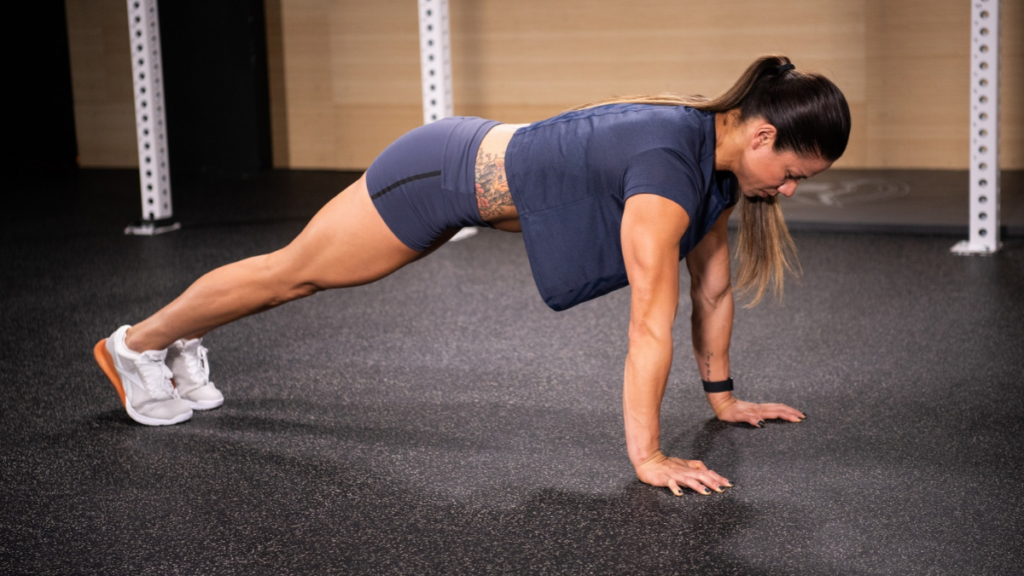
A test that counts how many controlled push-ups you can complete is mainly a measure of upper-body muscular endurance. It also reflects your ability to coordinate the movement and maintain your body position as you get tired. The number can change depending on the test rules, including how low you need to go, whether you can pause, and how quickly you perform each repetition.
Research has found that push-up tests can be reliable when the testing method is consistent. In one study of young adults, test results were highly repeatable. However, performance also differed substantially between the men and women in the study. That finding is a reminder that scores should be interpreted with appropriate reference groups, rather than treated as a universal measure of fitness.
Pull-ups test repeated pulling strength
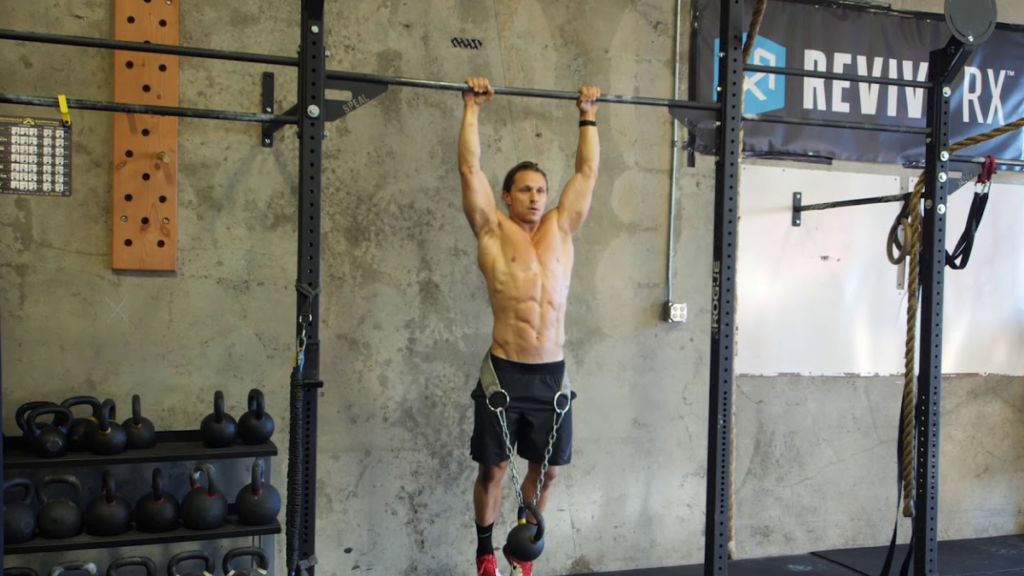
A standard pull-up starts from a hanging position. You pull until your chin clears the bar, then lower under control. Your back, arms and shoulders work together to raise your body, while your hands and forearms must hold the bar.
A maximum-repetition pull-up test measures your ability to perform repeated pulling movements while supporting your body weight. It also depends on grip, coordination, technique and familiarity with the exercise. Since you have to lift your whole body through a substantial range of motion, many people cannot complete a strict repetition, even if they have some upper-body strength.
Pull-up grip and technique can influence the test. A pronated grip, with palms facing away, is commonly used for a standard pull-up. A chin-up uses a supinated grip, with palms facing toward you, and is a different variation. Research on pull-up variations has found that grip position can change the activity of some muscles, though the overall muscle activation patterns were similar across the variations studied.
The Main Difference: Pushing Versus Pulling
The clearest difference is the direction in which you apply force. Push-ups test how well you push your body away from the floor. Pull-ups test how well you pull your body toward a bar. These are complementary abilities, not interchangeable ones.
A study comparing push-ups and modified pull-ups found that the tests were both repeatable, but that they did not always classify participants in the same way. The researchers concluded that the tests may measure different aspects of upper-body strength and endurance. The study involved children and a modified pull-up test, so its results should not be applied directly to every adult fitness assessment. Still, it illustrates an important point: one test cannot stand in for the other.
The muscle activity involved also differs. Push-up research has measured activity in the chest, triceps and trunk muscles, while pull-up research has examined muscles in the shoulder, arm and forearm. Each movement challenges a different combination of muscles and positions. A person could therefore perform well on push-ups but struggle with pull-ups, or the other way around.
Which Test Is More Practical?
For most people, push-ups are easier to use as a general field test. They require no bar, and the exercise can be adjusted to suit different ability levels. For example, someone who cannot yet do a floor push-up can begin with their hands on a wall or elevated surface. These modified versions are useful for training, although a score from one variation should not be compared directly with a score from another.
Pull-ups require access to a stable bar and enough grip strength to hang from it. They are also difficult to scale while keeping the test comparable. Assisted pull-ups, banded pull-ups and inverted rows can help build strength, but they are not the same test as an unassisted pull-up.
That makes the push-up a more inclusive starting point for a broad group. It is easier to set up in a home, school or gym, and it offers more ways to adjust the difficulty. Pull-ups can be a more selective test: completing even one strict repetition can demonstrate a meaningful level of body-weight pulling ability, but people who cannot do one receive little information from a maximum-repetition score.
What Body Weight Means for Your Score
Both exercises involve moving your own body, so body weight affects performance. With a pull-up, you must raise your body mass against gravity. A heavier person may have to move more total weight than a lighter person, even if both have similar absolute pulling strength.
Push-ups also require you to support and move part of your body weight, but the exercise distributes support between your hands and feet. The amount of body weight supported by the arms changes with body position and technique. This means push-up scores are affected by body size and proportions too, although the test does not require lifting your full body off the ground.
Neither score measures strength in isolation. A repetition count combines strength, muscular endurance, body mass, limb proportions, range of motion, pacing and skill. This is why a simple comparison between two people can be misleading. It is usually more useful to compare your own results over time, using the same technique and test rules.
How to Make the Tests More Meaningful
A fitness test only works well when the rules stay the same. For push-ups, choose a clear standard for hand position, depth, body alignment, lockout and whether you can pause. For pull-ups, define the starting position, grip, range of motion and whether swinging is allowed. Count only repetitions that meet the standard.
Use a controlled pace that you can repeat on future test days. If you move faster on one attempt, shorten the range of motion, or change your technique when tired, your result may look better without showing a real improvement in strength or endurance.
A warm-up and familiarization session can also help. If you rarely do pull-ups, for example, your first test may reflect unfamiliarity with the movement as much as your pulling capacity. The research on both tests shows the value of consistent procedures, and a study of school-age participants found that practice can affect test performance.
For tracking progress, repeat the test under similar conditions. Use the same variation, rest beforehand, surface, equipment, range of motion and scoring rules. A small increase in repetitions may be meaningful, but changes in technique or test setup can make the score difficult to interpret.
Which One Should You Choose?
Choose push-ups if you want a convenient, repeatable test of pushing endurance that can be adjusted for different starting levels. They are often the better single test for a general fitness setting because they are easy to administer and require no equipment.
How Many Chin-Ups Should You Be Able to Do Based on Your Age?
Choose pull-ups if you specifically want to assess body-weight pulling ability and have access to a bar. They provide information that push-ups cannot, especially about pulling strength and grip. A strict pull-up is a demanding standard, so it may be most useful for people who already train the movement or whose sport or goals require it.
For a fuller picture of upper-body fitness, use both. Add a separate strength test if you need to measure maximal force, since a maximum number of push-ups or pull-ups does not directly tell you how much weight you can lift for one repetition. Fitness includes more than upper-body performance, too. Lower-body strength, cardiovascular fitness, mobility and balance all matter.
The clearest answer is that push-ups are generally the more practical broad-access test, while pull-ups are the more demanding test of body-weight pulling ability. Neither is the single best measure of upper-body fitness. Together, they show more than either one alone.
Key Takeaways
| Test | What it mainly measures | Main advantage | Main limitation |
|---|---|---|---|
| Push-up | Repeated upper-body pushing strength and endurance | Easy to set up and scale | Results depend on technique, body position and test rules |
| Pull-up | Repeated body-weight pulling strength and endurance | Tests a challenging pulling movement and grip | Requires a bar and may be inaccessible to beginners |
| Both tests | Complementary aspects of upper-body performance | Gives a broader picture than either test alone | Neither measures maximal strength or total fitness |
References
- Augustsson, S.R., Bersås, E., Thomas, E.M., Sahlberg, M., Augustsson, J. and Svantesson, U. (2009). Gender differences and reliability of selected physical performance tests in young women and men. Advances in Physiotherapy, 11(2), pp. 64-70.
- Dickie, J.A., Faulkner, J.A., Barnes, M.J. and Lark, S.D. (2017). Electromyographic analysis of muscle activation during pull-up variations. Journal of Electromyography and Kinesiology, 32, pp. 30-36.
- Garavaglia, L., Romanò, J., Lazzari, F. and Pittaccio, S. (2024). Biomechanical characterisation of the pull-up exercise. Sport Sciences for Health, 20, pp. 221-234.
- Lehman, G.J., MacMillan, B., MacIntyre, I., Chivers, M. and Fluter, M. (2006). Shoulder muscle EMG activity during push up variations on and off a Swiss ball. Dynamic Medicine, 5, article 7.
- Saint Romain, B. and Mahar, M.T. (2001). Norm-referenced and criterion-referenced reliability of the push-up and modified pull-up. Measurement in Physical Education and Exercise Science, 5(2), pp. 67-80.