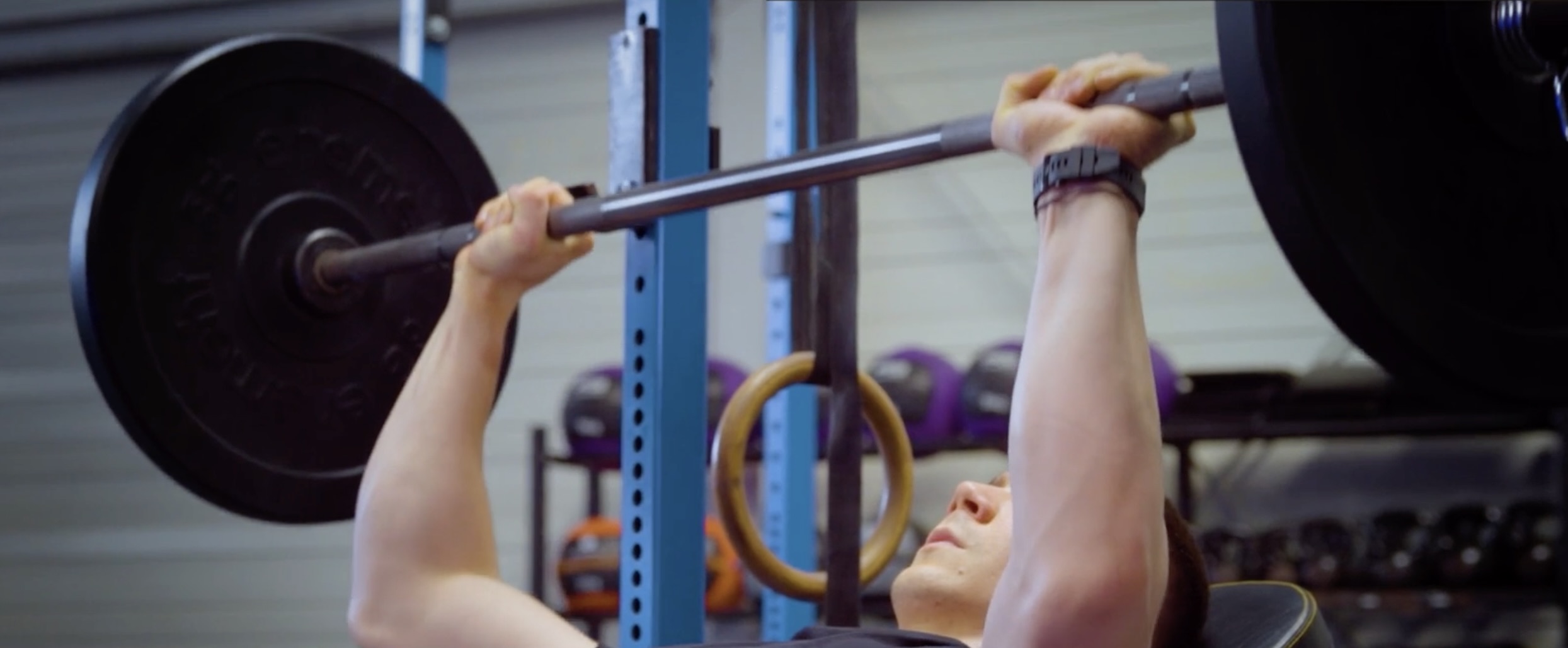


If your bench press has stalled or feels disproportionately weak compared to your squat or deadlift, you are not alone. The bench press is one of the most technically demanding compound lifts, and small inefficiencies can significantly limit your strength output. The good news is that most plateaus come down to a few common and fixable issues.
This article breaks down three science-backed reasons why your bench press may be underperforming and shows you exactly how to address each one.


Reason 1: Poor Technique and Inefficient Mechanics
Why Technique Matters More Than You Think
The bench press is not just a chest exercise. It is a coordinated full-body movement involving the pectoralis major, anterior deltoids, triceps brachii, and stabilizing muscles across the upper back and core. Research using electromyography has shown that small changes in technique can significantly alter muscle activation patterns and force production.
If your technique is inefficient, you are leaving strength on the table. Worse, you are increasing injury risk while doing it.

Common Technical Mistakes
Many lifters unknowingly adopt habits that reduce their pressing power:
- Elbows flaring too early, which reduces triceps contribution and increases shoulder stress
- Lack of upper back tightness, leading to instability
- Inconsistent bar path, often drifting toward the neck or stomach
- No leg drive, meaning less total body force transfer
- Shallow or uncontrolled range of motion
Studies have shown that a stable base and controlled bar path improve force production and efficiency during the bench press. Proper scapular retraction and depression increase shoulder stability and allow better force transfer through the kinetic chain.
How to Fix It
Set Up Like a Powerlifter
A strong bench press starts before the bar leaves the rack:
- Retract and depress your shoulder blades to create a stable base
- Keep your chest high and upper back tight
- Plant your feet firmly on the ground
- Maintain a slight arch in your lower back
This position reduces shoulder stress and increases mechanical advantage.
Use an Efficient Bar Path
The strongest bench pressers use a slightly curved bar path:
- Lower the bar to your lower chest or sternum
- Press back toward your shoulders in a controlled arc
This allows better leverage and engages both the chest and triceps more effectively.
Engage Leg Drive
Leg drive is not optional. It helps transfer force from the lower body through the torso into the bar:
- Push your feet into the ground throughout the lift
- Keep your hips stable on the bench
- Use tension, not movement
Research shows that full-body tension improves force output in compound lifts.
Control the Eccentric Phase
Lowering the bar with control increases muscle activation and improves strength over time:
- Take about 2 to 3 seconds to lower the bar
- Avoid bouncing the bar off your chest
Controlled eccentrics have been shown to enhance hypertrophy and strength development.
Reason 2: Weak Supporting Muscle Groups
The Bench Press is Not Just Chest
A common misconception is that a weak bench press means a weak chest. In reality, the triceps and anterior deltoids play critical roles, especially near lockout.
Studies on muscle activation during the bench press show:
- The pectoralis major is most active in the bottom phase
- The triceps dominate the lockout phase
- The anterior deltoid contributes throughout the movement
If any of these muscles are underdeveloped, your bench press will suffer.
Identifying Your Weak Point
To fix the problem, you need to identify where the lift breaks down:
- Struggling off the chest suggests weak pecs or poor positioning
- Failing mid-range often indicates poor coordination or weak delts
- Lockout failure points to weak triceps
Understanding your sticking point allows targeted training.
How to Fix It
Build Triceps Strength
Strong triceps are essential for a powerful lockout:
- Close-grip bench press
- Skull crushers
- Cable pushdowns
- Dips
Research shows that triceps strength strongly correlates with bench press performance, especially in advanced lifters.

Strengthen the Upper Bac
A strong upper back improves stability and bar control:
- Barbell rows
- Face pulls
- Rear delt flyes
- Pull-ups
Upper back strength helps maintain scapular positioning, which improves force transfer and reduces injury risk.
Train the Chest Through Full Range
Target the pecs effectively:
- Dumbbell bench press for greater range of motion
- Paused bench press to improve strength off the chest
- Incline bench press to develop upper chest
Paused reps eliminate momentum and improve starting strength.
Include Accessory Variations
Different variations can target weak points:
- Board press for lockout strength
- Spoto press for mid-range control
- Tempo bench press for overall control
Variation training has been shown to improve strength by addressing specific weaknesses and increasing neuromuscular adaptation.
Reason 3: Poor Programming and Recovery
Strength is Built Outside the Gym Too
Even with perfect technique and strong muscles, your bench press will stall if your training program and recovery are not aligned.
Strength development depends on:
- Progressive overload
- Adequate training volume
- Proper frequency
- Sufficient recovery
Research consistently shows that both volume and frequency are key drivers of strength gains.

Common Programming Mistakes
Many lifters unknowingly sabotage their progress:
- Training the bench press only once per week
- Using the same weight and rep scheme for too long
- Not tracking progress
- Ignoring fatigue and recovery
These mistakes limit adaptation and lead to plateaus.
How to Fix It
Increase Training Frequency
Training the bench press more often improves skill and strength:
- Aim for 2 to 3 sessions per week
- Vary intensity across sessions
Higher frequency allows more practice and better motor learning.
Apply Progressive Overload
Your body adapts to stress. If the stress does not increase, neither will your strength:
- Add small increments of weight over time
- Increase reps or sets gradually
- Track every session
Progressive overload is one of the most well-established principles in strength training science.
Use Periodization
Structured variation prevents stagnation:
- Alternate between heavy, moderate, and light sessions
- Cycle between strength and hypertrophy phases
Periodized training has been shown to produce superior strength gains compared to non-structured approaches.
Prioritize Recovery
Recovery is where adaptation happens:
- Sleep at least 7 to 9 hours per night
- Consume enough protein and calories
- Manage overall training stress
Sleep deprivation has been shown to impair strength performance and recovery. Nutrition also plays a key role in muscle repair and growth.
Nutrition Basics for Bench Press Strength
To support strength gains:
- Protein intake should be around 1.6 to 2.2 grams per kilogram of body weight
- Ensure a slight calorie surplus if aiming to gain strength
- Stay hydrated
Adequate protein intake has been consistently linked to increased muscle mass and strength.
Putting It All Together
A weak bench press is rarely caused by just one factor. More often, it is a combination of technical inefficiencies, muscular weaknesses, and poor programming. To summarize:
- Fix your technique to maximize efficiency
- Strengthen the muscles that support the lift
- Follow a structured training plan with proper recovery
Consistency across these areas is what drives long-term progress.
Final Thoughts
Improving your bench press is not about chasing random tips or constantly switching programs. It is about identifying your specific limitations and addressing them with precision.
The lifters who build strong benches are the ones who:
- Treat technique as a skill
- Train weak points deliberately
- Respect the role of recovery
If you apply the strategies in this article consistently, your bench press will improve. Not overnight, but steadily and predictably.
Key Takeaways
| Problem | Why It Happens | Fix |
|---|---|---|
| Poor technique | Inefficient mechanics reduce force output | Improve setup, bar path, and full body tension |
| Weak triceps, chest, or delts | Muscle imbalances limit performance | Use targeted accessory exercises |
| Poor programming | Lack of overload and structure stalls progress | Increase frequency, use progressive overload and periodization |
| Lack of recovery | Fatigue limits strength gains | Prioritize sleep, nutrition, and rest |
References
- Barnett, C., Kippers, V. and Turner, P. (1995). Effects of variations of the bench press exercise on the EMG activity of five shoulder muscles. Journal of Strength and Conditioning Research, 9(4), pp. 222 to 227.
- Schoenfeld, B.J. (2010). The mechanisms of muscle hypertrophy and their application to resistance training. Journal of Strength and Conditioning Research, 24(10), pp. 2857 to 2872.
- Saeterbakken, A.H., van den Tillaar, R. and Fimland, M.S. (2011). A comparison of muscle activity and 1RM strength in bench press on stable and unstable surfaces. Journal of Strength and Conditioning Research, 25(1), pp. 265 to 270.
- Tillaar, R. and Ettema, G. (2010). The sticking region in bench press. Journal of Sports Sciences, 28(5), pp. 529 to 535.