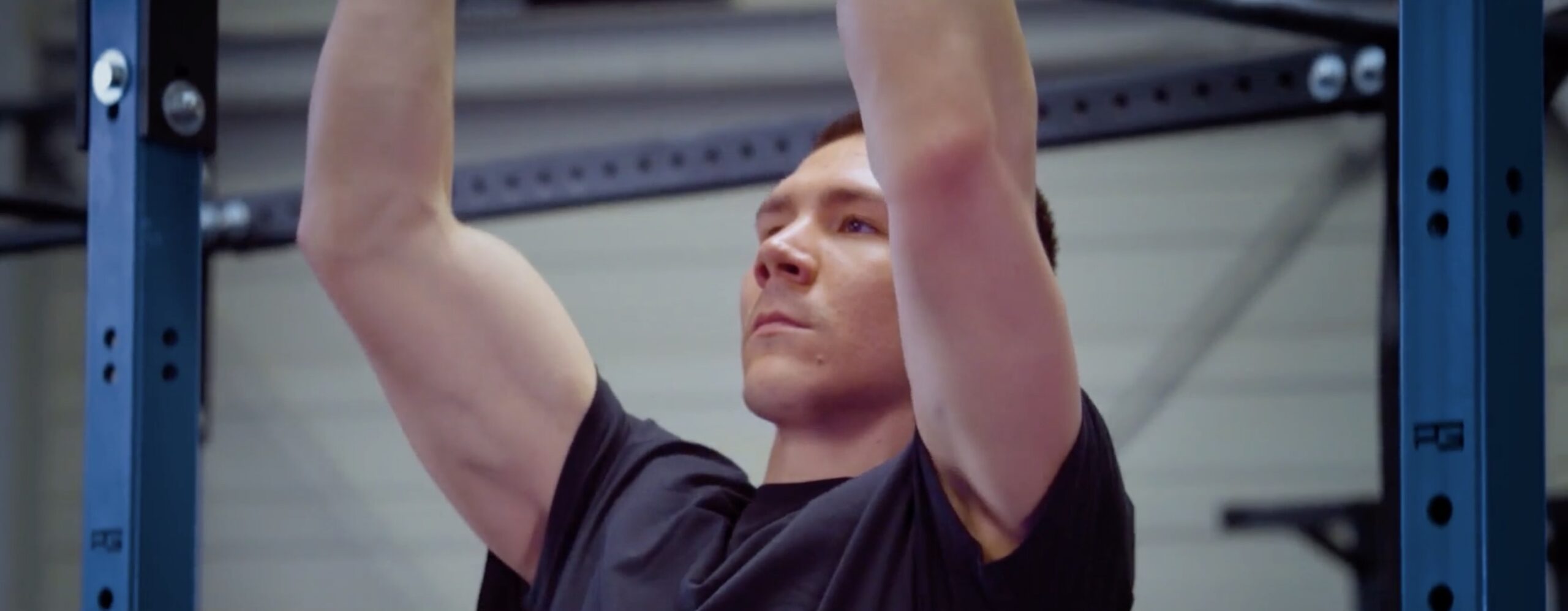


Walk into almost any commercial gym and you will see rows of people chasing bigger arms with endless sets of curls. There is nothing inherently wrong with bicep curls. They isolate the elbow flexors, they are easy to learn, and they certainly have a place in a well designed training program.
However, if you look at elite climbers, wrestlers, gymnasts, CrossFit athletes, obstacle course racers, and many strength athletes, you will notice something interesting. Most of them do not rely on curls as the foundation of their arm training. Instead, they build massive, strong arms by performing demanding pulling movements that require the biceps, brachialis, brachioradialis, forearms, shoulders, back, and core to work together.


The result is not only impressive arm size but also real world strength that transfers directly to athletic performance.
Three exercises stand out because they combine exceptionally high muscular demands with functional movement patterns. The legless rope climb, seated sled pull, and chin up challenge the elbow flexors under heavy loading while forcing the entire upper body to contribute. Research consistently shows that compound pulling exercises produce high levels of muscle activation and mechanical tension, two of the primary drivers of muscle growth.
If your goal is bigger arms that are also genuinely strong, these three movements deserve far more attention than another set of concentration curls.
Why Functional Pulling Exercises Build Bigger Arms
Muscle hypertrophy is driven primarily by mechanical tension, sufficient training volume, and progressive overload. Compound pulling exercises naturally provide all three while recruiting significantly more muscle mass than isolation movements.
During vertical and horizontal pulling patterns, the biceps are responsible for elbow flexion while simultaneously assisting shoulder movement and stabilizing the joint. The brachialis, which lies underneath the biceps, also contributes heavily and plays a major role in increasing total upper arm thickness.
Electromyography research has repeatedly shown that chin ups and similar pulling exercises create high activation of the biceps brachii while also recruiting the latissimus dorsi, trapezius, posterior deltoids, and forearm muscles. This creates an environment where athletes can progressively overload the arms using much heavier resistance than is practical with curls alone.
Functional pulling exercises also improve grip strength. Grip has repeatedly been associated with athletic performance, healthy aging, and overall upper body strength. Stronger grip muscles allow greater training loads during pulling movements, creating an upward cycle of continued strength and hypertrophy.
Legless Rope Climb

Why Athletes Love It
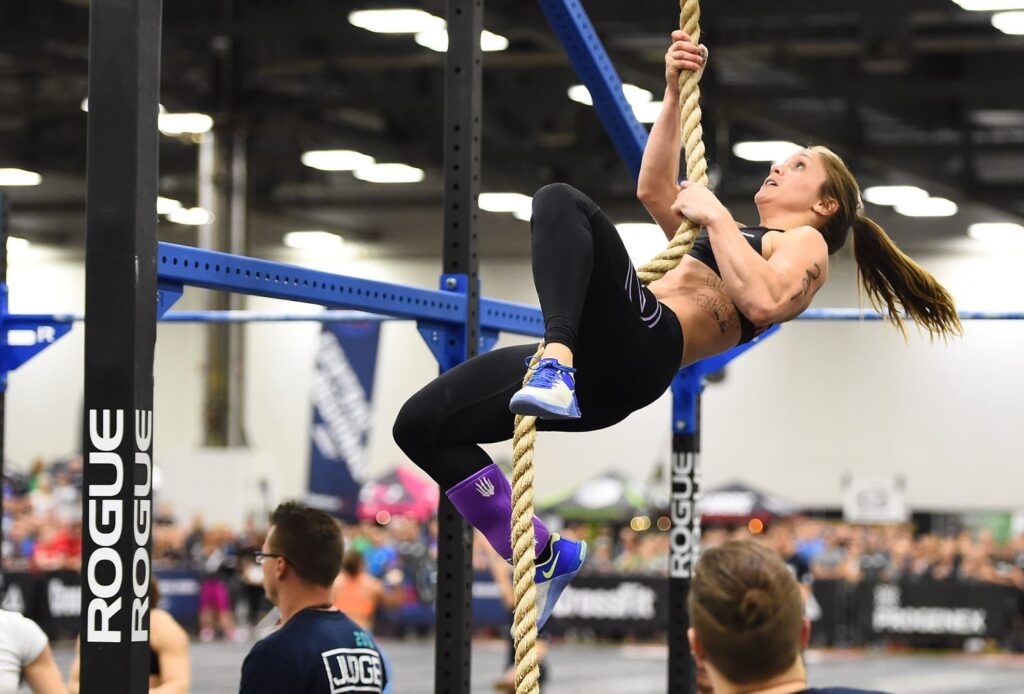
The legless rope climb is one of the most demanding upper body exercises ever created. Unlike a traditional rope climb that allows the legs to assist, the entire movement depends on upper body pulling strength.
Every repetition requires explosive elbow flexion, powerful shoulder extension, intense grip strength, and remarkable core stability. The biceps work continuously through large ranges of motion while the forearms contract almost maximally to maintain a secure grip.
Elite gymnasts, military special operations personnel, obstacle course racers, and CrossFit competitors frequently include rope climbs because they develop pulling power that carries over to many athletic situations.
Why It Builds Huge Arms
The legless rope climb creates prolonged time under tension while requiring repeated high force contractions from the elbow flexors.
Unlike curls, where the load remains relatively constant, rope climbing introduces constant instability. Every hand placement changes the angle of pull, forcing the nervous system to recruit additional motor units to stabilize the movement.
Higher motor unit recruitment generally allows greater stimulation of muscle fibers that possess the highest growth potential.
The exercise also produces enormous demands on the brachialis and brachioradialis. Many lifters focus exclusively on the visible biceps peak, but increasing the size of these deeper muscles pushes the biceps outward and contributes substantially to overall arm circumference.
How to Progress
Most people cannot perform a full legless rope climb immediately.
Begin with standard rope climbs using the legs for assistance. Once these become comfortable, reduce lower body involvement gradually until the arms perform most of the work.
Eccentric only repetitions are another excellent progression. Climb using your legs, then lower yourself slowly using only your upper body. Eccentric training has consistently been shown to stimulate muscle hypertrophy and increase strength effectively.
Seated Sled Pull
The Overlooked Arm Builder
The seated sled pull rarely receives attention outside athletic training facilities, yet it is one of the best exercises for developing functional arm size.
The movement is simple. Sit on the floor with your legs extended while pulling a weighted sled toward your body using a rope attached to the sled.
Every pull resembles a powerful rowing action, but unlike machine rows, the resistance continuously changes as the rope moves through your hands.
Why It Works
Each pull requires forceful elbow flexion combined with scapular retraction and shoulder extension.
The biceps never completely relax because one arm begins pulling as the other finishes its repetition. This creates sustained muscular tension throughout the entire set.
The forearm flexors receive particularly high stimulation because every pull demands maximal gripping strength.
Research has shown that increasing grip demands elevates activation throughout the upper limb. The seated sled pull combines this grip challenge with continuous concentric pulling, making it an excellent hypertrophy exercise for both the upper arms and forearms.
Another major advantage is that there is virtually no eccentric loading while the sled slides toward you. This allows athletes to accumulate substantial training volume with less muscle soreness than many traditional pulling exercises.
That makes the seated sled pull particularly valuable during periods of intense sports practice when recovery capacity may already be limited.
Programming Tips
- Heavy sled pulls emphasize maximal strength and muscle recruitment.
- Lighter sled pulls performed over greater distances improve muscular endurance while still creating significant arm fatigue.
- Alternating heavy and lighter sessions throughout the week allows continued progress without excessive fatigue accumulation.
Chin Ups
The Gold Standard for Arm Development
Few exercises have accumulated as much scientific support for upper body development as the chin up. Unlike the pull up, which uses an overhand grip, the chin up employs a supinated grip with the palms facing the body. This grip places the biceps in a stronger mechanical position, allowing them to contribute more significantly throughout the movement.

Electromyography studies consistently demonstrate that chin ups generate some of the highest levels of biceps activation among common resistance training exercises.
For athletes seeking both strength and muscular size, few movements offer a better return on investment.
More Than Just a Back Exercise
Many people incorrectly classify the chin up as purely a back movement. While the latissimus dorsi certainly performs much of the work, the elbow flexors contribute heavily from the beginning of every repetition until the chin clears the bar. Weighted chin ups provide progressive overload that can rival or exceed the loading used during heavy barbell curls.
Because multiple large muscle groups work together, athletes are often able to continue increasing external load for years, supporting long term hypertrophy.
Research consistently shows that progressive overload remains one of the most important variables for continued muscle growth.
Mastering the Movement
If bodyweight chin ups are currently too difficult, resistance bands or assisted chin up machines allow the same movement pattern while reducing the required force.
Once multiple bodyweight repetitions become comfortable, gradually adding external weight creates an outstanding long term hypertrophy exercise. Slowing the lowering phase also increases mechanical tension without requiring additional weight.
Why These Exercises Beat Endless Curls
Isolation exercises certainly have value. Curls allow targeted work after heavier compound lifts, help address muscular imbalances, and provide additional training volume with relatively low fatigue.

However, athletes prioritize efficiency. A single challenging set of chin ups or legless rope climbs trains the biceps, brachialis, forearms, grip, shoulders, upper back, lats, and core simultaneously.
This higher total muscular involvement allows greater training density while improving movement patterns directly relevant to athletic performance.
Compound pulling exercises also expose the muscles to higher absolute loads. Since muscle hypertrophy responds strongly to progressive mechanical tension, being able to increase loading over months and years often results in greater long term development.
Many successful strength athletes still perform curls, but they usually treat them as accessory work rather than the foundation of their arm training.
How to Build Bigger Arms Using These Exercises
A practical approach is to build training around one primary vertical pulling movement and one horizontal pulling movement.
Chin ups provide the primary vertical stimulus while seated sled pulls develop horizontal pulling endurance and grip. Legless rope climbs can be introduced once sufficient strength has been developed.
Training each movement two times per week provides enough weekly volume for continued growth while allowing adequate recovery. Progressive overload remains essential. Add repetitions, increase resistance, reduce assistance, or improve movement quality over time. Recovery is equally important. Muscle protein synthesis requires adequate dietary protein, sufficient calories for growth, quality sleep, and consistent resistance training.
Research continues to support protein intakes between approximately 1.6 and 2.2 grams per kilogram of body weight per day for individuals seeking maximal muscle growth during resistance training.
The Bottom Line
Bicep curls are not obsolete, but they are rarely the primary reason athletes develop impressive arms. The biggest, strongest arms are often built through demanding compound pulling exercises that challenge multiple muscle groups simultaneously.
- Legless rope climbs develop exceptional pulling strength, grip, and arm thickness while demanding total body coordination.
- Seated sled pulls create continuous muscular tension with lower recovery costs, making them ideal for athletes training frequently.
- Chin ups remain one of the most effective upper body exercises ever studied, combining high biceps activation with progressive overload potential that supports years of continued growth.
If your goal is arms that not only look powerful but also perform at a high level, these three functional exercises deserve to become the center of your training program.
Key Takeaways
| Exercise | Primary Arm Benefits | Additional Athletic Benefits | Best For |
|---|---|---|---|
| Legless rope climb | High biceps, brachialis, and forearm recruitment | Grip strength, core stability, coordination | Advanced athletes seeking maximal pulling strength |
| Seated sled pull | Continuous arm tension and forearm development | Work capacity, grip endurance, reduced soreness | Athletes needing high training volume |
| Chin up | Excellent biceps activation with progressive overload | Back strength, shoulder stability, functional pulling power | Nearly every strength and fitness athlete |
| Bicep curls | Isolation and additional arm volume | Muscle balance and finishing work | Accessory exercise after compound lifts |
References
- American College of Sports Medicine. (2009) ‘Progression models in resistance training for healthy adults’, Medicine & Science in Sports & Exercise, 41(3), pp. 687 to 708.
- Andersen, V., Fimland, M.S., Brennset, O., Haslestad, L., Lundteigen, M., Skalleberg, K. and Saeterbakken, A.H. (2014) ‘Muscle activation and strength in squat and deadlift variations’, Journal of Strength and Conditioning Research, 28(12), pp. 3402 to 3410.
- Gentil, P., Soares, S. and Bottaro, M. (2015) ‘Single versus multi joint resistance exercises for muscle hypertrophy’, Sports Medicine, 45(12), pp. 1693 to 1702.
- Grgic, J., Schoenfeld, B.J., Orazem, J. and Sabol, F. (2022) ‘Effects of resistance training performed to repetition failure or non failure on muscular strength and hypertrophy’, Journal of Sport and Health Science, 11(2), pp. 202 to 211.
- Lusk, S.J., Hale, B.D. and Russell, D.M. (2010) ‘Grip width and forearm orientation effects on muscle activity during the lat pull down’, Journal of Strength and Conditioning Research, 24(7), pp. 1895 to 1900.
- Schoenfeld, B.J. (2010) ‘The mechanisms of muscle hypertrophy and their application to resistance training’, Journal of Strength and Conditioning Research, 24(10), pp. 2857 to 2872.
- Schoenfeld, B.J., Ogborn, D. and Krieger, J.W. (2017) ‘Dose response relationship between weekly resistance training volume and increases in muscle mass’, Journal of Sports Sciences, 35(11), pp. 1073 to 1082.