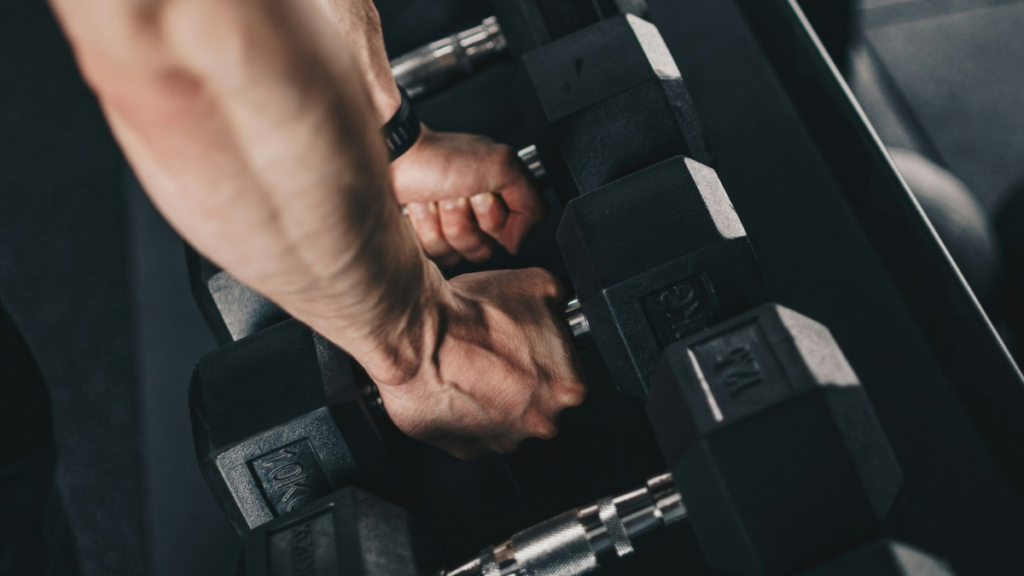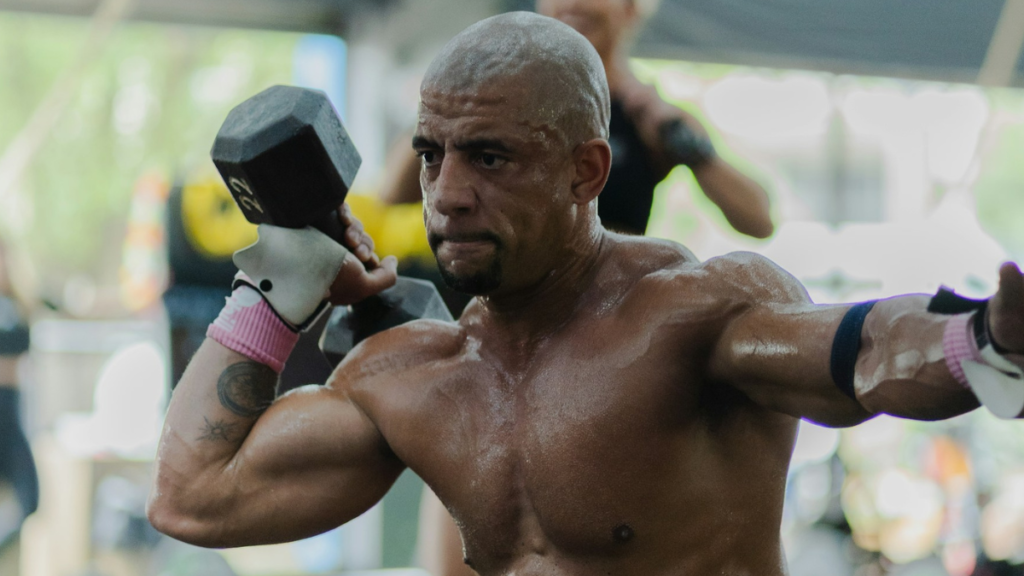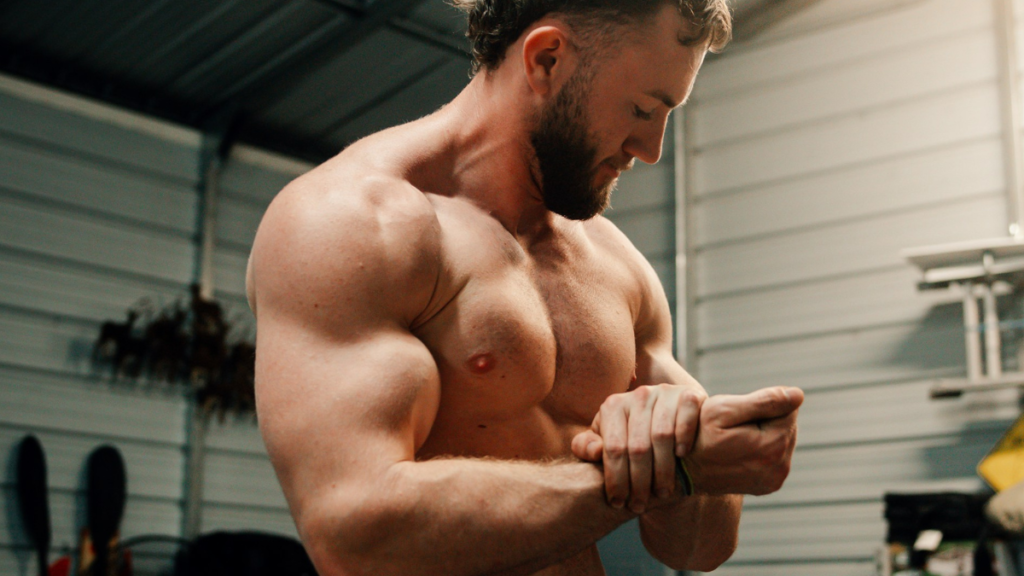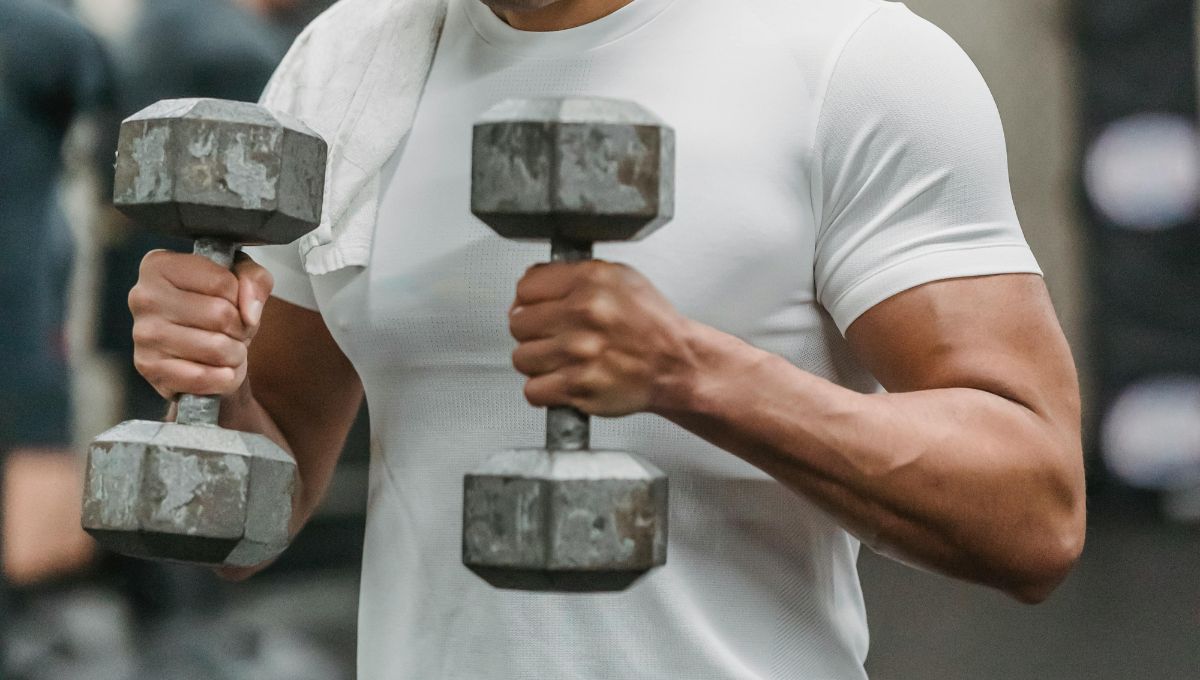


Most lifters eventually ask the same question: should you prioritize hammer curls or traditional biceps curls if your main goal is bigger arms? The short answer is that both exercises can help you build impressive upper arms, but they emphasize the elbow flexors in somewhat different ways. Traditional biceps curls are the stronger choice when you want to emphasize the biceps brachii. Hammer curls can add valuable work for the brachialis and brachioradialis, muscles that contribute to arm thickness and forearm development.
The most productive approach is usually not choosing one exercise forever. It is using each movement well, training hard enough, and accumulating sufficient weekly volume with controlled technique. Exercise selection matters, but it is only one part of the muscle growth equation.


The Muscles That Make Your Arms Look Bigger
The biceps brachii is the familiar muscle on the front of the upper arm. It has two heads and performs elbow flexion, meaning it helps bend the elbow. It also strongly assists with forearm supination, which is the action of turning the palm upward.
The brachialis sits underneath the biceps brachii. It is an elbow flexor regardless of whether your palm faces up, down, or inward. Because it lies beneath the biceps, developing it can contribute to a thicker looking upper arm from the side.

The brachioradialis runs along the upper portion of the forearm and crosses the elbow joint. It assists elbow flexion, particularly when the forearm is near a neutral position with the thumbs facing upward. Although it is technically a forearm muscle, a well developed brachioradialis can make the entire arm look more muscular.
Why Grip Position Changes the Exercise
A traditional biceps curl uses a supinated grip, with the palms facing upward. This position allows the biceps brachii to contribute both to elbow flexion and to its role in forearm supination. A hammer curl uses a neutral grip, with the palms facing each other. That grip changes the relative contribution of the elbow flexors and often feels more natural for the wrists and elbows.
Grip position does not turn one exercise into a completely different movement. Both are still elbow flexion exercises. However, it can shift which muscles produce more of the force during the lifting phase.
What Research Says About Muscle Activation
Research using surface electromyography has compared curl variations and hand positions. This method estimates electrical activity in a muscle while it is working. It is useful for understanding how an exercise is performed, but it does not directly measure long term muscle growth.
In trained bodybuilders, a study comparing supinated, neutral, and pronated cable curl variations found greater biceps brachii excitation during the lifting phase with a supinated grip than with a neutral grip. The neutral grip produced more biceps brachii excitation than the pronated grip. This supports the idea that a conventional palms up curl is a strong option when the biceps brachii is your main target.
The same study also found that the brachioradialis was active across all three grip positions. Interestingly, the supinated condition showed slightly greater brachioradialis excitation than the neutral condition in that specific testing setup. That result is a useful reminder that simple gym rules often become too absolute. Hammer curls are not the only way to train the brachioradialis, and traditional curls do not isolate the biceps brachii.
Activation Is Not the Same as Hypertrophy
It would be a mistake to see an activation result and conclude that it proves one curl will produce more muscle. Surface electromyography does not measure muscle protein synthesis, muscle thickness, or long term hypertrophy. It measures an acute signal during a particular exercise, load, range of motion, and group of participants.
Muscle growth is influenced by repeated exposure to challenging resistance training, enough hard sets, progressive overload, recovery, nutrition, and individual response. A curl variation that allows you to train comfortably, use a full range of motion, and progressively add repetitions or load may be more useful than a theoretically perfect exercise that aggravates your joints.
Traditional Biceps Curls for Biceps Size
Traditional curls are usually the better starting point if your top priority is making the biceps brachii larger. The supinated position fits the biceps brachii well because the muscle contributes to both bending the elbow and turning the palm upward.
This does not mean every rep needs to be performed with a rigidly fixed palm up position. Dumbbell curls can begin near neutral and rotate gradually toward supination as the weight rises. That approach can feel smooth and may allow the lifter to use the biceps through a comfortable range of motion.
The key is to avoid making the movement easier with excessive shoulder swing, back extension, or elbow drift. A little natural movement can occur, particularly during difficult sets, but a controlled curl that keeps the elbow flexors under tension is usually easier to progress and repeat consistently.
Choosing the Right Traditional Curl
A standing dumbbell curl, barbell curl, cable curl, and preacher curl can all train the biceps effectively. The best choice depends on your equipment, comfort, and ability to control the motion.
Cable curls can provide resistance throughout much of the range of motion. Dumbbells allow each arm to move independently and may be comfortable for people whose wrists do not enjoy a straight bar. Preacher curls limit body movement and can make it easier to keep the upper arm stable. No single variation has been proven universally superior for hypertrophy, so practical execution matters.
Hammer Curls for Arm Thickness
Hammer curls deserve a place in many arm programs because they train elbow flexion with a neutral grip and provide a useful variation from standard curls. The brachialis contributes to elbow flexion in all grip positions, while the brachioradialis is well positioned to assist when the forearm is neutral.
If your arms look narrow from the side, building the brachialis and brachioradialis may improve the overall appearance of your arms even if your biceps peak does not change dramatically. Hammer curls can also offer a comfortable option for lifters who experience wrist discomfort when they curl with a fully supinated grip.
A hammer curl is not a shortcut that bypasses the biceps. The biceps brachii remains involved. Instead, it changes the emphasis within the group of muscles that bend the elbow.
Common Hammer Curl Mistakes
The most common error is using a weight that is too heavy to control. The lifter swings the dumbbells forward, turns the movement into a partial front raise, and shortens the useful elbow flexion range. This can make the set feel difficult while reducing the quality of work performed by the target muscles.
Keep the upper arm close to the torso, move the dumbbell through a controlled range, and lower it deliberately. You do not need an extremely slow lowering phase, but maintaining control improves consistency and helps you judge when genuine progress occurs.
Which Exercise Builds Bigger Arms?
Traditional biceps curls are the better single choice if the question is specifically about maximizing stimulus to the biceps brachii. The supinated grip allows the biceps to perform one of its primary actions and has produced higher acute biceps brachii activation than a neutral grip in controlled research.
Hammer curls may be the better addition if the question is about building arms that look bigger overall. They provide a different elbow flexion pattern and can support development of the brachialis and brachioradialis. Those muscles add visible thickness around the upper arm and forearm.
The best answer for most lifters is to include both. Use traditional curls as the main biceps focused movement, then add hammer curls to broaden your elbow flexor training. This creates variety without relying on novelty for its own sake.
How to Program Both Exercises for Growth
Research on resistance training shows that greater weekly training volume is generally associated with greater muscle hypertrophy, although the relationship is not unlimited and individual recovery matters. Hard sets performed close to muscular failure can stimulate growth across a wide range of loads, provided the set is sufficiently challenging.
For a practical arm session, start with a curl variation that you can load and control well. Perform traditional curls first if biceps size is your priority. Follow them with hammer curls after the biceps focused work, using a controlled neutral grip and a range of motion that feels comfortable.
Most lifters can make progress with moderate repetition ranges, such as six to 15 repetitions, but growth is not restricted to that range. Lighter sets can also build muscle when they are taken close enough to failure. The important point is that the final repetitions should be demanding without technique collapsing.
Training the elbow flexors two or more times per week can make it easier to distribute quality volume. For example, one session can emphasize traditional curls and another can emphasize hammer curls. This can reduce excessive fatigue within a single workout while maintaining enough weekly practice and stimulus.
Progressive Overload Matters More Than Exercise Loyalty
Progressive overload does not mean adding weight every workout no matter what. It can mean completing more repetitions with the same load, improving range of motion, using cleaner technique, adding a set when recovery allows, or eventually increasing the load while preserving execution.
Keep a record of your sets, repetitions, and load. If a curl has stalled for weeks, first check whether sleep, food intake, recovery, and technique are limiting progress. Then consider a small programming change rather than abandoning the exercise immediately.
The Bottom Line
Hammer curls and traditional biceps curls both belong in an effective arm building program. Traditional curls are the more direct choice for emphasizing the biceps brachii because a supinated grip better matches its function. Hammer curls are valuable for training the brachialis and brachioradialis while adding variety and potentially improving arm thickness.
If you only have time for one movement, choose traditional curls when biceps development is your main goal. If you want the most complete arm development, perform both over the course of your training week. Train with consistent technique, take sets close to failure, progress gradually, and give your nutrition and recovery the same attention as your exercise selection.
Key Takeaways
| Question | Practical answer |
|---|---|
| Which curl better emphasizes the biceps brachii? | Traditional curls with a supinated grip are the stronger choice. |
| Are hammer curls still useful for bigger arms? | Yes. They add elbow flexor training and can support upper arm thickness and forearm development. |
| Does muscle activation prove muscle growth? | No. Activation findings help explain exercise mechanics but do not directly measure long term hypertrophy. |
| Should most lifters use both exercises? | Yes. Combining them is a practical way to train the elbow flexors through different grip positions. |
| What drives growth most reliably? | Sufficient hard training volume, progressive overload, good technique, recovery, and nutrition. |
References
- Coratella, G., Tornatore, G., Longo, S., Toninelli, N., Padovan, R., Esposito, F. and Cè, E. (2023) ‘Biceps brachii and brachioradialis excitation in biceps curl exercise: Different handgrips, different synergy’, Sports, 11(3), 64.
- Grgic, J., Schoenfeld, B.J., Orazem, J. and Sabol, F. (2022) ‘Effects of resistance training performed to repetition failure or non failure on muscular strength and hypertrophy: A systematic review and meta analysis’, Journal of Sport and Health Science, 11(2), pp. 202 to 211.
- Kassiano, W., Tricoli, V., Gomes, I. et al. (2026) ‘Small muscle mass exercise enhances muscular adaptations? Effects of unilateral and bilateral biceps curl on maximum strength and muscle size changes’, European Journal of Applied Physiology, 126, pp. 2539 to 2549.
- Schoenfeld, B.J., Ogborn, D. and Krieger, J.W. (2017) ‘Dose response relationship between weekly resistance training volume and increases in muscle mass: A systematic review and meta analysis’, Journal of Sports Sciences, 35(11), pp. 1073 to 1082.
- Schoenfeld, B.J., Grgic, J., Ogborn, D. and Krieger, J.W. (2017) ‘Strength and hypertrophy adaptations between low versus high load resistance training: A systematic review and meta analysis’, Journal of Strength and Conditioning Research, 31(12), pp. 3508 to 3523.