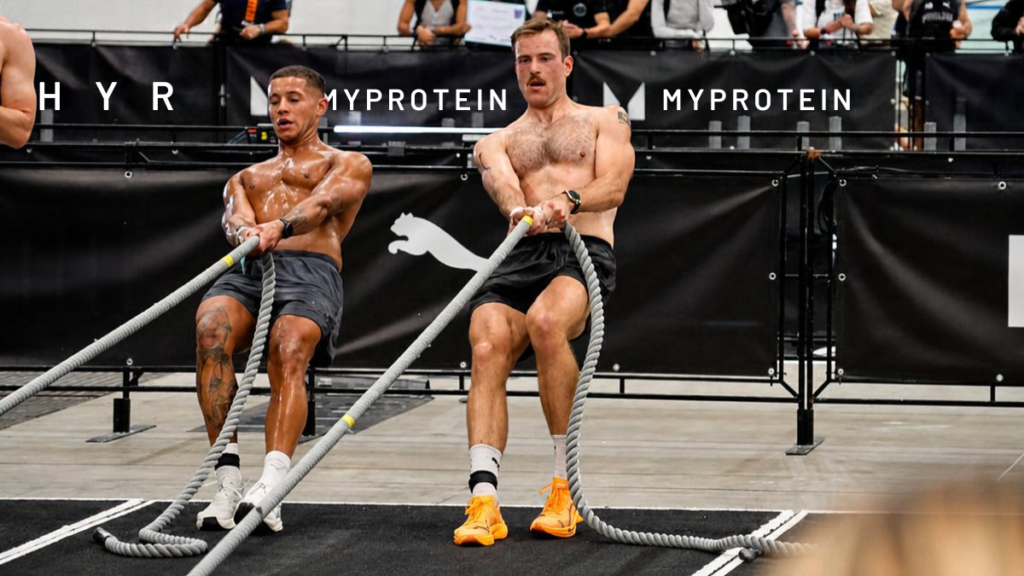
HYROX has rapidly become one of the most popular fitness racing formats in the world. Its appeal is simple. Standardized workouts, global competition, and a blend of endurance and strength that challenges both recreational athletes and elite performers. As the sport grows, many athletes face a key decision before signing up for their first or next race. Should you compete in HYROX Singles or HYROX Doubles?
At first glance, the choice seems straightforward. Singles means you complete the entire race yourself. Doubles means you share the workload with a partner. But the reality is far more nuanced. The demands on your physiology, pacing strategy, mental resilience, and training approach differ significantly between the two formats.


Understanding the Structure of HYROX
Before comparing formats, it is important to understand what HYROX actually demands from the body.
A standard HYROX race consists of eight 1 km runs, each followed by a functional workout station. These stations include movements such as sled pushes, sled pulls, burpee broad jumps, rowing, farmers carries, lunges, and wall balls.
Physiological Demands
HYROX sits at the intersection of endurance and strength. From a physiological standpoint, it challenges:
- Aerobic capacity
- Anaerobic capacity
- Muscular strength and endurance
- Movement efficiency under fatigue
Research shows that events combining endurance and resistance elements create high cardiovascular strain while also taxing local muscular endurance. This leads to significant lactate accumulation and fatigue across multiple systems.
The ability to sustain repeated bouts of effort with incomplete recovery is central to performance. This is known as intermittent high intensity endurance.
What Is HYROX Singles?
HYROX Singles requires one athlete to complete the entire race independently. You perform every run and every workout station on your own.
Key Characteristics
- Full workload falls on one athlete
- No rest periods beyond transitions
- Requires consistent pacing across the entire race
- High cumulative fatigue
Physiological Profile
HYROX Singles places a premium on aerobic endurance. While strength is important, the limiting factor for most athletes is their ability to sustain effort over time without excessive fatigue.
Research on endurance events shows that pacing strategy and aerobic efficiency are critical predictors of performance. Athletes with higher VO2 max and better lactate threshold can maintain a higher intensity for longer.
Muscle fatigue also plays a major role. Studies show that repeated resistance efforts with limited recovery lead to decreased force production over time. In HYROX Singles, this means your sled push, lunges, and wall balls will feel progressively harder even if the weight stays the same.
What Is HYROX Doubles?
HYROX Doubles involves two athletes working together. Both athletes complete all running segments, but the workout stations can be divided between partners.
Key Characteristics
- Shared workload during functional stations
- Both athletes run every kilometer
- Strategic transitions between partners
- Opportunities for partial recovery
Physiological Profile
HYROX Doubles introduces an intermittent work rest dynamic that changes the demands significantly.
When one partner is working, the other can recover. Even short recovery periods can restore partial muscle function and reduce fatigue. Research shows that brief rest intervals allow for phosphocreatine resynthesis and improved subsequent performance in high intensity efforts.
This means athletes can perform at higher intensities during work periods compared to Singles. However, the running component remains continuous and cannot be split. This means aerobic fitness is still essential.

Energy Systems in HYROX
To understand the difference between Singles and Doubles, it helps to look at the energy systems involved.
Aerobic System
The aerobic system provides energy for sustained efforts. It dominates during the running portions and contributes significantly to recovery between high intensity efforts.
Higher aerobic fitness improves:
- Recovery between stations
- Ability to maintain pace
- Resistance to fatigue
Anaerobic System
The anaerobic system provides energy for short, intense efforts such as sled pushes or burpees.
It is responsible for:
- Explosive movements
- High power output
- Rapid fatigue when overused
Interaction Between Systems
HYROX requires constant switching between aerobic and anaerobic demands. Research shows that athletes who can efficiently transition between these systems perform better in mixed modality events.
In Singles, this transition is continuous with little recovery. In Doubles, the work rest structure allows for more anaerobic output during work periods.
Comparing Physical Demands
Total Workload
In Singles, you complete 100 percent of the workload. In Doubles, you typically complete about 50 percent of the functional work, though this can vary depending on strategy.
This reduces total muscular fatigue in Doubles.
Intensity
Because of the opportunity to rest, athletes in Doubles can perform each station at a higher intensity. Studies on interval training show that rest periods allow for greater peak output compared to continuous exercise.
Fatigue Accumulation
Fatigue builds continuously in Singles. In Doubles, fatigue is more cyclical. You work hard, then recover briefly. This difference is crucial. Continuous fatigue leads to greater central and peripheral fatigue, affecting both muscle function and the nervous system.
Cardiovascular Strain
Both formats place high demands on the cardiovascular system. However, Singles tends to produce more sustained elevated heart rates, while Doubles may show more fluctuations due to rest periods.
Pacing Strategy Differences
Singles Pacing
Pacing is critical in Singles. Starting too fast can lead to early fatigue and significant performance decline. Research shows that even pacing or slight negative splits are optimal in endurance events.
Key principles:
- Maintain sustainable effort
- Avoid spikes in intensity
- Manage heart rate and breathing
Doubles Pacing
Doubles allows for more aggressive pacing during work intervals.
Key principles:
- Push hard during your work periods
- Communicate with your partner
- Use recovery periods effectively
However, poor coordination can lead to inefficiencies and wasted time.
Strength Requirements
Singles Strength Demands
In Singles, strength endurance is key. You need to sustain force production over time. Research shows that muscular endurance is strongly correlated with repeated task performance under fatigue. Movements like lunges and wall balls require:
- Local muscular endurance
- Movement efficiency
- Mental resilience
Doubles Strength Demands
In Doubles, maximal strength and power become more important. Because you can rest, you can push harder during your efforts. This favors athletes with higher peak strength and power output.
For example:
- Heavier sled pushes can be performed faster
- Wall balls can be completed in larger sets
Psychological Demands

Singles Mental Challenge
Singles is mentally demanding because there is no external support during the race.
You must:
- Manage discomfort alone
- Maintain motivation under fatigue
- Make pacing decisions independently
Research shows that endurance performance is strongly influenced by perception of effort and mental fatigue.
Doubles Mental Dynamics
Doubles introduces teamwork and shared responsibility.
Benefits:
- Social support can improve performance
- Motivation is higher with a partner
- Shared decision making
However, challenges include:
- Communication breakdowns
- Mismatched pacing
- Unequal effort distribution
Skill and Strategy Considerations
Movement Efficiency
Efficient movement reduces energy cost. This is critical in both formats. Research shows that improved technique lowers oxygen consumption for the same workload.
Transitions
In Doubles, transitions between partners can either save or waste time. Effective transitions require:
- Clear communication
- Pre planned strategy
- Practice
Work Splitting
In Doubles, deciding how to split work is key. Options include:
- Even splits
- Strength based splits
- Interval style switching
Each approach has pros and cons depending on the athletes involved.
Training for HYROX Singles
Key Focus Areas
- Aerobic endurance
- Muscular endurance
- Pacing strategy
- Fatigue resistance
Training Methods
- Long steady state runs to build aerobic capacity
- Tempo workouts to improve lactate threshold
- Circuit training with minimal rest
- High repetition strength work
Research shows that combining endurance and resistance training improves performance in hybrid events.
Training for HYROX Doubles
Key Focus Areas
- High intensity output
- Strength and power
- Communication and teamwork
- Transition efficiency
Training Methods
- Interval training with rest periods
- Heavy strength work
- Partner workouts
- Practice race simulations
Studies on high intensity interval training show improvements in both aerobic and anaerobic capacity.
Injury Risk Considerations
Singles
Higher cumulative fatigue can increase injury risk. Fatigue is associated with reduced movement quality and increased joint stress.
Doubles
Lower total workload may reduce injury risk. However, higher intensity efforts can increase acute injury risk if not managed properly. Proper training and recovery are essential in both formats.
Who Should Choose HYROX Singles?
HYROX Singles is best suited for athletes who:
- Have strong endurance capacity
- Enjoy individual challenges
- Can pace themselves effectively
- Have experience with long duration efforts
It is also ideal for those who want to test their overall fitness without relying on a partner.
Who Should Choose HYROX Doubles?
HYROX Doubles is best suited for athletes who:
- Prefer teamwork
- Have strong power or strength
- Want to compete at higher intensities
- Are newer to HYROX and want a more manageable workload
It is also a great entry point for athletes transitioning from strength based sports.
Common Mistakes
In Singles
- Starting too fast
- Poor pacing strategy
- Neglecting endurance training
- Underestimating fatigue
In Doubles
- Poor communication
- Inefficient transitions
- Unequal workload distribution
- Lack of practice together
Final Thoughts
Choosing between HYROX Singles and Doubles is not just about preference. It is about understanding the demands of each format and aligning them with your strengths and goals.
Singles is a test of sustained endurance, pacing, and mental resilience. Doubles is a dynamic, high intensity format that rewards teamwork, strategy, and power. Neither is easier. They are simply different.
If you enjoy pushing yourself alone and testing your limits over time, Singles is likely the better choice. If you thrive in a team environment and want to maximize intensity while sharing the workload, Doubles may suit you better. Ultimately, both formats offer a unique challenge that can drive significant improvements in fitness when approached with the right preparation.
References
- Journal of Applied Physiology
Gastin, P.B. (2001). Energy system interaction and relative contribution during maximal exercise. - Sports Medicine
Laursen, P.B. and Jenkins, D.G. (2002). The scientific basis for high intensity interval training. - Medicine and Science in Sports and Exercise
Coyle, E.F. (1995). Integration of the physiological factors determining endurance performance ability. - European Journal of Applied Physiology
Bogdanis, G.C. et al. (1996). Recovery of power output and muscle metabolites following 30 seconds of maximal sprint cycling. - Journal of Strength and Conditioning Research
Kraemer, W.J. and Ratamess, N.A. (2004). Fundamentals of resistance training. - Sports Medicine