Losing body fat is often presented as a math problem. Count calories, track every gram, and maintain a precise deficit. While this approach works, many people find it exhausting and difficult to sustain long term. The good news is that science shows you can lose fat effectively without counting calories, as long as you structure your diet in a way that naturally regulates energy intake.
Human appetite is not random. It is influenced by food composition, eating patterns, and physiological signals that evolved to maintain energy balance. When you align your eating habits with these mechanisms, fat loss becomes far more manageable.


This article breaks down three evidence based strategies that help you lose fat without tracking calories. Each one is grounded in research on satiety, metabolism, and behavior. These are not tricks or hacks. They are principles that consistently lead to reduced energy intake without the need for meticulous tracking.
Why Calorie Tracking Is Not Always Necessary
Before diving into the tips, it is important to understand why calorie counting is not the only path to fat loss. Fat loss occurs when you consistently consume fewer calories than you expend. However, you do not need to measure calories directly to achieve this. The body has built in systems that regulate hunger and fullness. These systems respond strongly to food quality, protein intake, fiber, and meal structure.
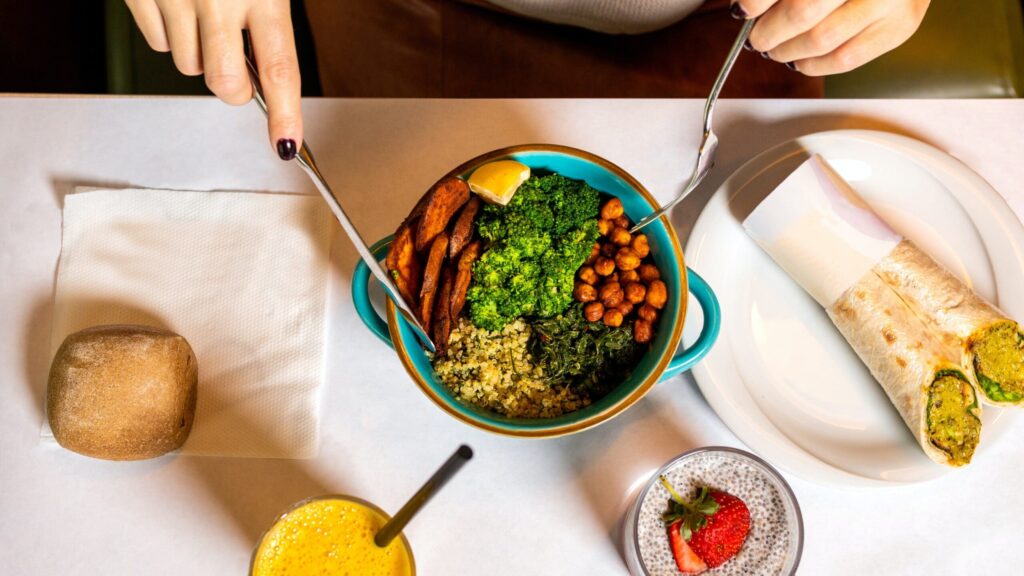
Highly processed foods tend to override these signals, making it easy to overeat. Whole, nutrient dense foods do the opposite. They increase satiety, reduce hunger, and naturally limit calorie intake.
Research consistently shows that when people shift toward diets higher in protein, fiber, and minimally processed foods, they spontaneously reduce calorie intake without being told to eat less.
With that in mind, here are three powerful strategies.
Tip 1: Prioritize Protein at Every Meal
Why Protein Matters for Fat Loss
Protein is the most important macronutrient for fat loss when calories are not being tracked. It has a stronger effect on satiety than carbohydrates or fats, meaning it helps you feel full with fewer calories.
Protein also has a higher thermic effect. This means your body burns more energy digesting protein compared to other macronutrients. Roughly 20 to 30 percent of protein calories are used during digestion, compared to about 5 to 10 percent for carbohydrates and 0 to 3 percent for fats.
In addition, protein helps preserve lean muscle mass during weight loss. This is critical because maintaining muscle keeps your metabolism higher and improves body composition.
Evidence Behind Protein Intake
Multiple controlled trials show that increasing protein intake leads to reduced hunger, lower calorie intake, and greater fat loss.

In one well known study, increasing protein intake to about 30 percent of total calories led to a spontaneous reduction in daily calorie intake by over 400 calories, without participants intentionally restricting food. Another line of research demonstrates that higher protein diets improve satiety hormones such as peptide YY while reducing levels of the hunger hormone ghrelin.
How to Apply This in Real Life
You do not need to calculate exact grams. Instead, use simple structure. Aim to include a high quality protein source at every meal. This ensures you consistently trigger satiety signals throughout the day.
Examples of protein rich foods:
- Eggs
- Chicken breast or thighs
- Lean beef
- Fish such as salmon or tuna
- Greek yogurt
- Cottage cheese
- Tofu and tempeh
- Protein rich legumes
A practical guideline is to build each meal around protein first, then add vegetables and other foods around it.
Simple Meal Structure
Think in terms of portions instead of numbers:
- One palm sized portion of protein per meal
- Fill half your plate with vegetables
- Add a moderate portion of carbohydrates or fats
This approach works because it naturally limits energy intake while maximizing fullness.
Common Mistakes
One mistake is underestimating protein intake at breakfast. Many people eat low protein breakfasts such as cereal or toast, which leads to increased hunger later in the day.
Starting the day with a protein rich meal like eggs, Greek yogurt, or a protein smoothie can significantly reduce overall food intake across the day. Another mistake is relying heavily on processed protein bars or shakes. While convenient, whole food sources tend to be more filling and nutritionally complete.
Tip 2: Focus on High Volume, Low Energy Density Foods

Understanding Energy Density
Energy density refers to the number of calories in a given weight of food. Foods with low energy density provide fewer calories per gram, allowing you to eat larger portions while consuming fewer calories.
Water and fiber play a major role here. Foods that are high in water and fiber tend to be more filling and lower in calories. Examples include vegetables, fruits, and whole grains.
Why This Works
Your stomach responds more to the volume of food than the calorie content. Eating larger volumes of low calorie foods stretches the stomach and sends fullness signals to the brain. This allows you to feel satisfied without overeating.
Evidence Behind Low Energy Density Diets
Research consistently shows that diets lower in energy density lead to reduced calorie intake and weight loss, even when people are allowed to eat as much as they want.
In controlled studies, participants consuming low energy density meals ate significantly fewer calories compared to those eating higher energy density foods, despite reporting similar levels of fullness.
Practical Implementation
You do not need to overhaul your entire diet. Start by increasing the proportion of low energy density foods on your plate.
Focus on:
- Vegetables such as broccoli, spinach, zucchini, peppers, and carrots
- Fruits such as berries, apples, oranges, and watermelon
- Soups and stews with a high vegetable content
- Whole grains like oats and quinoa
The Plate Method
A simple visual strategy works well:
- Half your plate: vegetables or fruit
- One quarter: protein
- One quarter: carbohydrates or fats
This ensures you are eating a large volume of food without excessive calories.
Smart Food Swaps
Small changes can significantly reduce calorie intake:
- Replace refined grains with whole grains
- Swap chips for air popped popcorn
- Add vegetables to meals to increase volume
- Choose whole fruit instead of fruit juice
These swaps increase fullness without requiring willpower or tracking.
Common Pitfalls
One mistake is adding large amounts of high calorie sauces or oils to otherwise healthy meals. This can quickly increase energy density.
Another is relying too heavily on liquid calories such as smoothies or juices. These are less filling than whole foods and can lead to higher calorie intake.
Tip 3: Eat Mindfully and Structure Your Meals
The Role of Eating Behavior
How you eat matters just as much as what you eat. Eating quickly, distracted, or irregularly can disrupt hunger signals and lead to overeating. Mindful eating and consistent meal structure help regulate appetite and improve satiety.
Evidence on Eating Speed and Awareness
Studies show that eating slowly increases fullness and reduces calorie intake. It allows time for satiety signals to reach the brain, which typically takes around 20 minutes.
Research also indicates that distracted eating, such as eating while watching television, leads to higher calorie intake and reduced awareness of how much has been consumed.
Meal Timing and Consistency
While there is no single best meal frequency, consistency helps regulate hunger hormones. Irregular eating patterns can increase hunger and lead to overeating later in the day. Most people benefit from eating three structured meals per day, with optional snacks if needed.
Practical Strategies
To improve eating behavior:
- Eat without distractions whenever possible
- Slow down and chew thoroughly
- Pause midway through meals to assess fullness
- Use smaller plates to control portions visually
- Establish regular meal times
Hunger and Fullness Awareness

Learn to recognize true hunger versus habitual eating.
Signs of true hunger:
- Gradual onset
- Physical sensations such as stomach emptiness
- Willingness to eat a variety of foods
Signs of non hunger eating:
- Triggered by boredom or stress
- Craving specific foods
- Eating despite feeling full
Improving this awareness reduces unnecessary calorie intake without conscious restriction.
Emotional Eating
Stress and emotions can drive overeating. While this is normal, relying on food for comfort can interfere with fat loss. Develop alternative coping strategies such as exercise, walking, or relaxation techniques.
Putting It All Together
These three strategies work best when combined.
A typical day might look like this:
- Breakfast: Greek yogurt with berries and nuts
- Lunch: Chicken salad with a large portion of vegetables and olive oil dressing
- Dinner: Salmon with roasted vegetables and quinoa
Snacks if needed: fruit, yogurt, or a protein rich option. This approach emphasizes protein, high volume foods, and structured eating. It naturally reduces calorie intake without tracking.
Why These Strategies Work Long Term
The key advantage of these methods is sustainability. Calorie tracking can be effective, but it requires ongoing attention and precision. Many people find it difficult to maintain over time.
In contrast, focusing on food quality, satiety, and behavior aligns with how the body regulates appetite. This reduces reliance on willpower and makes fat loss more consistent.
Additional Considerations
Sleep and Fat Loss
Poor sleep disrupts hunger hormones, increasing ghrelin and reducing leptin. This leads to increased appetite and cravings. Aim for seven to nine hours of quality sleep per night.
Physical Activity
Exercise supports fat loss by increasing energy expenditure and preserving muscle mass. Resistance training is especially important for maintaining lean tissue.
Hydration
Drinking enough water can support appetite control. Sometimes thirst is mistaken for hunger. Starting meals with a glass of water may help reduce calorie intake.
Final Thoughts
You do not need to track calories to lose fat. By focusing on protein intake, choosing low energy density foods, and improving eating behavior, you can create a natural calorie deficit.
These strategies are supported by strong scientific evidence and are easier to sustain than strict tracking. Fat loss does not need to be complicated. When you align your diet with how your body regulates hunger and fullness, results follow.
Key Takeaways
| Principle | What to Do | Why It Works |
|---|---|---|
| Prioritize Protein | Include protein at every meal | Increases satiety, reduces hunger, preserves muscle |
| Low Energy Density Foods | Fill half your plate with vegetables and fruits | Allows larger portions with fewer calories |
| Mindful Eating | Eat slowly and without distractions | Improves fullness signals and reduces overeating |
| Meal Structure | Stick to regular meals | Helps regulate hunger hormones |
| Whole Foods Focus | Minimize processed foods | Prevents overeating driven by hyper palatable foods |
References
- American Journal of Clinical Nutrition
Leidy, H.J., Clifton, P.M., Astrup, A., Wycherley, T.P., Westerterp-Plantenga, M.S., Luscombe-Marsh, N.D., Woods, S.C. and Mattes, R.D. (2015). The role of protein in weight loss and maintenance. - American Journal of Clinical Nutrition
Weigle, D.S., Breen, P.A., Matthys, C.C., Callahan, H.S., Meeuws, K.E., Burden, V.R. and Purnell, J.Q. (2005). A high-protein diet induces sustained reductions in appetite, ad libitum caloric intake, and body weight. - Journal of Nutrition
Halton, T.L. and Hu, F.B. (2004). The effects of high protein diets on thermogenesis, satiety and weight loss. - Nutrition Reviews
Paddon-Jones, D., Westman, E., Mattes, R.D., Wolfe, R.R., Astrup, A. and Westerterp-Plantenga, M. (2008). Protein, weight management, and satiety. - American Journal of Clinical Nutrition
Rolls, B.J., Bell, E.A. and Thorwart, M.L. (1999). Water incorporated into a food but not served with a food decreases energy intake in lean women. - Obesity Research
Rolls, B.J. (2000). The role of energy density in the overconsumption of fat.