

The T bar row has earned a serious reputation. It lets you load a horizontal pull hard, train the muscles across the upper and middle back, and challenge the trunk to hold position while the arms move. Done well, it can be an outstanding strength and muscle building exercise. It can also expose a weak hinge, poor bracing, or a tendency to turn every rep into a lower back heave.
That is why the word bulletproof needs a reality check. No single exercise can guarantee a pain free back or make you immune to injury.


Back pain has many contributors, and the evidence does not support one magic movement as a universal solution. The more useful question is whether the T bar row can help you build the strength, control, and training capacity that make your back more robust. For many healthy lifters, the answer is yes, provided that it is taught, loaded, and progressed intelligently.
What the T Bar Row Actually Trains
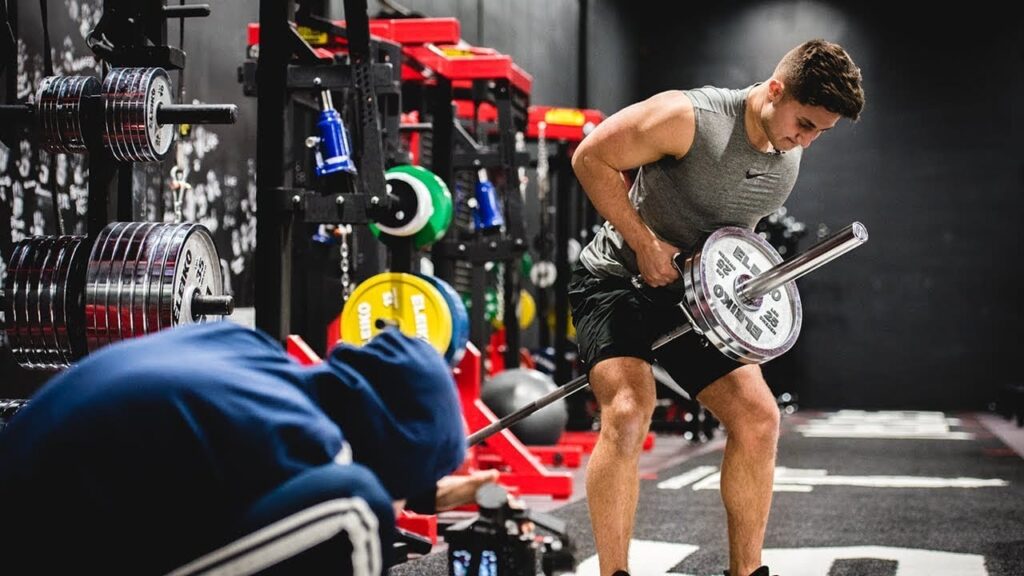
A T bar row is a horizontal pulling movement performed with a landmine style barbell setup or a dedicated machine. In the classic free weight version, one end of a barbell is anchored, plates are loaded at the other end, and you row the loaded end toward your lower chest or upper abdomen. Your hips stay hinged, knees remain softly bent, and your torso holds a stable angle while the shoulders and elbows do the pulling.
The prime movers are the latissimus dorsi, middle trapezius, lower trapezius, rhomboids, posterior deltoids, and elbow flexors. The spinal erectors, abdominal wall, glutes, and hamstrings work largely isometrically to help maintain the hip hinge and resist unwanted movement. This combination is the reason the movement feels more like a full body lift than a seated cable row.
Research comparing rowing variations supports that distinction. In a laboratory study of three rowing exercises, the standing bent over row produced substantial activation through the upper and lower back and the greatest measured spinal stiffness, but it also created greater spinal loading than the inverted row. That does not make the T bar row unsafe. It means its benefit comes with a technical demand: the trunk must contribute meaningfully, so the load must match the lifter’s ability to control it.
Why a Stronger Back Is Not the Same as a Bulletproof Back
Strength training can improve muscle strength, physical function, and muscle size when it is progressively applied. A large body of research also supports exercise as an important part of care for many people with nonspecific low back pain. However, these findings should not be stretched into a promise that a specific row prevents all back injuries or treats every painful back.
Pain is not a simple measure of tissue strength. Sleep, stress, training history, total workload, recovery, previous injury, and confidence with movement can all matter. Someone with severe pain, pain spreading down a leg, numbness, weakness, unexplained weight loss, fever, or changes in bladder or bowel control needs prompt clinical assessment rather than a new rowing variation.
3 Best Beginner Exercises for Massive Muscle Mass for Your Triceps
For a healthy lifter, a practical definition of a resilient back is more modest and more useful. It is a back that can repeatedly tolerate the movements, postures, and loads demanded by your sport, job, and training. T bar rows can contribute because they train force production through the upper back while asking the trunk and hips to maintain position. They should be one component of a broader program that includes lower body strength, other pulling patterns, sensible exposure to loading, and enough recovery.
The Case for the T Bar Row
It Builds Useful Horizontal Pulling Strength
Horizontal pulling is important for balanced upper body development. Many gym programs include plenty of pressing, but much less deliberate work for the muscles that retract and control the shoulder blades. The T bar row provides a stable and repeatable way to train this pattern with meaningful load.
The bar path is naturally somewhat arced because one end of the bar is anchored. This often makes the movement feel more comfortable than a conventional barbell row for lifters who struggle to keep a bar close to their body. A close, neutral grip can also make it easier to keep the elbows moving near the torso, which many lifters find useful for a strong lat focused row.
It is important not to confuse an acute electromyography reading with a guarantee of long term muscle growth. Electromyography helps describe muscle activity during an exercise, but it cannot by itself prove that one variation builds more muscle over months of training. Still, the known functions of the lats, scapular retractors, and spinal extensors make the T bar row a sensible exercise for developing the musculature involved in strong pulling and trunk control.
It Requires the Trunk to Resist Movement
In a chest supported row, the bench takes much of the task of holding your torso still. That is useful when you want to train the upper back hard with little fatigue in the lower back. In a free standing T bar row, the trunk has a different job. It must maintain the hip hinge and resist excessive spinal flexion, extension, rotation, and side bending as the load moves.

This is an isometric strength demand. Your spinal erectors are not supposed to repeatedly curl and straighten your back on every rep. They should help hold a controlled position. Your abdominal wall creates pressure and stiffness around the trunk, while the glutes and hamstrings support the hinged position. That coordinated effort is highly relevant to lifting tasks that require you to transfer force while keeping your torso organized.
The same feature that makes the lift valuable also makes technical discipline essential. If your lumbar spine repeatedly rounds, your hips shoot upward, or your torso rises sharply on each rep, the load is probably too heavy for the intended training effect. The answer is not to fear the movement. It is to reduce the load, improve the setup, or choose a supported row until you can own the position.
It Is Easy to Progress
Progressive overload is a central principle of resistance training. You can progress a T bar row by adding a small amount of load, performing another repetition with the same clean technique, adding a set, or improving control at a given weight. You do not need to chase maximum weight every session.
Research on resistance training shows that multiple loading schemes can build muscle when effort and training volume are appropriate. Heavier loads are especially useful when maximal strength is the goal, while moderate and lighter loads can also support hypertrophy when sets are performed sufficiently hard. This makes the T bar row flexible. You can use controlled sets of six to ten repetitions to emphasize strength, or sets of eight to fifteen repetitions to accumulate productive volume without turning the exercise into a sloppy endurance test.
Weekly hard set volume also matters for hypertrophy, with evidence showing a graded relationship between more weekly resistance training volume and muscle growth up to the practical limits of recovery. The T bar row is useful because it gives you one clear horizontal pulling option that can be tracked over time. It does not mean every set must be all out, and it does not replace vertical pulling, rear delt work, or other back exercises.
How to Perform the T Bar Row Well
Build a Stable Starting Position
Anchor one end of a barbell securely in a landmine attachment or a purpose built corner setup. Load the other end with plates and use a close grip row handle if available. Stand with your feet about hip width apart, with the loaded end positioned between your feet or just in front of them. Push your hips back into a comfortable hinge, soften the knees, and set your torso at an angle you can maintain without discomfort.
Before the first rep, brace as if you are preparing to take a light punch to the midsection. Keep the ribs stacked over the pelvis rather than flaring them upward. Your neck should stay long and neutral, with your gaze directed a few feet ahead on the floor. Do not chase a perfectly rigid, identical spine shape for every lifter. Aim for a controlled, comfortable position that you can reproduce from rep to rep.
Row With the Elbows and Shoulder Blades
Let the arms lengthen under control without losing your torso position. Start the pull by allowing the shoulder blades to move naturally, then drive your elbows back toward your hips. Pull the handle toward the lower chest or upper abdomen. Pause briefly when the upper back is contracted, then lower the load smoothly until the arms are long again.
Avoid trying to pin the shoulder blades back before every single repetition. Healthy shoulder blades need to move during rows. The goal is controlled movement, not a frozen upper back. Keep the torso quiet and let the pulling muscles do the work.
Use a Load You Can Control
The most common mistake is making the T bar row into a series of hip extensions. A small amount of natural body movement is not automatically wrong in experienced lifters using heavy loads, but it changes the exercise. If your goal is back development and trunk control, use a load that allows a stable hinge, a clear pull, and a controlled lowering phase.
Start conservatively. Leave roughly one to three repetitions in reserve on most working sets, especially while learning the movement. This gives you enough effort to stimulate adaptation while preserving the technique that makes the exercise worth doing.
A Practical T Bar Row Prescription
For general strength and muscle building, begin with two to four hard sets once or twice per week, depending on the rest of your program. Use six to ten repetitions when you want a heavier strength focused set, or eight to fifteen repetitions when you want more controlled volume. Rest long enough to repeat quality work, usually around two minutes or more for demanding sets.
A simple progression is to select a repetition range, such as eight to twelve. Keep the same load until you can complete twelve clean repetitions on all planned sets. Then add a small amount of weight and return to the lower end of the range. This approach follows the broader evidence based principle of gradual progression without demanding constant maximal efforts.
Pair the movement with a vertical pull such as a pull up or pulldown, a lower body exercise, and a press. If you also deadlift heavily, schedule T bar rows after the deadlift or on a different day, and adjust volume if your lower back feels persistently fatigued. Training hard is productive. Accumulating fatigue that degrades technique week after week is not.
Who Should Choose a Different Row
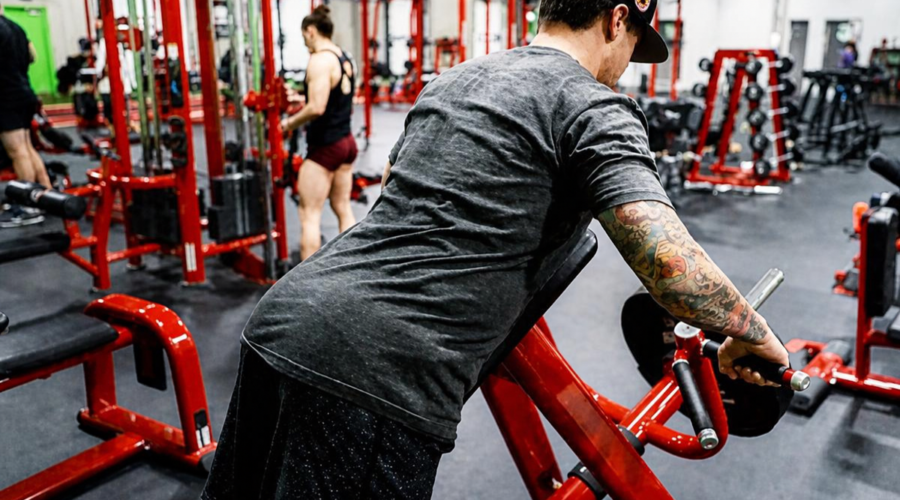
A chest supported T bar row is often a smart choice if you want to focus on the upper back while minimizing the isometric demand on the lower back. It is also useful late in a session, after heavy squats or deadlifts, when your ability to maintain a hinge is reduced. An inverted row provides another option for people who need a lower spinal load while developing pulling strength.
If a free standing T bar row produces sharp pain, escalating symptoms, or discomfort that remains worse after training, do not force it. Try a supported row, cable row, or inverted row and seek individualized guidance when needed. The best row is the one you can progressively train with sound technique and recover from.
The Verdict
The T bar row is not the perfect exercise, because no exercise is. It will not make your back invincible, and it is not a substitute for medical care when pain or neurological symptoms are present. But it is one of the most effective tools for building a stronger horizontal pull, a more muscular upper back, and better tolerance for holding a loaded hip hinge.
Use it as a controlled strength exercise rather than an ego lift. Build the position first, progress the load gradually, and balance it with other pulling patterns and lower body training. Do that consistently, and the T bar row can become a very valuable part of a program designed to make your back stronger, more capable, and more resilient.
References
- American College of Sports Medicine (2009) ‘American College of Sports Medicine position stand. Progression models in resistance training for healthy adults’, Medicine and Science in Sports and Exercise, 41(3), pp. 687 to 708.
- Grgic, J., Schoenfeld, B.J., Skrepnik, M., Davies, T.B. and Mikulic, P. (2018) ‘Effects of resistance training frequency on measures of muscle hypertrophy: A systematic review and meta analysis’, Sports Medicine, 48(5), pp. 1207 to 1220.
- McGill, S.M., Karpowicz, A. and Fenwick, C.M.J. (2009) ‘Comparison of different rowing exercises: Trunk muscle activation and lumbar spine motion, load, and stiffness’, Journal of Strength and Conditioning Research, 23(2), pp. 350 to 358.
- Schoenfeld, B.J., Ogborn, D. and Krieger, J.W. (2017) ‘Dose response relationship between weekly resistance training volume and increases in muscle mass: A systematic review and meta analysis’, Journal of Sports Sciences, 35(11), pp. 1073 to 1082.
- Schoenfeld, B.J., Grgic, J., Van Every, D.W. and Plotkin, D.L. (2021) ‘Loading recommendations for muscle strength, hypertrophy, and local endurance: A re examination of the repetition continuum’, Sports, 9(2), 32.
- Steiger, F., Wirth, B., de Bruin, E.D., Mannion, A.F. and Bauer, C.M. (2012) ‘Is a positive clinical outcome after exercise therapy for chronic non specific low back pain contingent upon a corresponding improvement in the strength of the trunk musculature? A systematic review with meta analysis’, PLoS One, 7(6), e38594.
Key Takeaways
| Point | What it means for your training |
|---|---|
| The T bar row trains more than the lats | It challenges the upper back, elbow flexors, spinal erectors, glutes, hamstrings, and abdominal wall. |
| It is not an injury guarantee | No single exercise can bulletproof every back or replace assessment for concerning symptoms. |
| Technique determines the benefit | Hold a controlled hip hinge, brace your trunk, and avoid using excessive body swing to move the load. |
| Progress slowly | Add repetitions or small load increases only when every rep remains stable and controlled. |
| Supported rows are valuable alternatives | Use chest supported, cable, or inverted rows when you need less lower back fatigue or a more comfortable option. |