


This is part 2 of our series on Keto and CrossFit. We hope you enjoyed our first article, in which we covered what keto is, and showed you why it can work just as well as a traditional high carbohydrate diet for CrossFit.
CrossFit is a mix of strength, gymnastics, Olympic weightlifting and endurance. We’ll delve deep into how the ketogenic diet affects CrossFit in its individual aspects and explain why it can work with all. Most of it has to do with “gluconeogenesis”.


But first, let’s look at a study on Keto and CrossFit titled “A Low Carbohydrate Ketogenic Diet Combined with 6-Weeks of CrossFit Training Improves Body Composition and Performance.”
Apart from the findings in the title, the study also found a large loss of fat, maintenance of lean body mass, and improvements in performance metrics for participants.
One unique aspect about this study is that it was performed mostly on women. A common misconception is that keto is bad for women. This study convincingly shows that is not the case. Give it a read, it is the Gold Standard for Keto and CrossFit.
Now, let’s dig in!
KETO AND STRENGTH
It is obvious that you have to be strong to be good at CrossFit, so we want to find out if the keto diet is good for strength training. Let’s take a look at a couple of studies that address this topic.
Strength Study: The Effects of Ketogenic Dieting on Body Composition, Strength, Power, and Hormonal Profiles in Resistance Training Males
This covers a couple key aspects of CrossFit, namely the strength, power and hormonal profile during keto and weight training.
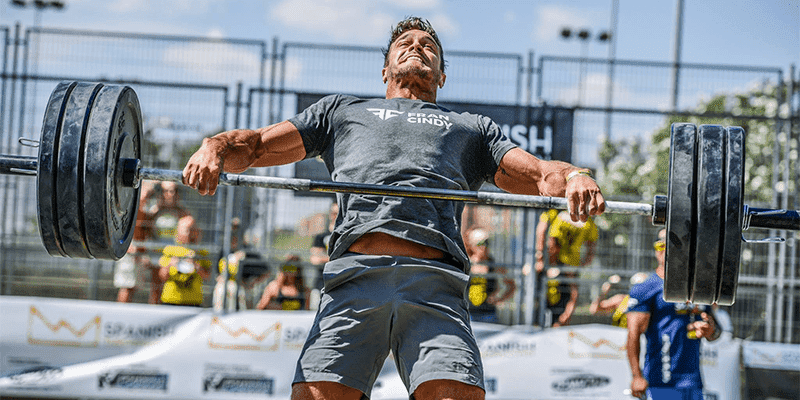
Can keto help you increase strength?
This study is interesting because the keto participants followed a modified Cyclical Ketogenic Diet. The keto group saw an increase in lean body mass, as did the Western Diet group.
The keto group, however, lost more body fat. During the first week of high carb for the keto group (think modified Cyclical Keto), participants saw a big increase in lean body mass, and the Western Diet group saw no change.
Both groups saw the same increases in strength and power. An interesting final note is that the Keto Group saw a notable increase in testosterone, while the Western Diet group saw a small drop in testosterone.
This could not be more promising for CrossFit and for male health in general. The keto group saw more testosterone, which is a cause for strength improvement and performance across the board.
Increases in muscle mass would lead to an increased ability to move heavy objects, increases in power would be great for sprinting and Olympic lifting, and more fat loss means better overall movement and increased ease of bodyweight movements such as gymnastics.
KETO AND GYMNASTICS
Gymnastic skill has become a massive part of CrossFit. Any athlete who cannot adequately perform bodyweight skills will not be successful in “the sport of fitness.” So, how does Keto affect gymnastics?
Gymnastics Study: Keto Diet Does Not Affect Strength Performance in Elite Artistic Gymnasts
This study explores whether moves like hanging straight leg raises, push ups, parallel bar dips, pull ups, squat jumps, etc. are impacted by the keto diet.

The body uses fat instead of carbs as the primary energy source with keto.
What we find is that not only is there no significant difference between the keto group and the standard group on strength, but the keto group again loses significantly more fat mass, as well as seeing a slight rise in lean muscle mass.
Leaner, lighter, yet just as strong. I think this is what all athletes want; to be pound for pound stronger. Looks like the ketogenic diet did these guys some good.
I’ve mentioned this before, but typical transition to keto can take a month, in some people even longer, so the fact that the study participants saw this good of a result after only 30 days is actually surprising to me, as that is still usually a transition period.
I would expect that after 60 days on the diet or longer, they would be doing even better.
THE KETOGENIC DIET AND OLYMPIC WEIGHTLIFTING
Another integral aspect of CrossFit and most athlete’s favourite discipline when they get good at it. Olympic weightlifting (together with throwing) is the fourth level of the CrossFit pyramid and determines an athlete’s ability to control external objects and produce power.
Olympic Weightlifting Study: A Low Carb Keto Diet Reduces Body Mass Without Compromising Performance in Powerlifting and Olympic Weightlifting Athletes
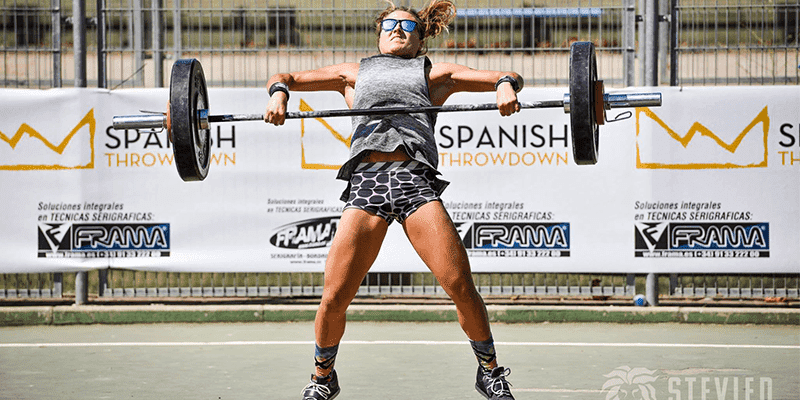
Olympic weightlifting is an essential part of CrossFit.
The title pretty much says it all. Less fat, which is a constant finding in most studies on the subject, and good performance. This study was performed on elite level lifters.
Again, if you are a lighter, leaner yet strong athlete, your level of athleticism can greatly improve.
The study concludes with a statement that coaches should consider using keto for weight class sports because it is so effective with fat loss and results in no loss in performance.
Personally, I would push that to say it should be used for all sports because the strength to weight ratio is going way up.
THE KETO DIET AND ENDURANCE
Endurance is clearly very important for CrossFit, as anyone participating in the sport would know.
As we know from the study on what physiological parameters impact CrossFit benchmark WOD’s, the need for a solid VO2max is important to be good at the benchmark WOD Nancy.
Also, a better cardiovascular system means faster recovery, even between sets in a single typical HIIT session or a CrossFit style workout.
Let’s dig into one of the most in-depth and impactful studies ever done on ketogenic athletes.
This study will introduce a new, and extraordinarily important concept called “gluconeogenesis” which is why keto works for CrossFit, sans carbs.
Endurance Study: Metabolic characteristics of keto-adapted ultra-endurance runners
To me, this study puts the nail in the coffin that Keto is bad for CrossFit. The study found that keto athletes burn mostly fat at much higher intensities than carbohydrate athletes, and keto athletes recover their muscle glycogen levels (without eating carbs) just as fast as carbohydrate-based athletes.

Keto: fat for fuel.
A few keto athletes even replenished their glycogen faster than the carb athletes. This is one of the only keto studies in which the participants were allowed to become fully fat adapted, meaning all the physiological adaptations necessary to burn fat efficiently were given enough time to fully occur in the body (typically a month or more).
By having the athletes follow a keto diet anywhere from nine to 36 months, those athletes that were ketogenic for more than a couple years were getting the full utilization of fat for fuel. This is key to a successful keto study.
First, we have both a maximal exertion of up to 18 minutes, which is very similar to a CrossFit WOD. Then, we have an endurance event which can be considered to mimic a longer workout, such as the 7K trail run from the Games in 2017.
Second, the rates of fat oxidation (burning fat for energy), even at higher intensities, are off the charts for the keto group. This literally resulted in the rewriting of physiology textbooks.
A key finding from digging into the study is that some athletes actually experienced peak fat oxidation rates at levels ABOVE 75% of VO2Max. At 75% of VO2Max, an athlete is roughly around 80-90% of their max heart rate, depending on the individual. This is a stunningly high intensity effort to be experiencing PEAK fat usage.
By using more fat at higher levels of effort, you spare your limited stores of glucose and glycogen for those maximal efforts when you really need to go all out. Compare this to the high-carbohydrate athlete who is always burning through significant amounts of glucose, and not preserving nearly as much for those ultra-high intensity efforts.
Muscle glycogen levels recovered very similarly in both groups within two hours of exercise, with the keto group actually having a slightly higher (but insignificant) increase in muscle glycogen after 2 hours of rest.
This means that you do not need carbohydrates to maintain glucose, nor to restore glycogen after exercise.
How can athletes that hardly eat any glucose, recover their glucose as fast or faster than a high-carbohydrate athlete? The answer is something called gluconeogenesis.
This leads us to our next point, which is why keto works well for all types of exercise. Read on to find out.
Gluconeogenesis – The Creation of New Glucose
We have just explained why you do not need carbohydrates to maintain glucose, nor to restore glycogen after exercise.
Gluconeogenesis is a fancy word for the internal creation of glucose, meaning the restoration of muscle, blood, and liver glycogen by creating new glucose from non-carbohydrate based sources.
Glycogen is the storage form of glucose, is made up of many connected glucose molecules and can be found in muscles and the liver. Glucose is the individual sugar that is broken down directly to produce energy.
Gluconeogenesis occurs mostly in the liver and to a small degree in the kidneys. A common misconception about keto is that when people stop eating carbohydrates, all the glucose and glycogen in their body goes away permanently.
This is physiologically impossible, and if it did all go away, you would die. There are certain cells in the brain, red blood cells, kidney medulla cells, and cells in the testicles that rely on glucose.
Ketones can provide fuel for up to 70% of your brain’s energy needs. Thus, even when you go keto, your body figures out a new way to create this glucose, which is pretty remarkable.
Once you have become fully fat adapted, your body gets highly efficient at gluconeogenesis.
This ability to create glucose from non-carbohydrate sources also debunks the strongly held belief that carbs are an essential macronutrient, which they are not.
Your body can make glucose from protein and fat, thus protein and fat are the only essential macronutrients the body absolutely needs.
Let’s take a look at the different ways your body can make glucose.
The possible sources of gluconeogenesis within your body are glycerol (from fat), lactate (think lactic acid), and some amino acids (from protein). All of these sources are in different ways converted to a chemical substance called pyruvate, which is then, through a series of steps, converted to glucose.
Lactate
This is the same lactate, or lactic acid, that is created during intense exercise, and is typically thought of as that muscle burn that builds with prolonged intense exercise. All CrossFit athletes are probably too familiar with lactic acid.
Via a process called the Cori Cycle (lactic acid cycle), lactate made from anaerobic glycolysis from the muscles is shuttled to the liver, where it is converted, eventually, into glucose, and then goes back to the muscle.
Amino Acids
These are the basic building blocks of protein, and they can come from the diet or from skeletal muscle. The main amino acids used to create glucose are glutamine and alanine.
Glycerol
Glycerol is actually a component of fatty acids and can be converted to eventually make glucose. Who knew, sugar from fat.
In summary, the body makes all the glucose it needs from eating protein and fat, and generating lactic acid from exercise.
This concept is the key why the ketogenic diet and CrossFit are ultimately highly compatible.

It is possible to follow a ketogenic diet and perform at CrossFit.
THE IMPACT OF KETO ON ATHLETIC PERFORMANCE FOR CROSSFIT
In this article, we disproved the myths that keto can’t work for CrossFit. Keto athletes can get leaner, just as strong and actually produce all their own glucose from fat and protein.
They also use more fat at higher intensities of exercise, potentially saving precious glycogen stores for really hard efforts.
Next up in this Keto and CrossFit series, we are going to look at how keto impacts your bodies’ energy metabolism, inflammation, oxidative damage, mental health and sleep. While often neglected, these are extremely important aspects for CrossFit success that happen outside the gym.
Keep your eyes out for it.
–
Nic and Lindsay are certified Ketogenic Living Health Coaches, accredited by both NASM (National Academy of Sports Medicine) and AFAA (Athletics and Fitness Association of America).
Collectively known as the Millennial Keto Couple, Nic and Lindsay run Millennial Methods to help others fix underlying health issues or optimise their body composition and athletic performance through keto. You can find more of their work here.
All content within this article is provided for general information only, and should not be treated as a substitute for the medical advice of your own doctor or nutritionist. Please consult a health care professional before drastically changing your diet.