

Step count is one of the most popular health metrics because it is simple. Your phone or watch records steps throughout the day, then gives you a number that is easy to compare with yesterday or last week. Walking speed is different. It tells you how quickly you cover a distance and can reflect physical capacity, balance, leg strength, coordination, and cardiorespiratory fitness.
Both measurements are useful, but they answer different questions.


Step count is usually the better marker of how much you move across a typical day. Walking speed is usually the better marker of how well your body can move when you are asked to walk with purpose. Neither number is a complete measure of fitness, but together they provide a clearer picture than either one alone.
If you want one simple daily health metric, step count is highly practical. If you want to assess physical function and walking capacity, walking speed is more informative. The best approach is to use step count to build activity habits and use walking speed or cadence to make sure some of that walking is purposeful.
What Step Count Actually Measures
Step count measures movement volume. It captures how many steps you take during work, errands, household tasks, workouts, and leisure time. Because it reflects accumulated movement throughout the day, it is useful for identifying whether you are generally active or highly sedentary.
A person who averages 8,000 steps per day usually moves more than someone who averages 2,000 steps per day. That may sound obvious, but it matters because low daily movement is associated with poorer health outcomes. Large studies and systematic reviews have found that higher daily step counts are associated with lower all cause mortality risk.
The health benefit is not limited to people who reach 10,000 steps per day. That number is popular, but it was not originally developed as a precise scientific threshold. Research suggests that health benefits begin well below 10,000 steps and continue as step count rises, although the rate of benefit becomes smaller at higher amounts.

A recent systematic review found that around 7,000 steps per day was associated with lower risks across several major health outcomes compared with around 2,000 steps per day. This supports a more useful message than an all or nothing target: moving from very low activity toward a moderate daily step count can make a meaningful difference.
Why Step Count Is So Useful
The strongest feature of step count is behavior change. It is easy to monitor, easy to understand, and easy to increase gradually. You can add a short walk before work, take a walking break after lunch, park farther away, or walk while making a phone call. These actions all raise your total.
Step count also gives you feedback about your routine. You may believe you are active because you exercise several times per week, but a wearable device can reveal that you barely move outside those sessions. In that case, a step goal can encourage more consistent movement across the whole day.
For people who are currently inactive, increasing step count is often a safer and more approachable starting point than beginning with hard intervals or long runs. Walking usually has a lower barrier to entry and can be adjusted according to fitness level, joint comfort, and available time.
What Step Count Misses
Step count does not tell you how hard you are working. Two people can each take 8,000 steps, but one may spend most of the day walking slowly around a workplace while the other includes a fast 30 minute walk. The total is the same, but the physiological demand is different.
It also does not measure non stepping exercise well. Cycling, swimming, rowing, resistance training, and many forms of sport can improve fitness substantially while adding few or no steps. A person who cycles regularly may have a lower step count than a sedentary person who works in a large building.
3 Best Beginner Chest Exercises for Jacked and Muscular Upper Pecs
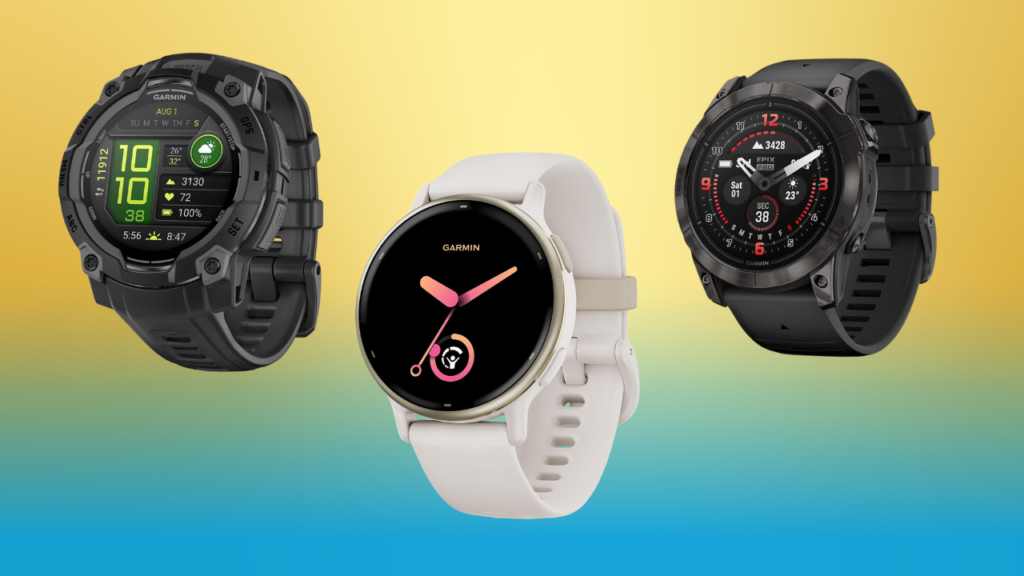
Wearable devices also have limitations. Different devices use different algorithms, and accuracy can vary according to where the device is worn, walking pattern, speed, and movement type. The best use of your own step count is to compare your current average with your own future average, rather than treating a single number as a perfect measurement.
What Walking Speed Actually Measures
Walking speed measures how fast you can cover a distance. It can be measured in miles per hour, meters per second, or simply by timing a known route. It is often assessed over a short distance in clinical and research settings because it reflects multiple systems working together.
To walk quickly, you need adequate leg strength, balance, coordination, joint mobility, confidence, and cardiorespiratory capacity. This is why walking speed is often described as a functional health marker, especially in older adults.

Research shows that usual walking speed changes with age and differs on average between men and women. A systematic review of more than 51,000 apparently healthy adults found that walking speed generally slowed during adulthood, with meaningful variation by age and sex. This makes it more useful to compare your walking speed with your own previous results than to judge yourself against one universal standard.
Why Walking Speed Can Be a Strong Fitness Marker
Walking speed tells you something about capacity. A person who can walk briskly for a sustained period usually has a different fitness profile from someone who can only manage a slow pace before becoming breathless or unstable.
Research on walking programs has found that vigorous pace walking can improve cardiorespiratory fitness more clearly than leisurely walking. This does not mean every walk needs to be hard. Low intensity walking still contributes to step count and daily movement. It means that pace influences the cardiovascular training effect.
Walking speed also matters for physical function. Studies in older adults show that resistance training, coordination training, and combined exercise programs can improve gait speed. This suggests that faster walking is not only a result of aerobic capacity. It can also improve when leg strength, balance, and movement coordination improve.
For this reason, walking speed can act as a useful check on whether your overall training is improving real world function. If you are getting stronger in the gym and building your aerobic base, brisk walking should usually feel easier over time.
Walking Speed Is Not the Same as Cadence
Walking speed is the distance you cover over time. Cadence is the number of steps you take per minute. They are related, but they are not identical.
A taller person may cover more distance per step than a shorter person at the same cadence. Hills, terrain, footwear, and stride length can also change walking speed. Cadence is often easier to monitor with a wearable device because it does not require measuring distance precisely.
Research in adults from middle age through older age has found that a cadence of about 100 steps per minute can be a practical marker of moderate intensity walking for many people. However, this is a general guideline, not a rule. The cadence that produces moderate intensity depends partly on age, fitness level, body size, and walking economy.
If 100 steps per minute feels easy to you, you may need a faster pace to challenge your cardiovascular system. If you are older, deconditioned, or returning from inactivity, a lower cadence may already feel moderately demanding. Your breathing and perceived effort still matter.
Step Count vs Walking Speed for Health
Step count has a strong advantage for measuring total daily movement. It reflects how much you walk across the day, and research consistently links more daily steps with lower mortality risk. It is an excellent metric for reducing inactivity and building a sustainable walking habit.
Walking speed has a strong advantage for measuring function and intensity. A timed brisk walk can reveal whether you are improving your ability to move quickly and tolerate effort. It is more closely connected to the physical challenge of walking than a total step count alone.
For health, the strongest answer is to combine the two. Use steps to ensure you move often. Use pace to make sure at least some of your walking is purposeful enough to improve fitness.

A person who accumulates 7,000 steps at a very easy pace will likely benefit from the movement. That same person may improve fitness further by including 20 to 30 minutes of brisk walking several times per week. In contrast, a person who completes one intense walk but spends the rest of the day sitting may benefit from increasing overall step volume.
How to Use Step Count and Walking Speed Together
Start by measuring your normal weekly step average. Do not change your routine for the first week. This gives you a realistic baseline instead of an ambitious target that does not match your current lifestyle.
Then increase your average gradually. Adding 500 to 1,000 daily steps is a practical adjustment for many people. Continue until you reach a level that fits your schedule and recovery. A target of 7,000 or more daily steps can be useful for many adults, but the right target is one you can sustain.
Next, add purposeful walking. Choose a flat route you can repeat, such as a track, neighborhood block, park path, or treadmill. After a brief easy warm up, walk briskly for 10 to 30 minutes. You should feel your breathing increase while still being able to speak in short sentences.
You can monitor this with cadence if your device provides it. Aiming for around 100 steps per minute is a useful starting point for many adults. You can also track the time it takes to walk a fixed distance. If you cover the same route more quickly at a similar effort level, that is a meaningful sign of improvement.
A Simple Walking Fitness Test
Choose a safe, flat route of one half mile or one kilometer. Warm up for five to 10 minutes, then walk the distance as briskly as you can without running. Record your time, average pace, and how difficult the effort felt.
Repeat the test every four to six weeks under similar conditions. Use similar footwear, a similar route, and a similar time of day when possible. A faster time at the same effort level usually suggests improved walking capacity. A similar time with lower perceived effort can also indicate progress.
Do not treat a single test as a diagnosis. Weather, sleep, stress, illness, and device errors can affect the result. Look for trends over several tests.
The Verdict
Step count is the better marker of daily movement volume. It is simple, practical, and strongly linked with health outcomes. It is especially useful for people who need a clear daily activity target and a way to reduce prolonged inactivity.
Walking speed is the better marker of functional walking capacity. It reflects more than activity volume because it depends on aerobic fitness, leg strength, balance, coordination, and confidence. It is especially useful for assessing whether your ability to move through the world is improving.
Neither measure replaces a complete fitness assessment. Step count does not measure muscular strength. Walking speed does not fully measure endurance, body composition, or athletic performance. Still, they are two valuable metrics that require no expensive testing.
Track daily steps to build a consistently active life. Track brisk walking pace to make sure your body can do more than simply accumulate movement. Together, they provide a practical and evidence based view of your health and fitness.
Key Takeaways
| Metric | What it measures best | Best practical use |
|---|---|---|
| Step count | Total daily movement volume. | Use it to reduce inactivity and build a sustainable walking habit. |
| Walking speed | Functional walking capacity and the ability to move at a purposeful pace. | Use a repeatable route or timed test to track physical progress. |
| Cadence | Steps per minute and an estimate of walking intensity. | Use it to guide brisk walking, with around 100 steps per minute as a general starting point for many adults. |
| Best approach | Both volume and intensity matter for health and fitness. | Track a weekly step average and include purposeful brisk walks. |
| Important limitation | Neither measure captures every part of fitness. | Pair walking metrics with strength training and other activity you enjoy. |
References
- Dwyer, D., Hansen, B., Barrera, M., Burns, R.D., Barreira, T.V., Tudor Locke, C. and Abel, M.G. (2022) ‘Cadence based classification of moderate intensity overground walking in 41 to 85 year old adults’, Scandinavian Journal of Medicine and Science in Sports, 32(12), pp. 1801–1810.
- Hupin, D., Roche, F., Gremeaux, V., Chatard, J.C., Oriol, M., Gaspoz, J.M., Barthélémy, J.C. and Edouard, P. (2015) ‘Even a low dose of moderate to vigorous physical activity reduces mortality by 22 percent in adults aged 60 years and over: A systematic review and meta analysis’, British Journal of Sports Medicine, 49(19), pp. 1262–1267.
- Liu, B., Sun, Y., Xu, C., Liu, X., Wu, S. and Li, H. (2022) ‘Dose response association between the daily step count and all cause mortality: A systematic review and meta analysis’, Journal of Sport and Health Science, 11(5), pp. 620–627.
- Paluch, A.E., Bajpai, S., Bassett, D.R., Carnethon, M.R., Ekelund, U., Evenson, K.R., Galuska, D.A., Jefferis, B.J., Kraus, W.E., Lee, I.M., Matthews, C.E., Orsini, N., Roth, G.A., Shalev, I., Spence, J.C., Stephens, S.K., Tudor Locke, C. and Lewis, C.E. (2022) ‘Daily steps and all cause mortality: A meta analysis of 15 international cohorts’, The Lancet Public Health, 7(3), pp. e219–e228.
- Peel, N.M., Kuys, S.S. and Klein, K. (2013) ‘Gait speed as a measure in geriatric assessment in clinical settings: A systematic review’, Journals of Gerontology Series A: Biological Sciences and Medical Sciences, 68(1), pp. 39–46.
- Schrack, J.A., Simonsick, E.M., Ferrucci, L. and Newman, A.B. (2010) ‘The relationship between energy availability and physical activity in older adults’, Journal of Gerontology Series A: Biological Sciences and Medical Sciences, 65A(10), pp. 1165–1172.
- Middleton, A., Fritz, S.L. and Lusardi, M. (2015) ‘Walking speed: The functional vital sign’, Journal of Aging and Physical Activity, 23(2), pp. 314–322.
- Vestergaard, S., Kronborg, C., Puggaard, L. and Bangsbo, J. (2015) ‘Effects of three types of exercise interventions on healthy old adults’ gait speed: A systematic review and meta analysis’, BMJ Open, 5(10), article e008524.