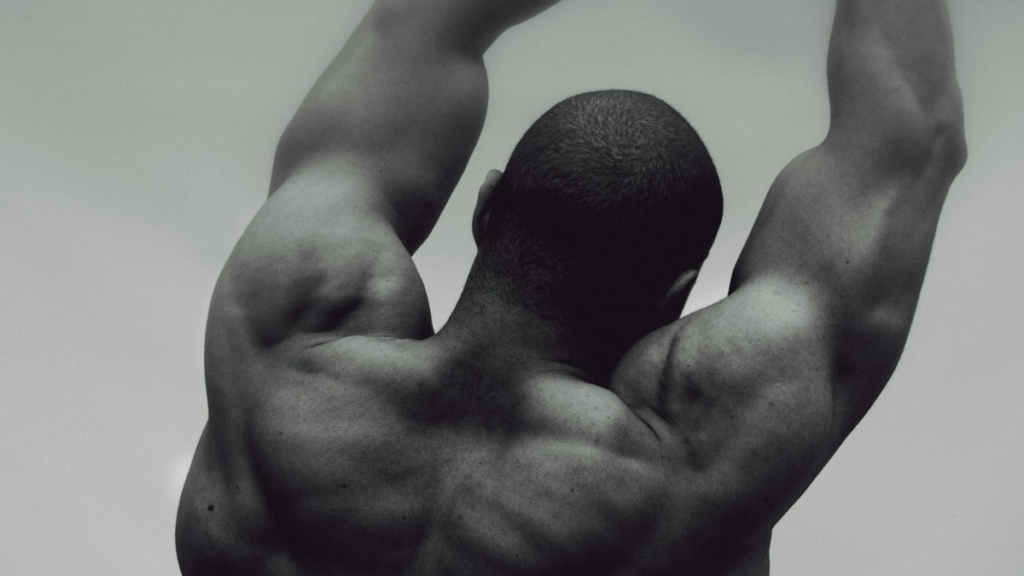
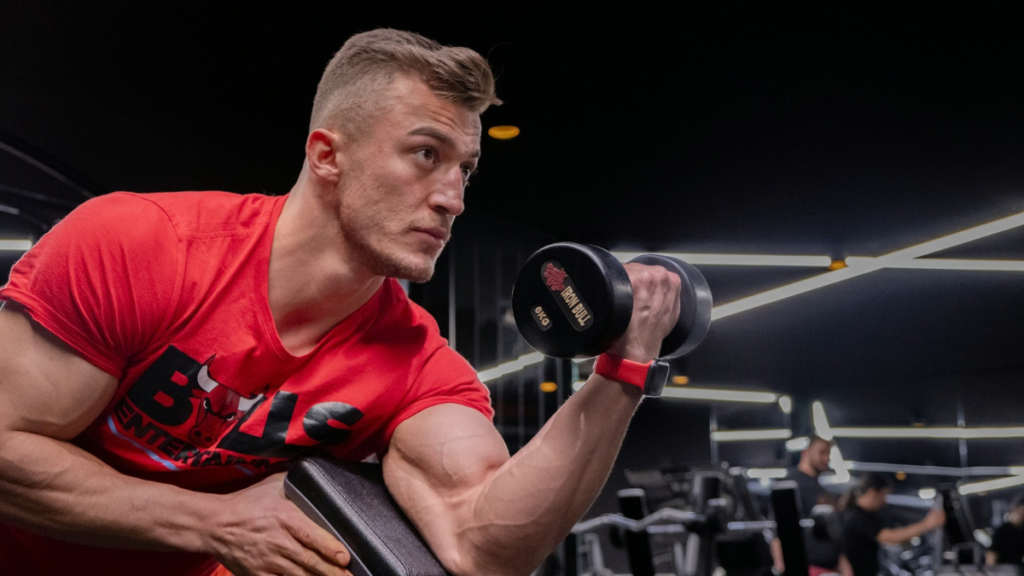
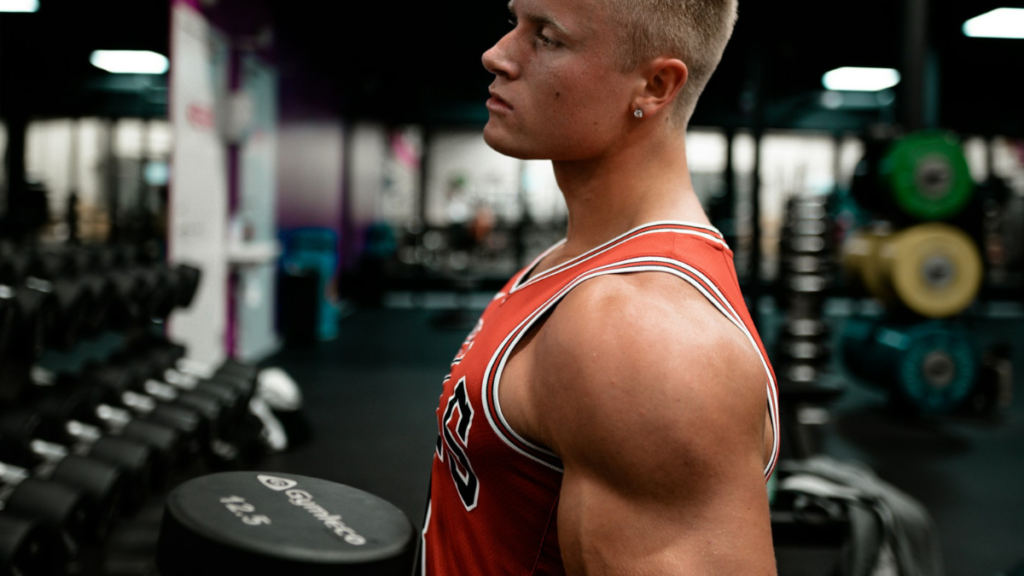
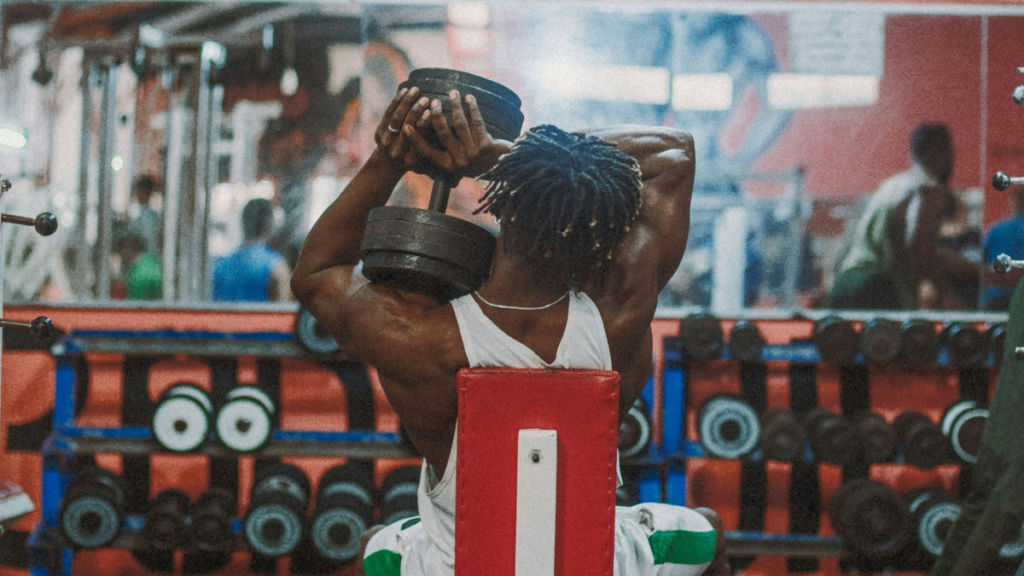
Building bigger biceps does not require a complicated arm day or a huge collection of equipment. A pair of dumbbells gives beginners enough freedom to train the elbow flexors through different hand positions and arm angles, while also letting each arm work independently. That matters because one side cannot quietly take over the work for the other.
The biceps brachii is best known for bending the elbow, but it also helps turn the palm upward, a movement called supination. The brachialis, which sits beneath the biceps, is also a powerful elbow flexor. The brachioradialis in the forearm contributes as well, particularly when the hand is in a neutral position. A smart beginner routine should therefore include curls that challenge these muscles without relying on momentum, excessive weight, or complicated setup.


The three exercises below cover those bases. The standing dumbbell curl teaches the core movement. The incline dumbbell curl trains the biceps with the upper arm behind the torso. The hammer curl adds a neutral grip variation that develops the elbow flexors and forearms. Together, they provide a simple and effective foundation for muscle growth.
What Actually Builds Bigger Biceps
Muscle growth comes from consistent resistance training that asks the muscle to produce meaningful force, followed by sufficient recovery and nutrition. Research shows that resistance training volume has a dose response relationship with hypertrophy. In plain terms, performing an appropriate amount of challenging work for a muscle over time is important for building it.
Beginners do not need to start with huge amounts of volume. They need good repetitions, a manageable training load, and a plan that allows gradual progress. More work is not automatically better if it causes poor technique, persistent soreness, or missed sessions. Starting with a few focused sets per exercise gives you room to improve.

You also do not need extremely heavy dumbbells to gain muscle. Research comparing lower and higher load resistance training has found similar muscle growth when sets are performed with sufficient effort. Heavier loads can be useful for increasing maximum strength, but moderate loads are practical for dumbbell curls because they make it easier to control the movement and keep tension on the target muscles.
The most important practical rule is to choose a weight that lets you perform the exercise with clean form while making the final repetitions hard. You should usually finish a set feeling that you could complete only a small number of additional good repetitions. Training close to muscular failure can promote hypertrophy, but beginners do not need to reach complete failure on every set. Leaving a little in reserve helps preserve technique and makes training easier to recover from.
1. Standing Supinated Dumbbell Curl
The standing supinated dumbbell curl is the essential starting point for beginners. It directly trains elbow flexion while allowing the lifter to rotate the palm upward during the repetition. That supinated position aligns well with one of the major functions of the biceps brachii.
Unlike a barbell curl, dumbbells allow each arm to move independently. This can make it easier to notice differences in strength, coordination, or range of motion between sides. It also means each arm must complete its own repetitions without assistance from the stronger side.
How to Perform the Standing Supinated Dumbbell Curl
Stand tall with a dumbbell in each hand, your arms relaxed by your sides, and your palms facing inward. Keep your feet about hip width apart and brace your torso gently as if preparing for someone to tap your stomach.
Begin the curl by bending one elbow. As the dumbbell rises, rotate your palm so it faces upward. Continue until the dumbbell reaches near shoulder height, without allowing the elbow to travel far forward. Pause briefly when the biceps is fully contracted, then lower the dumbbell under control until your arm is straight again.
You can curl both arms at once or alternate sides. Alternating curls often help beginners focus more closely on each repetition, while curling both arms together may make the workout more time efficient. Both options can work well when the movement is controlled.
Why It Works
This exercise teaches the most transferable biceps training skill: flexing the elbow while keeping the upper arm relatively stable. The biceps does not need a dramatic body swing or a complicated angle to receive an effective training stimulus. It needs challenging, controlled contractions performed consistently.
The standing position also requires you to control your torso. That is valuable because momentum is one of the most common mistakes in beginner curl training. If you lean backward and swing the dumbbells upward, your hips and lower back begin to do work that the biceps should be doing. Reducing the weight is usually a faster route to muscle growth than repeatedly practicing poor repetitions with a weight that is too heavy.
Common Mistakes to Avoid
Do not rush the lowering phase. Muscle actions during the lowering portion of a repetition can contribute to hypertrophy, and a controlled descent makes it easier to keep the biceps under tension. Aim to lower the dumbbell smoothly rather than dropping it toward the start position.
Avoid turning the movement into a shoulder raise. Your elbows may move slightly naturally, but they should not drift far forward as you curl. Keep your upper arms close to your sides and let the elbow joint do most of the visible work.
Finally, do not grip the dumbbell so hard that your forearms fatigue before your biceps. Hold the weight securely, but avoid squeezing it as hard as possible throughout every rep.
2. Incline Dumbbell Curl
The incline dumbbell curl is one of the best ways for beginners to make a light or moderate dumbbell feel challenging. By sitting on an incline bench with the upper arms positioned behind the torso, the biceps begins each repetition in a lengthened position.
This exercise is not about forcing an extreme stretch or using a very steep bench angle. It is about maintaining control in a position where the biceps has to work hard from the beginning of the curl. Research on resistance training at longer muscle lengths suggests that training muscles in more lengthened positions can be a useful hypertrophy strategy, although results can vary between muscles and exercises.
How to Perform the Incline Dumbbell Curl
Set an adjustable bench to a moderate incline, then sit back with your head, upper back, and hips supported. Let the dumbbells hang beside your body with your palms facing forward or slightly inward.
Keep your shoulders against the bench and curl the dumbbells upward by bending your elbows. Your upper arms should remain behind your torso throughout the set. Bring the dumbbells toward the front of your shoulders, pause briefly, and lower them slowly until your elbows are fully extended or close to fully extended.
Start with less weight than you use for standing curls. The position removes many opportunities to cheat, so even a modest load can feel demanding.
Why It Works
The incline setup limits body movement and reduces the temptation to swing. That makes the exercise especially useful for beginners who struggle to feel their biceps working during standing curls. With your upper back supported and your arms behind your body, the biceps must generate most of the movement.
It also provides a different training angle from the standing curl. Exercise variation can help distribute stress across slightly different positions and maintain productive training over time. You do not need to constantly change your entire routine, but including a second curl that feels distinct can make your biceps work more complete and engaging.
The key is controlled range of motion. Lower the dumbbells until your arms are long, but do not force the shoulder into an uncomfortable position. A mild stretching sensation in the biceps is normal. Sharp pain in the front of the shoulder, elbow, or wrist is not.
Common Mistakes to Avoid
The most common error is allowing the shoulders to roll forward at the bottom of the rep. Keep your upper back in contact with the bench and avoid chasing a deeper stretch by losing your position. A stable shoulder makes the curl more effective and more comfortable.
Do not flare the elbows outward. Keep them pointing generally toward the floor and allow the dumbbells to travel in a smooth arc. You also do not need to touch the dumbbells to your shoulders. Stop when you can no longer curl without your elbows moving excessively forward.
3. Dumbbell Hammer Curl
The hammer curl uses a neutral grip, meaning the palms face each other throughout the movement. This changes the mechanics of the curl and places strong emphasis on the brachialis and brachioradialis while still training the biceps brachii.
For beginners, the hammer curl is valuable because the neutral grip can feel natural and stable. It is also an excellent complement to supinated curls. Building the muscles beneath and around the biceps can contribute to fuller looking upper arms, while stronger forearms can make many pulling exercises feel more secure.
How to Perform the Dumbbell Hammer Curl
Stand upright with a dumbbell in each hand and your palms facing your thighs. Brace your torso and keep your elbows close to your sides.
Curl the dumbbells upward while maintaining the neutral grip. Imagine lifting the ends of two hammers toward your shoulders. Pause at the top without allowing your elbows to move far forward, then lower the dumbbells slowly until your arms return to the starting position.
You can perform hammer curls with both arms together, alternate reps, or use a cross body path by curling each dumbbell toward the opposite side of the chest. Beginners should start with the standard version because it is the easiest to learn and monitor.
Why It Works
The hammer curl broadens your biceps training beyond the palm up position. The brachialis is a major elbow flexor regardless of forearm position, and the brachioradialis is highly active during neutral grip elbow flexion. Training these muscles can improve elbow flexion strength and add more overall development to the upper arm and forearm.
Hammer Curls vs Biceps Curls – Which Builds Bigger Arms?
It is also a practical movement when your wrists do not enjoy a fully supinated curl. Some lifters find that a neutral grip is more comfortable, particularly when they are new to direct arm work. Comfort does not replace effort, but an exercise you can perform consistently and pain free is more useful than an exercise that looks perfect on paper but irritates your joints.
Common Mistakes to Avoid
Avoid allowing the dumbbells to drift away from your body. Keep them close to your sides as they travel upward. If the weights move forward, the shoulders will take over more of the work.
Do not let the wrists bend backward or forward. Keep them neutral and in line with your forearms. If this is difficult, reduce the load and focus on slower reps.
How to Program These Exercises for Muscle Growth
Perform this biceps workout twice per week on nonconsecutive days. You can add it after a back workout or include it near the end of an upper body session. Begin with two sets of each exercise and build toward three sets as your recovery and confidence improve.
For the standing dumbbell curl and hammer curl, aim for roughly eight to 15 controlled repetitions per set. For incline curls, a range of 10 to 15 repetitions is often a sensible place to begin because the movement is difficult to perform with heavy weights. Rest for around one to two minutes between sets so that fatigue does not destroy your technique.
Progressive overload does not mean adding weight every single workout. First, try to complete more good repetitions with the same dumbbell. Once you can reach the upper end of your target range for all sets with strong form, choose the next available weight and begin again toward the lower end of the range.
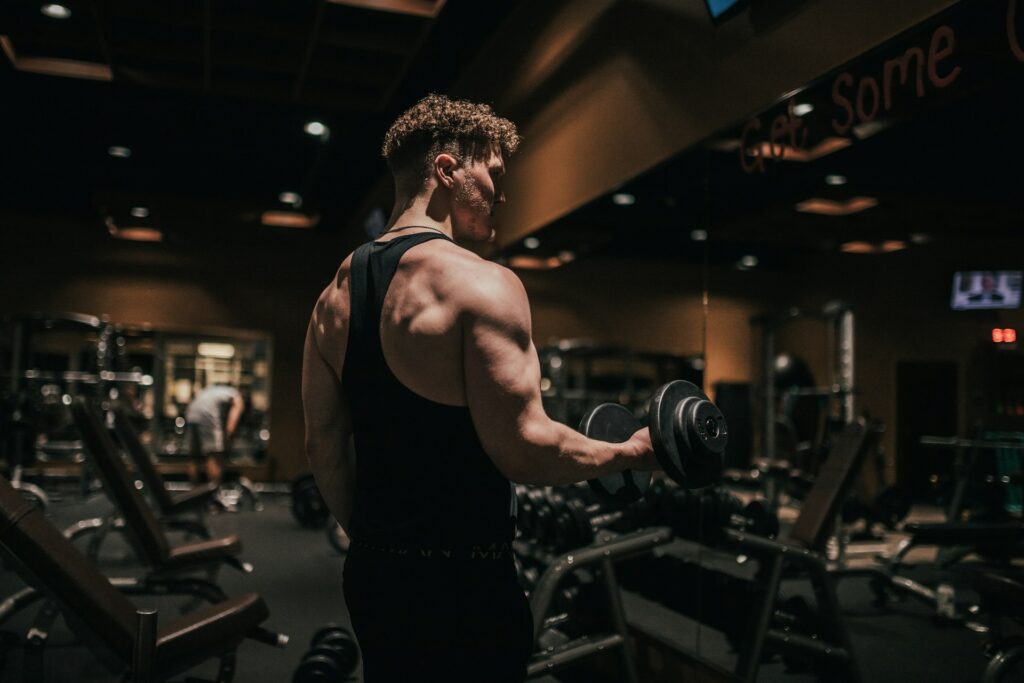
Keep a simple training log. Record the exercise, weight, sets, and repetitions. This gives you clear feedback on whether you are progressing. It also prevents the common beginner problem of guessing what weight was used last week.
Remember that biceps grow in response to training, but they also need adequate food, protein, sleep, and recovery. Direct curls work best when they are part of a balanced resistance training program that also includes pressing, pulling, leg training, and regular physical activity.
The Bottom Line
The best beginner biceps routine is not the one with the greatest number of exercises. It is the one you can perform consistently, progressively, and with high quality technique. Standing dumbbell curls teach the basic movement. Incline dumbbell curls provide a challenging lengthened position with less opportunity to use momentum. Hammer curls build the elbow flexors and forearms through a neutral grip.
Train these three movements with controlled repetitions, use weights that challenge you without breaking form, and gradually increase the work you can do over time. That simple approach gives beginners everything they need to start building stronger, more muscular arms.
References
- American College of Sports Medicine (2009) ‘American College of Sports Medicine position stand. Progression models in resistance training for healthy adults’, Medicine and Science in Sports and Exercise, 41(3), pp. 687–708.
- Nunes, J.P., Grgic, J., Cunha, P.M., Ribeiro, A.S., Schoenfeld, B.J. and Cyrino, E.S. (2022) ‘What influence does resistance exercise proximity to failure have on muscular adaptations? A systematic review with meta analysis’, Sports Medicine, 52(2), pp. 311–322.
- Schoenfeld, B.J., Ogborn, D. and Krieger, J.W. (2017) ‘Dose response relationship between weekly resistance training volume and increases in muscle mass: A systematic review and meta analysis’, Journal of Sports Sciences, 35(11), pp. 1073–1082.
- Schoenfeld, B.J., Grgic, J., Ogborn, D. and Krieger, J.W. (2017) ‘Strength and hypertrophy adaptations between low and high load resistance training: A systematic review and meta analysis’, Journal of Strength and Conditioning Research, 31(12), pp. 3508–3523.
- Schoenfeld, B.J., Ogborn, D.I. and Krieger, J.W. (2017) ‘Hypertrophic effects of concentric versus eccentric muscle actions: A systematic review and meta analysis’, Journal of Strength and Conditioning Research, 31(9), pp. 2599–2608.
- Wolf, M., Fröhlich, M., Behringer, M., Aschenbrenner, P., Schröder, J. and Halle, M. (2023) ‘Muscle hypertrophy following resistance training at long versus short muscle lengths: A systematic review and meta analysis’, Sports Medicine, 53(5), pp. 1019–1035.
Key Takeaways
| Exercise | Main benefit | Beginner focus |
|---|---|---|
| Standing supinated dumbbell curl | Trains elbow flexion and palm up curling strength | Keep the torso still and control every rep |
| Incline dumbbell curl | Challenges the biceps from a lengthened arm position | Use lighter weights and keep shoulders supported |
| Dumbbell hammer curl | Trains the brachialis, brachioradialis, biceps, and forearms | Maintain a neutral wrist and keep elbows close |
| Weekly approach | Builds productive training volume without excessive fatigue | Train biceps twice weekly and progress gradually |