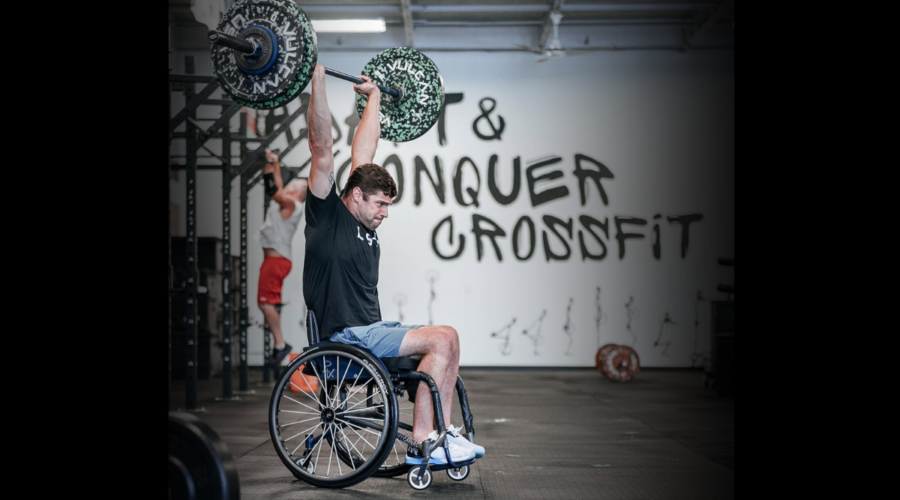


Tom Miazga is an Adaptive HYROX World Champion, 10x Adaptive CrossFit Games Champion, and Paralympian. We chatted with him to learn more about competing at the highest levels, training, nutrition, recovery handling nerves, and everything else that comes with being an elite level athlete.
Combating Nerves
A ten-time adaptive CrossFit Games champion, Miazga has spent years competing at the highest level of adaptive fitness. Yet despite the titles, the experience and the familiarity of stepping onto a competition floor, the nerves have never disappeared.

“I think that I get nervous before a competition. Always have and always will,” Miazga said.
That may be part of what keeps him sharp. Miazga describes himself as highly competitive, with an ambitious streak that prevents him from relying too heavily on past success. Previous victories can provide confidence, but they do not guarantee anything about the next event. For him, every competition still demands preparation, strategy and the willingness to prove himself again.
It is a mindset that has helped carry him through what he has described as his “summer of fitness”, a stretch packed with major competitions across both CrossFit and HYROX.
And while the volume has been exhausting, Miazga still wants to race.
Managing the Demands of Adaptive Training
Often for an adaptive athlete, training volume extends well beyond the gym.
The shoulders, elbows and wrists that Miazga relies on during workouts are also responsible for moving him through everyday life. That means managing training stress is not simply a question of what happens during a CrossFit session or HYROX race.
“My shoulders, my elbows and wrists are all well acclimated to being the primary mover of my body,” Miazga explained.
Years of propelling a wheelchair have conditioned his upper body to tolerate a significant amount of repetitive work. That does not eliminate the need for recovery. Sleep, nutrition and post-training recovery all remain important, particularly as training intensity changes throughout the week.
“Getting plenty of sleep is super important,” he said, also pointing to a high-protein diet and adequate carbohydrates as part of the recovery process. His approach is not rigid. Instead, he pays attention to how demanding individual sessions are and how his body is responding.
That awareness becomes especially important when training and competing at an elite level for years rather than months. He is dialed in on both a micro, day to day scale, and a macro level, thinking about the kind of longevity and long term excellence that earns you 10 CrossFit Games titles.
What Coaches Should Understand About Adaptive Athletes

For coaches working with adaptive athletes, Miazga’s advice begins with something simple.
“Don’t be afraid of the disability,” he said. Instead, ask questions.
A coach should understand how an athlete’s disability affects them in daily life and in training, what movements they feel confident performing, what their strengths are and, most importantly, what they actually want from fitness.
“Maybe gather what their greatest strengths are with a disability, what they feel really comfortable doing, what they’re able to do,” Miazga said. “And of course, what are they trying to achieve by coming to you?”
Not every athlete entering a CrossFit or HYROX gym has the same goal. Some may want to compete. Others may simply want to become stronger, healthier or more capable in everyday life.
“You’ll never know unless you ask those questions,” Miazga said. The biggest mistake, in his view, is assuming.
Adaptive athletes can respond differently from one day to the next, and two athletes with what appears to be a similar disability may move in completely different ways. Coaches need to communicate, experiment and learn from the athlete in front of them rather than approaching adaptive training with a predetermined idea of what someone can or cannot do.
“I’ll reiterate: ask questions,” Miazga said. That same principle applies to athletes taking their first steps into fitness.
Miazga encourages people to get outside their comfort zone and start experimenting. Walking into a CrossFit gym, trying a workout or entering an event can provide knowledge that is impossible to gain from the sidelines.
“You only know what you know once you go out there and try,” he said. Sometimes, the only way to understand what your body is capable of is to try.
Ten CrossFit Games
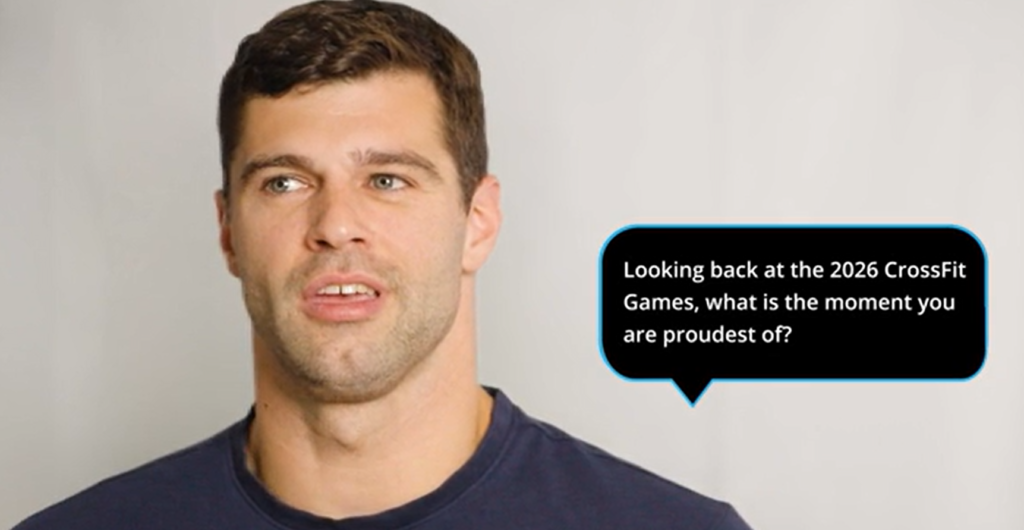
Looking back across ten consecutive CrossFit Games appearances gives Miazga a perspective and level of experience that few athletes can match.
There have been victories, difficult years and moments of uncertainty. But beyond the results, the bigger story has been how much his life has changed alongside the sport.
What began as competition eventually opened the door to a life built around fitness. Miazga has been able to operate as a full-time athlete while also becoming involved in coaching and the broader CrossFit community.
“It’s so cool to see how it has evolved over time,” he said while reflecting on the journey.
The significance of that journey extends beyond individual titles. He has watched adaptive competition develop considerably over the past decade, with his own division becoming increasingly competitive.
“I’ve seen our division grow so much more competitive over the last ten years,” Miazga said. “That’s really cool.”
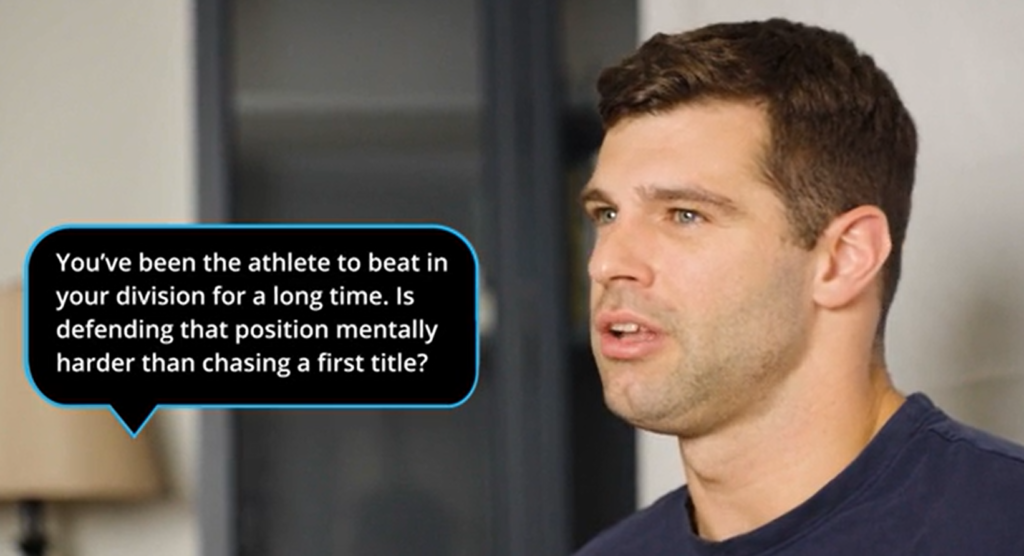
Rather than viewing that growth as a threat, he sees it as something positive. Greater competition has forced him to improve. It has also changed the way he measures success.
Instead of focusing exclusively on beating the athletes around him, Miazga increasingly evaluates himself against his previous performances. The question becomes less about whether he was better than someone else and more about whether he is a better athlete than he was a year ago.
That shift has helped take some of the pressure out of defending a position at the top.
Still Finding Ways to Improve
Despite years of elite competition, Miazga believes he is still improving. One of the clearest areas has been endurance.
He has become more efficient, more capable of maintaining intensity during longer workouts and better at sustaining a higher output over time. Strength has progressed too, but the ability to remain consistent deep into a workout has become an important part of his development.
That matters in CrossFit, but it becomes particularly relevant in HYROX. The standardized structure of HYROX appeals to a different side of Miazga’s personality.
“I appreciate the unknown of CrossFit,” he said. “There’s so many different things you can do and a lot of ways to adapt.”
The unpredictability forces athletes to develop a broad fitness base and continually solve new problems. But Miazga is also, as he puts it, “a numbers guy.”
“I am a numbers guy, and I love being able to compare stats and compare performances across time,” he said.
That is where HYROX offers something different. Its standardized structure gives him the ability to compare performances from race to race, study his progress and identify exactly where he has gained or lost time.
“So I love HYROX in that sense,” he said, describing the value of being able to compare one race with another.
His early HYROX experiences, including competing at the World Championships in Stockholm, gave him another major competitive target.
The atmosphere at the Strawberry Arena made an immediate impression. From the scale of the venue to the crowds and the energy surrounding the competition, the experience reinforced his excitement for the sport. And he already has another benchmark in mind.
After recording a HYROX time of just over one hour, “an hour, three minutes and one second”, Miazga’s next major target is clear.
“I’d be happy to break an hour,” he said.
An Engine Built in the Pool
Long before CrossFit and HYROX, there was swimming. Miazga credits the sport with helping build much of the discipline that now defines his athletic career.
Swimming demanded consistency long before he entered the world of functional fitness. His regimen was intense, “I was swimming almost every single day, sometimes twice a day, every day,” he recalled.
It developed his cardiovascular base, but its influence went beyond physical conditioning. The sport taught him independence, stubbornness and the willingness to repeatedly do the work required to improve.
“But that discipline, all those things, is really what made me successful,” Miazga said.
Those lessons followed him outside the pool. He sees that discipline reflected not only in the athlete he became, but also in his life as a competitor, coach and son.
Swimming also provided an enormous aerobic foundation. “There is no greater sport for cardiovascular training,” Miazga said.
The ability to handle long periods of work, recover quickly and maintain cardiovascular fitness became particularly valuable as he moved into CrossFit and eventually HYROX.
But the transition required him to learn new lessons too. One of the biggest was nutrition.
As his training and competition demands evolved, Miazga became far more aware of what he ate before races, how carbohydrates and protein affected performance and how nutrition influenced recovery.
“I learned very quickly how crucial nutrition is prior to racing,” he said. What had once been secondary became another part of the competitive process.
The Competitor Is Always There
Ask Miazga whether he prefers strength or endurance training and the answer comes quickly, “Endurance training.”
Ask about training versus competing and the competitive side emerges again. Training matters because it creates the opportunity to perform when the moment arrives. Competition is where that work becomes visible. Yet one aspect of his mentality has started to change.
For much of his career, a victory quickly became another target. Win, move on, prepare for the next thing. Now, after years of competition and achievement, Miazga is becoming more deliberate about appreciating what he has accomplished.

The next goal still matters. So does improvement. But there is room to acknowledge the moment as well.
That balance may become increasingly important as Miazga continues to move between CrossFit, HYROX and whatever challenge comes next.
Ten titles have not removed the nerves. Years at the top have not removed the desire to improve. And despite everything he has already accomplished, Miazga still appears most motivated by the same question that has driven his career from the beginning:
What else is possible?
Because We All Fit initiative
Tom Miazga was speaking to us to mark the launch of the RITFIT Because We All Fit initiative.
Tom Miazga represents everything the Because We All Fit initiative stands for. As one of the world’s most decorated adaptive CrossFit athletes, a former Paralympian and HYROX World Champion, Tom has earned respect across multiple communities.
Together, BOXROX and RITFIT have the opportunity to launch Tom’s partnership through a film that also serves as the flagship creative for RITFIT’s August Day One Never Ends campaign.