Strong upper abs can make the midsection look more defined, but they also help you brace, lift, carry, run, and transfer force between your upper and lower body. The visible upper section of a six pack comes from the rectus abdominis, which runs from the rib cage to the pelvis.
It is important to be realistic about what training can do. The rectus abdominis is one continuous muscle, so you cannot perfectly isolate only the upper abs. You can, however, choose exercises that challenge trunk flexion, stability, and resistance to unwanted movement.



Visible abs also depend on overall body fat levels. Dumbbell exercises can build the muscles of the abdominal wall, but they cannot remove fat only from the stomach. A more defined midsection comes from direct abdominal training combined with full body resistance training, regular activity, and nutrition that supports your body composition goal.
The three exercises below are the weighted dumbbell crunch, dumbbell plank drag, and dumbbell front rack carry. They train the abdominal muscles in different ways while using simple equipment.
What Builds Strong and Visible Abs
The rectus abdominis is responsible for flexing the trunk and helping control the relationship between the rib cage and pelvis. The obliques sit on the sides of the waist and help control rotation, side bending, and trunk stiffness.
A muscular midsection needs direct training. Research shows that resistance training can increase muscle size and strength when exercises are performed with enough effort and progressive overload. The abs are no exception.
Over 30? 5 Barbell Exercises You Should Do to Protect Your Body Against Injury
However, direct ab exercises are only one part of the process. Research on spot reduction shows that training one body part does not significantly remove fat only from that location. You cannot crunch your way to visible abs if overall body fat remains too high for them to show. The practical solution is simple. Train your abs with resistance, strength train your whole body, move regularly, eat enough protein, and use a sustainable energy deficit if fat loss is your goal.
1. Weighted Dumbbell Crunch
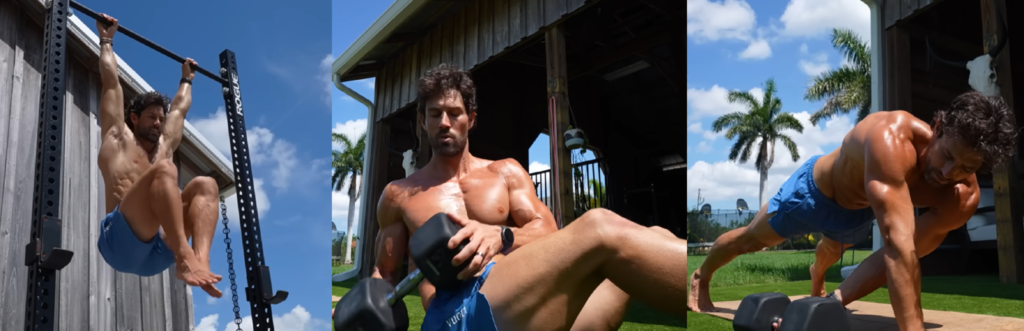
The weighted dumbbell crunch is the most direct upper ab exercise in this article. It trains the rectus abdominis through controlled trunk flexion and allows easy progression by increasing the dumbbell load. Lie on your back with your knees bent and feet flat on the floor. Hold one dumbbell against your chest with both hands. Keep your lower back in a comfortable position and gently draw your ribs toward your pelvis.
Lift your shoulders and upper back from the floor by contracting your abdominal muscles. You do not need to sit all the way up. A controlled curl through the upper torso is enough. Lower slowly until your shoulder blades lightly touch the floor, then repeat.
The dumbbell adds resistance to a movement that is often too easy when performed with bodyweight alone. This makes the exercise useful for beginners who can already perform controlled bodyweight crunches.
Research using muscle activity measurements shows that trunk flexion exercises can strongly challenge the rectus abdominis. The weighted crunch is especially practical because the load can be increased gradually as your strength improves.
How to Progress the Weighted Crunch
Start with two or three sets of eight to fifteen repetitions. Choose a dumbbell that makes the final few repetitions difficult but does not force you to pull on your neck or use momentum.
When you can perform all sets with controlled form, increase the weight slightly or slow the lowering phase. You can also pause briefly at the top position before lowering.
Common Weighted Crunch Errors
The most common mistake is pulling the head forward. Keep your neck relaxed and focus on lifting your rib cage with your abdominal muscles.
Another error is turning the movement into a full situp. A larger range of motion is not always better. The goal is controlled trunk flexion, not swinging your torso upward with hip flexors.
2. Dumbbell Plank Drag
The dumbbell plank drag trains the abs, obliques, shoulders, and trunk stabilizers. Instead of moving the spine through flexion, you resist rotation while moving a dumbbell across the floor.
Begin in a high plank position with your hands below your shoulders and a dumbbell placed outside one hand. Keep your body in a straight line from head to heels. Reach across with the opposite hand, drag the dumbbell under your torso, and place it beside the other hand. Pause, reset your plank position, and repeat on the other side. Your hips and shoulders should remain as level as possible while the dumbbell moves.
The dumbbell creates a small but meaningful rotational challenge. Your obliques and deeper trunk muscles must resist the urge to twist as you shift your weight from one arm to the other. Research on trunk stabilization exercises supports movements that challenge the core to control unwanted rotation and extension. The plank drag is useful because it combines a stable plank with a deliberate reaching task.
How to Progress the Dumbbell Plank Drag
Start with two or three sets of six to ten drags per side. Use a light dumbbell at first because the main challenge is maintaining the plank position.
Progress by using a slightly heavier dumbbell, slowing each drag, increasing repetitions, or moving your feet closer together. A narrower foot position increases the balance demand and should be introduced gradually.
Common Dumbbell Plank Drag Errors
The most common error is allowing the hips to rotate dramatically as you drag the dumbbell. Widen your feet or use a lighter weight until you can keep your pelvis stable.
Another error is letting the lower back sag. Lightly tighten your glutes and abs throughout the exercise. Stop the set if you can no longer maintain a straight body position.
3. Dumbbell Front Rack Carry
The dumbbell front rack carry trains the abs, upper back, shoulders, grip, and legs while you walk under load. Holding dumbbells near the shoulders creates a forward pulling force that the trunk must resist. Clean two dumbbells to shoulder height or lift them safely into position. Hold the weights close to your shoulders with your elbows slightly forward. Stand tall with your ribs stacked over your pelvis.
Walk forward slowly with short, controlled steps. Breathe steadily and avoid leaning backward to compensate for the load. Your abs should work to keep the torso upright and organized.
The front rack carry is not an isolation exercise for the upper abs. It is an integrated core exercise that teaches your trunk to maintain position while the legs move under load. This is useful for both gym performance and everyday carrying tasks.
Research on loaded carries and resistance training supports the value of training the trunk under external load. The carry also develops grip endurance and upper back strength, which can support other exercises such as rows, deadlifts, and pullups.
How to Progress the Front Rack Carry
Begin with two or three carries of twenty to thirty seconds. Use dumbbells that challenge you without forcing your ribs to flare or your lower back to arch.
Progress by adding a small amount of weight, extending the carry duration, or walking a greater distance. Change one variable at a time so that your posture remains controlled.
Common Front Rack Carry Errors
The most common mistake is leaning backward as the dumbbells pull forward. Keep your glutes and abs lightly engaged, and choose a lighter load if you cannot maintain an upright position.
Another error is holding your breath for the entire carry. Brace your trunk, but continue taking small, controlled breaths as you walk.
How to Program These Exercises
Train your abs two or three times per week. Perform the weighted dumbbell crunch first if your main goal is direct abdominal muscle development. Use plank drags and front rack carries afterward to train stability and loaded control.
A simple session could include three sets of weighted crunches, two sets of plank drags per side, and two front rack carries. This is enough direct core work for most beginners when combined with a broader strength training program.
Progress gradually. Research shows that progressive overload and sufficient weekly volume support muscle growth. You do not need to train your abs to complete failure. Stop most sets with one to three good repetitions still available.
Final Thoughts
The weighted dumbbell crunch, dumbbell plank drag, and dumbbell front rack carry are three excellent exercises for building a stronger and more muscular midsection. The crunch directly trains trunk flexion. The plank drag challenges anti rotation control. The front rack carry teaches the abs to brace under load while moving.
These exercises cannot isolate only the upper abs or reveal them without changes in overall body composition. Train consistently, progress patiently, and combine direct core work with full body strength training and sustainable nutrition.
Key Takeaways
| Exercise | Main core demand | Starting recommendation | Main technique priority |
|---|---|---|---|
| Weighted dumbbell crunch | Controlled trunk flexion | Two or three sets of eight to fifteen repetitions | Lift with the abs, not the neck or momentum |
| Dumbbell plank drag | Resisting rotation during a plank | Two or three sets of six to ten drags per side | Keep the hips and shoulders level |
| Dumbbell front rack carry | Bracing against a forward load | Two or three carries of twenty to thirty seconds | Walk tall while keeping the ribs controlled |
| Overall strategy | Abs need training and appropriate body composition | Train the core two or three times weekly | Progress gradually and avoid spot reduction myths |
References
- Escamilla, R.F., Babb, E., DeWitt, R., Jew, P., Kelleher, P., Burnham, T., Busch, J., D Anna, K. and Montalvo, S. (2006) ‘Electromyographic analysis of traditional and nontraditional abdominal exercises: Implications for rehabilitation and training’, Physical Therapy, 86(5), pp. 656 to 671.
- McGill, S.M. and Karpowicz, A. (2009) ‘Exercises for spine stabilization: Motion and motor patterns, stability progressions, and clinical technique’, Archives of Physical Medicine and Rehabilitation, 90(1), pp. 118 to 126.
- Schoenfeld, B.J., Ogborn, D. and Krieger, J.W. (2017) ‘Dose response relationship between weekly resistance training volume and increases in muscle mass: A systematic review and meta analysis’, Journal of Sports Sciences, 35(11), pp. 1073 to 1082.
- Vispute, S.S., Smith, J.D., LeCheminant, J.D. and Hurley, K.S. (2011) ‘The effect of abdominal exercise on abdominal fat’, Journal of Strength and Conditioning Research, 25(9), pp. 2559 to 2564.