

Toned legs are not created by a special rep range, a machine, or one punishing workout. The look most people describe as toned comes from building muscle in the legs while reducing enough body fat for that muscle shape to become visible.
For beginners, the most effective approach is simple. Train the major muscles of the legs with controlled resistance exercises, gradually make those exercises more challenging, and support the process with regular activity and nutrition that fits your goal.


You do not need a complicated program to start. Three exercises can cover a great deal of what your legs need: the goblet squat, reverse lunge, and glute bridge. Together, they train the quadriceps, glutes, hamstrings, calves, and muscles that stabilize the hips and knees.
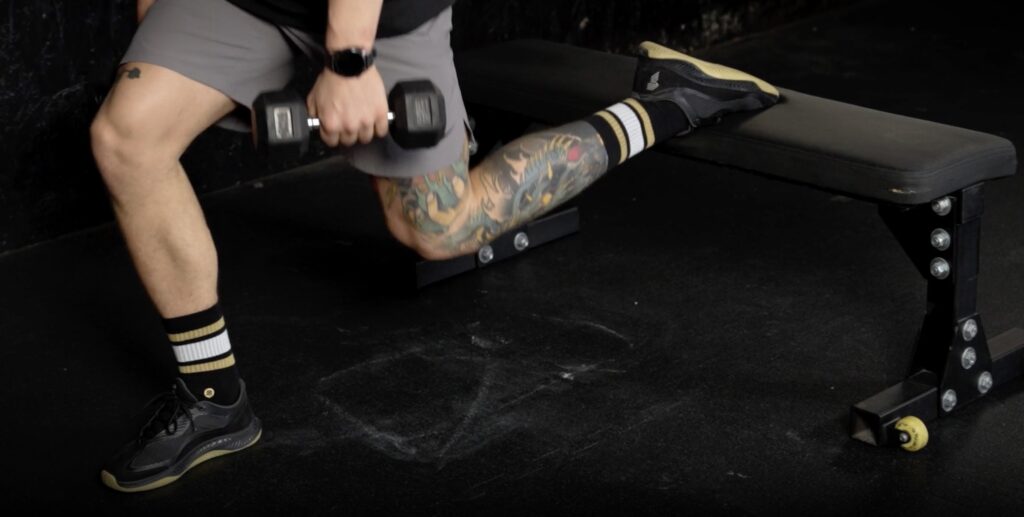
Research on resistance training consistently shows that muscles grow and get stronger when training is performed regularly with enough effort and progressive overload. Beginners do not need to start with heavy weights. Bodyweight movements, light dumbbells, kettlebells, and resistance bands can all create an effective stimulus when used with good technique.
What Toning Really Means
The word tone is widely used in fitness, but muscles do not become toned through a unique type of exercise. A muscle can become stronger and larger through resistance training. It can then become more visible when body fat levels are low enough for its shape to show.
This means that leg training and nutrition work together. Squats and lunges can build the muscles of your thighs and glutes, but they cannot remove fat only from your legs. Research does not support the idea that repeatedly training one body part causes meaningful fat loss only in that area.
How to Build Strength Without Heavy Weights (Is It Possible?)
Your body decides where it loses fat based partly on genetics, sex, hormones, and total energy balance. You can influence your overall body composition through consistent activity, resistance training, and nutrition habits, but you cannot choose the exact location where fat loss happens first.
The most productive goal is to build strong legs and improve overall fitness. As your strength improves and your body composition changes over time, the legs often become more defined.
Why Beginners Should Focus on Simple Movements
Beginners usually make faster progress when they repeat a small number of movements long enough to improve them. Constantly changing exercises can feel exciting, but it makes it harder to track strength gains and learn proper technique.
The goblet squat, reverse lunge, and glute bridge are useful because they are easy to adjust. You can begin with bodyweight or a light load, then increase repetitions, range of motion, resistance, or the number of sets as you get stronger.
These movements also train different parts of the lower body. The squat emphasizes the quadriceps and glutes. The reverse lunge trains one leg at a time and challenges balance. The glute bridge focuses more directly on hip extension, which targets the glutes and hamstrings. A complete leg program can include many other exercises, but these three create an effective beginner foundation.
1. Goblet Squat
The goblet squat is one of the best beginner exercises for building stronger and more defined thighs and glutes. It trains the quadriceps, glutes, adductors, calves, and trunk while teaching the basic squat pattern.

Hold a dumbbell or kettlebell close to your chest with both hands. Stand with your feet about shoulder width apart, although a slightly wider or narrower stance may feel better depending on your body structure. Keep your chest tall and your feet firmly connected to the floor.
Lower yourself by bending your knees and hips at the same time. Let your knees travel in the same direction as your toes. Descend only as far as you can while keeping your feet stable and your torso controlled. Then press through the floor to return to standing.
The goblet position makes the exercise more beginner friendly because the weight is held in front of the body. This can make it easier to maintain an upright torso and learn how to squat with control.
Research supports squatting movements for improving lower body strength and muscle development. The exact depth of your squat should depend on your current mobility, comfort, and control. You do not need to force a deep squat if your heels rise, knees hurt, or your back loses position.
How to Progress the Goblet Squat
Start with two or three sets of eight to twelve repetitions. Choose a weight that makes the final few repetitions challenging without causing your form to deteriorate.
Once you can complete all sets for twelve controlled repetitions, increase the weight slightly. If you do not have a heavier weight available, slow the lowering phase, pause briefly near the bottom, or add another set. The goal is to make gradual progress while keeping every repetition smooth and controlled.
Common Goblet Squat Errors
A common mistake is letting the knees collapse inward during the descent. Keep the knees tracking in the same direction as the toes. Another mistake is allowing the heels to rise. Keep pressure through the whole foot, especially the heel and the base of the big toe.
Avoid rushing through repetitions. A slower descent gives you more control and helps you learn the movement pattern.
2. Reverse Lunge
The reverse lunge is one of the best lower body exercises for beginners because it trains each leg separately. This can help you notice differences in strength, balance, or coordination between your left and right sides.
Stand tall with your feet about hip width apart. Step one foot backward and lower your body until both knees are bent. Your front foot should remain flat on the floor, and your front knee should track in the same direction as your toes.

Push through the front foot to return to standing. Complete all repetitions on one side before switching, or alternate sides if that feels more natural.
The reverse lunge trains the quadriceps, glutes, hamstrings, calves, and hip stabilizers. It also challenges balance because the base of support changes as you step backward and forward.
Research supports unilateral resistance training as a useful way to develop lower body strength and function. Training one leg at a time can be particularly valuable for beginners who tend to rely heavily on one side during bilateral exercises such as squats.
How to Progress the Reverse Lunge
Start with two or three sets of six to ten repetitions per leg. Begin with bodyweight if you are learning the movement or if balance is the main challenge. Hold onto a stable support lightly if needed.
Once bodyweight repetitions feel stable, hold a dumbbell or kettlebell close to your chest. You can also hold one weight in each hand if your balance and grip allow it.
Increase the range of motion only as far as you can maintain control. Your back knee does not need to touch the floor. A comfortable depth with a stable front foot is the priority.
Common Reverse Lunge Errors
The most common mistake is taking a step that is too short. This can force the front knee far forward and make balance harder. Take a comfortable step backward that allows both knees to bend naturally.
Another common mistake is pushing mostly through the back foot. Focus on pressing through the front foot to stand up. This helps the front leg receive the intended training stimulus.
3. Glute Bridge
The glute bridge is an excellent beginner exercise for the glutes and hamstrings. It teaches hip extension, which is the movement of driving the hips forward. Strong hip extension is important for walking, running, climbing stairs, jumping, and lifting.
Lie on your back with your knees bent and your feet flat on the floor. Place your feet about hip width apart and bring your heels close enough to your body that you can feel your glutes working as you lift.

Gently brace your abdomen, then press through your feet and lift your hips toward the ceiling. At the top, your knees, hips, and shoulders should form a straight line. Lower your hips under control and repeat.
The glute bridge is simple, but it can be challenging when performed with good technique. The goal is to extend the hips using the glutes, not to create an exaggerated arch in the lower back.
Research on resistance training supports hip extension exercises for developing the gluteal muscles. The glute bridge can be progressed with bodyweight, a resistance band around the knees, a weight across the hips, or a single leg variation.
How to Progress the Glute Bridge
Begin with two or three sets of ten to fifteen repetitions. Pause for one or two seconds at the top of each repetition and squeeze the glutes before lowering.
When bodyweight bridges become easy, place a dumbbell, kettlebell, or barbell across the front of the hips. Use padding if needed for comfort. You can also progress to a single leg bridge, although this requires more control and should be introduced gradually.
Common Glute Bridge Errors
A common mistake is pushing through the toes instead of the whole foot. Keep pressure through the heels and the middle of the feet. Another mistake is allowing the knees to drift outward or inward. Keep them in line with the hips and feet.
If you feel the exercise mainly in your lower back, reduce the range of motion and focus on gently tightening the abdominal muscles before lifting.
How to Program These Exercises
Train your legs two or three times per week with at least one day between demanding sessions. This allows time for muscles to recover and adapt while still providing enough regular practice to improve.
A beginner workout can include two sets of goblet squats, two sets of reverse lunges, and two sets of glute bridges. Rest for about one to two minutes between sets. As your strength and confidence improve, build toward three sets of each exercise.
Research shows that training volume is an important factor in muscle growth. Beginners do not need high volume immediately, but they do need consistency. Six to nine challenging lower body sets per session can be enough to begin making progress.
Keep most sets challenging but not maximal. Finish with one to three repetitions still available with good form. This allows you to train hard enough to stimulate muscle growth while preserving technique and managing soreness.
Supporting Leg Definition Outside the Workout
Resistance training builds the muscles that shape your legs. Regular physical activity and nutrition habits support changes in body composition. Walking, cycling, swimming, sports, and other forms of aerobic activity can increase daily energy expenditure and improve cardiovascular fitness.
Protein is also important during resistance training and body fat loss because it supports muscle protein synthesis and helps preserve lean mass. A moderate and sustainable approach to nutrition is more useful than extreme dieting, which can reduce training performance and make adherence difficult.
Aim for progress over months, not days. Muscle gain and fat loss are gradual processes. Your legs may feel stronger before they look noticeably different, and that is a positive sign that the program is working.
Final Thoughts
The goblet squat, reverse lunge, and glute bridge are three of the best exercises for beginners who want stronger and more defined legs. They train the major muscles of the thighs, glutes, and hips while improving balance, coordination, and confidence.
Start with manageable resistance, use controlled repetitions, and make small improvements over time. Pair your training with regular activity and sustainable nutrition habits. That is the most reliable route to legs that look toned because they are genuinely stronger.
Key Takeaways
| Exercise | Main muscles trained | Starting recommendation | Main technique priority |
|---|---|---|---|
| Goblet squat | Quadriceps, glutes, adductors, calves | Two or three sets of eight to twelve repetitions | Keep the feet stable and knees tracking with the toes |
| Reverse lunge | Quadriceps, glutes, hamstrings, hip stabilizers | Two or three sets of six to ten repetitions per leg | Take a controlled step backward and push through the front foot |
| Glute bridge | Glutes, hamstrings, trunk | Two or three sets of ten to fifteen repetitions | Extend through the hips without overarching the lower back |
| Weekly structure | Lower body strength and muscle development | Train two or three times per week | Add repetitions or load gradually |
References
- American College of Sports Medicine (2009) ‘American College of Sports Medicine position stand: Progression models in resistance training for healthy adults’, Medicine and Science in Sports and Exercise, 41(3), pp. 687 to 708.
- Borde, R., Hortobagyi, T. and Granacher, U. (2015) ‘Dose response relationships of resistance training in healthy old adults: A systematic review and meta analysis’, Sports Medicine, 45(12), pp. 1693 to 1720.
- Schoenfeld, B.J., Ogborn, D. and Krieger, J.W. (2017) ‘Dose response relationship between weekly resistance training volume and increases in muscle mass: A systematic review and meta analysis’, Journal of Sports Sciences, 35(11), pp. 1073 to 1082.
- Schoenfeld, B.J., Grgic, J., Ogborn, D. and Krieger, J.W. (2017) ‘Strength and hypertrophy adaptations between low versus high load resistance training: A systematic review and meta analysis’, Journal of Strength and Conditioning Research, 31(12), pp. 3508 to 3523.
- Vispute, S.S., Smith, J.D., LeCheminant, J.D. and Hurley, K.S. (2011) ‘The effect of abdominal exercise on abdominal fat’, Journal of Strength and Conditioning Research, 25(9), pp. 2559 to 2564.
- Wirth, K., Keiner, M., Hartmann, H., Sander, A. and Mickel, C. (2016) ‘Effect of 8 weeks of free weight squat training on strength, sprint performance, and jump power in recreationally trained men and women’, Journal of Strength and Conditioning Research, 30(10), pp. 2762 to 2769.