

For many beginners, shoulder training feels confusing because there are so many exercises to choose from. Social media often pushes advanced movements that look impressive but are difficult to perform correctly. The truth is that building bigger and stronger shoulders does not require complicated workouts. It requires mastering a handful of proven exercises, applying progressive overload, and training consistently.
The shoulder, or deltoid muscle, has three primary heads. The anterior deltoid helps with pressing and lifting the arm forward. The lateral deltoid creates shoulder width by lifting the arm to the side. The posterior deltoid assists with pulling movements and helps maintain healthy posture. Well developed shoulders also depend on strong rotator cuff muscles and upper back muscles that stabilize the joint during movement.


Research consistently shows that resistance training is one of the most effective ways to increase muscle size, strength, and functional capacity across all experience levels. Beginners can make particularly rapid progress because their bodies respond quickly to new training stimuli.
Here are five beginner friendly exercises that provide the greatest return on investment for building stronger and more muscular shoulders.
Why Beginners Should Focus on Simple Shoulder Exercises
The shoulder is the most mobile joint in the body, which also makes it one of the least stable. This means beginners benefit from exercises that are easy to learn, allow controlled loading, and reinforce proper movement patterns.
Studies examining muscle hypertrophy have shown that mechanical tension is one of the primary drivers of muscle growth. Compound exercises allow heavier loads that create high mechanical tension, while isolation exercises help ensure every part of the deltoid receives enough training volume for balanced development.
Research also suggests that training each muscle group with approximately 10 to 20 challenging sets per week is an effective target for maximizing muscle growth in most people. Beginners usually make excellent progress toward the lower end of that range.
1. Dumbbell Shoulder Press
The dumbbell shoulder press is arguably the best overall exercise for beginners because it develops strength throughout the entire shoulder while teaching proper overhead pressing mechanics.
Unlike a barbell press, dumbbells allow each arm to move independently. This helps reduce strength imbalances while encouraging better shoulder stability. It also lets beginners find a comfortable pressing path that suits their individual anatomy.
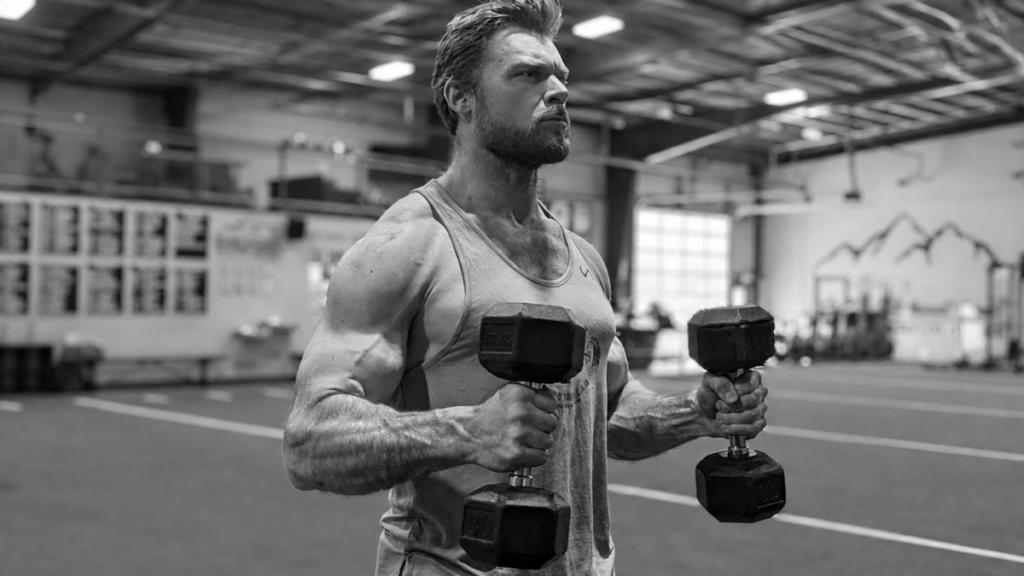
Sit or stand with a dumbbell in each hand at shoulder height. Brace your core and press both weights overhead until your elbows are nearly straight. Lower the dumbbells slowly back to the starting position under control.
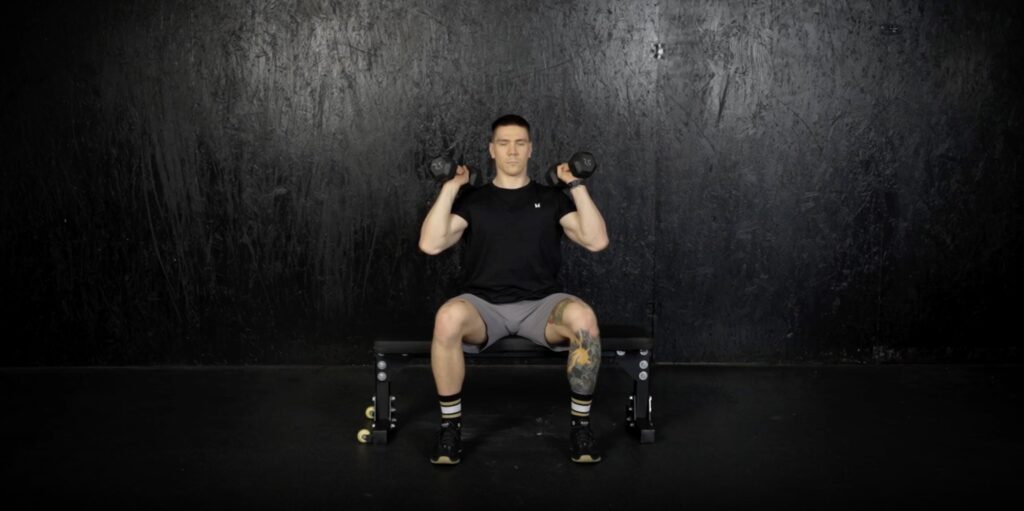
Most of the work comes from the anterior deltoids, but the lateral deltoids, triceps, and upper chest also contribute significantly. The core muscles remain active throughout the lift to stabilize the spine.
A controlled tempo is important. Lowering the weight too quickly reduces muscular tension and increases the chance of losing proper technique. Focus on smooth repetitions and avoid using momentum. For beginners, performing three sets of eight to twelve repetitions with a weight that leaves one or two repetitions in reserve is an excellent starting point.
2. Dumbbell Lateral Raise
If your goal is wider looking shoulders, no beginner exercise is more effective than the lateral raise. The lateral deltoid is responsible for lifting the arm away from the body. Because it contributes greatly to shoulder width, direct isolation work is essential for complete development. Pressing exercises alone generally do not maximize activation of the lateral deltoid.
10 Signs You Are Healthier and Fitter than You Think
Stand with a dumbbell in each hand beside your thighs. Raise your arms out to your sides until they reach roughly shoulder height while maintaining a slight bend in the elbows. Lower the weights slowly back to the starting position.

The biggest mistake beginners make is using weights that are too heavy. Swinging the torso or shrugging the shoulders shifts work away from the deltoids and onto the upper traps.
Electromyography studies consistently show high activation of the middle deltoid during properly performed lateral raises, making them one of the most valuable isolation movements for shoulder hypertrophy.
Use relatively light weights and aim for two to four sets of ten to fifteen controlled repetitions.
3. Face Pull
The face pull is one of the best exercises for building balanced shoulders while improving posture and shoulder health. Modern lifestyles often involve prolonged sitting and computer work, which can encourage rounded shoulders and weak upper back muscles. Strengthening the posterior deltoids, external rotators, and middle trapezius helps restore muscular balance.
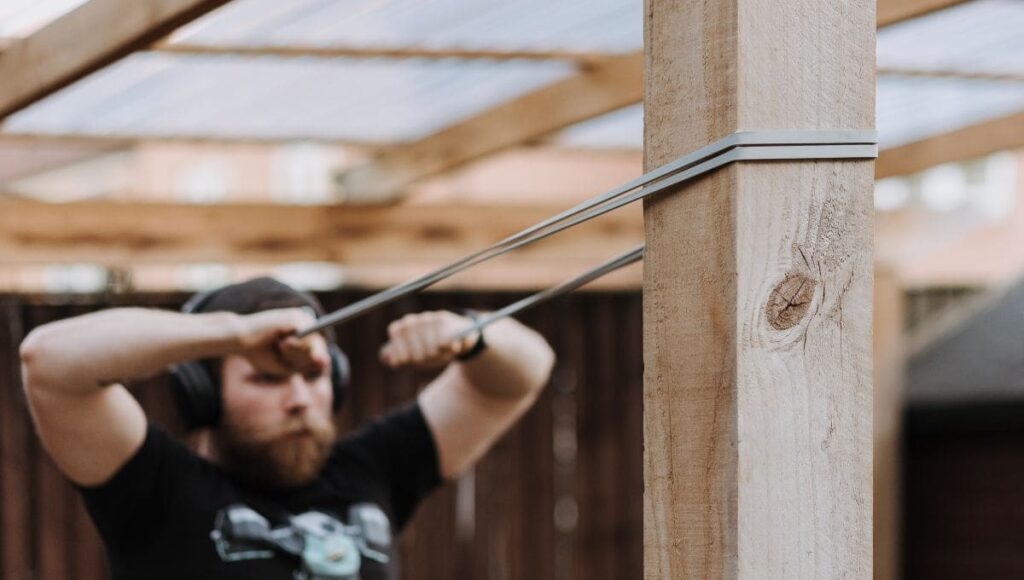
Attach a rope handle to a cable machine at upper chest or face height. Pull the rope toward your face while keeping your elbows high. Finish by rotating your hands outward so your shoulder blades squeeze together before slowly returning to the starting position. This exercise strengthens muscles that are frequently neglected by beginners who focus mostly on pressing movements.
Research examining shoulder muscle activation has shown that exercises emphasizing external rotation and scapular retraction effectively recruit the posterior deltoids and rotator cuff muscles, making face pulls an excellent addition to beginner programs. Because this movement emphasizes control rather than heavy loading, perform two to four sets of twelve to fifteen repetitions.
4. Arnold Press
The Arnold press introduces a slightly greater range of motion than a standard shoulder press while training multiple portions of the deltoid through rotation.
Begin with dumbbells held in front of your shoulders and your palms facing your body. As you press upward, rotate your palms until they face forward at the top of the movement. Reverse the motion during the lowering phase. The rotating movement increases the contribution of the anterior and lateral deltoids while challenging shoulder stability.
Although beginners should first learn the standard dumbbell shoulder press, the Arnold press provides useful variation once pressing mechanics become comfortable. As with all overhead exercises, avoid arching the lower back. Keep your ribs down, brace your abdominal muscles, and move through a comfortable pain free range of motion.
Two or three sets of eight to twelve repetitions work well for most beginners.
5. Reverse Dumbbell Fly
Balanced shoulders require direct work for the posterior deltoids.
The reverse dumbbell fly isolates the muscles at the back of the shoulders while strengthening the upper back. Strong posterior deltoids improve posture and contribute to shoulder stability during both pressing and pulling exercises.
Hinge forward at the hips until your chest is close to parallel with the floor. Hold a dumbbell in each hand beneath your shoulders with a slight bend in the elbows. Raise the weights outward until your upper arms align roughly with your torso before lowering under control.
Avoid swinging the weights or lifting your chest during the movement. The focus should remain on squeezing the shoulder blades and contracting the rear deltoids.
Studies comparing different shoulder exercises have demonstrated that reverse fly variations produce high activation of the posterior deltoid, making them valuable for balanced shoulder development. Perform two to four sets of ten to fifteen repetitions with strict technique.
How to Build Muscle Faster With These Exercises
Choosing good exercises is only part of the equation. Muscle growth depends on applying the right training principles consistently.
Progressive overload remains the foundation of strength and hypertrophy. This means gradually increasing the challenge over time by adding weight, performing additional repetitions, or improving technique while maintaining proper form.
Research has shown that muscle growth can occur across a wide range of repetition ranges, provided sets are performed close enough to muscular failure. Beginners do not need to train until complete failure on every set. Stopping with one or two repetitions left in reserve allows high quality training while reducing excessive fatigue.
Training frequency also matters. Evidence suggests that working each muscle group at least twice per week generally produces better hypertrophy than training it only once weekly when total training volume is similar.
Adequate protein intake supports muscle repair and growth. Current sports nutrition research recommends that individuals seeking muscle growth consume approximately 1.4 to 2.2 grams of protein per kilogram of body weight each day alongside regular resistance training.
Sleep should not be overlooked. Recovery is where adaptation occurs. Chronic sleep restriction has been associated with impaired muscle recovery, reduced strength gains, and poorer athletic performance.
Common Beginner Mistakes
Many beginners prioritize lifting heavier weights before mastering technique. This often reduces muscle activation and increases injury risk.
Another common mistake is performing only pressing exercises. While presses are excellent for overall shoulder strength, they emphasize the front deltoids. Without direct work for the lateral and posterior heads, muscular imbalances may develop over time.
Using excessive momentum during lateral raises and reverse flies also limits results. The goal is to make the shoulder muscles perform the work instead of relying on body movement.
Some beginners also neglect recovery by training shoulders hard every day. Muscles need adequate recovery between challenging sessions in order to grow stronger. For most people, training shoulders two or three times each week provides an excellent balance between stimulus and recovery.
Sample Beginner Shoulder Workout
A simple workout built around these five exercises covers every major shoulder function.
Start with the dumbbell shoulder press for three sets of eight to twelve repetitions. Continue with the Arnold press for two sets of eight to twelve repetitions. Perform dumbbell lateral raises for three sets of ten to fifteen repetitions. Add reverse dumbbell flies for three sets of ten to fifteen repetitions. Finish with face pulls for three sets of twelve to fifteen repetitions. Increase the weight only when every repetition can be completed with excellent technique.
Final Thoughts
Building stronger and more muscular shoulders does not require advanced training methods or complicated exercise variations. Beginners make the fastest progress by mastering a small number of fundamental movements that train every part of the deltoid while promoting healthy shoulder mechanics.
The dumbbell shoulder press develops overall strength. The lateral raise builds shoulder width. Face pulls improve stability and posture. The Arnold press adds variety and additional shoulder activation. Reverse dumbbell flies strengthen the often neglected rear deltoids.
Combined with progressive overload, sufficient protein intake, consistent training, and quality recovery, these five exercises provide an evidence based foundation for long term shoulder development.
Key Takeaways
| Exercise | Primary Benefit | Recommended Sets and Reps |
|---|---|---|
| Dumbbell Shoulder Press | Builds overall shoulder strength and muscle | 3 sets of 8 to 12 reps |
| Dumbbell Lateral Raise | Increases shoulder width by targeting the lateral deltoid | 2 to 4 sets of 10 to 15 reps |
| Face Pull | Improves posture, stability, and rear shoulder strength | 2 to 4 sets of 12 to 15 reps |
| Arnold Press | Develops pressing strength through a larger range of motion | 2 to 3 sets of 8 to 12 reps |
| Reverse Dumbbell Fly | Strengthens the posterior deltoids and upper back | 2 to 4 sets of 10 to 15 reps |
References
- American College of Sports Medicine. (2009). Progression models in resistance training for healthy adults. Medicine & Science in Sports & Exercise, 41(3), 687 to 708.
- Grgic, J., Schoenfeld, B.J., Orazem, J. and Sabol, F. (2022). Effects of resistance training performed to repetition failure or non failure on muscular strength and hypertrophy. Scandinavian Journal of Medicine & Science in Sports, 32(11), 1837 to 1852.
- Krieger, J.W. (2010). Single versus multiple sets of resistance exercise for muscle hypertrophy. Journal of Strength and Conditioning Research, 24(4), 1150 to 1159.
- Paoli, A., Gentil, P., Moro, T., Marcolin, G. and Bianco, A. (2017). Resistance training with single versus multi joint exercises at equal total load volume. Physiology & Behavior, 179, 5 to 10.
- Schoenfeld, B.J. (2010). The mechanisms of muscle hypertrophy and their application to resistance training. Journal of Strength and Conditioning Research, 24(10), 2857 to 2872.