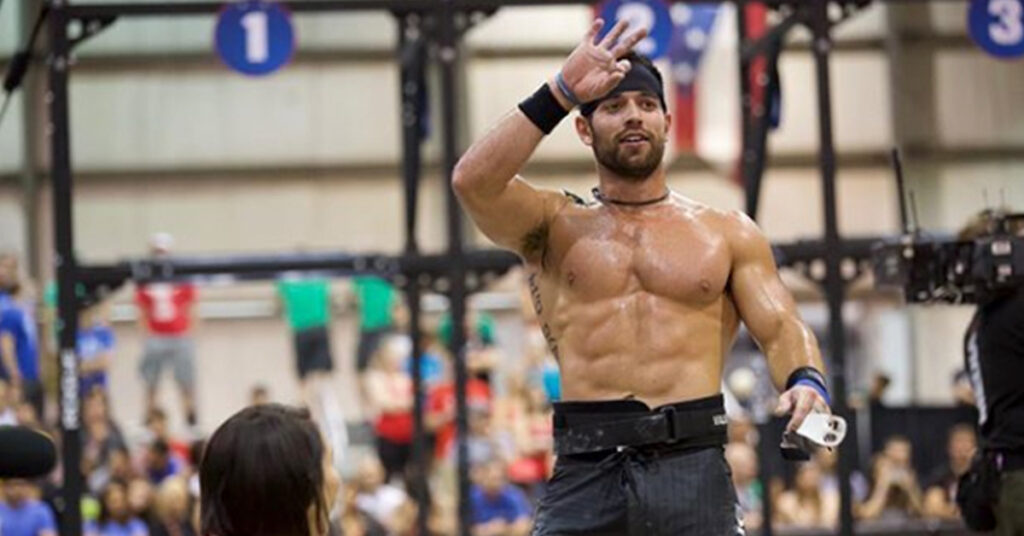


A wide, well developed back is one of the biggest contributors to an athletic looking physique. Broad lats create the classic V taper, improve posture, support shoulder health, and increase overall upper body strength. The good news is that beginners do not need dozens of complicated exercises to achieve these benefits. A small number of well chosen movements performed consistently can produce impressive results.
Many people make the mistake of chasing advanced exercises before they have built a foundation of strength and technique. Research consistently shows that muscle growth depends primarily on applying sufficient mechanical tension, training through a full range of motion, progressively increasing workload, and performing enough weekly training volume. Beginners can achieve all of these goals with basic exercises that target the major muscles of the back.



The back is made up of several important muscle groups, including the latissimus dorsi, trapezius, rhomboids, teres major, rear deltoids, and spinal erectors. While no single exercise can perfectly isolate every muscle, combining a few effective pulling movements creates balanced development while improving functional strength.
Here are five of the best exercises every beginner should master to build a wider back.
Why Building a Wider Back Matters
Many people focus heavily on chest and arm training while neglecting their back. This often creates muscular imbalances that contribute to poor posture, shoulder discomfort, and reduced athletic performance.
Strong back muscles stabilize the shoulder blades during pressing movements, improve pulling strength, and help protect the spine during everyday lifting tasks. The latissimus dorsi also plays an important role in shoulder extension, adduction, and internal rotation, making it essential for sports such as climbing, rowing, swimming, gymnastics, and many field sports.
Research also demonstrates that resistance training improves muscular strength, body composition, metabolic health, and long term physical function across all age groups. Beginners often experience especially rapid improvements because their nervous system quickly adapts to new movement patterns while muscle growth begins during the first several weeks of consistent training.
1. Lat Pulldown
The lat pulldown is one of the most beginner friendly exercises for increasing back width. It closely mimics the movement pattern of a pull up while allowing precise control over resistance.

The exercise primarily targets the latissimus dorsi while also recruiting the biceps, rear deltoids, rhomboids, lower trapezius, and forearm muscles.
How to Perform the Lat Pulldown
Sit firmly in the machine with your thighs secured under the pads. Grip the bar slightly wider than shoulder width. Pull your shoulders down before bending your elbows and bringing the bar toward the top of your chest. Pause briefly before returning the bar under control until your arms are fully extended.
Avoid leaning excessively backward or using momentum. Focus on driving your elbows toward your hips instead of simply pulling with your hands.
Electromyography studies have shown that various pulldown grip widths effectively activate the latissimus dorsi, although moderate grip widths often provide an excellent combination of muscle activation and joint comfort for beginners.
Common Mistakes
Many beginners use too much weight, turning the movement into a full body swing. Others fail to fully extend their arms, reducing the total range of motion. Controlling both the lowering and lifting phases helps maximize muscle tension while reinforcing proper technique.
2. Assisted Pull Up
The pull up is often considered the gold standard for building back width. While many beginners cannot perform an unassisted repetition initially, assisted pull ups allow them to practice the same movement pattern safely.
Assistance can come from a machine, resistance bands, or even a training partner.
Why Beginners Should Learn Pull Ups Early
Pull ups recruit multiple upper body muscles simultaneously while requiring significant core stability. Compared with many machine exercises, they develop coordination alongside strength.
As strength improves, assistance can gradually be reduced until full bodyweight repetitions become possible. This gradual progression aligns with the principle of progressive overload, which is one of the primary drivers of muscle growth.
Technique Tips
Start each repetition by pulling your shoulders down before bending your elbows. Think about bringing your chest toward the bar rather than simply lifting your chin. Lower yourself slowly until your arms are fully extended before beginning the next repetition.
Using controlled movement helps beginners build better technique and greater muscle activation than rushing through repetitions.
3. Chest Supported Dumbbell Row
Rows are essential because they build thickness while supporting the muscles responsible for shoulder stability. The chest supported dumbbell row is particularly valuable for beginners because the bench reduces stress on the lower back while allowing complete focus on pulling mechanics.

The exercise targets the rhomboids, middle trapezius, rear deltoids, and latissimus dorsi.
How to Perform It
Set an adjustable bench to an incline of approximately 30 to 45 degrees. Lie face down with a dumbbell in each hand. Begin with your arms fully extended. Pull both elbows backward until your upper arms reach your torso while squeezing your shoulder blades together. Lower the weights slowly back to the starting position.
Because your chest remains supported throughout the exercise, it becomes much harder to generate momentum.
Why It Works
Research comparing different rowing variations has shown that horizontal pulling exercises effectively activate the muscles responsible for scapular retraction and shoulder stability. Combining rowing movements with vertical pulling exercises creates more complete back development than relying on either movement alone.
4. Straight Arm Cable Pulldown
Many beginners struggle to actually feel their lats working during rows and pulldowns because their biceps dominate the movement. The straight arm cable pulldown helps solve this problem by removing elbow flexion from the exercise.
The movement directly trains shoulder extension, one of the primary functions of the latissimus dorsi.
Proper Execution
Stand facing a cable machine with a straight bar attached above head height. Hold the bar with straight arms and a slight bend in the elbows. Pull the bar downward by driving your shoulders and upper arms toward your hips. Finish with the bar near your thighs before returning slowly to the starting position.
Is The Spoto Press the Perfect Chest Exercise for Jacked Pecs?
Avoid bending your elbows throughout the exercise. The movement should come from the shoulders instead of the arms.
Benefits for Beginners
This exercise teaches proper lat engagement while strengthening the mind muscle connection. Although the mind muscle connection should never replace progressive overload, studies suggest that directing attention toward the target muscle can enhance activation during certain isolation exercises.
The straight arm pulldown also improves movement awareness, making compound exercises more effective over time.
5. Single Arm Dumbbell Row
The single arm dumbbell row remains one of the most effective exercises for building both width and thickness while correcting side to side strength imbalances.
Since each arm works independently, weaker muscles cannot hide behind stronger ones.
How to Perform the Exercise
Place one knee and one hand on a bench while supporting yourself with a neutral spine. Hold a dumbbell in the opposite hand with your arm fully extended.
Pull your elbow toward your hip while keeping your shoulders square to the floor. Pause briefly at the top before lowering the weight slowly until your arm reaches full extension.
Focus on moving through a complete range of motion rather than lifting the heaviest possible weight.
Why Unilateral Training Helps
Unilateral exercises improve muscular symmetry while increasing overall coordination. They also require greater stabilization from the core and shoulder muscles, providing additional functional benefits beyond simple muscle growth.
How Many Sets and Repetitions Should Beginners Perform?
Research examining resistance training volume consistently shows that multiple weekly sets produce greater muscle growth than very low volume training.
For beginners, performing two or three back sessions each week with approximately 10 to 15 total working sets across these exercises provides an excellent starting point.
Most exercises should be performed for 8 to 15 repetitions using a weight that leaves one to three repetitions in reserve before failure. This intensity allows consistent technique while still providing enough mechanical tension to stimulate muscle growth.
Beginners should focus more on mastering movement quality than constantly chasing heavier weights. Progressive overload can come from increasing repetitions, improving technique, adding small amounts of weight, or performing additional sets over time.
Common Beginner Mistakes That Limit Back Growth
Many beginners fail to achieve noticeable back development because they make avoidable training mistakes. One common problem is relying too heavily on the arms. Since the biceps assist nearly every pulling exercise, many lifters unconsciously pull with their hands instead of initiating movement from the shoulders and elbows.
Another mistake is using excessive momentum. Swinging the body may increase the amount of weight lifted, but it often reduces tension on the target muscles.
Poor range of motion also limits muscle development. Fully stretching the lats at the beginning of each repetition and contracting them completely at the end increases total muscle stimulation.
Finally, inconsistent training prevents long term progress. Muscle growth requires repeated exposure to progressive overload over many months. Even the best exercises produce limited results without consistent effort and adequate recovery.
Final Thoughts
Building a wider back does not require complicated routines or advanced lifting techniques. Beginners make excellent progress by mastering a handful of proven exercises and performing them consistently with good technique.
The lat pulldown develops the foundational movement pattern for vertical pulling. Assisted pull ups build functional strength while preparing for full bodyweight repetitions. Chest supported rows strengthen the middle back without unnecessary stress on the lower spine. Straight arm cable pulldowns teach proper lat activation, while single arm dumbbell rows improve strength, symmetry, and overall muscular development.
Combined with progressive overload, sufficient protein intake, and consistent recovery, these five exercises provide everything most beginners need to develop a broader, stronger back that supports both athletic performance and long term health.
Key Takeaways
| Topic | Main Point |
|---|---|
| Best exercise for beginners | The lat pulldown provides an accessible introduction to vertical pulling while effectively targeting the lats. |
| Functional progression | Assisted pull ups build the strength needed for full bodyweight pull ups. |
| Best rowing movement | Chest supported dumbbell rows improve back thickness while minimizing lower back stress. |
| Improving lat activation | Straight arm cable pulldowns help beginners learn to engage the lats effectively. |
| Correcting imbalances | Single arm dumbbell rows develop strength evenly between both sides of the body. |
| Training frequency | Two or three back sessions per week with 10 to 15 total working sets is an effective starting point for beginners. |
| Muscle growth essentials | Progressive overload, sufficient protein, quality sleep, and consistent training are all necessary for optimal results. |
References
- American College of Sports Medicine. (2009). Progression models in resistance training for healthy adults. Medicine & Science in Sports & Exercise, 41(3), pp. 687 to 708.
- Grgic, J., Schoenfeld, B.J., Orazem, J. and Sabol, F. (2022). Effects of resistance training performed to repetition failure or non failure on muscular strength and hypertrophy. Journal of Sport and Health Science, 11(2), pp. 202 to 211.
- Hughes, D.C., Ellefsen, S. and Baar, K. (2018). Adaptations to endurance and strength training. Cold Spring Harbor Perspectives in Medicine, 8(6), a029769.
- Lasevicius, T., Schoenfeld, B.J., Silva Batista, M., Barros, T.D.S., Aihara, A.Y., Brendon, H., Longo, A.R. and Tricoli, V. (2019). Muscle failure promotes greater muscle hypertrophy in low load but not high load resistance training. Journal of Strength and Conditioning Research, 36(2), pp. 346 to 351.
- Oliveira, L.F., Matta, T.T., Alves, D.S., Garcia, M.A.C. and Vieira, T.M.M. (2009). Effect of the shoulder position on the activation of the latissimus dorsi during pulldown exercises. Journal of Strength and Conditioning Research, 23(3), pp. 950 to 957.
- Schoenfeld, B.J. (2010). The mechanisms of muscle hypertrophy and their application to resistance training. Journal of Strength and Conditioning Research, 24(10), pp. 2857 to 2872.
- Schoenfeld, B.J., Ogborn, D. and Krieger, J.W. (2017). Dose response relationship between weekly resistance training volume and increases in muscle mass. Journal of Sports Sciences, 35(11), pp. 1073 to 1082.
- Schoenfeld, B.J., Grgic, J., Ogborn, D. and Krieger, J.W. (2019). Strength and hypertrophy adaptations between low load and high load resistance training. Journal of Strength and Conditioning Research, 33(Suppl. 1), pp. S1 to S18.
- Vigotsky, A.D., Halperin, I., Lehman, G.J., Trajano, G.S. and Vieira, T.M. (2018). Interpreting signal amplitudes in surface electromyography studies in sport and rehabilitation sciences. Frontiers in Physiology, 8, 985.
- Morton, R.W., Murphy, K.T., McKellar, S.R., Schoenfeld, B.J., Henselmans, M., Helms, E., Aragon, A.A., Devries, M.C., Banfield, L., Krieger, J.W. and Phillips, S.M. (2018). A systematic review, meta analysis and meta regression of protein supplementation on resistance training induced gains in muscle mass and strength in healthy adults. British Journal of Sports Medicine, 52(6), pp. 376 to 384.