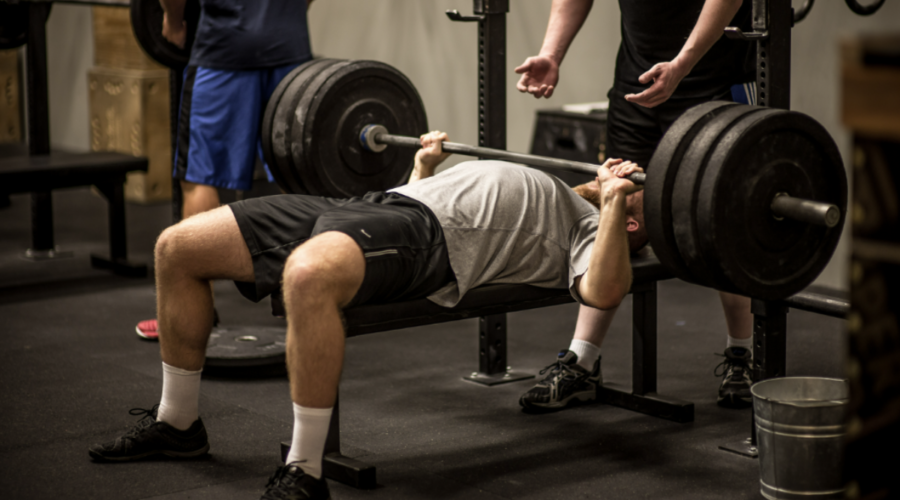


A good bench press spotter is not there to turn a hard set into an assisted set. Their job is to make the lift safer, help the lifter keep ownership of the bar, and act decisively if the rep genuinely fails. That sounds simple, but poor spotting is common. A spotter may hover too close, touch the bar early, miss the liftoff, or let their attention drift at the exact moment the lifter needs them.
The research on spotters is limited, but it gives us a useful starting point. In trained people performing bench press sets to failure, simply having visible spotters present improved total repetitions and total load lifted compared with a condition in which spotters were hidden from view. The participants also reported lower perceived exertion and greater self efficacy when spotters were present. In other words, a reliable spotter can improve both safety and performance, provided they do not take work away from the lifter.


Here are five rules that make you the training partner people want behind the bench.
Rule 1: Agree on the Plan Before the Bar Leaves the Rack
The best spot begins before the lifter lies down. Ask how many reps they expect, whether they want a lift off, whether they are taking the set to failure, and what they want you to do if the bar slows down. This conversation should be brief, but it should be specific.
A lifter doing a heavy single may need a secure lift off and immediate readiness. Someone performing a set of eight may want no contact unless the bar stops moving or begins to descend. A lifter using a close grip, a wide grip, wrist wraps, or a pronounced arch may have different preferences for the liftoff. You should know the plan before the bar is unracked, because a mid set debate is useless once fatigue is building.
5 Best Exercises for Every Beginner that Wants a Stronger Bench Press
This matters because bench press performance is influenced by the lifter’s sense of support and confidence. Research has shown that the presence of spotters can increase the work completed during bench press exercise, likely through changes in perceived effort and self efficacy. That benefit depends on the lifter trusting that help will arrive when needed, not worrying that the spotter will interfere with every difficult rep.
Use clear language that both people understand. Agree on whether “help” means a light touch, a full takeover, or a guided return to the hooks. If the lifter is training close to failure, make the rule simple: once the bar reverses direction or becomes clearly stuck, you help immediately. Do not wait for a dramatic collapse to prove that you were paying attention.
What a Good Pre Set Check Looks Like
Confirm the number of reps, the planned effort, the liftoff preference, and the assistance signal. Check that the plates are secured with collars and that the bench, rack, and hooks are positioned correctly. If the lifter has an injury, pain, dizziness, or a history of failed reps in that position, encourage a more conservative load or the use of safety arms if they are available.
Rule 2: Own the Liftoff Without Pulling the Lifter Out of Position
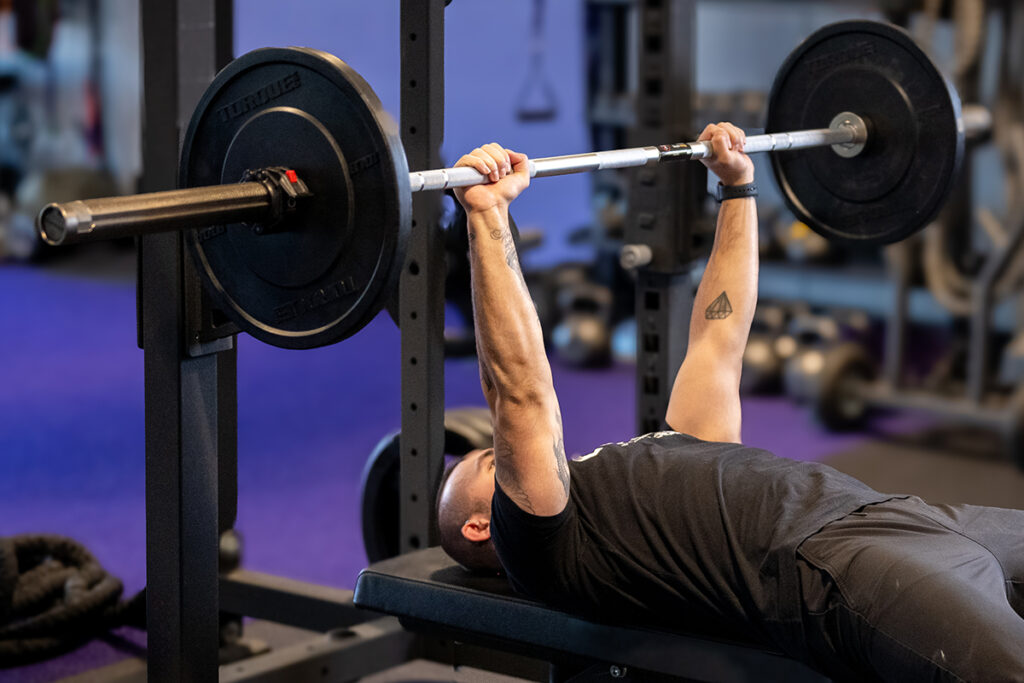
The liftoff is often the first difficult part of a heavy bench press. A lifter may have their shoulder blades set, feet planted, and upper back tight, then lose that position while trying to pull the bar forward out of the rack. Your help should reduce that problem.
Stand close enough to control the bar, usually behind the head of the bench, with a stable stance and enough room to move. Take the bar with both hands, help it clear the hooks, and guide it to the lifter’s starting position above the shoulder area. The lifter should still feel the bar’s weight as soon as it is clear of the rack. You are helping them get into position, not performing the first part of the repetition for them.
The bench press places substantial demands on the shoulder complex, particularly when grip width, elbow position, and scapular setup change. Biomechanical research shows that technique variations can alter modeled shoulder joint loads. This does not mean there is one perfect setup for every person, but it does mean that disrupting a lifter’s controlled position during the liftoff is not a trivial mistake.
Avoid yanking the bar upward, pulling it too far forward, or leaving the lifter to reach awkwardly for it. Those errors can force the lifter to chase the bar and lose tension before the first rep begins. A smooth handoff lets the lifter stabilize, take a breath, and begin the descent under control.
Keep Your Hands Ready, Not Attached
After the liftoff, keep your hands close to the bar without touching it. Your hands should follow the bar’s path closely enough that you can act within a fraction of a second, but not so closely that you distract the lifter or accidentally bump the bar. Watch the bar, not the room, your phone, or the person using the next bench.
Rule 3: Let Hard Reps Belong to the Lifter
A difficult rep is not automatically a failed rep. This is one of the most important lessons for any spotter to learn.
During resistance training, effort and fatigue are expected. A bar may slow down near the chest or move gradually through the sticking point, but still continue upward under the lifter’s own control. If you grab the bar as soon as the speed drops, you change the training stimulus and steal a rep that the lifter may have completed.
The sticking region of the bench press is a well documented feature of the lift. It is the portion of the upward movement where mechanical demands and changes in muscle contribution make the bar more difficult to accelerate. A slow bar can therefore be normal, especially during challenging sets. Your job is to recognize the difference between controlled effort and a true failure.
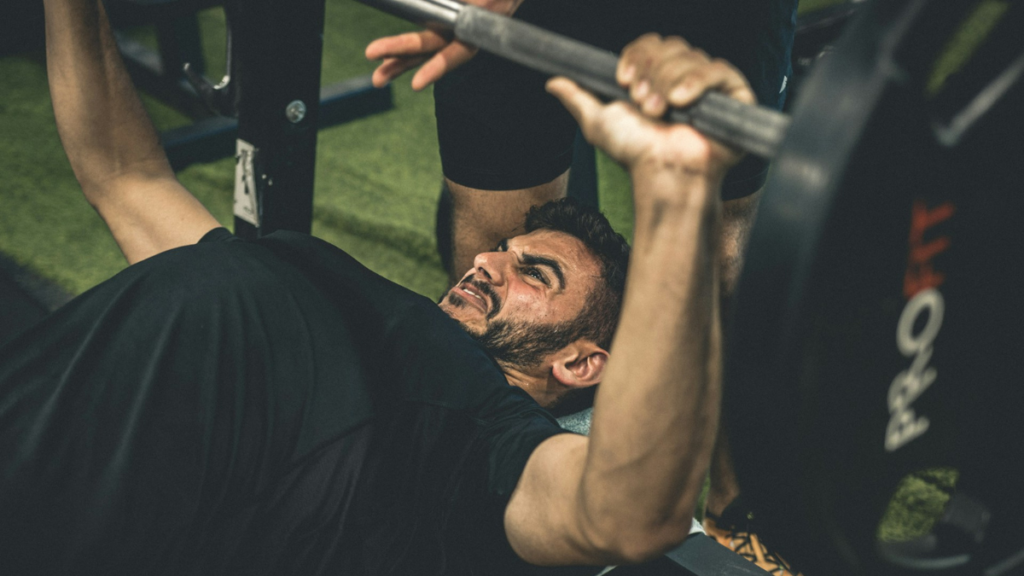
Look for clear warning signs. The bar may stop completely despite a continued push, drift unevenly to one side, descend after starting upward, or move toward the neck rather than back toward the rack. The lifter may also lose wrist position, elbows may collapse unevenly, or their verbal signal may tell you that the rep is over. These are reasons to intervene promptly.
Do not turn every difficult repetition into a forced repetition. Assisted reps can be used deliberately in some training plans, but they should be planned in advance. They are not the default response to a bar that simply moves slowly.
Touch Only When You Are Helping
If you need to assist, use enough force to get the bar moving safely, then continue helping until the bar is securely racked. Do not use a light fingertip touch that creates confusion about whether the lifter completed the repetition independently. Clear assistance is safer and gives the lifter an honest result.
Rule 4: Take Control Quickly When the Rep Fails
Once a rep has truly failed, speed matters. A loaded barbell can become dangerous when it is trapped on the chest or drifts toward the neck. Case reports have documented fatal asphyxia involving a barbell during bench press, which is a serious reminder that a failed lift is not a moment for hesitation.
If the bar stops moving or begins to descend, grip it firmly with both hands and help guide it upward toward the rack. Use your legs and hips to create a strong base rather than reaching with your back rounded over the lifter. Keep the bar level whenever possible. A crooked rescue can make the situation worse if one side drops while the other side rises.
Your priority is not preserving the lifter’s final rep count. Your priority is moving the bar into a secure position. If the lifter cannot regain control, take as much of the load as necessary and rack the bar. A missed rep is normal training feedback. A delayed rescue is a preventable safety failure.
This is also why the spotter must be physically capable of helping with the load being attempted. One strong spotter is often more effective than several people who arrive too late and do not coordinate. For maximal attempts, a competent head spotter should be present, and the rack height should allow the bar to be returned to the hooks without forcing the lifter into an awkward position.
Know When Equipment Should Replace a Human Spotter
Safety arms, pins, or properly adjusted spotter bars provide an additional layer of protection when training alone or when a reliable spotter is unavailable. They should be set so the bar can be caught before it reaches the chest or neck, while still allowing the intended range of motion. Human spotting remains valuable, but equipment can reduce the consequences of a failed lift.
Rule 5: Stay Engaged Until the Bar Is Racked
A set is not finished when the lifter locks out the final rep. It is finished when the bar is safely in the hooks.
The rack is a common point for mistakes because fatigue is high and attention drops. The lifter may push the bar backward too early, miss one hook, or turn their head to check where the bar is going. Stay with the bar through the final lockout and guide it into the rack only if necessary.
Help the lifter confirm that both sides are secure before you let go. If the bar is close to the hooks but not fully seated, keep control until it is. Do not step away while the lifter is still trying to find the rack.
This level of attention matters beyond safety. Supervised resistance training has been associated with somewhat greater strength improvements than unsupervised training in a recent systematic review and meta analysis. A spotter is not automatically a coach, but attentive supervision can improve training quality by helping lifters repeat safe, consistent setups and make better decisions under fatigue.
A great spotter is calm, focused, and predictable. They do not shout random cues, grab the bar too early, or disappear after the final repetition. They make hard training feel more secure, while ensuring the lifter still earns every successful rep.
The Bottom Line
Spotting the bench press is a skill, not just a favor. Communicate before the set, deliver a controlled liftoff, respect hard reps, act fast when failure is real, and stay locked in until the bar is fully racked. These habits protect your training partner and make their work more productive.
References
- Fisher, J., Steele, J., Wolf, M., Androulakis Korakakis, P., Smith, D. and Giessing, J. (2026) ‘The role of supervision in resistance training: An exploratory systematic review and meta analysis’, International Journal of Strength and Conditioning, 2(1), pp. 1–18.
- Noteboom, L., Belli, I., Hoozemans, M.J.M., Seth, A., Veeger, H.E.J. and van der Helm, F.C.T. (2024) ‘Effects of bench press technique variations on musculoskeletal shoulder loads and potential injury risk’, Frontiers in Physiology, 15, 1393235.
- Sheridan, A., Marchant, D., Williams, E.L., Massey, H., Hewitt, P.A. and Sparks, S.A. (2019) ‘Presence of spotters improves bench press performance’, Journal of Strength and Conditioning Research, 33(7), pp. 1755–1761.
- Stastny, P., Lehnert, M., Zaatar, A.M., Svoboda, Z., Xaverova, Z. and Pietraszewski, P. (2017) ‘The role of trunk muscles in the control of the barbell during the bench press’, International Journal of Environmental Research and Public Health, 14(10), 1173.
- Yamada, S., Ueno, Y., Yamada, T. and Tsunoyama, K. (2021) ‘A case of fatal asphyxia by a barbell during a bench press’, Legal Medicine, 54, 101998.
Key Takeaways
| Key takeaway | What a great spotter does | Why it matters |
|---|---|---|
| Set expectations first | Confirms the liftoff, target reps, and failure plan before the set | Clear communication prevents hesitation and unwanted assistance |
| Make the liftoff smooth | Helps move the bar out of the hooks without disrupting the lifter’s position | A controlled start supports consistent technique |
| Do not steal difficult reps | Watches closely and waits while the bar is still moving under control | Slow bar speed does not always mean a failed repetition |
| Intervene decisively at failure | Uses both hands, controls the bar, and racks it safely | Fast, clear help reduces the danger of a trapped barbell |
| Stay focused through the rack | Remains ready until both ends of the bar are secure in the hooks | The set is not over until the bar is safely racked |