

Slow progress is one of the biggest motivation killers in training. You show up, follow the program, eat reasonably well, and still feel like nothing is moving. Strength gains stall. Conditioning plateaus. Body composition barely changes. This experience is normal, but it is also one of the main reasons people quit training altogether.
Motivation is not just about willpower or mindset. It is strongly influenced by biology, psychology, and how training interacts with the human nervous system. Research shows that perceived lack of progress can reduce adherence to exercise programs even when real physiological improvements are happening under the surface. Understanding how motivation works — and how to support it — can make the difference between long-term progress and burnout.


This article breaks down six science-backed strategies to stay motivated when training feels slow. Each strategy is grounded in peer-reviewed research from exercise physiology, sports psychology, and behavioral science. The goal is not hype or positive thinking, but practical tools you can apply immediately.
1. Redefine What “Progress” Actually Means

Why Progress Often Feels Slower Than It Is
Most athletes define progress too narrowly. They focus on outcomes like max lifts, body fat percentage, or race times. While these metrics matter, they often change slowly and irregularly. Research in exercise psychology shows that when people rely only on distal outcomes (long-term results), motivation drops sharply during plateaus.
Physiological adaptations do not occur in a straight line. Strength gains, for example, depend on neural adaptations, muscle hypertrophy, tendon stiffness, and motor learning. Early improvements are often neural and fast. Later gains are structural and slower. This shift alone can make progress feel like it has stopped even when it has not.
Studies on resistance training show that measurable performance improvements can lag behind underlying biological adaptations by weeks or months. Muscle protein synthesis, connective tissue remodeling, and mitochondrial changes can all occur without immediate changes in performance.
Process-Based Metrics Improve Motivation
Shifting from outcome goals to process goals has been shown to improve exercise adherence and perceived competence. Process goals focus on behaviors you control: training frequency, technical quality, recovery habits, and consistency.
Research on self-regulation in sport shows that athletes who track process metrics report higher motivation and lower dropout rates. These metrics provide frequent feedback, which is critical for the brain’s reward system.
Examples of process-based progress include:
- Completing all scheduled training sessions for a month
- Improving movement quality or range of motion
- Recovering faster between workouts
- Maintaining consistent sleep and nutrition habits
These changes may not show up on a leaderboard, but they strongly predict long-term performance improvements.
The Role of Perceived Competence
Self-determination theory identifies perceived competence as a core driver of intrinsic motivation. When athletes feel capable and effective, they are more likely to persist. Broadening your definition of progress increases opportunities to experience competence, even during slow performance phases.
2. Use Short-Term Feedback Loops to Support Motivation

The Brain Needs Frequent Signals of Success
Motivation is closely tied to dopamine signaling in the brain. Dopamine is released not only when you achieve a goal, but when you perceive progress toward it. Long gaps between feedback weaken this signal.
Exercise science research shows that programs with frequent feedback improve adherence compared to programs where feedback is delayed or absent. This is especially important during slow progress phases.
Micro-Goals Create Momentum
Breaking long-term goals into short-term, achievable targets creates more frequent dopamine responses. These “micro-goals” do not replace long-term planning, but they support it.
Examples of effective micro-goals:
- Add one technically perfect rep at a submaximal load
- Improve pacing consistency in conditioning workouts
- Reduce rest time while maintaining output
- Improve warm-up efficiency or mobility benchmarks
Studies in behavioral psychology show that small wins increase self-efficacy, which in turn increases persistence. This effect is well documented in both athletic and non-athletic populations.
Objective Tracking Reduces Emotional Bias
When progress feels slow, perception is often distorted by fatigue, stress, or comparison to others. Objective tracking helps counter this bias.
Research on training monitoring shows that athletes who track variables like volume load, rate of perceived exertion, and heart rate variability have more accurate perceptions of progress and lower frustration levels.
Tracking does not need to be complex. Consistency matters more than sophistication.
3. Understand the Biology of Plateaus

Plateaus Are a Normal Adaptive Response
Plateaus are not failures. They are a predictable outcome of adaptation. The body adapts to repeated stress by becoming more efficient. Over time, the same training stimulus produces a smaller response.
Exercise physiology research shows that adaptation follows the principle of diminishing returns. As training age increases, the magnitude of improvement from a given stimulus decreases.
This applies to:
- Strength
- Aerobic capacity
- Power
- Body composition
Expecting linear progress indefinitely is biologically unrealistic.
Stress, Recovery, and Hidden Fatigue
Slow progress is often related to accumulated fatigue rather than lack of effort. Studies on overreaching show that performance can stagnate or decline even while fitness is improving underneath.
Markers of fatigue include:
- Elevated resting heart rate
- Poor sleep quality
- Increased perceived effort
- Reduced motivation
Importantly, research shows that psychological fatigue often appears before physical markers. Feeling unmotivated can be an early sign that recovery needs adjustment, not that training is failing.
Reframing Plateaus Reduces Dropout Risk
Cognitive reframing — interpreting plateaus as part of the process rather than a dead end — has been shown to reduce emotional distress and improve persistence in athletes.
Education plays a key role here. Athletes who understand adaptation timelines are less likely to interpret slow progress as personal failure.
4. Shift from Outcome Motivation to Identity-Based Motivation

Why Identity Matters More Than Goals
Goals can motivate, but identity sustains behavior. Research in behavioral science shows that people are more consistent when actions align with their self-concept.
An athlete who trains “because I am someone who trains” is more resilient to slow progress than someone who trains only to hit a specific number.
Exercise Identity Predicts Adherence
Multiple studies show that exercise identity is one of the strongest predictors of long-term training adherence. People with a strong exercise identity are more likely to:
- Train consistently during plateaus
- Return after setbacks or injury
- Maintain habits under stress
Identity-based motivation is less sensitive to short-term outcomes because it is rooted in who you are, not what you achieve.
Building Identity Through Repetition
Identity is built through repeated action, not affirmations. Every training session reinforces the identity of being someone who trains with intent.
Practical ways to reinforce identity:
- Maintain training routines even when intensity is reduced
- Focus on craftsmanship and skill development
- Treat training sessions as non-negotiable appointments
Research on habit formation shows that consistency, not intensity, is the key driver of identity reinforcement.
5. Use Social and Environmental Support Strategically
Motivation Is Social, Not Just Personal
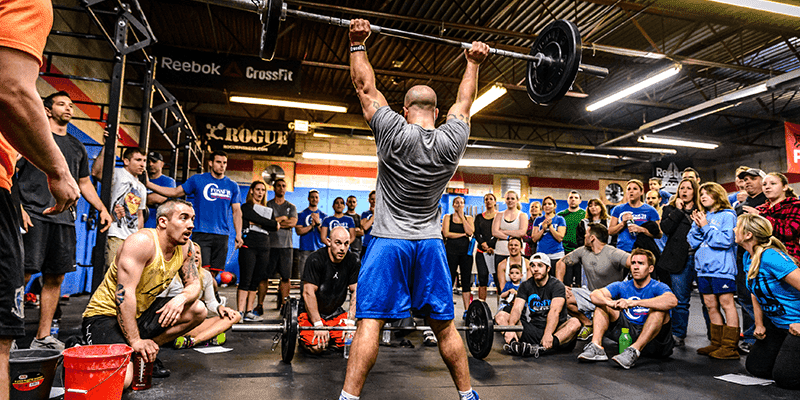
Human motivation is deeply influenced by social context. Studies in sports psychology show that social support improves motivation, perceived enjoyment, and adherence to training programs.
Training alone is not a problem, but training in isolation without feedback or community increases dropout risk, especially during slow progress phases.
Accountability Improves Consistency
Research shows that external accountability increases adherence even when motivation is low. This does not require pressure or judgment. Simply knowing that someone else is aware of your training increases follow-through.
Forms of effective accountability include:
- Training partners
- Coaches or mentors
- Group classes or teams
- Shared training logs
The effect is strongest when accountability is supportive rather than controlling.
Environment Shapes Behavior Automatically
Environmental cues strongly influence behavior without conscious effort. Studies in behavioral design show that small environmental changes can significantly increase consistency.
Examples include:
- Keeping training equipment visible and accessible
- Scheduling training at the same time each day
- Reducing friction to start sessions
When progress feels slow, lowering the psychological and logistical cost of training helps maintain momentum.
6. Accept Fluctuating Motivation and Train Anyway
Motivation Is a State, Not a Trait
Motivation fluctuates naturally due to sleep, stress, hormones, and life demands. Expecting constant high motivation is unrealistic and unsupported by research.

Studies show that elite athletes experience motivation dips just like recreational athletes. The difference is not constant motivation, but consistent behavior despite fluctuations.
Discipline Is Not Willpower
Discipline is often misunderstood as forceful self-control. Research suggests it is more accurately described as structured decision-making that reduces reliance on moment-to-moment motivation.
Athletes who rely less on motivation and more on routine show higher consistency and lower mental fatigue.
This includes:
- Training at scheduled times
- Following predefined programs
- Removing daily decision-making around whether to train
Training Through Low Motivation Builds Psychological Resilience
Training during low-motivation periods builds resilience and confidence. Research on mental toughness shows that exposure to manageable discomfort improves coping skills and self-belief.
Importantly, this does not mean ignoring recovery or pushing through injury. It means maintaining reasonable effort and consistency even when enthusiasm is low.
Over time, this approach reduces the emotional impact of slow progress because training becomes a stable part of life rather than a mood-dependent activity.
Putting It All Together
Slow progress does not mean training is failing. It often means you are deep enough into the process for adaptation to be subtle and complex. Motivation problems during these phases are normal, predictable, and solvable.
By redefining progress, creating short feedback loops, understanding plateaus, building identity, using social support, and accepting fluctuating motivation, you can maintain consistency when it matters most.
Long-term progress belongs to those who stay engaged when results are quiet.
References
- Baumeister, R.F., Vohs, K.D. and Tice, D.M. (2007) ‘The strength model of self-control’, Current Directions in Psychological Science, 16(6), pp. 351–355.
- Brick, N.E., MacIntyre, T.E. and Campbell, M.J. (2016) ‘Attentional focus in endurance activity’, International Review of Sport and Exercise Psychology, 9(1), pp. 1–27.
- Deci, E.L. and Ryan, R.M. (2000) ‘The “what” and “why” of goal pursuits’, Psychological Inquiry, 11(4), pp. 227–268.
- Dishman, R.K., McIver, K.L., Dowda, M. and Pate, R.R. (2018) ‘Declining physical activity and motivation from middle school to high school’, Medicine & Science in Sports & Exercise, 50(6), pp. 1206–1215.
- Halson, S.L. (2014) ‘Monitoring training load to understand fatigue’, Sports Medicine, 44(S2), pp. 139–147.
- Harkin, B., Webb, T.L., Chang, B.P.I., Prestwich, A., Conner, M., Kellar, I. and Sheeran, P. (2016) ‘Does monitoring goal progress promote goal attainment?’, Psychological Bulletin, 142(2), pp. 198–229.
- Lindner, C., Ehrlenspiel, F. and Scholz, U. (2019) ‘Exercise identity and exercise behaviour’, Psychology of Sport and Exercise, 42, pp. 85–92.
- Meeusen, R., Duclos, M., Foster, C., Fry, A., Gleeson, M., Nieman, D. and Urhausen, A. (2013) ‘Prevention, diagnosis and treatment of the overtraining syndrome’, European Journal of Sport Science, 13(1), pp. 1–24.