

Training to failure has become a deeply ingrained habit in modern gym culture. Many lifters believe that if a set does not end with complete exhaustion, it was not effective. The logic seems straightforward. If effort drives results, then maximal effort on every set should produce maximal gains. However, the scientific evidence paints a very different picture.
Training to failure can be useful in certain situations, but doing it on every set is not necessary for muscle growth and can actually hold you back. Research in strength training, neuromuscular fatigue, and hypertrophy consistently shows that stopping just short of failure often leads to equal or better outcomes, with fewer downsides.


This article explains three clear, science-backed reasons why you should stop training to failure every set, and how to train more effectively instead.
What Training to Failure Really Means
To understand the issue properly, it is important to define what “training to failure” actually involves.
Defining Muscular Failure
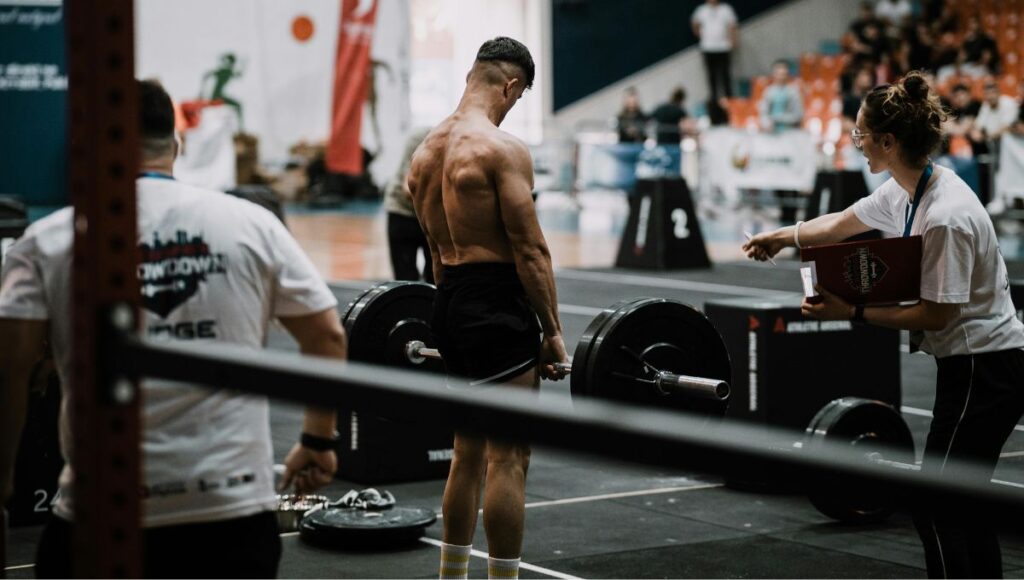
Muscular failure occurs when you reach a point during a set where you cannot complete another repetition with proper form, despite giving maximum effort. This is often called momentary muscular failure.
In practice, there are a few closely related concepts that matter:
Technical failure refers to the point where your form begins to break down significantly.
Volitional failure is when you stop because of discomfort, even though you may still be capable of another repetition.
Repetitions in reserve describe how many reps you could still perform before reaching true failure.
Most research compares training to failure with training that stops one to three repetitions short. That small difference turns out to be extremely important.
Why People Gravitate Toward Failure
There are a few reasons why training to failure feels appealing. It creates a strong sensation of effort and fatigue, which many people associate with effectiveness. It also provides a clear endpoint. You simply keep going until you cannot.
But feeling exhausted is not the same as creating an optimal stimulus for muscle growth and strength development.
Reason 1: Training to Failure Does Not Produce More Muscle Growth
The belief that you must reach failure to build muscle is one of the most persistent myths in fitness. The scientific literature does not support it.
Muscle Growth Is Driven by Tension and Volume
Hypertrophy is primarily driven by mechanical tension placed on muscle fibers, combined with sufficient training volume over time. While fatigue plays a role, it is not the main driver.
When you perform a set with moderate to heavy loads, your body recruits motor units based on the force required. As the set progresses and fatigue builds, more motor units are recruited. By the time you are close to failure, most of the available muscle fibers are already engaged.

This means that pushing all the way to failure does not significantly increase muscle fiber recruitment compared to stopping slightly earlier.
Evidence Comparing Failure and Non-Failure Training
Controlled studies have directly compared training to failure with training that stops short. When total volume is matched, muscle growth is very similar between the two approaches.
In some cases, stopping short of failure even leads to slightly better results, likely because it allows for better recovery and higher quality training sessions over time. The key takeaway is simple. Training close to failure is effective, but going all the way to failure is not required.
Efficiency of Stimulus
Think of training stimulus as a curve. As you approach failure, the stimulus increases. However, the final repetitions provide diminishing returns in terms of muscle growth while dramatically increasing fatigue. Stopping one to three repetitions before failure allows you to capture most of the benefits without the unnecessary cost.
Reason 2: Training to Failure Creates Excessive Fatigue and Limits Performance
If training to failure does not provide extra benefits for hypertrophy, the next question is whether it comes with any downsides. The answer is yes, and the most significant one is fatigue.
Understanding Fatigue
Fatigue from resistance training can be divided into two categories. Peripheral fatigue occurs within the muscle itself due to metabolic stress and energy depletion. Central fatigue involves the nervous system and affects how effectively your brain can send signals to your muscles. Training to failure significantly increases both types.
Immediate Impact on Your Workout
When you push every set to failure, fatigue accumulates quickly. This has a direct impact on performance within the same session. After one or two all-out sets, your ability to produce force declines. Subsequent sets become weaker, slower, and less controlled. As a result, you often perform fewer total repetitions across the workout.
This matters because total volume is a key driver of progress. If failure reduces the amount of high-quality work you can perform, it may actually limit your results.
Recovery Between Sessions
Fatigue does not end when the workout is over. Training to failure increases muscle damage and prolongs recovery time. Research shows that sessions taken to failure lead to greater reductions in strength and performance in the following days compared to sessions that stop short. This can interfere with your ability to train consistently.
If you are still fatigued from your last session, your next workout will suffer. Over time, this creates a cycle where you are constantly underperforming.
Long Term Consequences
Excessive fatigue can lead to plateaus in both strength and hypertrophy. It can also increase the likelihood of overtraining symptoms such as persistent soreness, reduced motivation, and declining performance. Progress in strength training is built on consistency. If your approach makes it harder to recover and repeat high-quality sessions, it is not sustainable.
Reason 3: Training to Failure Compromises Technique and Increases Injury Risk
Another major issue with training to failure is its impact on movement quality.
Breakdown of Form
As you approach failure, fatigue affects your coordination and control. This makes it harder to maintain proper technique, especially during complex compound movements.
Exercises such as squats, deadlifts, and presses require precise coordination between multiple muscle groups. When fatigue is high, that coordination begins to break down. Even small deviations in form can increase stress on joints and connective tissue.
Compensation Patterns
When a primary muscle group becomes fatigued, the body naturally tries to compensate by recruiting other muscles or altering movement patterns. While this may allow you to complete the repetition, it changes how the load is distributed.
These compensations can reduce the effectiveness of the exercise and increase strain on structures that are not meant to handle that load. Over time, repeated compensation can contribute to overuse injuries.
Fatigue and Injury Risk
Fatigue is a well-established factor in injury risk. As fatigue increases, neuromuscular control decreases. This combination creates a situation where errors in movement are more likely and more costly. Training to failure maximizes fatigue, which means it also increases the likelihood of technical errors.
Mental and Psychological Strain
There is also a psychological cost to constantly pushing to failure. Training this way can be mentally draining. It can create anxiety around workouts and reduce long term adherence. A sustainable training approach should challenge you without making every session feel overwhelming.
A Better Approach to Training Intensity
If training to failure every set is not optimal, the next step is to understand what works better.
Train Close to Failure, Not At Failure
The most effective approach for most lifters is to stop one to three repetitions before failure on the majority of sets. This ensures that you are training with sufficient intensity while avoiding unnecessary fatigue.
Focus on Quality and Consistency
Instead of chasing exhaustion, focus on performing high-quality repetitions with good technique. Consistency over time is far more important than how hard you push in a single set.
Progress comes from gradually increasing the demands placed on your body. This can be achieved by adding weight, increasing repetitions, or improving execution.
Manage Volume and Frequency
Because stopping short of failure reduces fatigue, it allows you to perform more total volume and train more frequently. This is a major advantage. Higher training frequency and volume, when managed properly, are strongly associated with better results.
Use Failure Strategically
Training to failure is not inherently bad. It simply needs to be used wisely. It can be useful in situations such as isolation exercises where the risk of injury is low, or during the final set of an exercise when additional fatigue will not compromise the rest of the workout.

It can also be helpful when training with very light loads, where reaching failure ensures that enough muscle fibers are recruited. The key is that failure should be a tool, not a default setting.
Common Misunderstandings About Training to Failure
Many of the beliefs surrounding failure training come from misunderstanding how muscle growth works. One common idea is that more pain or fatigue equals more growth. In reality, fatigue is just a byproduct of training, not the goal.
Another misconception is that stopping short of failure means you are not training hard enough. In truth, stopping with one or two repetitions in reserve still represents a very high level of effort. There is also a belief that training to failure builds superior mental toughness. While pushing your limits can be valuable, it is not necessary to do so on every set to develop discipline and resilience.
Final Thoughts
Training to failure feels intense, and intensity can be satisfying. But effective training is not about how exhausted you feel at the end of a set. It is about applying the right stimulus, recovering from it, and repeating the process consistently over time.
The evidence is clear. Training to failure on every set does not produce superior muscle growth, it increases fatigue in a way that limits performance and recovery, and it raises the risk of technique breakdown and injury. A smarter approach is to train close to failure, manage fatigue, and prioritize long term consistency. This allows you to build muscle and strength more effectively while staying healthy and motivated.
Key Takeaways
| Principle | What It Means | Practical Action |
|---|---|---|
| Failure is not required for growth | Muscle can grow without reaching absolute exhaustion | Stop one to three reps before failure on most sets |
| Fatigue reduces performance | Too much fatigue lowers output in the same and future sessions | Focus on sustainable effort rather than maximal effort every set |
| Technique drives safety and results | Poor form reduces effectiveness and increases injury risk | Maintain control and consistency in every repetition |
| Use failure selectively | Failure can still be useful in the right context | Apply it to low-risk exercises or final sets only |
| Long term consistency wins | Progress depends on repeatable high-quality training | Prioritize recovery, volume, and progression |
References
- Ahtiainen, J.P., Pakarinen, A., Alen, M., Kraemer, W.J. and Häkkinen, K. (2003). Muscle hypertrophy, hormonal adaptations and strength development during strength training in strength trained and untrained men. European Journal of Applied Physiology, 89(6), pp.555 to 563.
- Davies, T., Orr, R., Halaki, M. and Hackett, D. (2016). Effect of training leading to repetition failure on muscular strength. Journal of Sports Medicine, 2016, pp.1 to 7.
- Grgic, J., Schoenfeld, B.J., Orazem, J. and Sabol, F. (2021). Effects of resistance training performed to repetition failure or non-failure on muscular strength and hypertrophy. Journal of Sport and Health Science, 10(2), pp.202 to 209.
- Izquierdo, M., Ibáñez, J., González-Badillo, J.J., Häkkinen, K., Ratamess, N.A., Kraemer, W.J. and Gorostiaga, E.M. (2006). Differential effects of strength training leading to failure versus not to failure on hormonal responses, strength, and muscle power gains. Journal of Applied Physiology, 100(5), pp.1647 to 1656.
- Sampson, J.A. and Groeller, H. (2016). Is repetition failure critical for the development of muscle hypertrophy and strength. Scandinavian Journal of Medicine and Science in Sports, 26(4), pp.375 to 383.