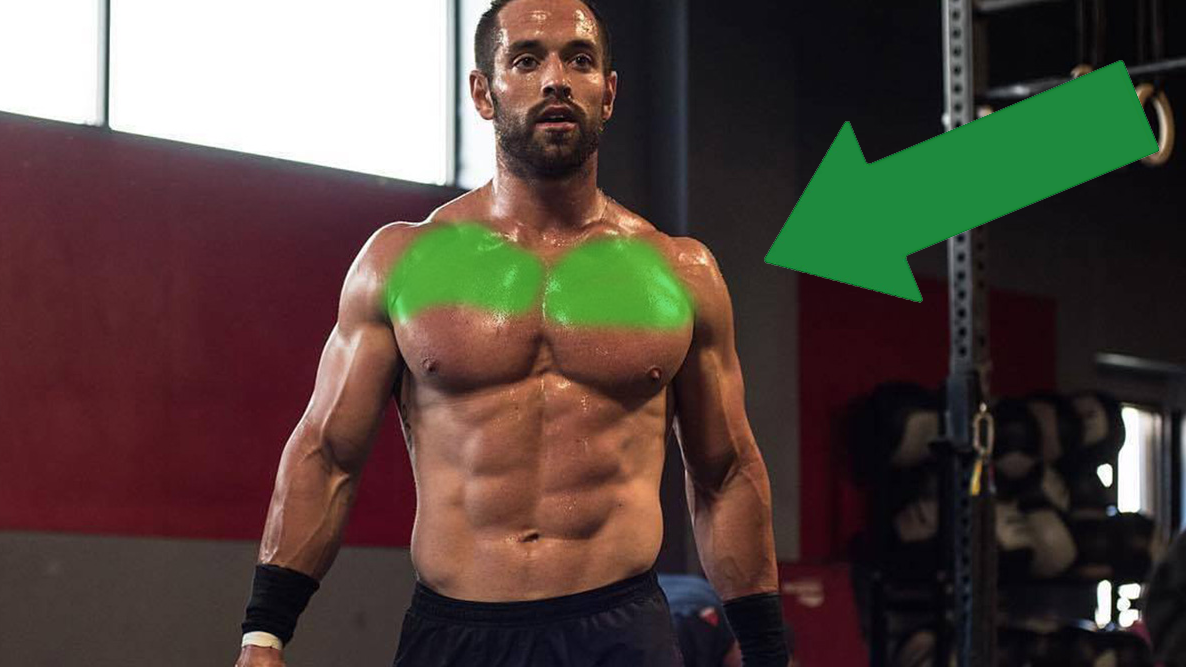


Building a full, well-developed chest is one of the most common goals in strength training. However, many lifters struggle with a lagging upper chest, which can make the physique look flat or unbalanced. The upper portion of the pectoralis major, often called the clavicular head, requires specific training strategies to grow effectively.
Compound movements like the bench press are essential, but they do not always provide enough targeted stimulation to the upper chest. That is where isolation exercises come in. When chosen and executed correctly, they can significantly improve muscle activation, mind muscle connection, and hypertrophy.


Understanding the Upper Chest
Anatomy of the Pectoralis Major
The pectoralis major has two primary regions:
- Clavicular head, commonly referred to as the upper chest
- Sternal head, commonly referred to as the middle and lower chest
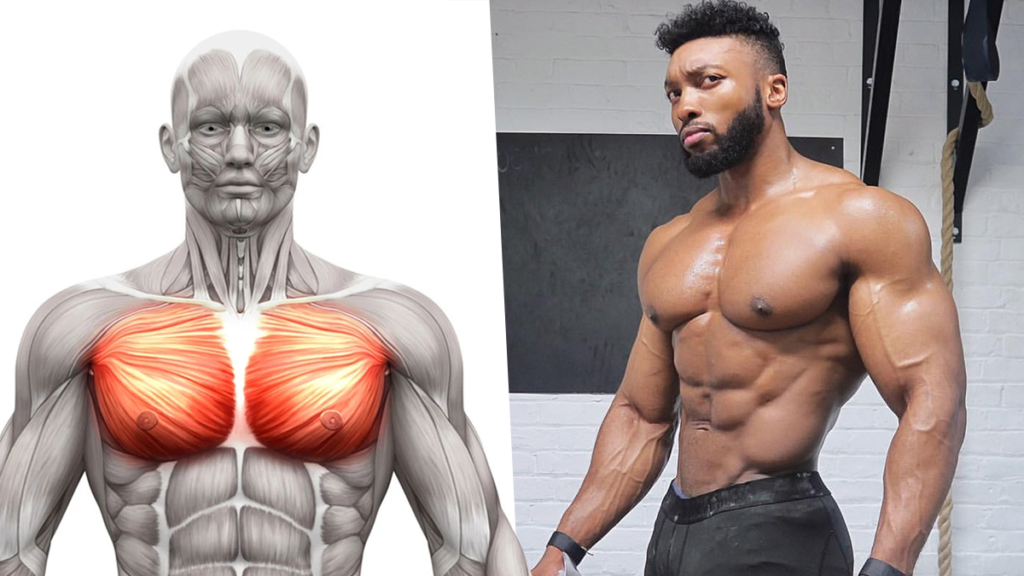
The clavicular head originates from the clavicle and inserts into the humerus. Its main functions include:
- Shoulder flexion
- Horizontal adduction
- Internal rotation of the arm
Because of its line of pull, the upper chest is most active when the arm moves upward and inward. This is why incline movements are often recommended for targeting this region.
Why the Upper Chest Is Hard to Build
There are a few reasons why the upper chest often lags behind:
- Standard bench pressing emphasizes the sternal head more than the clavicular head
- Poor exercise selection limits targeted activation
- Many lifters use too much weight and lose proper technique
- Lack of mind muscle connection reduces effective tension
Electromyography research shows that incline pressing increases activation of the clavicular head compared to flat pressing, especially at moderate incline angles. However, isolation exercises can further enhance this activation by reducing assistance from other muscle groups.
Key Principles for Upper Chest Growth
To effectively build the upper chest, training should focus on:
- Mechanical tension through controlled resistance
- Proper alignment of the resistance with the muscle fibers
- Full range of motion
- Consistent progressive overload
Isolation exercises are particularly useful for refining these factors.
Exercise 1: Incline Cable Fly
Why It Works
The incline cable fly is one of the most effective isolation exercises for the upper chest because it provides constant tension throughout the entire range of motion. Unlike dumbbells, cables maintain resistance even at the top of the movement.
Research shows that exercises with continuous tension can increase muscle activation and hypertrophy by prolonging time under tension. Additionally, cables allow precise adjustment of angles to match the fiber direction of the clavicular head.
How to Perform the Incline Cable Fly
Set up a bench at a low incline, around 30 degrees. Position the cables at the lowest setting.
Steps:
- Sit on the bench with a handle in each hand
- Start with arms slightly bent and extended out to the sides
- Bring the handles upward and inward in a hugging motion
- Squeeze the chest at the top without locking the elbows
- Slowly return to the starting position
Technique Tips
- Keep a slight bend in the elbows throughout
- Avoid using momentum
- Focus on bringing the upper arms together, not just the hands
- Maintain a controlled tempo, especially on the eccentric phase
Common Mistakes
- Using too much weight and losing control
- Turning the movement into a press
- Letting the shoulders take over
Programming Recommendations
- 3 to 4 sets of 10 to 15 reps
- Moderate weight with strict form
- Rest 60 to 90 seconds between sets
Exercise 2: Low to High Cable Fly
Why It Works
The low to high cable fly specifically targets the clavicular head by matching its natural fiber direction. The upward path of the movement aligns closely with the function of the upper chest, which is shoulder flexion combined with horizontal adduction.
Studies on muscle activation indicate that aligning resistance with fiber direction enhances recruitment and efficiency. This makes the low to high cable fly a highly targeted option.
How to Perform the Low to High Cable Fly
Set both cable pulleys to the lowest position.
Steps:
- Stand in the center with a handle in each hand
- Start with arms down and slightly behind the body
- Raise the handles upward and inward toward shoulder height
- Squeeze the upper chest at the top
- Lower slowly back to the starting position
Technique Tips
- Keep your chest lifted and shoulders down
- Maintain a slight bend in the elbows
- Focus on the upward arc rather than just lifting the arms
Common Mistakes
- Using excessive weight and jerking the cables
- Shrugging the shoulders
- Cutting the range of motion short
Programming Recommendations
- 3 sets of 12 to 15 reps
- Light to moderate weight
- Emphasize slow and controlled execution
Exercise 3: Incline Dumbbell Fly
Why It Works
The incline dumbbell fly allows for a deep stretch in the upper chest, which is a key driver of muscle growth. Research suggests that training muscles at longer lengths can enhance hypertrophy by increasing mechanical tension and muscle damage.
Unlike cables, dumbbells rely on gravity, which means tension is greatest at the bottom of the movement. This complements cable exercises that emphasize peak contraction.
How to Perform the Incline Dumbbell Fly
Set a bench at a 30 to 45 degree incline.
Steps:
- Lie back with a dumbbell in each hand
- Start with arms extended above the chest
- Lower the dumbbells in a wide arc until you feel a stretch
- Bring the weights back together in a controlled motion
- Squeeze at the top without letting the dumbbells touch
Technique Tips
- Keep the movement slow and controlled
- Do not let the elbows drop too low if it causes shoulder discomfort
- Focus on stretching the chest, not just moving the weights
Common Mistakes
- Using too heavy dumbbells
- Turning the exercise into a press
- Losing control at the bottom
Programming Recommendations
- 3 to 4 sets of 8 to 12 reps
- Moderate weight
- Rest 90 seconds between sets
How to Combine These Exercises

To maximize upper chest development, these exercises should be used together within a structured program.
Sample Upper Chest Isolation Routine
- Incline Cable Fly: 4 sets of 12 reps
- Low to High Cable Fly: 3 sets of 15 reps
- Incline Dumbbell Fly: 3 sets of 10 reps
Weekly Frequency
Training the upper chest 2 times per week is effective for most lifters. Research on training frequency shows that hitting a muscle group multiple times per week can lead to greater hypertrophy compared to once per week.
Progression Strategy
To ensure continuous growth:
- Gradually increase resistance
- Improve technique and control
- Increase total volume over time
The Role of Mind Muscle Connection
Mind muscle connection refers to the ability to consciously activate a target muscle during exercise. Studies show that focusing attention on the working muscle can increase its activation.
For upper chest training:
- Visualize the muscle contracting
- Slow down the movement
- Reduce weight if necessary to maintain focus
Supporting Factors for Growth
Nutrition
Muscle growth requires adequate protein intake. Research suggests that consuming around 1.6 to 2.2 grams of protein per kilogram of body weight supports hypertrophy.

Recovery
Muscles grow during recovery, not during training. Adequate sleep and rest are essential for maximizing results.
Volume and Intensity
Optimal hypertrophy occurs with moderate to high volume and moderate intensity. Training too heavy can reduce isolation effectiveness, while training too light may not provide enough stimulus.
Summary of Key Points
- The upper chest is the clavicular head of the pectoralis major
- Isolation exercises help target this region more effectively than compound lifts alone
- Incline cable fly provides constant tension
- Low to high cable fly matches fiber direction
- Incline dumbbell fly emphasizes stretch
- Proper technique and control are essential
- Training frequency and progression drive long term results
Common Questions
Do I Still Need Bench Pressing?
Yes. Compound movements build overall mass and strength. Isolation exercises should complement, not replace them.
What Is the Best Incline Angle?
Around 30 degrees is generally optimal. Higher angles may shift emphasis to the shoulders.
How Long Does It Take to See Results?
With consistent training and proper nutrition, noticeable changes can occur within 8 to 12 weeks.
Conclusion
Building a jacked upper chest requires more than just pressing heavy weights. It demands precision, control, and the right exercise selection. The incline cable fly, low to high cable fly, and incline dumbbell fly are three of the most effective isolation exercises for targeting the clavicular head.
By understanding the science behind these movements and applying them consistently, you can develop a fuller, more balanced chest that stands out both in and out of the gym.
References
- Schoenfeld, B.J. (2010). The mechanisms of muscle hypertrophy and their application to resistance training. Journal of Strength and Conditioning Research, 24(10), 2857 to 2872.
- Schoenfeld, B.J., Ogborn, D. and Krieger, J.W. (2016). Effects of resistance training frequency on measures of muscle hypertrophy. Sports Medicine, 46(11), 1689 to 1697.
- Wakahara, T., Fukutani, A. and Kawakami, Y. (2013). Nonuniform muscle hypertrophy. European Journal of Applied Physiology, 113(5), 1243 to 1252.
- Gentil, P., Soares, S. and Bottaro, M. (2015). Single versus multi joint resistance exercises. Journal of Strength and Conditioning Research, 29(8), 2365 to 2370.
- Calatayud, J., Borreani, S., Colado, J.C., Martin, F. and Rogers, M.E. (2015). Muscle activation during push up variations. Journal of Sports Science and Medicine, 14(2), 384 to 390.