

The 2k row is widely considered one of the toughest tests in training.
If you’ve ever wondered how your time compares then this guide breaks it all down, and provides you with a practical ways to improve your technique and engine for the future.


Improve Your Technique
The 2k is a fantastic distance because it is long enough to require real aerobic capacity, short enough to demand consistent and intense power output, and technique matters. If your technique is bad, you will waste a lot of energy, every stroke will be inefficient, and that you will underperform.
Start by refreshing your technique.
What’s a Good 2000m Row Time for Men?
The data that we have included in the article will help to show you the averages for different age groups, and from there you can extrapolate.
Obviously the first thing to do is complete the 2k itself. This will give you an honest base upon which you can build and improve.
When we look at the data, across all age groups and experience levels, the typical 2,000m row time for men sits at around 7:04. At the elite end, top performers have pushed that number down to a highly impressive 5:35.
Do Row Times Change With Age, Is It a Factor?
The simple answer is yes, age does affect performance when it comes to the 2k row time. Age impacts recovery times and power output, however there are silver linings.
If you are an older athlete and you do already have experience on the rower or in the water, then use that to your advance. Every single athlete will improve their time by refining their technique.
Let’s dive into the data.
Average 2K Rowing Times for Men
| Age | Beginner | Novice | Intermediate | Advanced | Elite | WR |
|---|---|---|---|---|---|---|
| 10 | 10:05.1 | 09:26.0 | 08:47.6 | 08:11.9 | 07:40.1 | 06:57.8 |
| 15 | 08:48.6 | 08:14.4 | 07:40.9 | 07:09.7 | 06:41.9 | 06:05.0 |
| 20 | 08:17.6 | 07:45.4 | 07:13.9 | 06:44.5 | 06:18.3 | 05:43.6 |
| 25 | 08:10.6 | 07:38.8 | 07:07.8 | 06:38.8 | 06:13.0 | 05:38.7 |
| 30 | 08:06.9 | 07:35.4 | 07:04.6 | 06:35.9 | 06:10.2 | 05:36.2 |
| 35 | 08:13.6 | 07:41.6 | 07:10.4 | 06:41.3 | 06:15.3 | 05:40.8 |
| 40 | 08:23.7 | 07:51.1 | 07:19.2 | 06:49.5 | 06:23.0 | 05:47.8 |
| 45 | 08:33.8 | 08:00.5 | 07:28.0 | 06:57.7 | 06:30.7 | 05:54.8 |
| 50 | 08:43.9 | 08:10.0 | 07:36.8 | 07:05.9 | 06:38.3 | 06:01.7 |
| 55 | 08:59.6 | 08:24.7 | 07:50.6 | 07:18.7 | 06:50.3 | 06:12.6 |
| 60 | 09:11.4 | 08:35.7 | 08:00.8 | 07:28.2 | 06:59.2 | 06:20.7 |
| 65 | 09:29.9 | 08:53.0 | 08:17.0 | 07:43.3 | 07:13.3 | 06:33.5 |
| 70 | 09:56.8 | 09:18.2 | 08:40.4 | 08:05.2 | 07:33.8 | 06:52.1 |
| 75 | 10:15.9 | 09:36.1 | 08:57.1 | 08:20.7 | 07:48.3 | 07:05.3 |
| 80 | 10:46.8 | 10:05.0 | 09:24.0 | 08:45.8 | 08:11.8 | 07:26.6 |
| 85 | 11:26.8 | 10:42.4 | 09:58.9 | 09:18.3 | 08:42.2 | 07:54.2 |
| 90 | 12:36.6 | 11:47.6 | 10:59.7 | 10:15.1 | 09:35.3 | 08:42.4 |
The rowing data can be originally found on Rowing Level.
Understanding the Levels
With the table above, it is also important to understand why each category actually means. According to Rowing Level, this is how they define each segment.
| Beginner | Faster than 5% of rowers. A beginner rower has started rowing and has rowed for at least a month. |
|---|---|
| Novice | Faster than 20% of rowers. A novice rower has rowed regularly for at least six months. |
| Intermediate | Faster than 50% of rowers. An intermediate rower has rowed regularly for at least two years. |
| Advanced | Faster than 80% of rowers. An advanced rower has rowed for over five years. |
| Elite | Faster than 95% of rowers. An elite rower has dedicated over five years to become competitive at rowing. |
This will help you to understand your own performance.
What Makes the 2k Row So Challenging?
The 2k row is so highly regarded because of the demands it places on your body and mind. It requires a strong aerobic engine to sustain effort, significant muscular endurance, particularly in the legs and back, along with efficient technique that holds up under fatigue and smart pacing from start to finish.
There’s no room for error; go out too fast and you’ll burn out, start too conservatively and you’ll struggle to claw back time.
How to Pace a 2k Row Time
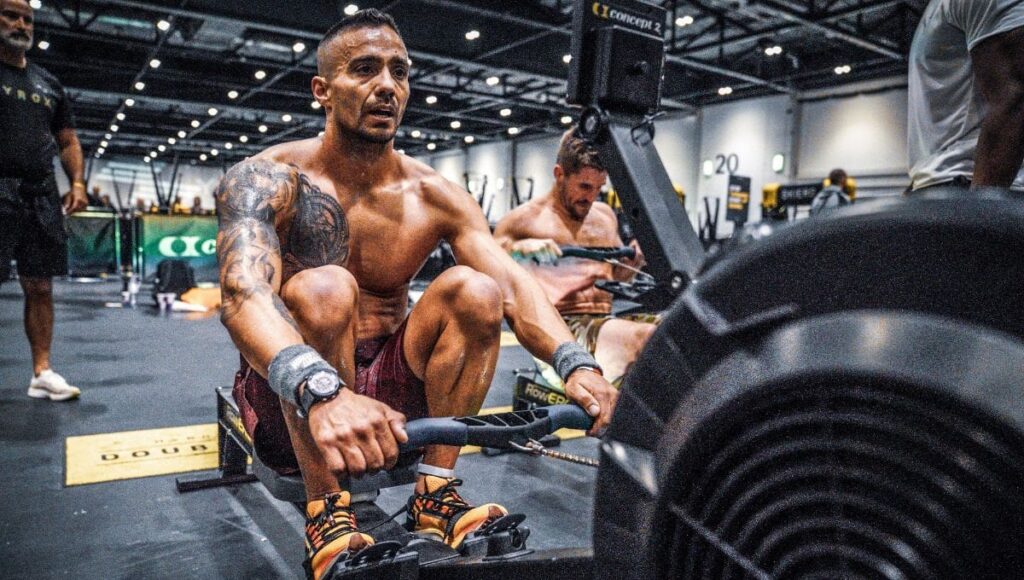
Pacing a 2k row requires a balance of aggression and control, as it’s short enough to push hard but long enough to punish mistakes.
A common strategy is to start strong but not all-out in the first 250–500 metres to get the flywheel moving and settle just below race pace, then lock into a consistent split through the middle 1,000 metres where discipline and excellent form is key.
This phase should feel challenging but sustainable, with a focus on efficient, powerful strokes and controlled breathing. In the final 500 metres, you gradually increase intensity, and over the last 200 metres, you empty the tank by lifting your stroke rate and applying maximum effort. The most effective approach is often a slight negative split, finishing faster than you started, rather than going out too hard and fading.
How to Lower Your 2k Row Time
Getting faster over 2,000 metres isn’t about rowing harder, it’s about rowing smarter and with more power. Try these tips to start building a better time.
Key Areas to Focus On
Prioritise Leg Drive
Your stroke should start with a powerful push from the legs. The arms and upper body finish the movement—not the other way around.
Stay Composed at the Catch
Avoid rushing into each stroke. A controlled setup leads to a stronger, more efficient drive.
Build Power Through the Stroke
Think smooth acceleration rather than jerky effort. Consistent force produces better results than aggressive but inefficient pulls.
Control Your Stroke Rate
Rowing faster doesn’t always mean taking more strokes. Focus on quality over quantity.
Develop Your Engine
Aerobic fitness is what keeps you moving when fatigue hits—especially in the final stretch.
A Simple Interval Session to Build Power
If you want to improve your 2k performance, structured intervals are one of the most effective tools.
Start with a warm-up of 8–10 minutes of easy rowing to gradually raise your heart rate and loosen up your muscles. During this time, include a few short bursts of higher intensity to activate your legs and prepare your body for the work ahead.
The main workout consists of five rounds of 500 metres at a challenging pace, just below your race effort. After each interval, take two minutes of rest to recover before the next round. The goal is to sustain a high level of output across all repetitions.
Throughout the session, focus on maintaining consistent split times from start to finish. Each stroke should be driven powerfully through the legs, while your technique stays controlled and efficient. Even as fatigue builds, aim to preserve good form rather than letting your stroke break down.
Finish with a cool-down of 5–8 minutes of easy rowing to gradually bring your heart rate down and aid recovery.
The Bottom Line
The 2,000-metre row is simple in structure but demanding in execution. It tests not just your fitness, but your discipline and ability to stay composed under pressure.
Good luck and have fun.