

Most people think core training is about doing endless crunches, sit ups, and leg raises. While those exercises can help build abdominal muscle, they only train a small part of what the core is designed to do. In real life and in sport, the core has a much bigger job. It must transfer force between the upper and lower body, stabilize the spine under load, and resist unwanted movement.
One of the most important but often overlooked functions of the core is resisting rotation.


Every time you sprint, throw, lift a heavy object, carry groceries, change direction, or perform a barbell exercise, your trunk must prevent excessive twisting. This ability is known as anti rotation. Training it can improve athletic performance, reduce injury risk, increase strength, and help create the stable foundation needed for visible abdominal development.

Research consistently shows that the abdominal wall, obliques, transverse abdominis, multifidus, and other trunk muscles work together primarily to stabilize the spine rather than create movement. Exercises that challenge stability often generate high levels of core activation while teaching the body to maintain efficient movement patterns. If your goal is a stronger midsection, better athletic performance, and a more resilient body, anti rotational training deserves a place in your program.
In this article, we will break down the three best anti rotational exercises for building a ripped and strong core, explain the science behind why they work, and show you how to perform them correctly.
What Are Anti Rotational Exercises?
Anti rotational exercises are movements that force your core muscles to resist rotational forces acting on the body. Instead of actively twisting your torso, you fight against a force that is trying to rotate you. This creates high levels of muscular tension throughout the trunk.
Think about holding a heavy suitcase in one hand. The weight tries to pull your body sideways and rotate your torso. Your core muscles must work hard to keep your spine aligned and your posture upright. The same principle applies during exercises such as Pallof presses, suitcase carries, and renegade rows.
This type of training develops what researchers often call spinal stiffness or trunk stability. Contrary to what some people assume, spinal stiffness in this context is beneficial. It refers to the ability of the trunk muscles to create enough stability to protect the spine and efficiently transfer force.
Studies investigating spinal biomechanics have repeatedly shown that core function is closely tied to stability and force transmission. Stronger stabilizing muscles can help improve movement efficiency while reducing excessive spinal motion under load.
Why Anti Rotational Training Matters
Improved Core Muscle Recruitment
The rectus abdominis often receives most of the attention because it forms the visible six pack. However, the external obliques, internal obliques, transverse abdominis, multifidus, quadratus lumborum, diaphragm, and pelvic floor muscles all contribute to trunk stability.
Anti rotational exercises challenge many of these muscles simultaneously. Electromyography studies have shown significant activation of the obliques and deep stabilizers during exercises that resist rotational forces.
This means you train the core as an integrated system rather than isolating a single muscle group.
Better Athletic Performance
Running, jumping, throwing, punching, tackling, and changing direction all depend on efficient force transfer through the trunk. A weak core can create energy leaks where force generated by the legs never fully reaches the upper body. Athletes who develop greater trunk stability often demonstrate improved power production and movement efficiency.
Research has found strong relationships between core stability and athletic performance measures including sprinting, jumping, balance, and force production.
Reduced Injury Risk
Back pain remains one of the most common musculoskeletal complaints worldwide. While no exercise guarantees injury prevention, evidence suggests that improving trunk stability can help reduce stress on spinal structures during physical activity.
The spine relies heavily on muscular support. Anti rotational training strengthens the muscles responsible for maintaining alignment and controlling movement under load.
Enhanced Strength Development
The core acts as the bridge between the upper and lower body. Whether you are squatting, deadlifting, pressing, or rowing, your ability to create trunk stability influences how effectively force can be transferred through the body.
A stronger anti rotational core often contributes to better lifting performance because it allows athletes to maintain position under heavy loads.
The Science Behind a Strong and Defined Core
Many people associate visible abs with specific abdominal exercises. In reality, muscle definition depends heavily on body fat levels. However, developing thicker and stronger abdominal muscles can improve the appearance of the midsection once body fat is reduced.
Research demonstrates that resistance training stimulates muscular adaptations throughout the trunk. Exercises that require significant stabilization can increase muscle activation and contribute to strength development. Anti rotational movements also provide an important functional component that many traditional abdominal exercises lack. Rather than simply flexing the spine repeatedly, they teach the body to stabilize while generating or resisting force.
This mirrors the demands of sports and daily life much more closely.
Exercise 1: Pallof Press

Why It Works
The Pallof press is one of the most effective anti rotational exercises ever developed. Named after physical therapist John Pallof, this movement uses a cable machine or resistance band to create a rotational force that attempts to twist the torso. Your job is simple. Prevent that rotation.
As you press the handle away from your chest, the lever arm increases and the rotational challenge becomes greater. The obliques, transverse abdominis, rectus abdominis, and deep spinal stabilizers must all work together to maintain alignment. Research examining core muscle activation consistently identifies anti rotational cable exercises as highly effective for recruiting the abdominal wall while minimizing excessive spinal loading.
How to Perform the Pallof Press
- Attach a resistance band or cable handle at chest height.
- Stand sideways to the anchor point and hold the handle against your chest with both hands.
- Step away from the anchor until you feel tension.
- Stand tall with your feet approximately shoulder width apart.
- Brace your core and squeeze your glutes.
- Slowly press the handle straight out in front of your chest.
- Pause briefly while resisting any twisting.
- Return the handle to your chest under control.
- Repeat for the desired number of repetitions before switching sides.
Common Mistakes
Many people allow their torso to rotate toward the anchor point. This reduces the training effect because the core is no longer resisting rotation effectively. Others compensate by leaning sideways or arching the lower back. The goal is to remain completely still from the shoulders to the hips while the arms move.
Exercise 2: Suitcase Carry
Why It Works
The suitcase carry appears deceptively simple. You pick up a heavy weight with one hand and walk. What makes it so effective is the enormous stabilization demand it places on the trunk.
Holding a load on one side creates rotational and lateral flexion forces. Your core must resist both while maintaining posture and balance. Research on loaded carries suggests they challenge multiple muscle groups simultaneously while improving trunk stability, grip strength, and overall work capacity.
The suitcase carry heavily recruits the obliques, quadratus lumborum, transverse abdominis, glutes, and spinal stabilizers. Unlike many gym exercises, it also closely resembles real world tasks such as carrying bags, equipment, or groceries.
How to Perform the Suitcase Carry
- Choose a heavy dumbbell or kettlebell.
- Stand tall and hold the weight at your side with one hand.
- Keep your shoulders level and your chest up.
- Brace your core and begin walking slowly.
- Avoid leaning toward or away from the weight.
- Take controlled steps while maintaining an upright posture.
- Walk for the prescribed distance or time.
- Switch hands and repeat.
Programming Recommendations
Perform carries for twenty to sixty seconds per side. Two to four rounds is usually sufficient. As strength improves, increase the load before increasing the duration.
Exercise 3: Renegade Row
Why It Works
The renegade row combines upper body pulling strength with intense anti rotational core training. During the exercise, one arm supports the body while the opposite arm performs a rowing motion. This creates a significant rotational challenge because the body naturally wants to twist toward the rowing side.

To stay stable, the obliques, rectus abdominis, transverse abdominis, glutes, shoulders, and spinal stabilizers must work together. Electromyography studies have shown that unstable plank based exercises can substantially increase activation of core musculature compared with traditional floor exercises.
The renegade row also trains coordination between the upper body and lower body, making it a highly functional movement.
How to Perform the Renegade Row
- Place two dumbbells on the floor.
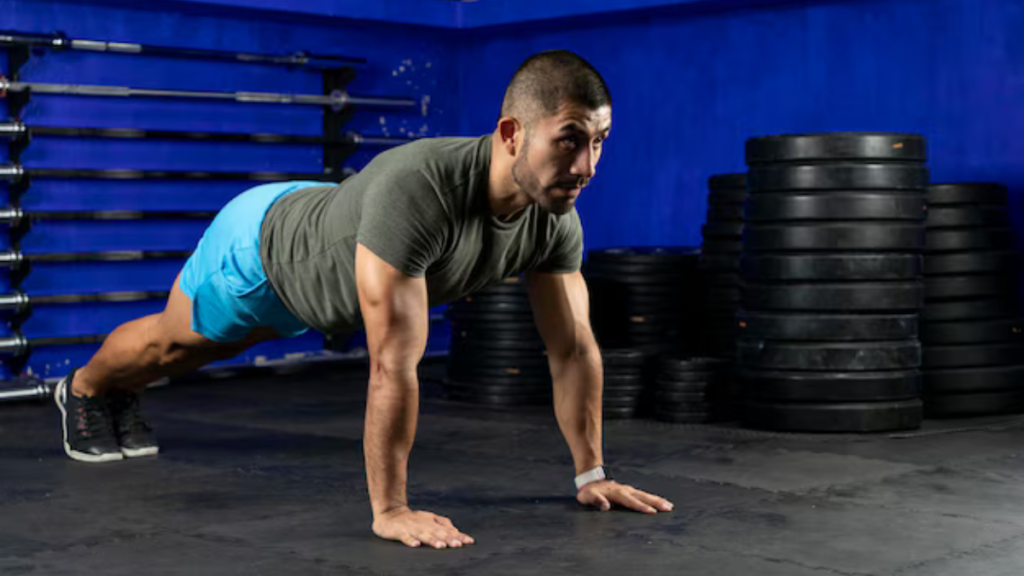
- Assume a push up position with your hands gripping the dumbbells.
- Position your feet wider than shoulder width for greater stability.
- Brace your core and squeeze your glutes.
- Row one dumbbell toward your rib cage while maintaining a stable torso.
- Lower the weight under control.
- Repeat on the opposite side.
- Continue alternating sides.
Which Exercise Is Best?
All three exercises are excellent choices, but they offer slightly different benefits. The Pallof press is often the best starting point because it directly targets anti rotational strength with relatively low technical demands.
The suitcase carry provides tremendous functional carryover and allows heavy loading. The renegade row combines anti rotational stability with upper body strength development. For most people, incorporating all three exercises into a training program creates the most comprehensive approach.
How Often Should You Train Anti Rotation?
Most lifters benefit from including anti rotational exercises two to four times per week. Because these movements generally create less muscular damage than heavy compound lifts, they can be performed more frequently.
A simple strategy is to add one anti rotational exercise at the end of each workout. For example, perform Pallof presses after lower body sessions, suitcase carries after upper body sessions, and renegade rows during full body workouts.
Consistency matters more than volume. Regular exposure to anti rotational training leads to gradual improvements in strength, stability, and movement quality.
Can Anti Rotational Exercises Help You Get Visible Abs?
Anti rotational exercises strengthen and develop the muscles of the core, but visible abdominal definition still depends primarily on body composition. Even the strongest abdominal muscles remain hidden beneath excess body fat.
To reveal a defined midsection, most people need a combination of resistance training, appropriate nutrition, adequate protein intake, and a sustainable calorie balance.
That said, anti rotational exercises can help build thicker abdominal musculature, improve posture, and enhance overall core development. When combined with effective nutrition and full body strength training, they contribute to a more athletic and visually impressive physique.
Final Thoughts
If your core training still revolves around endless crunches and sit ups, you may be missing one of the most important functions of the trunk. Anti rotational exercises teach the body to resist unwanted movement, stabilize the spine, and transfer force efficiently. These qualities are essential for athletic performance, strength development, injury resilience, and long term movement health.
The Pallof press, suitcase carry, and renegade row stand out because they challenge the core in ways that closely reflect real world demands. They recruit multiple muscles simultaneously, improve trunk stability, and create a stronger foundation for everything from heavy lifting to everyday activities.
Add these three exercises to your weekly training routine and you will build a core that is not only more defined, but also significantly stronger and more functional.
Key Takeaways
| Exercise | Primary Benefit | Main Muscles Trained | Best Use |
|---|---|---|---|
| Pallof Press | Direct anti rotational strength | Obliques, transverse abdominis, rectus abdominis | Learning core stability |
| Suitcase Carry | Functional trunk stability under load | Obliques, quadratus lumborum, spinal stabilizers | Real world strength and posture |
| Renegade Row | Anti rotation plus upper body strength | Obliques, abdominals, lats, shoulders | Athletic performance and coordination |
| Training Frequency | 2 to 4 sessions weekly | Entire core system | Ongoing strength and stability development |
| Visible Abs | Requires lower body fat levels | Core musculature | Best combined with nutrition and resistance training |
References
- Akuthota, V. and Nadler, S.F. (2004) ‘Core strengthening’, Archives of Physical Medicine and Rehabilitation, 85(Suppl 1), pp. S86 to S92.
- Behm, D.G., Drinkwater, E.J., Willardson, J.M. and Cowley, P.M. (2010) ‘Canadian Society for Exercise Physiology position stand: The use of instability to train the core in athletic and nonathletic conditioning’, Applied Physiology, Nutrition, and Metabolism, 35(1), pp. 109 to 112.
- Cholewicki, J. and McGill, S.M. (1996) ‘Mechanical stability of the in vivo lumbar spine: Implications for injury and chronic low back pain’, Clinical Biomechanics, 11(1), pp. 1 to 15.
- Hibbs, A.E., Thompson, K.G., French, D., Wrigley, A. and Spears, I. (2008) ‘Optimizing performance by improving core stability and core strength’, Sports Medicine, 38(12), pp. 995 to 1008.
- Hodges, P.W. and Richardson, C.A. (1997) ‘Contraction of the abdominal muscles associated with movement of the lower limb’, Physical Therapy, 77(2), pp. 132 to 142.
- Kibler, W.B., Press, J. and Sciascia, A. (2006) ‘The role of core stability in athletic function’, Sports Medicine, 36(3), pp. 189 to 198.
- Marshall, P.W.M. and Murphy, B.A. (2005) ‘Core stability exercises on and off a Swiss ball’, Archives of Physical Medicine and Rehabilitation, 86(2), pp. 242 to 249.
- McGill, S.M. (2001) ‘Low back stability: From formal description to issues for performance and rehabilitation’, Exercise and Sport Sciences Reviews, 29(1), pp. 26 to 31.
- McGill, S.M. (2010) ‘Core training: Evidence translating to better performance and injury prevention’, Strength and Conditioning Journal, 32(3), pp. 33 to 46.