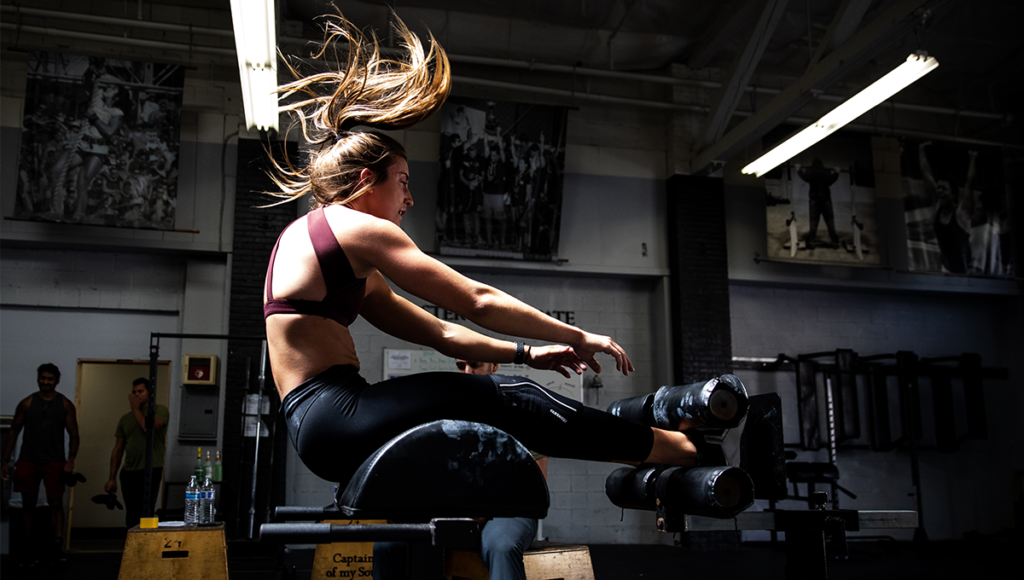
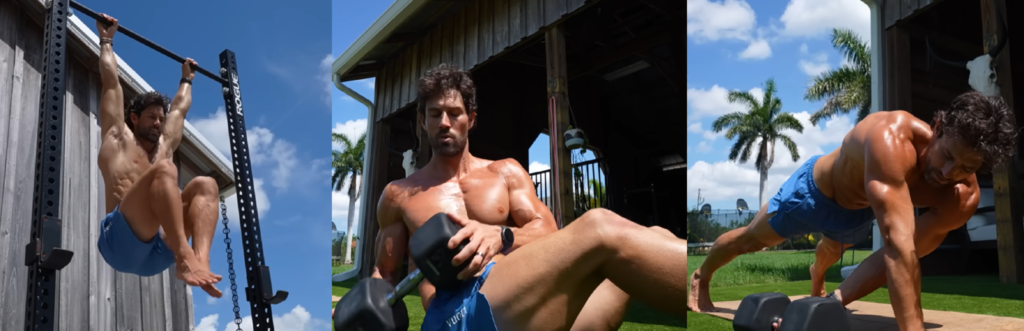
Visible abs are built in the kitchen, but they are revealed and strengthened through smart training. Most people think six pack training starts and ends with crunches. That is a mistake. Your core is designed to do much more than bend your spine forward. One of its main jobs is to resist and control rotation. That is where rotational exercises come in.
Rotation based training challenges the obliques, transverse abdominis, rectus abdominis, and deep stabilizing muscles of the torso in a way that traditional sit ups often cannot. These exercises also improve athletic performance, posture, spinal stability, and overall functional strength.


If your goal is a ripped midsection that performs as good as it looks, rotational training deserves a permanent place in your program.
Why Rotational Training Matters for Abs
The abdominal muscles are not just there for aesthetics. They are responsible for transmitting force between the upper and lower body while stabilizing the spine during movement.
The core includes:
- Rectus abdominis
- Internal obliques
- External obliques
- Transverse abdominis
- Erector spinae
- Multifidus
- Pelvic floor muscles
- Diaphragm
Many traditional ab exercises focus heavily on spinal flexion. While there is nothing wrong with exercises like crunches in moderation, they do not fully challenge the rotational and anti rotational functions of the core.
Research has shown that exercises involving rotational torque and stabilization create greater activation in the obliques and deep core musculature compared to standard crunches. This is important because well developed obliques create sharper abdominal definition and contribute to the coveted V taper appearance.

Rotational training also improves movement efficiency. Every time you walk, sprint, throw, punch, swing, or change direction, your torso transfers rotational force. Training this function directly improves athleticism and injury resilience.
Another major advantage is caloric demand. Rotational movements often involve multiple muscle groups and require greater stabilization, which increases energy expenditure and overall training intensity.
The Science Behind a Visible Six Pack
Before diving into the exercises, it is important to understand that no ab exercise can directly burn belly fat.
Spot reduction is a myth.
Visible abs appear when body fat levels are low enough for the abdominal muscles to show through. For most men, this typically happens around 10 to 12 percent body fat. For women, it is usually around 16 to 20 percent.
To reveal your abs, you need:
- A calorie controlled nutrition plan
- Sufficient protein intake
- Resistance training
- Cardiovascular conditioning
- Quality sleep
- Stress management
Ab training strengthens and develops the muscles underneath. Nutrition reveals them.
That said, training the abs effectively still matters. Larger and stronger abdominal muscles become more visible at higher body fat percentages compared to underdeveloped abs.
Research also shows that compound and functional core exercises produce greater muscle activation and hypertrophy potential than endless high rep crunches.
What Makes a Great Rotational Exercise?
The best rotational exercises share several key characteristics.
They Challenge Multiple Core Functions
A good rotational movement does more than twist the torso. It also trains stability, force transfer, and anti rotational control.
They Create Progressive Overload
Just like any other muscle group, the abs need increasing stimulus over time. Effective exercises allow progression through added resistance, volume, or complexity.
They Minimize Spinal Stress
Some rotational movements can overload the lumbar spine if performed poorly. The best exercises train rotation while maintaining spinal integrity.
They Carry Over to Real World Movement
Functional movements that improve athletic performance and total body coordination provide more overall benefit than isolated abdominal drills alone.
With those criteria in mind, here are the three best rotational exercises for building a ripped six pack.
1. Russian Twists
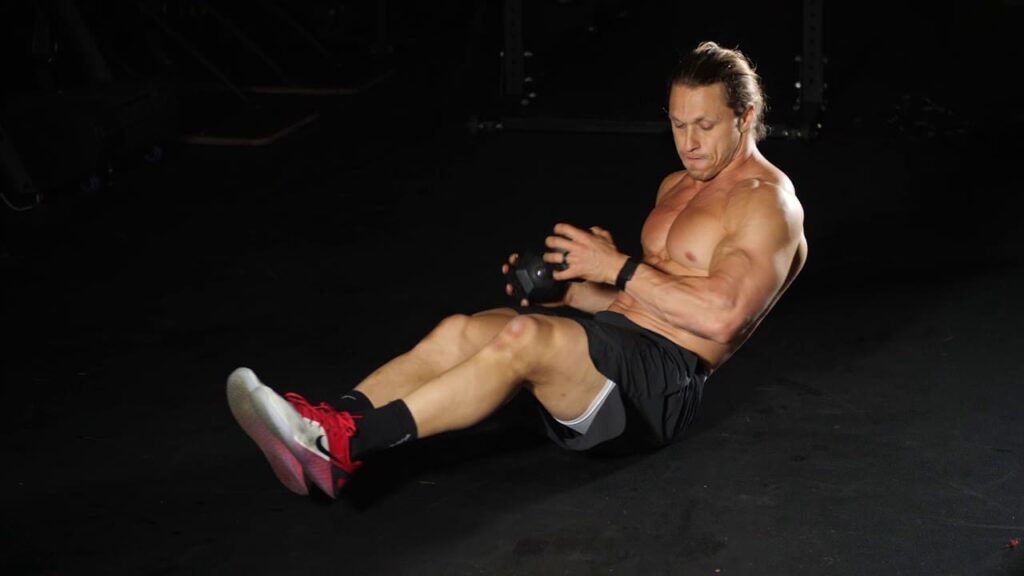
The Russian twist is one of the most effective exercises for targeting the obliques and improving rotational endurance. When performed correctly, it creates significant tension across the abdominal wall while training coordinated trunk rotation.
Why Russian Twists Work
Russian twists place the torso under continuous tension while forcing the core to stabilize the spine during rotation. The obliques work hard to control movement while the rectus abdominis maintains trunk position.
Electromyography research has shown high activation of the external obliques during rotational seated exercises, especially when resistance is added. Adding a medicine ball, dumbbell, or weight plate increases loading and hypertrophy potential.
How to Perform Russian Twists
- Sit on the floor with your knees bent.
- Lean your torso back slightly while keeping your spine neutral.
- Lift your feet off the floor if you can maintain good control.
- Hold a weight close to your chest.
- Rotate your torso from side to side in a controlled manner.
- Keep your chest lifted and avoid collapsing through the lower back.
Common Mistakes
Many people perform Russian twists too fast and turn the movement into uncontrolled arm swinging.
Avoid:
- Rounding the spine
- Using momentum
- Rotating only the arms instead of the torso
- Letting the feet bounce excessively
Slow and controlled repetitions produce better muscle activation and reduce injury risk.
Best Rep Range
For muscle development and endurance:
- 3 to 4 sets
- 12 to 20 reps per side
Use moderate resistance and focus on quality movement.
Progression Options
To increase difficulty:
- Add heavier resistance
- Slow the tempo
- Extend the arms further from the body
- Perform on a decline bench
- Add an isometric pause at each side
Benefits Beyond Aesthetics
Russian twists improve rotational control that carries over into sports like golf, baseball, tennis, boxing, and mixed martial arts.
They also improve trunk coordination and postural stability.
2. Cable Woodchoppers
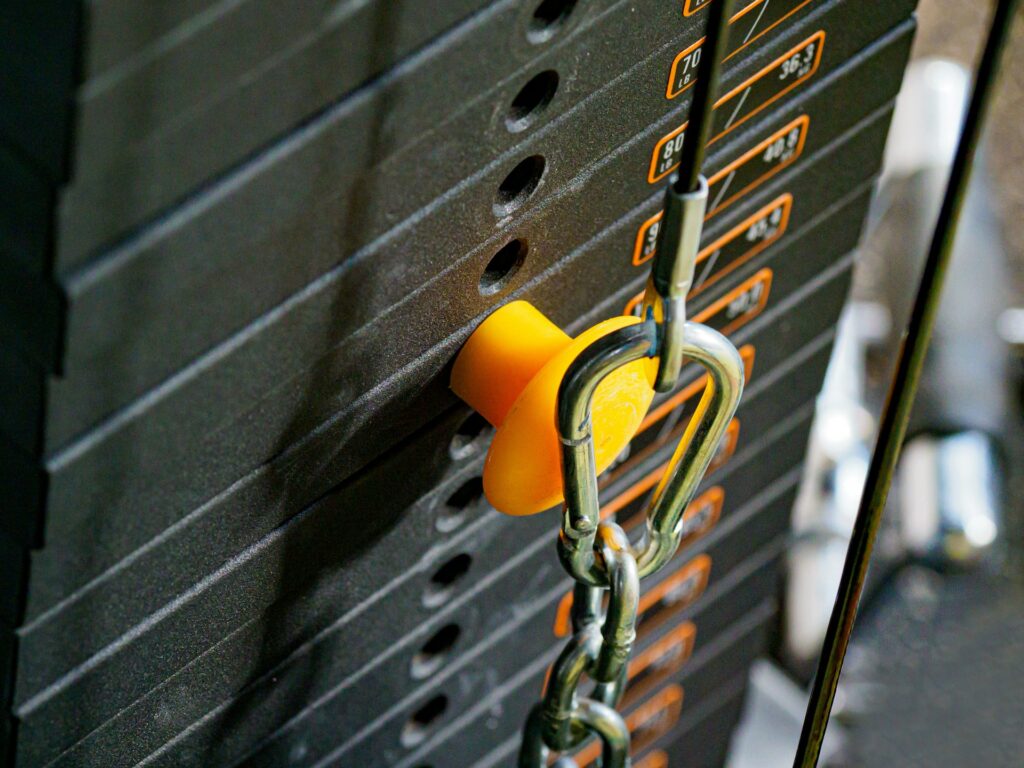
If there is one rotational exercise that combines aesthetics, functionality, and scalability perfectly, it is the cable woodchopper. This movement trains explosive rotation while heavily engaging the obliques and deep core muscles.
Why Cable Woodchoppers Work
Cable woodchoppers create continuous tension through a large range of motion. Unlike free weights, cables maintain resistance throughout the entire movement.
This exercise trains:
- Rotational strength
- Anti rotational stability
- Shoulder and hip coordination
- Force transfer through the kinetic chain
Research on cable based rotational exercises has demonstrated substantial activation of the external obliques and transverse abdominis.
The diagonal movement pattern also mimics real life athletic actions.
How to Perform Cable Woodchoppers
- Attach a handle to a high cable pulley.
- Stand sideways to the machine.
- Grip the handle with both hands.
- Rotate through the torso and pull the cable diagonally downward across your body.
- Finish near the opposite hip.
- Control the return phase slowly.
Your hips and shoulders should rotate together naturally.
Key Coaching Tips
- Brace your core before each rep.
- Keep your arms relatively straight.
- Rotate through the torso instead of pulling with the arms alone.
- Maintain balanced foot pressure.
- Avoid excessive lumbar twisting.
Best Rep Range
For hypertrophy and definition:
- 3 to 4 sets
- 10 to 15 reps per side
Use moderate resistance with strict form.
Progression Options
You can make cable woodchoppers more challenging by:
- Increasing resistance
- Slowing the eccentric phase
- Performing half kneeling variations
- Using low to high chopping patterns
- Adding pauses at peak contraction
Why Athletes Love This Exercise
Rotational power is essential in nearly every sport. Woodchoppers train the body to generate and resist torque safely and efficiently.
This improves:
- Sprint mechanics
- Throwing velocity
- Swing power
- Punching force
- Change of direction speed
Muscle Activation and Core Integration
One major advantage of woodchoppers is that they integrate the entire kinetic chain.
The movement involves:
- Glutes
- Lats
- Obliques
- Rectus abdominis
- Shoulders
- Hip stabilizers
This total body integration increases functional carryover and overall caloric expenditure.
3. Landmine Rotations
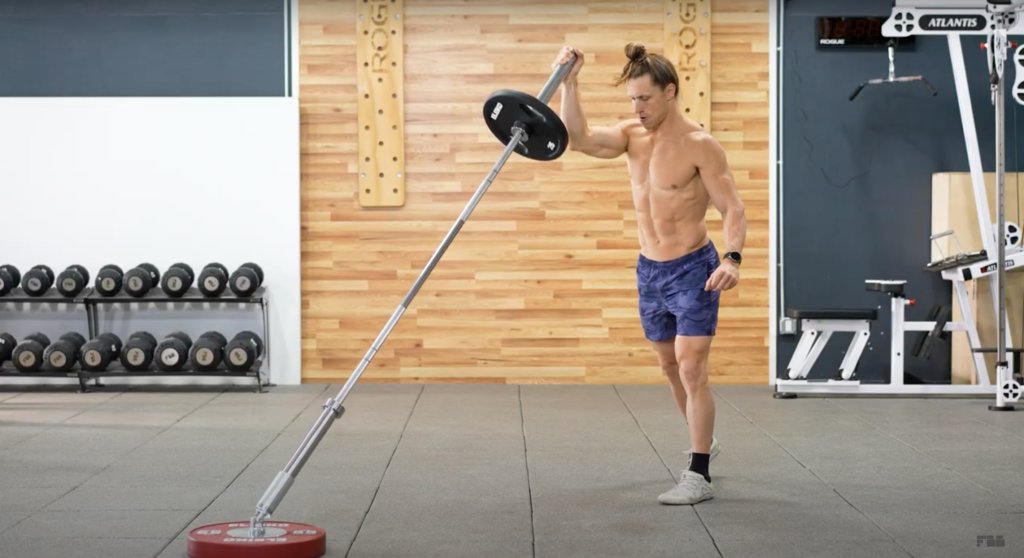
Landmine rotations are one of the most underrated core exercises for building rotational strength and visible abs. They combine dynamic movement with anti rotational control and total body tension.
Why Landmine Rotations Work
The angled resistance of the landmine creates a unique loading pattern that challenges the core throughout the movement. Unlike isolated ab exercises, landmine rotations force the body to coordinate multiple joints and muscle groups simultaneously.
Research on integrated core training consistently shows that standing compound movements produce high abdominal activation due to stabilization demands.
How to Perform Landmine Rotations
- Secure one end of a barbell in a landmine attachment or corner.
- Hold the free end with both hands.
- Stand with feet shoulder width apart.
- Move the barbell in an arc from one side of the body to the other.
- Rotate through the hips and torso while maintaining core tension.
- Control the movement throughout the entire range.
Technique Tips
- Keep your arms extended but not locked.
- Rotate through the hips naturally.
- Brace your core hard.
- Avoid excessive lower back arching.
- Move smoothly instead of jerking the weight.
Best Rep Range
For core development and conditioning:
- 3 to 4 sets
- 8 to 15 reps per side
Progression Options
Increase challenge by:
- Adding load
- Increasing range of motion
- Slowing the tempo
- Using staggered stances
- Performing explosive variations carefully
Functional Benefits
Landmine rotations improve:
- Rotational power
- Athletic coordination
- Core endurance
- Shoulder stability
- Hip mobility
They also teach the body to produce force efficiently while maintaining spinal integrity.
How Often Should You Train Rotational Abs?
The abs recover relatively quickly compared to larger muscle groups, but that does not mean they should be trained every day with high volume.
For most people:
- 2 to 4 dedicated core sessions per week works well.
- Include rotational and anti rotational movements.
- Focus on progressive overload.
- Prioritize quality over quantity.
Your abs are also heavily involved in compound exercises like squats, deadlifts, overhead presses, and carries.
Total weekly core stress matters.
The Importance of Anti Rotational Training
Rotational exercises are powerful, but they should be balanced with anti rotational work.
Anti rotational exercises train the core to resist unwanted movement, which improves spinal stability and injury prevention.
Excellent anti rotational exercises include:
- Pallof presses
- Planks
- Dead bugs
- Bird dogs
- Farmer carries
Combining rotational and anti rotational work creates a stronger, more resilient core.
Nutrition Tips for Visible Abs
You cannot out train poor nutrition.
To reveal your six pack:
Prioritize Protein
Protein supports muscle retention and satiety during fat loss.
Aim for approximately:
- 1.6 to 2.2 grams of protein per kilogram of body weight daily
High protein diets have consistently been shown to improve body composition and preserve lean mass during calorie deficits.
Maintain a Moderate Calorie Deficit
Aggressive dieting often leads to muscle loss and reduced performance.
A sustainable deficit of around:
- 300 to 500 calories per day
is usually effective for gradual fat loss.
Focus on Whole Foods
Base your nutrition around:
- Lean protein
- Vegetables
- Fruit
- Whole grains
- Healthy fats
- Legumes
Minimally processed foods help control appetite and improve nutrient intake.
Manage Alcohol Intake
Alcohol can impair muscle recovery and increase calorie intake significantly. Reducing alcohol consumption often accelerates abdominal definition.
Cardio and Six Pack Visibility
Cardiovascular training helps increase calorie expenditure and supports fat loss. The best approach often combines:
- Resistance training
- Low intensity steady state cardio
- High intensity interval training
Research suggests interval training can be highly effective for reducing body fat while preserving lean muscle. However, consistency matters more than choosing a perfect cardio style.
Common Mistakes That Prevent Ab Definition

Doing Endless Crunches
High repetition crunches alone will not create visible abs. Progressive resistance and total body training are far more effective.
Ignoring Nutrition
This is the biggest mistake by far. You can have strong abs hidden beneath excess body fat.
Training Too Light
The abs respond to resistance just like any other muscle. Challenge them progressively.
Using Poor Form
Momentum based twisting places stress on the spine while reducing muscular tension. Controlled movement is essential.
Neglecting Recovery
Sleep and stress management directly impact fat loss and recovery. Chronic stress can elevate cortisol and negatively affect body composition.
Sample Rotational Ab Workout
Here is a highly effective rotational core workout.
Workout A
- Cable Woodchoppers
- 4 sets
- 12 reps per side
- Russian Twists
- 3 sets
- 20 reps per side
- Pallof Press
- 3 sets
- 12 reps per side
- Plank
- 3 sets
- 45 to 60 seconds
Workout B
- Landmine Rotations
- 4 sets
- 10 reps per side
- Hanging Knee Raises
- 3 sets
- 15 reps
- Side Plank
- 3 sets
- 30 to 45 seconds per side
- Farmer Carry
- 3 rounds
- 30 meters
Perform these workouts two to three times weekly alongside a structured strength program.
Can Rotational Exercises Be Dangerous?
Rotational training is safe when performed correctly.
Problems occur when people:
- Use excessive load
- Twist aggressively through the lumbar spine
- Lose core bracing
- Train with poor posture
The hips and thoracic spine should contribute significantly to rotational movement. Avoid forcing rotation through the lower back. If you have a history of spinal injury, consult a qualified healthcare professional before beginning rotational training.
The Best Equipment for Rotational Core Training
You do not need a fancy gym setup. Effective tools include:
- Cable machines
- Resistance bands
- Medicine balls
- Dumbbells
- Barbells
- Landmine attachments
Resistance bands are especially useful because they allow rotational training with minimal joint stress.
Final Thoughts
If you want a ripped six pack, rotational training should become a core part of your routine.
Russian twists, cable woodchoppers, and landmine rotations challenge the abs through real world movement patterns while improving strength, stability, and athletic performance.
The key is performing them with control, progressive overload, and consistency. Remember that visible abs depend primarily on body fat levels. Smart nutrition, resistance training, recovery, and cardio all work together to reveal the muscle you build through effective core training.
Train your abs like any other muscle group. Focus on quality movement, increase difficulty over time, and support your training with proper nutrition. That combination delivers results.
Key Takeaways
| Topic | Key Point |
|---|---|
| Rotational Training | Builds stronger and more functional abs than crunches alone |
| Russian Twists | Excellent for oblique activation and rotational endurance |
| Cable Woodchoppers | Train rotational power with constant tension |
| Landmine Rotations | Develop total body rotational strength and core stability |
| Visible Abs | Primarily depend on low body fat levels |
| Nutrition | Calorie control and high protein intake are essential |
| Training Frequency | Train rotational core exercises 2 to 4 times weekly |
| Anti Rotational Work | Important for spinal stability and injury prevention |
| Progressive Overload | Necessary for abdominal muscle development |
| Recovery | Sleep and stress management strongly affect body composition |
Bibliography
- Akuthota, V. and Nadler, S.F. (2004) ‘Core strengthening’, Archives of Physical Medicine and Rehabilitation, 85(3), pp. 86 to 92.
- Behm, D.G., Drinkwater, E.J., Willardson, J.M. and Cowley, P.M. (2010) ‘Canadian Society for Exercise Physiology position stand: The use of instability to train the core in athletic and non athletic conditioning’, Applied Physiology, Nutrition, and Metabolism, 35(1), pp. 109 to 112.
- Escamilla, R.F., Lewis, C., Pecson, A., Imamura, R. and Andrews, J.R. (2010) ‘Muscle activation among supine, prone, and side position exercises with and without a Swiss ball’, Sports Health, 2(2), pp. 136 to 145.
- Hibbs, A.E., Thompson, K.G., French, D., Wrigley, A. and Spears, I. (2008) ‘Optimizing performance by improving core stability and core strength’, Sports Medicine, 38(12), pp. 995 to 1008.
- Marshall, P.W.M. and Murphy, B.A. (2005) ‘Core stability exercises on and off a Swiss ball’, Archives of Physical Medicine and Rehabilitation, 86(2), pp. 242 to 249.
- McGill, S.M. (2010) ‘Core training: Evidence translating to better performance and injury prevention’, Strength and Conditioning Journal, 32(3), pp. 33 to 46.
- Schoenfeld, B.J. (2010) ‘The mechanisms of muscle hypertrophy and their application to resistance training’, Journal of Strength and Conditioning Research, 24(10), pp. 2857 to 2872.