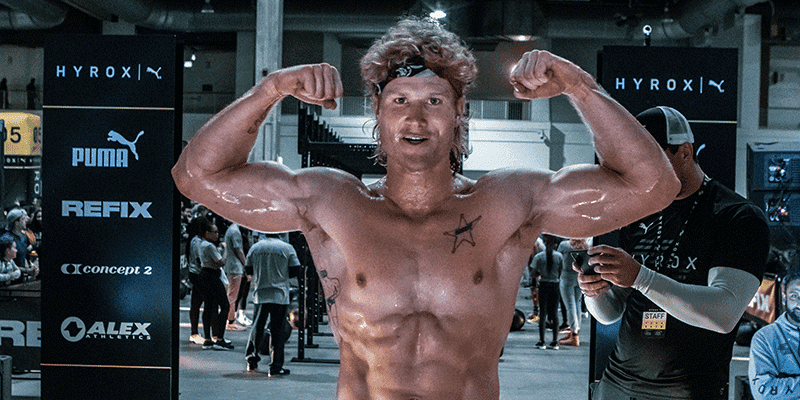
Big arms have always been a symbol of strength, and for many gym goers, barbell curls are the first exercise that comes to mind when it is time to train biceps. Walk into almost any commercial gym and you will find someone loading up an EZ bar or straight bar and curling away. The exercise has earned legendary status, but popularity does not automatically make it the best choice.
If your goal is maximizing muscle growth, there is a strong argument for replacing barbell curls with exercises that create more tension through a greater range of motion, challenge the biceps in different positions, and improve overall elbow flexor development.


That does not mean barbell curls are ineffective. They certainly build muscle when performed consistently with progressive overload. However, modern exercise science suggests that some movements may stimulate greater hypertrophy by placing the muscle under more mechanical tension, especially when stretched, improving stability, and allowing a stronger mind muscle connection.
Why Barbell Curls Are Not Always the Best Choice
Barbell curls have several advantages. They allow relatively heavy loading, are easy to learn, and make progressive overload straightforward. Yet they also come with limitations.
The straight bar locks your wrists into a fixed position, which may feel uncomfortable for people with limited forearm mobility or previous wrist issues. The exercise also becomes easier near the top because of changing leverage. Momentum often increases as weight gets heavier, reducing the tension placed directly on the biceps.
Another limitation is that both arms work together. While this allows heavier loads, it also lets the stronger side compensate for the weaker one without the lifter noticing. Research consistently identifies mechanical tension as one of the primary drivers of muscle hypertrophy. Exercises that maintain tension throughout the range of motion, especially when the muscle is stretched, appear to produce superior growth over time.
With that in mind, these three alternatives deserve serious attention.
Exercise 1: Incline Dumbbell Curl
Why It Works
The incline dumbbell curl places your arms behind your torso while sitting on an incline bench. This position lengthens the long head of the biceps before every repetition begins. Training muscles at longer lengths has become one of the biggest topics in hypertrophy research. Multiple studies suggest that exercises emphasizing loaded stretches produce greater muscle growth than movements that primarily challenge shortened muscle positions.
3 Reasons Why Most Men Never Build Big Arms
Because your shoulders remain extended throughout the exercise, the biceps begin each repetition under significant passive tension. This increases mechanical loading where muscle fibers appear especially responsive to hypertrophy. Unlike a barbell, dumbbells also allow each wrist to rotate naturally, reducing joint stress while improving comfort.

How to Perform It
Set an incline bench to approximately 45 to 60 degrees. Hold a dumbbell in each hand with your arms hanging straight toward the floor.
Keep your shoulders pulled back and avoid swinging your elbows forward as you curl. Rotate your palms upward as you lift the weights and squeeze the biceps at the top before lowering under complete control.
The lowering phase deserves extra attention. Slowing the eccentric increases total time under tension while maintaining control through the stretched position.
Common Mistakes
Many lifters instinctively move their elbows forward during the lift, turning the exercise into a standard dumbbell curl. This reduces stretch and shifts tension away from the long head.
Using excessive weight often leads to swinging, shortening the range of motion, and reducing muscular tension. Choose a weight that allows full control throughout every repetition.
Exercise 2: Bayesian Cable Curl
Why It Works
The Bayesian cable curl has become increasingly popular among physique athletes for good reason. Standing in front of a cable machine with the handle positioned behind you creates continuous resistance throughout the movement. Unlike free weights, cables maintain tension across nearly the entire range of motion.
Even more importantly, the starting position places the biceps under stretch because the arm begins behind the torso. Cable resistance also matches the strength curve differently than barbells. Since resistance remains consistent, the muscle continues working through positions where free weights naturally lose tension.
Another major benefit is stability. Because balance demands are low, more attention can be directed toward producing force with the target muscle. Studies examining muscle activation frequently show that cable exercises maintain high levels of muscular engagement through a broader range of motion compared with equivalent free weight variations.
How to Perform It
- Attach a single handle to the lowest cable position.
- Stand facing away from the machine while holding the handle in one hand.
- Step forward until the cable gently pulls your arm behind your body.
- Keeping your upper arm fixed, curl the handle toward your shoulder while fully supinating your forearm.
- Lower slowly until your elbow reaches full extension and the biceps are completely stretched.
- Complete all repetitions on one side before switching arms.
Common Mistakes
Allowing the shoulder to move forward eliminates much of the stretch advantage. Many lifters also rush the lowering phase. The eccentric portion is where significant hypertrophy stimulus occurs, particularly when the muscle is lengthened.
Exercise 3: Preacher Curl Machine
Why It Works
Preacher curls have existed for decades, but modern preacher curl machines solve many of the limitations associated with free weights. Supporting the upper arm against a pad removes momentum and isolates elbow flexion. This makes cheating nearly impossible.

The machine also keeps tension on the biceps through much of the movement while providing greater stability than standing variations. Research shows that external stability often increases force production because fewer resources are devoted to balance and coordination.
Many modern preacher curl machines also use resistance profiles that better match the strength curve of the biceps than barbells. The result is high muscular tension from beginning to end.
How to Perform It
- Adjust the seat so your armpits rest comfortably against the top of the pad.
- Grip the handles with a comfortable hand position.
- Curl through a full range of motion without lifting your upper arms from the pad.
- Pause briefly at the top before lowering under control until nearly full extension.
- Avoid locking the elbows aggressively at the bottom.
Common Mistakes
Stopping halfway through the lowering phase dramatically reduces stretch. Another frequent mistake is lifting the shoulders off the pad to finish repetitions, which shifts work away from the biceps.
Why Stretch Mediated Hypertrophy Matters
One of the biggest developments in resistance training research involves stretch mediated hypertrophy. Muscles appear to respond particularly well when loaded in lengthened positions. Animal studies first demonstrated dramatic increases in muscle growth following prolonged loaded stretching.
More recent human research supports similar conclusions during traditional resistance training. Exercises that challenge muscles while they are elongated may stimulate greater protein synthesis and muscle remodeling than exercises emphasizing only shortened positions.
For the biceps, this means movements where the arms begin behind the torso may have a meaningful advantage over exercises performed with the elbows directly beneath the shoulders. This does not mean peak contraction has no value. Instead, combining stretch and full range of motion appears to provide the greatest overall stimulus.
Does Heavy Weight Still Matter?
Absolutely. Building muscle still requires progressive overload.
Whether you perform incline curls, Bayesian curls, preacher curls, or barbell curls, gradually increasing training stimulus remains essential. That stimulus can come from heavier weights, more repetitions, additional sets, or improved technique.
Research consistently demonstrates that muscle growth occurs across a wide range of repetition schemes, provided sets are performed close to muscular failure. This gives lifters flexibility.
Some people respond well to sets of six to eight repetitions. Others may experience equally impressive growth with ten to fifteen repetitions. The key is reaching high levels of effort while maintaining excellent form.
Should You Completely Eliminate Barbell Curls?
Not necessarily. Barbell curls remain an effective compound isolation exercise for elbow flexors.
They allow efficient loading and can absolutely contribute to larger biceps. However, if arm growth has stalled or wrist discomfort limits performance, rotating in these three alternatives could provide a stronger hypertrophy stimulus.
Exercise variety may also improve long term adherence while reducing repetitive joint stress. Many successful bodybuilders rarely rely on only one curl variation year round. Instead, they rotate exercises based on recovery, comfort, and progression.
Programming These Exercises
For most people, training biceps twice weekly produces excellent results. Aim for approximately ten to twenty challenging sets per week depending on recovery ability and overall training volume.
One effective approach is combining different resistance profiles across the week. A workout might begin with incline dumbbell curls while energy is highest, followed by preacher machine curls for controlled fatigue, and finish with Bayesian cable curls for continuous tension and metabolic stress.
Prioritize strict technique over heavy weights. Controlled eccentrics, full elbow extension, and consistent progression matter far more than lifting the heaviest dumbbells in the gym.
Final Thoughts
Barbell curls deserve their place in strength training history, but they are no longer the unquestioned king of biceps development. Modern hypertrophy research highlights the importance of mechanical tension, full ranges of motion, stable training environments, and loaded stretching.
Incline dumbbell curls place the biceps under significant stretch. Bayesian cable curls provide continuous resistance while emphasizing the lengthened position. Preacher curl machines maximize isolation while minimizing momentum. Together, these three exercises may provide a more complete muscle building stimulus than relying exclusively on traditional barbell curls.
If bigger arms are your goal, replacing some barbell curls with these science supported alternatives could be one of the simplest upgrades you make to your training.
Key Takeaways
| Topic | Key Insight |
|---|---|
| Incline Dumbbell Curl | Loads the biceps in a stretched position that may enhance hypertrophy. |
| Bayesian Cable Curl | Maintains continuous tension across nearly the entire range of motion. |
| Preacher Curl Machine | Improves stability and reduces momentum for better isolation. |
| Mechanical Tension | The primary driver of muscle growth according to current evidence. |
| Progressive Overload | Consistent increases in training challenge remain essential regardless of exercise choice. |
| Recovery | Protein intake, sleep, and consistent programming determine long term results. |
References
- Brandao, L.H.A., Schoenfeld, B.J., Nunes, J.P., Vieira, A.F., Ribeiro, A.S. and Cyrino, E.S. (2020) ‘Differing resistance training movement patterns have distinct effects on muscle hypertrophy and strength adaptations’, Journal of Strength and Conditioning Research, 34(11), pp. 3004 to 3012.
- Maeo, S., Ando, Y., Takahashi, T., Kanehisa, H. and Nosaka, K. (2021) ‘Greater muscle hypertrophy after training at long muscle lengths than short muscle lengths in resistance trained men’, European Journal of Sport Science, 21(9), pp. 1299 to 1309.
- Pedrosa, G.F., Lima, F.V., Schoenfeld, B.J., Gentil, P. and Vieira, A. (2023) ‘Resistance training at longer muscle lengths enhances muscle hypertrophy, a systematic review and meta analysis’, Sports Medicine, 53(9), pp. 1789 to 1803.
- Schoenfeld, B.J. (2010) ‘The mechanisms of muscle hypertrophy and their application to resistance training’, Journal of Strength and Conditioning Research, 24(10), pp. 2857 to 2872.
- Schoenfeld, B.J., Grgic, J., Ogborn, D. and Krieger, J.W. (2017) ‘Strength and hypertrophy adaptations between low versus high load resistance training, a systematic review and meta analysis’, Journal of Strength and Conditioning Research, 31(12), pp. 3508 to 3523.
- Simao, R., Spineti, J., De Salles, B.F., Oliveira, L.F., Matta, T., Miranda, F., Tanaka, H. and Novaes, J. (2012) ‘Influence of exercise order on maximum strength and muscle thickness in untrained men’, Journal of Sports Science and Medicine, 11(1), pp. 152 to 157.
- Wakahara, T., Ema, R., Miyamoto, N. and Kawakami, Y. (2013) ‘Increase in vastus lateralis aponeurosis width induced by resistance training is related to muscle hypertrophy’, European Journal of Applied Physiology, 113(9), pp. 2335 to 2343.