


Many people have heard the same warning for years. Avoid eating after 8 p.m. because your body will automatically store those calories as fat. It sounds simple, but human metabolism is much more complex than the clock on your wall.
The belief that late night eating causes weight gain has become one of the most common nutrition myths. Some people even avoid healthy evening snacks because they fear those calories somehow count more than calories eaten earlier in the day. So, does eating late actually make you gain fat?
The short answer is that eating late by itself does not automatically cause fat gain. What matters most is your total calorie intake, food quality, physical activity, sleep, and overall lifestyle. However, research also shows that meal timing can influence hunger, hormones, metabolism, and eating behavior in ways that may indirectly increase the risk of gaining body fat. Understanding the difference between direct and indirect effects is the key to separating science from myth.
How Your Body Actually Stores Fat
Body fat is primarily regulated by energy balance. If you consistently consume more calories than your body burns, the excess energy is stored, mostly as body fat. If you consume fewer calories than you expend over time, your body uses stored energy, leading to fat loss.
Your digestive system does not suddenly change its basic biology when the sun goes down. Calories from a chicken breast eaten at 9 p.m. are processed using the same physiological mechanisms as calories from the same meal eaten at noon. Protein is broken down into amino acids. Carbohydrates become glucose. Fat is digested into fatty acids and glycerol. These nutrients are absorbed and either used immediately or stored depending on your body’s current needs.

The body’s energy balance operates continuously over days and weeks rather than resetting every evening. This is why nutrition researchers generally agree that total calorie intake remains the strongest predictor of long term weight change.
That does not mean meal timing is irrelevant. Instead, it means timing affects body composition through more subtle mechanisms.
Where the Myth Came From
The idea that eating late causes weight gain probably developed because many observational studies found that people who regularly eat late at night often have higher body weights.
3 Best Dead Stop Exercises for Muscular Legs
At first glance, this appears convincing. However, correlation does not prove causation. People who frequently eat late often have other habits that increase their risk of obesity. They may skip breakfast, consume more processed foods, sleep fewer hours, exercise less, drink more alcohol, or snack while watching television.
Late night eating is frequently associated with mindless eating rather than planned meals. Researchers have repeatedly found that evening calories are often consumed in the form of desserts, chips, pizza, sugary drinks, or other highly processed foods that are easy to overeat. This makes it difficult to determine whether the timing itself causes weight gain or whether the accompanying lifestyle explains most of the association.
What Controlled Studies Show
Controlled laboratory studies allow scientists to isolate meal timing while keeping calorie intake identical. Many of these studies show that when participants consume exactly the same number of calories and nutrients, eating later does not automatically produce greater fat gain over short periods.
This finding strongly suggests that calories still matter most. However, more recent research has revealed that meal timing can affect several biological processes involved in appetite regulation, energy expenditure, and fat storage.
One carefully controlled study found that eating meals later in the day increased hunger, reduced levels of leptin, which helps regulate fullness, lowered calorie burning during the day, and altered gene activity involved in fat storage. These findings suggest that consistently eating very late could make weight management more difficult, even if the direct effects are relatively modest.
Your Internal Clock Matters
Humans have evolved with a circadian rhythm, which is the body’s internal twenty four hour clock. Nearly every organ follows this daily rhythm, including the liver, pancreas, digestive tract, muscles, and fat tissue.
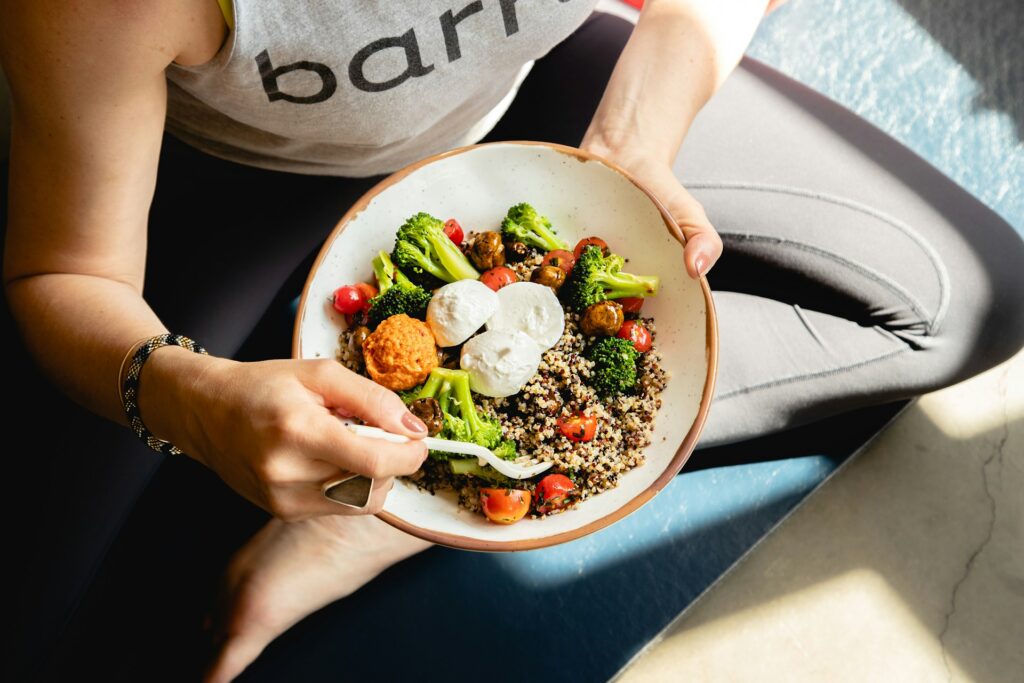
These biological clocks influence hormone production, insulin sensitivity, digestion, and metabolism throughout the day. Generally, the body handles carbohydrates more efficiently earlier in the day because insulin sensitivity tends to be higher during daylight hours.
As evening approaches, insulin sensitivity gradually declines. This does not mean carbohydrates suddenly become fat at night. Instead, glucose control may become slightly less efficient during late evening hours, particularly in people with obesity or type 2 diabetes. For healthy individuals, these differences are usually modest, but over many years they may contribute to metabolic health.
Eating Late Can Increase Hunger
One of the most interesting discoveries in recent years is how meal timing influences appetite.
- Late eating appears to affect hormones that regulate hunger and fullness.
- People who consume large amounts of food late in the evening often report feeling hungrier the following day.
- Researchers believe changes in leptin and ghrelin may partly explain this effect.
- Leptin helps signal fullness while ghrelin stimulates hunger.
- If meal timing shifts these hormones in an unfavorable direction, people may naturally consume more calories without realizing it.
This could explain why late eating sometimes contributes to weight gain without violating the basic principle of calorie balance. People simply end up eating more.
The Role of Sleep
Sleep may be the missing link connecting late eating and obesity. Eating large meals immediately before bed can interfere with sleep quality in some people, particularly if the meal is high in fat or very spicy.
Poor sleep is strongly associated with increased hunger, greater cravings for calorie dense foods, reduced impulse control, and lower physical activity levels. Even one night of inadequate sleep can alter hormones that regulate appetite. Studies consistently show that sleep deprived individuals consume significantly more calories during the following day.
If late eating regularly shortens sleep or disrupts sleep quality, it could indirectly contribute to fat gain through increased calorie intake.
Does Your Metabolism Slow Down at Night?
Many people believe metabolism shuts down during sleep. That is not true.
Your body continues burning calories every minute of the day. Even while sleeping, your heart beats, your lungs work, your brain remains active, your immune system functions, and countless repair processes occur.
Your resting metabolic rate remains relatively stable over twenty four hours. The main difference is that you are no longer burning calories through movement or exercise while asleep. Therefore, food eaten before bed is not automatically stored as fat simply because you are sleeping. The body continues digesting and using nutrients throughout the night.
What About Intermittent Fasting?
Intermittent fasting has increased interest in meal timing. Some versions encourage eating earlier in the day, while others simply shorten the eating window without specifying when meals should occur. Research suggests intermittent fasting can help some people lose weight, but the primary reason is usually reduced calorie intake rather than magical metabolic effects.
Interestingly, studies on early time restricted eating suggest that aligning food intake with circadian rhythms may provide additional metabolic benefits beyond calorie reduction. People often experience better blood sugar control, improved insulin sensitivity, and reduced appetite when eating earlier during the day. These findings support the idea that earlier eating patterns may complement healthy nutrition, although they are not essential for fat loss.
Should You Stop Eating After 8 p.m.?
There is no universal cutoff time that applies to everyone. Someone who goes to bed at 9:30 p.m. has different needs than someone who naturally sleeps after midnight. Likewise, an athlete training in the evening may benefit from eating after exercise, regardless of the time on the clock. Instead of focusing on an arbitrary deadline, consider your overall eating pattern.
If late night eating mainly consists of unnecessary snacking, emotional eating, or highly processed foods, reducing those habits may help control calorie intake. If your evening meal is balanced, fits within your daily calorie needs, and supports your schedule, there is little evidence that the timing alone will cause fat gain.
Practical Advice Based on the Evidence
The best nutritional advice is surprisingly simple. Focus first on maintaining an appropriate calorie intake for your goals. Prioritize whole, minimally processed foods that provide protein, fiber, vitamins, minerals, and healthy fats. Try to distribute protein across the day to support muscle maintenance and satiety.
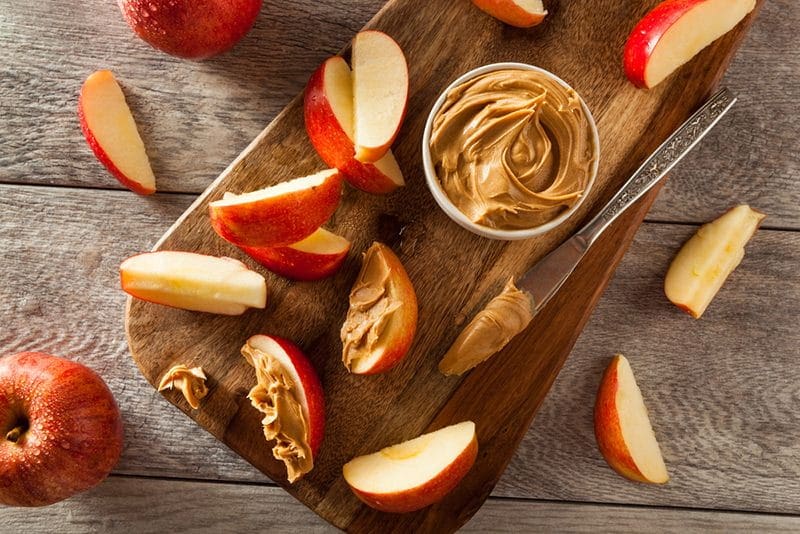
If possible, consume most of your calories during the daytime when your circadian biology is naturally better equipped for metabolism. Leave enough time between your final meal and bedtime if large meals interfere with your sleep. Stay physically active, prioritize good sleep, and avoid turning late evenings into prolonged snacking sessions.
These habits have much stronger scientific support than following rigid rules about never eating after a specific hour.
The Bottom Line
Eating late at night does not magically make food turn into body fat. Weight gain still depends primarily on consuming more calories than your body burns over time. Scientific evidence consistently shows that calorie balance remains the dominant factor controlling body fat.
However, meal timing is not completely irrelevant. Late eating can influence hunger hormones, reduce energy expenditure slightly, impair blood sugar regulation, and encourage overeating, particularly when it is accompanied by poor sleep and unhealthy food choices. For most healthy people, the best approach is not to fear eating after a certain hour. Instead, focus on eating nutritious foods, managing total calorie intake, sleeping well, and building sustainable habits that fit your lifestyle.
In the long run, those factors matter far more than what time you eat dinner.
Key Takeaways
| Topic | Evidence Based Conclusion |
|---|---|
| Does eating late directly cause fat gain? | No. Total calorie balance remains the primary driver of body fat changes. |
| Does meal timing matter? | Yes. It can influence hunger, hormones, blood sugar regulation, and eating behavior. |
| Does metabolism shut down at night? | No. The body continues burning calories during sleep. |
| Is eating after 8 p.m. unhealthy? | Not necessarily. Meal quality and total calorie intake are more important than the clock. |
| Can late eating make weight loss harder? | It can indirectly increase calorie intake through greater hunger, poorer food choices, and disrupted sleep. |
| Who should pay extra attention? | Shift workers, people with diabetes, and those who regularly overeat at night may benefit from structured meal timing. |
References
- Allison, K.C., Goel, N., Ahima, R.S. and Stunkard, A.J. (2014) ‘Night eating syndrome and obesity’, Obesity Reviews, 15(7), pp. 528 to 536.
- Arble, D.M., Bass, J., Laposky, A.D., Vitaterna, M.H. and Turek, F.W. (2009) ‘Circadian timing of food intake contributes to weight gain’, Obesity, 17(11), pp. 2100 to 2102.
- Dashti, H.S., Scheer, F.A.J.L., Jacques, P.F., Lamon-Fava, S. and Ordovás, J.M. (2015) ‘Short sleep duration and dietary intake’, Nutrients, 7(8), pp. 6363 to 6382.
- Garaulet, M. and Gómez Abellán, P. (2014) ‘Timing of food intake and obesity’, British Journal of Nutrition, 112(S2), pp. S75 to S80.
- Jakubowicz, D., Barnea, M., Wainstein, J. and Froy, O. (2013) ‘High caloric intake at breakfast versus dinner differentially influences weight loss of overweight and obese women’, Obesity, 21(12), pp. 2504 to 2512.
- Kelly, K.P., McGuinness, O.P. and Buchowski, M.S. (2020) ‘Eating breakfast and avoiding late evening snacking sustains lipid oxidation’, PLoS Biology, 18(2), e3000622.
- Lowe, C.J., Reichelt, A.C. and Hall, P.A. (2020) ‘The prefrontal cortex and obesity’, Nature Reviews Endocrinology, 16(10), pp. 581 to 596.