

Building a body that lasts isn’t just about lifting heavier weights or chasing bigger muscles. In a recent Youtube video, Strength Side’s Joshua Hash and smoov Movement founder Grant Thomas argue that long-term fitness comes from preserving the movement patterns humans rely on every day.
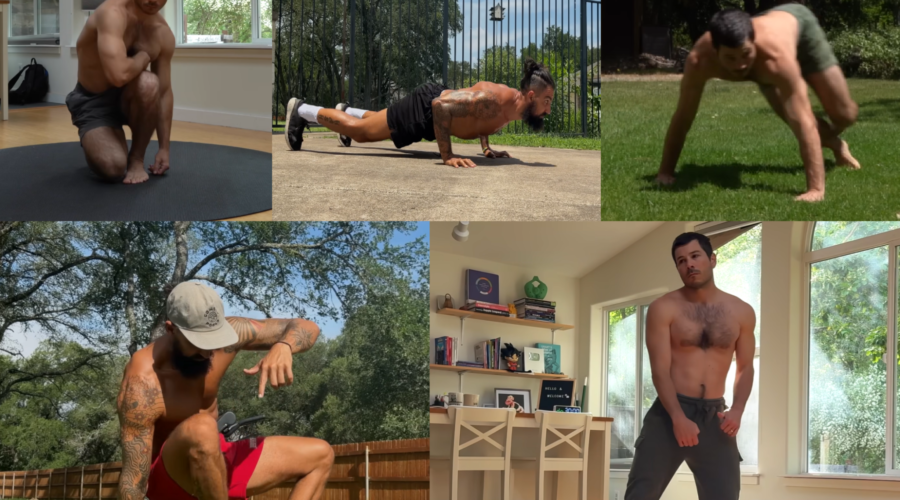
Rather than focusing on aesthetics, the pair demonstrate five simple movements designed to improve mobility, coordination, strength, and resilience with little or no equipment.


“We trade those aspirations for a body that lasts with lifelong mobility and fluid movement in our later years,” Hash explains.
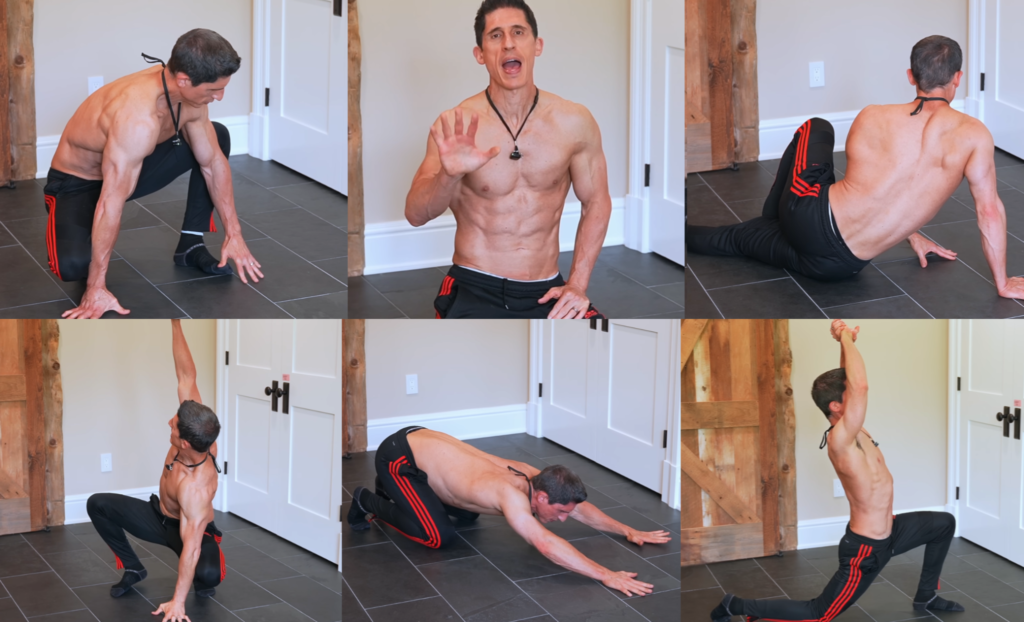
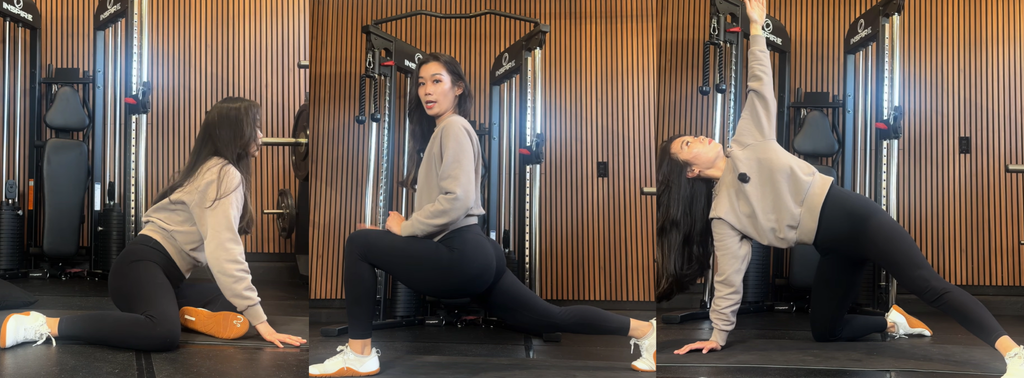
Cowboy Squat Builds Everyday Lower Body Strength
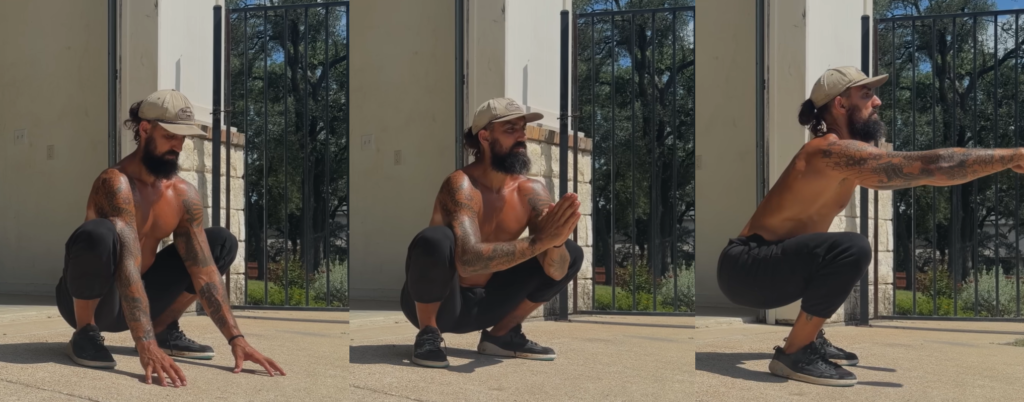
Grant Thomas opens the session with the Cowboy Squat, a movement inspired by everyday activities like gardening, tying shoes, and playing with children.
Instead of chasing heavier barbell squats, Thomas says he shifted his priorities toward mobility and function.
The movement begins in a split stance before progressing into deeper variations that improve hip, knee, ankle, and big toe mobility while developing single leg strength. As control improves, the exercise can evolve into walking patterns that better reflect real-world movement.
Thomas explains that these progressions also prepare the body for advanced exercises such as duck walks, pistol squats, and shrimp squats.

Rocking Push-Up Connects the Entire Body
Joshua Hash follows with the Rocking Push-Up, describing it as more than a traditional pressing exercise.
Beginning from a child’s pose position, the movement flows forward into a push-up before returning to the start. According to Hash, this develops coordination between the feet, legs, core, and shoulders while improving posture and shoulder mechanics.
Unlike conventional push-ups that isolate the upper body, the rocking variation incorporates hip movement, toe extension, and controlled changes of direction.
Hash notes that beginners can perform the movement from their knees before progressing to the toes as strength improves.
Human Crawl Restores Natural Movement
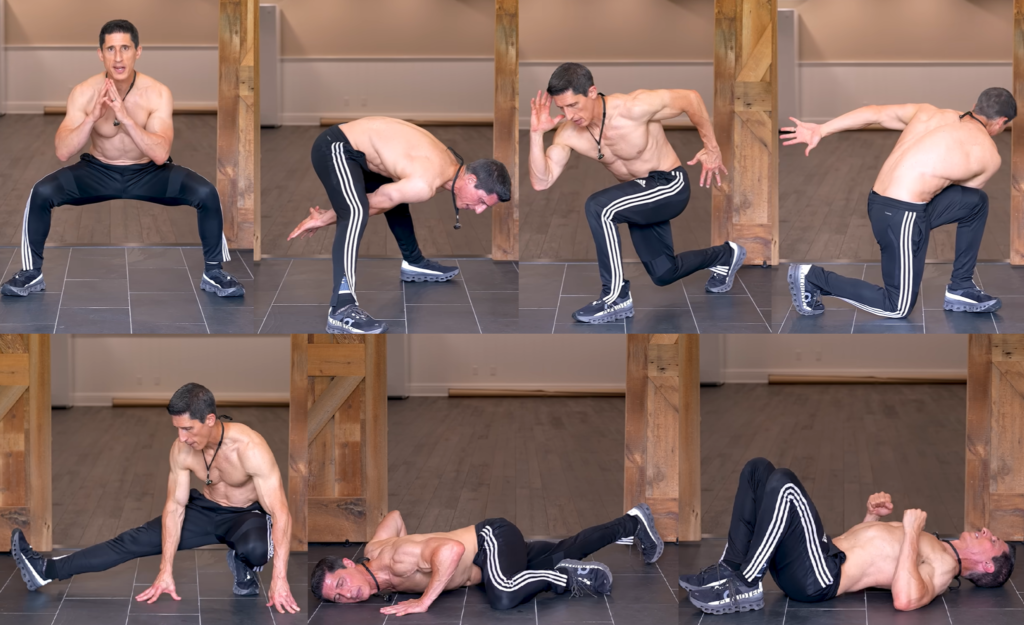
For their third movement, both coaches revisit one of their favorite training methods: crawling.
Thomas explains that after years of practicing animal-style crawls, he became interested in simply moving the way humans naturally do.
Instead of rigid positioning, he encourages a wider stance, larger steps, natural spinal rotation, and coordinated movement through the shoulders and hips.
“You’re not resisting movement with your core. You’re actually creating movement through your core.”
The pair explain that human crawling develops full-body coordination while reinforcing stability, mobility, and body awareness.
Get Up Through Squat Trains Longevity
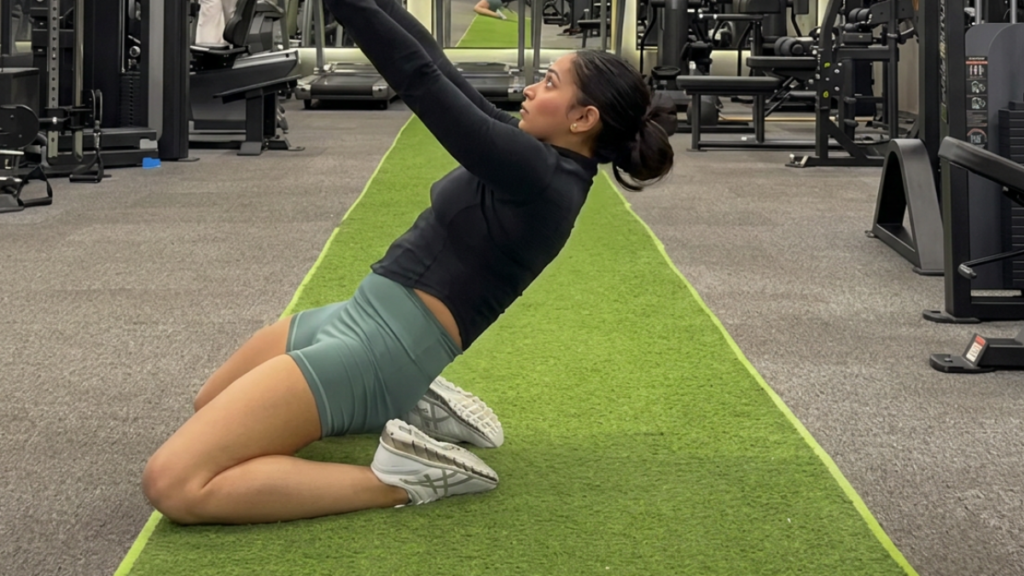
The fourth movement focuses on one of the most practical skills people can maintain as they age: getting up from the floor.
Hash references research linking the ability to stand up from the ground with better longevity, then demonstrates the Get Up Through Squat progression.
Starting from a seated position, participants press through one hand before transferring weight into a deep squat and standing up. As mobility improves, the movement begins from standing before reversing back to the floor.
“The secret sauce is using movements in your life and training that ask you to display mobility like a real human on a daily basis,” Hash says.
Rhythm May Be the Most Overlooked Human Skill
The final movement shifts away from strength and mobility toward coordination.
Thomas argues that rhythm has always been part of human culture through dance, even for people who believe they “can’t dance.”
His recommendation is simple: step side to side.
This basic movement develops balance, coordination, body awareness, and confidence while encouraging people to move more naturally. As comfort grows, additional footwork can be added, but Thomas believes even the simplest rhythm practice offers meaningful benefits.
Why These Five Movements Matter
Instead of presenting another complicated workout routine, Strength Side and smoov Movement offer five movement patterns that prioritize longevity over performance.
Cowboy squats, rocking push-ups, human crawls, floor transitions, and rhythm work all emphasize capabilities people use throughout life. The message is straightforward: staying athletic isn’t about doing more exercises. It’s about consistently practicing movements your body was designed to perform.
About the Author
Jeremiah Oliva
Jeremiah Oliva is a writer passionate about fitness, sports, and active living. He has experience in songwriting and managing content and social media for online radio and magazine platforms.
He covers HYROX, CrossFit®, and competitive fitness, with a focus on performance, mindset, and athlete development.
Outside of writing, Jeremiah trains in boxing, cycles, explores the outdoors with his kids, and plays the guitar.