

If you are new to lifting and want bigger arms, chin-ups and biceps curls are both useful exercises. Chin-ups train your back and arms together, while curls let you focus directly on bending your elbows against resistance. The best choice depends on your current strength, equipment, and how much direct arm training you do.
There is no strong research directly comparing chin-ups with biceps curls for long-term arm growth. Studies have compared curls with other pulling exercises, and researchers have measured which muscles work during chin-ups. Those findings offer useful guidance, but they do not prove that one exercise will always build bigger arms for every beginner.


For most beginners, curls are easier to learn and adjust to your strength. Chin-ups are a valuable upper-body exercise, but they can be difficult if you cannot yet perform controlled repetitions. If your main goal is bigger biceps, include curls in your plan and add chin-ups as you build the strength to do them well.
What Is the Difference Between Chin-Ups and Biceps Curls?
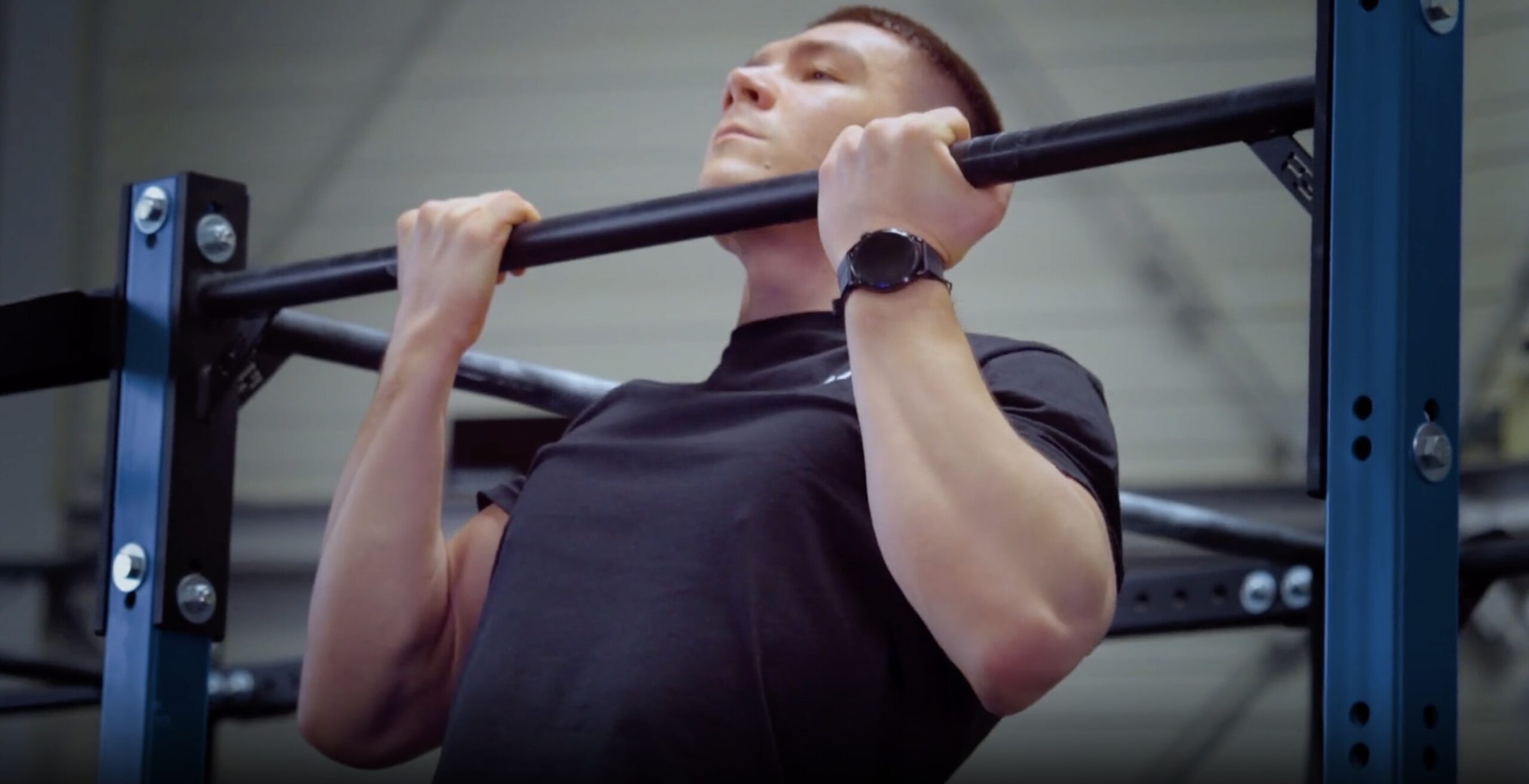
A chin-up is a bodyweight pulling exercise. You hang from a bar with your palms facing you, then pull until your chin reaches or passes the bar. Your elbows bend as you rise, and your shoulders and shoulder blades help control the movement. Your back does much of the work, while your biceps and other elbow flexors assist.
A biceps curl is an isolation exercise that focuses on bending the elbow. You hold a dumbbell, barbell, or cable handle and bring your hand toward your shoulder while keeping your upper arm mostly still. This makes it easier to concentrate on the muscles that flex your elbow without asking your back to perform much of the work.
The biceps brachii is the most familiar muscle on the front of the upper arm, but it is not the only muscle involved in elbow flexion. The brachialis and brachioradialis also help bend the elbow. Chin-ups and curls involve these muscles to different degrees, depending on grip, technique, and the equipment used.
Which Exercise Works the Biceps More?
Chin-ups clearly involve the biceps, but muscle activation during a repetition does not tell us exactly how much a muscle will grow over months of training. In laboratory studies, researchers use surface electromyography to measure electrical activity in muscles during exercise. This can show which muscles are active in the moment, but it cannot directly predict which exercise produces the most growth.
A small study that measured muscle activity during chin-ups and pull-ups found substantial activity in the biceps during both exercises. The chin-up also produced higher biceps activation than the pronated grip pull-up in that study. This supports the idea that chin-ups are a demanding exercise for the arms, but it does not show that they build bigger biceps than curls.
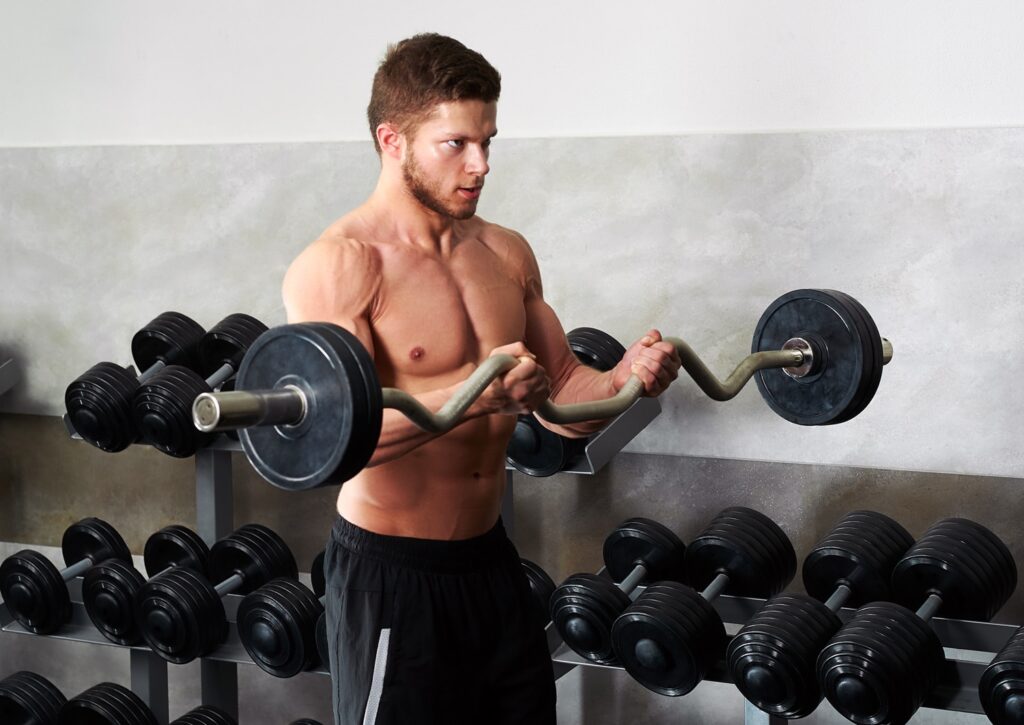
Curls have a practical advantage: they make it easier to direct training effort toward the elbow flexors. You can choose a weight that lets you complete controlled repetitions, adjust the load in small increments, and focus on the arm muscles without your grip or back becoming the main limiting factor.
That difference matters for beginners. If a chin-up is so difficult that you can only perform a few partial repetitions, it may be hard to accumulate enough challenging work for your arms. A beginner who can perform several controlled chin-ups can still train the biceps effectively with them, but curls make it simpler to match the resistance to current ability.
What Does the Research Say About Arm Growth?
Research comparing single-joint exercises, such as curls, with multi-joint pulling exercises offers a useful but limited comparison. In one small study of untrained men, a program using biceps curls produced more elbow-flexor growth than a program using dumbbell rows. That result suggests curls can be effective when the aim is to grow the elbow flexors specifically. A separate study comparing curls with lat pulldowns in untrained men found similar increases in elbow-flexor size between the two groups.
These studies do not settle the chin-up versus curl question. A dumbbell row or lat pulldown is not the same exercise as a chin-up, and the studies involved a small number of participants. Still, they show why it is sensible to include direct arm work if arm size is a priority. Pulling exercises train the elbow flexors, but they also ask other muscles to contribute.
Running vs Swimming: Which Is Better for Overall Fitness?
The overall training plan matters more than the name of the exercise. Muscle growth depends on completing enough challenging training over time and gradually improving what you can do. A review of resistance-training research found that higher weekly training volume was generally associated with greater muscle growth, although that does not mean beginners should immediately add as many sets as possible.
Your sets should feel challenging while your technique stays controlled. You do not need to force every set to the point where you cannot complete another repetition. Research reviews have not found a consistent muscle-growth advantage to taking every set to momentary failure. For a beginner, finishing most sets with a small number of good repetitions still possible can make training easier to manage and repeat.
Why Curls Are Often Better for Beginners
Curls are easy to scale. If a dumbbell is too heavy, you can choose a lighter one. If a barbell feels uncomfortable, you can try dumbbells or a cable. This makes it easier to practice the movement and use a load that challenges you without making you swing your body or shorten the range of motion.
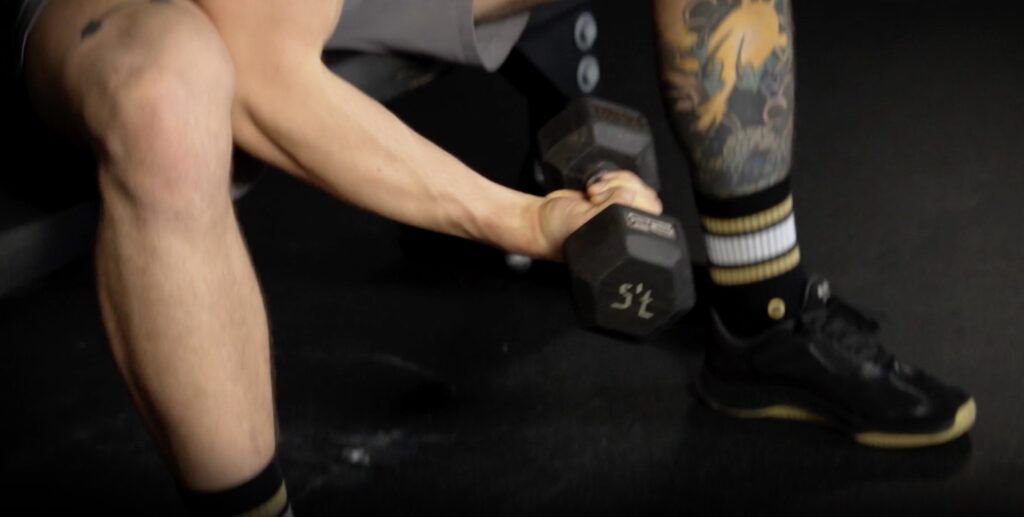
They also let you train the arms without first having to develop enough strength to lift your whole body. That can be important if you are heavier, new to strength training, or returning after a long break. You can start with a manageable load and increase it as you become stronger.
Curls are also easy to fit into a workout. You can perform them after rows, pulldowns, or other upper-body exercises. Since they do not require a pull-up bar or a particular strength level, they are a reliable way to give your biceps direct attention.
Good technique matters more than using the heaviest dumbbells in the gym. Keep your upper arms relatively steady, move through a comfortable range, and lower the weight under control. If you have to lean back or swing the weight to get it moving, reduce the load and regain control.
Why Chin-Ups Still Belong in Your Training
Chin-ups train more than your arms. They challenge the back and grip while teaching you to control your body through a demanding pulling movement. If you can perform them with a full, comfortable range of motion, they are an efficient exercise for building general upper-body strength.
They may also help you build arm strength that carries over to other pulling movements. However, the fact that chin-ups involve several muscle groups is both their strength and a limitation for focused biceps training. Your back, grip, or ability to move your bodyweight may limit a set before your biceps have received the amount of work you want.

You do not need to wait until you can do a full chin-up before you start training the movement. An assisted chin-up machine or resistance band can reduce the amount of bodyweight you lift. You can also use controlled lowering repetitions, beginning at the top and lowering yourself gradually, if you can get into position safely. Choose an option that lets you control the movement and avoid painful shoulder or elbow positions.
If you already perform chin-ups, use a consistent grip and range of motion so you can track your progress. Avoid turning every repetition into a partial rep or a swing. When you can complete several clean repetitions, you can gradually add repetitions or use a small amount of extra weight, provided your technique remains solid.
How to Include Both Exercises
If your goal is bigger arms, you do not have to choose only one exercise. Use chin-ups or an assisted version as part of your back training, then add curls for direct elbow-flexor work. This gives you the benefits of a compound pulling exercise and a movement that is easier to adjust for arm-focused training.
A beginner might start with two or three sets of chin-ups or assisted chin-ups, followed by two or three sets of curls, once or twice per week. Choose a repetition range that lets you use controlled technique and finish each set feeling challenged. If you are already doing rows and pulldowns, start with fewer curl sets and see how well you recover before adding more.
Progress gradually. For curls, add a small amount of weight when you can complete all your planned repetitions with good form. For chin-ups, build repetitions first or reduce assistance in small steps. Keep a simple record of the exercise, load, and repetitions so you can tell whether your training is moving forward.
Recovery matters too. Your arms are involved in many pulling exercises, so adding a large amount of curl training on top of a high-volume back routine may leave you sore without improving the quality of your next workout. Start with a manageable amount and adjust based on how your performance and recovery respond.
So, Which Builds Bigger Arms?
For beginners who want to focus on biceps growth, curls are usually the easier exercise to control, scale, and progress. Chin-ups are an excellent upper-body movement and they work the biceps, but they may be too demanding for a beginner to use as their only arm exercise.
The most practical approach is to do both if you can. Use chin-ups or assisted chin-ups to build pulling strength, then use curls to give your elbow flexors direct work. If you must choose one because of time, equipment, or your current ability, pick the exercise you can perform with good form and progress consistently. For many beginners focused on bigger arms, that will be the curl.
Key Takeaways
| Exercise | Main advantage | Best use for beginners |
|---|---|---|
| Chin-ups | Train the back, grip, and elbow flexors together | Build general pulling strength, using assistance if needed |
| Biceps curls | Make it easy to adjust resistance and focus on the elbow flexors | Add direct arm training that can be progressed gradually |
| Both exercises | Combine compound pulling with focused arm work | Use chin-ups or assisted chin-ups, then add a manageable amount of curls |
| Training progress | Consistent, challenging work supports muscle growth | Track repetitions and load, and increase them gradually |
References
- Mannarino, P., Matta, T., Lima, J., Simão, R. and Freitas de Salles, B. (2021). Single-joint exercise results in higher hypertrophy of elbow flexors than multijoint exercise. Journal of Strength and Conditioning Research, 35(10), pp. 2677–2681.
- McAllister, M.J., Schilling, B.K., Hammond, K.G., Weiss, L.W. and Farney, T.M. (2014). Muscle activation during various suspension training exercises. Journal of Strength and Conditioning Research, 28(12), pp. 3383–3390.
- Refalo, M.C., Helms, E.R., Trexler, E.T., Hamilton, D.L. and Fyfe, J.J. (2023). Influence of resistance training proximity-to-failure on skeletal muscle hypertrophy: a systematic review with meta-analysis. Sports Medicine, 53(3), pp. 649–665.
- Schoenfeld, B.J., Ogborn, D. and Krieger, J.W. (2017). Dose-response relationship between weekly resistance training volume and increases in muscle mass: a systematic review and meta-analysis. Journal of Sports Sciences, 35(11), pp. 1073–1082.
- Schoenfeld, B.J., Wilson, J.M., Lowery, R.P. and Krieger, J.W. (2016). Muscular adaptations in low- versus high-load resistance training: a meta-analysis. European Journal of Sport Science, 16(1), pp. 1–10.
- Youdas, J.W., Amundson, C.L., Cicero, K.S., Hahn, J.J., Harezlak, D.T. and Hollman, J.H. (2010). Surface electromyographic activation patterns and elbow joint motion during a pull-up, chin-up, or perfect-pullup rotational exercise. Journal of Strength and Conditioning Research, 24(12), pp. 3404–3414.