

You already love your mat routine. Now you want a little more challenge, variety, or feedback. That’s where Pilates equipment comes in.
The good news? You don’t need a studio or a reformer to expand your practice. A few simple props can add resistance, positioning help, and fresh variations to your home sessions.


In this guide, you’ll learn when to add equipment, which pieces may fit your space, and how each one can change your workouts. You’ll also get practical tips for setting up a small home Pilates area and building a routine you can stick with. Let’s make your mat workouts more versatile, one thoughtful piece at a time.
When Should You Add Equipment to Mat Pilates?
You can add equipment whenever you want more variety, resistance, or feedback—not when you reach a certain “level.” Mat Pilates is complete on its own. Props simply give you more ways to play.
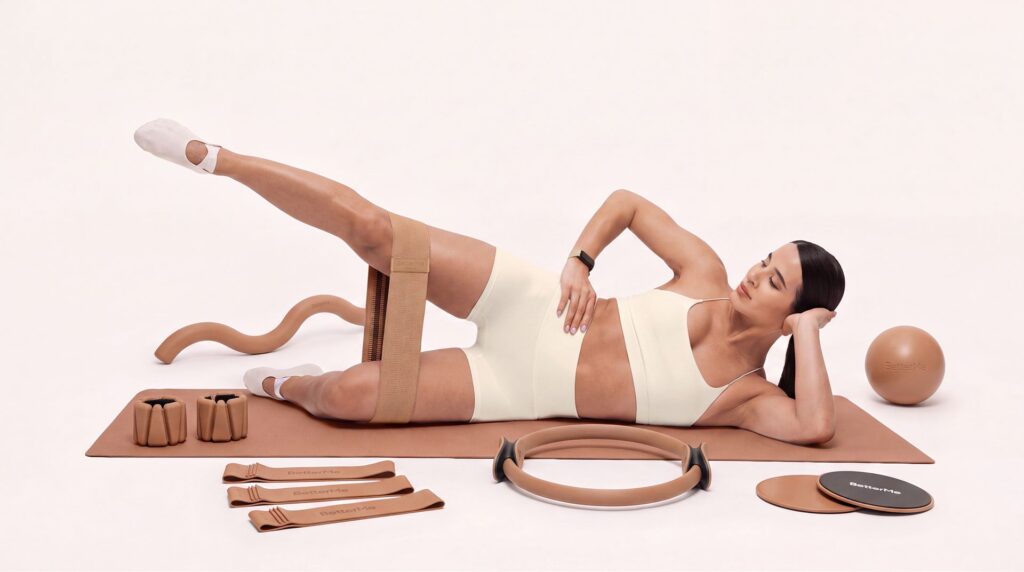
Many people find equipment useful when they want to:
- Add light resistance to familiar moves
- Explore new exercise variations
- Use props as simple cues for positioning and muscle focus
- Modify movements that feel too hard or too easy
- Make a familiar exercise more or less challenging
- Bring fresh variety to a routine that feels stale
You don’t need an advanced skill level to start using simple props. You don’t need to “earn” a Pilates ring or master 50 mat exercises first.
Instead, choose equipment based on your goals, your experience, your available space, and what feels comfortable. A beginner can start with a light resistance band. A more experienced practitioner may still use a small ball for variation and positioning cues.
Think of props as options, not obligations. If your mat routine already feels great, there’s no rush. Add gear when curiosity strikes or when you want a new way to move.
What Pilates Equipment Should You Add to Your Home Setup?
Start with one or two versatile pieces, then expand as your routine grows. The most practical Pilates props are light, compact, and useful across many exercises. Below are the items worth considering for a home Pilates setup.
Choosing a few versatile pieces of Pilates equipment can help you add resistance, support, and variety to your home workouts without needing a large dedicated space.
Here’s a closer look at common props and how each one fits into your practice.
1. Pilates Mat
A supportive mat is a practical foundation. Look for enough cushioning to support your back, hips, and knees during floor work.
When choosing a mat, consider:
- Cushioning: Thicker mats may feel more comfortable during floor work.
- Grip: A non-slip surface keeps you steady during controlled moves.
- Size: Enough length and width to stretch out fully.
- Stability: A mat that stays put as you shift positions.
2. Pilates Ring
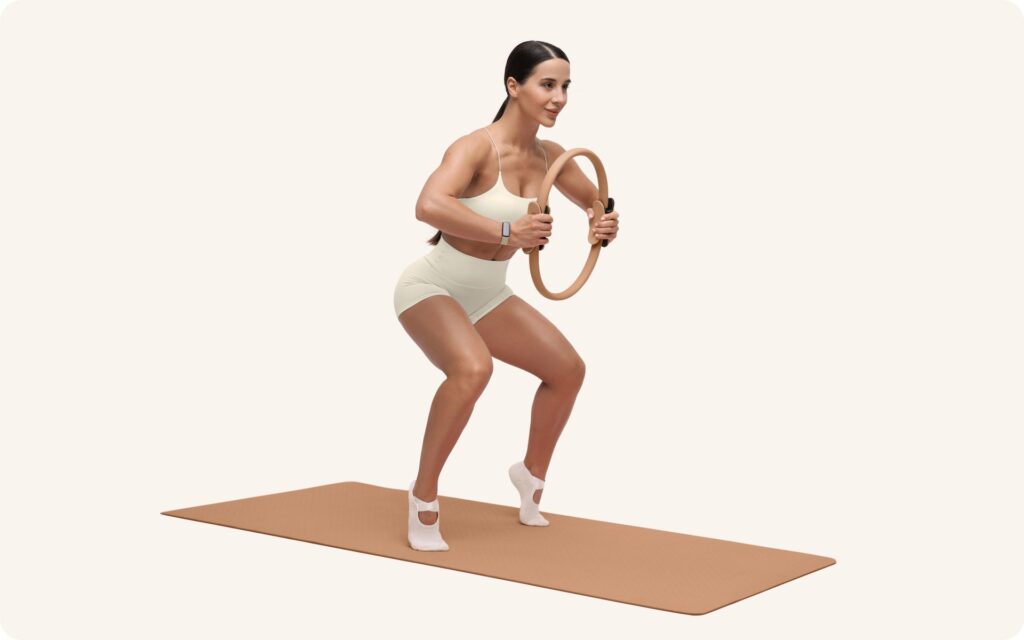
A Pilates ring adds light resistance and can give simple movement cues. You squeeze it between your hands, thighs, or ankles to engage specific muscles.
It can support exercises for the:
- Legs and inner thighs
- Arms and chest
- Glutes and core
The ring is great for people who like a tactile cue. That gentle squeeze can help you pay attention to the muscles involved.
3. Resistance Bands
Resistance bands bring adjustable resistance to upper- and lower-body moves. They’re light, affordable, and easy to store, which makes them a favorite for resistance training at home.
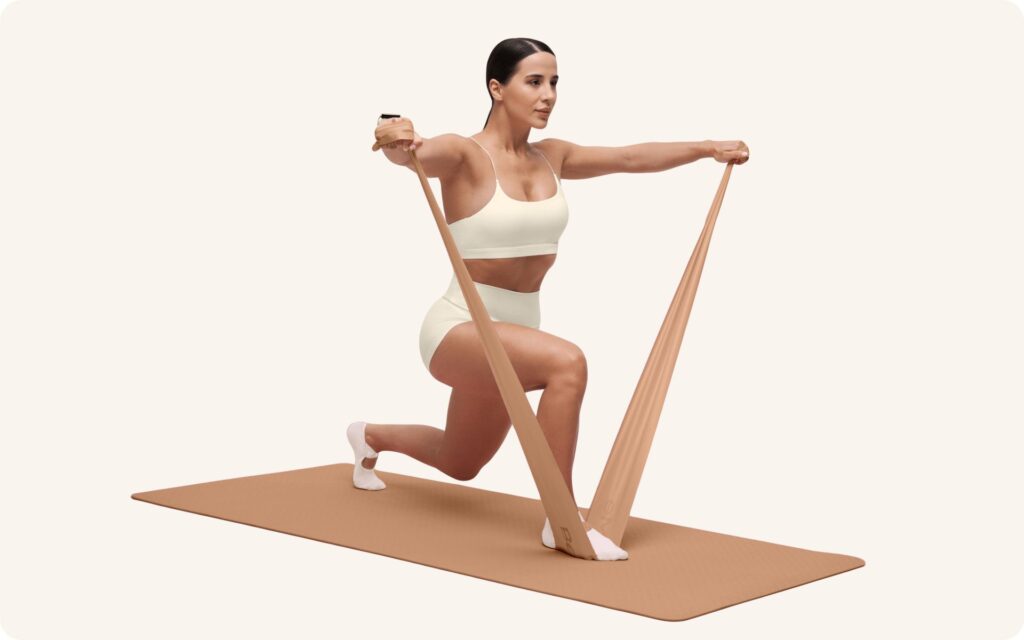
You can loop them, anchor them, or hold them to vary the challenge. They can work for different experience levels because you can adjust the tension.
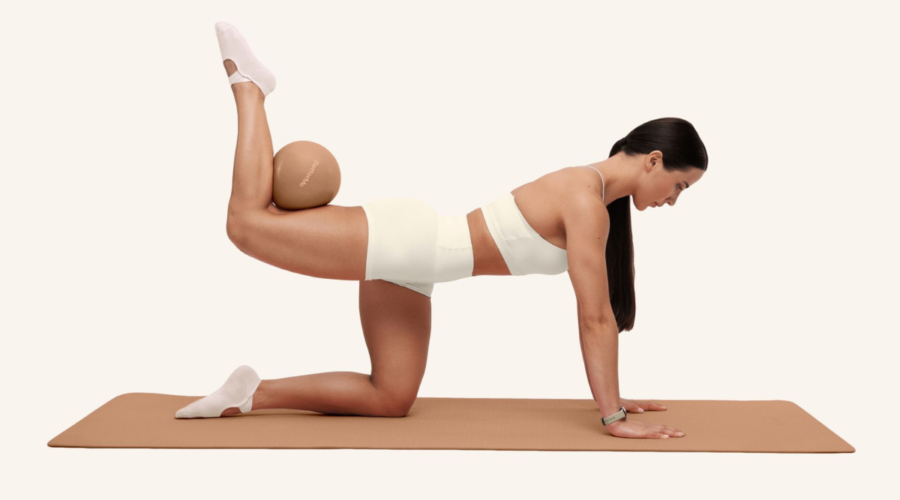
4. Pilates Ball
A small Pilates ball offers support, positioning help, and balance challenges. Tuck it behind your back, under your hips, or between your knees.
It’s useful for:
- Supporting your back position during seated work
- Adding a balance challenge to core exercises
- Cueing muscle engagement with a gentle squeeze
5. Ankle or Wrist Weights
Light wearable weights can increase the challenge of certain movements. Introduce them gradually and keep your control first.
If a move feels rushed or your form slips, lower the weight. The goal is steady, controlled motion, not heavier numbers.
6. Pilates Sliders
Sliders introduce controlled movement and raise the stability demand of an exercise. You place them under your hands or feet on a smooth surface.
They suit people who enjoy a coordination challenge. Mountain-climber variations and gliding lunges become smoother and more demanding.
7. Pilates Bar
A Pilates bar with attached resistance bands supports standing and mat-based exercises. It works well when you have enough room to extend it comfortably.
This piece is handy if you like full-body flows. Just make sure your space allows the bar to move freely.
Here’s a quick comparison to help you choose your first pieces.
| Equipment | What It’s Used For | Who May Like It | Space Needed |
| Pilates Mat | Cushioning and grip for floor work | Everyone | Small |
| Pilates Ring | Light resistance and muscle cues | Tactile learners | Small |
| Resistance Bands | Adjustable resistance training | All levels | Small |
| Pilates Ball | Support, balance, and positioning | Core-focused practitioners | Small |
| Sliders | Controlled, gliding movement | Coordination seekers | Small to medium |
| Pilates Bar | Standing and mat flows | Full-body fans | Medium |
How Can Pilates Equipment Add Resistance and Support?
Pilates props change an exercise by altering resistance, feedback, and stability. They change how a movement feels and where your attention goes. That’s what keeps a routine fresh.
Different props may affect a move by:
- Adding external resistance
- Providing tactile feedback
- Supporting your body position
- Changing stability demands
- Expanding your range of variations
- Encouraging slower, more controlled movement
Controlled resistance is the heart of it. When a band or ring pushes back, your core and supporting muscles may need to stay more active to help you stay steady.
This may also help you pay closer attention to your breath, positioning, and muscle engagement.
Some props may support exercises focused on mobility, stability, and strength when used consistently and with good technique. The key word is consistently. One session is unlikely to change much, but regular practice can help you build consistency over time.
| Prop | Main Effect | Movement Quality It Supports |
| Resistance Bands | External resistance | Strength and control |
| Pilates Ring | Tactile feedback | Muscle engagement |
| Pilates Ball | Support and balance | Stability and positioning |
| Sliders | Higher stability demand | Coordination and control |
How Can You Create a Pilates Workout Space at Home?
You can build a Pilates space in any flat, uncluttered corner—no dedicated room required. A living room nook or bedroom spot works fine.
To set up a simple, workable area:
- Choose a flat, uncluttered surface.
- Leave enough room to extend your arms and legs.
- Use a mat with suitable grip and cushioning.
- Store smaller props in a basket, drawer, or container.
- Keep your most-used workout gear easy to reach.
- Check bands, rings, and other gear regularly for wear.
- Use a wall or sturdy furniture only when a move calls for support.
Keep it simple enough to use often. A complicated setup tends to gather dust.
The easier your space is to access, the more likely you are to practice. That convenience is what turns a good intention into a steady habit.
How Do You Build a Consistent Pilates Routine With Equipment?
Equipment is most useful when it fits into a routine you can repeat, not when it crowds your space. Start small, learn the basics, and add gear gradually.
To build lasting consistency:
- Start with one or two versatile props.
- Learn the basic technique before adding more resistance.
- Introduce new equipment slowly.
- Prioritize control and form over difficulty.
- Alternate familiar movements with new variations.
- Choose gear that fits your space and preferred style.
Think of props as a way to adapt your practice, not a requirement for a good session. Your mat routine may already feel useful on its own. Equipment just adds flexibility and fun.
Adding Pilates equipment is one of the easiest ways to expand and personalize your home routine. A few versatile props—a mat, a band, a ring, or a small ball—can bring fresh resistance, support, and variety to your sessions.
Start with one or two pieces, focus on control, and keep your setup simple enough to use often. From there, add gear gradually as your practice grows. Pick one prop this week, and see how it changes your next workout.