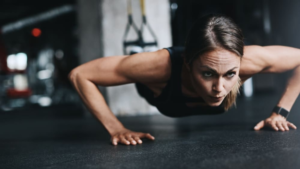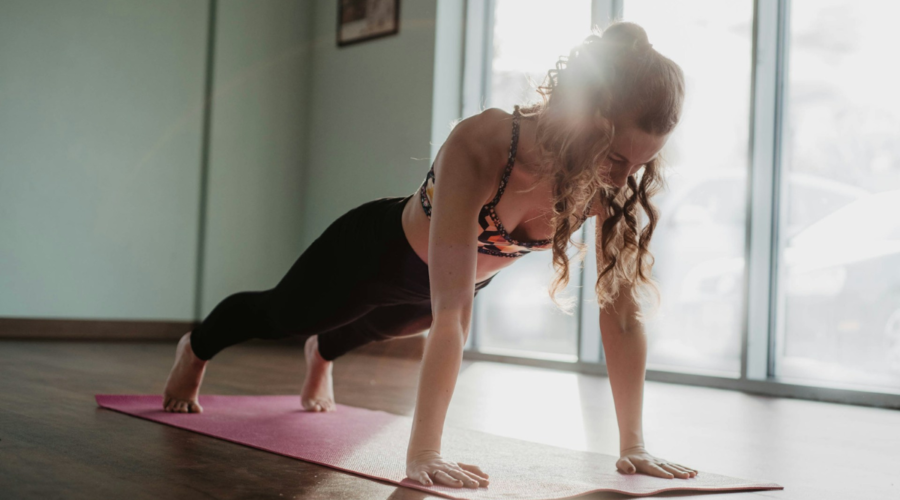


The plank is one of the simplest exercises you can perform, yet it remains one of the most misunderstood. Many people assume that holding a plank for as long as possible is the ultimate measure of core strength. Others believe that if they cannot reach several minutes, they have a weak core. The truth is more nuanced. Plank performance depends on your age, body weight, training experience, muscular endurance, and technique. A well performed 60 second plank can be far more valuable than a poorly executed three minute effort.
Research consistently shows that core endurance plays an important role in athletic performance, spinal stability, balance, injury prevention, and everyday movement. However, there is little benefit in chasing marathon plank times once you have developed sufficient endurance for your goals.


So how long should you actually be able to hold a plank at different ages? Here is what science and established fitness standards suggest.
Why the Plank Matters
The front plank primarily challenges the muscles responsible for stabilizing the spine rather than producing movement. These include the rectus abdominis, transverse abdominis, internal and external obliques, erector spinae, glutes, shoulders, and even the quadriceps.
Unlike crunches or sit ups, the plank teaches your body to resist unwanted movement. This quality, known as anti extension stability, is essential during lifting, running, jumping, carrying heavy objects, and many sports.
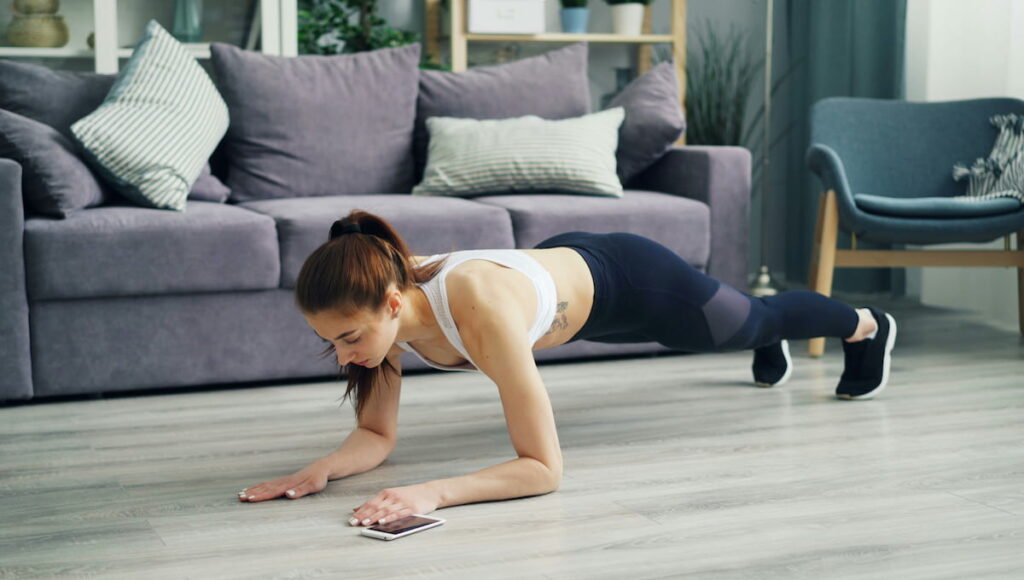
Numerous electromyography studies have shown that correctly performed planks activate multiple trunk muscles simultaneously, making them one of the most efficient bodyweight core exercises.
Research has also demonstrated that greater trunk endurance is associated with improved balance, reduced low back pain risk, and better athletic movement quality.
What Happens to Core Strength as You Age?
Like every other muscle group, the muscles of the core gradually lose strength and endurance with age. Beginning around the fourth decade of life, muscle mass naturally declines in a process known as sarcopenia. This loss accelerates after age 60 unless regular resistance training is maintained.
The good news is that core endurance appears to respond extremely well to training at every age. Studies involving older adults have shown significant improvements in balance, walking ability, posture, and functional independence after structured core strengthening programs.
That means your chronological age matters less than your training habits. A physically active 65 year old may outperform a sedentary 30 year old during a plank test.
How Long Should You Hold a Plank?
There is no universally accepted standard, but sports medicine organizations, military fitness programs, and exercise researchers provide useful benchmarks. These recommendations assume excellent technique from beginning to end.
Ages 18 to 29
Healthy young adults should generally aim for between 60 and 120 seconds.
Holding a solid plank for one minute demonstrates good core endurance. Reaching two minutes places you well above average for recreational exercisers.
Elite athletes often exceed three minutes, although additional performance benefits become increasingly limited beyond this point.
Ages 30 to 39
Recommended performance remains largely unchanged. A plank lasting 60 to 90 seconds represents excellent functional core endurance.

Individuals who exercise regularly should have little difficulty reaching one minute with proper form.
Ages 40 to 49
Natural muscle loss begins to accelerate during this decade, but resistance training can dramatically reduce its impact. A target of 45 to 90 seconds reflects strong core endurance. If you can comfortably maintain perfect alignment for one minute, your core endurance remains excellent.
Ages 50 to 59
Most healthy adults should aim for between 45 and 75 seconds. Regular exercise becomes increasingly important because muscle endurance declines more rapidly without training. Maintaining a one minute plank remains an impressive benchmark.
Ages 60 to 69
Holding a plank for 30 to 60 seconds demonstrates good functional strength. Balance, posture, and spinal stability become increasingly dependent upon maintaining core endurance during these years. Many adults who participate in regular resistance training continue exceeding one minute.
Ages 70 and Older
Thirty to 45 seconds represents excellent functional ability for many older adults. Those with long training histories may comfortably exceed one minute. For older individuals, quality matters far more than duration.
Age Based Plank Standards
| Age | Fair | Good | Excellent |
|---|---|---|---|
| 18 to 29 | 30 to 45 seconds | 60 seconds | 90 to 120 seconds |
| 30 to 39 | 30 to 45 seconds | 60 seconds | 90 seconds |
| 40 to 49 | 30 seconds | 45 to 60 seconds | 60 to 90 seconds |
| 50 to 59 | 20 to 30 seconds | 45 seconds | 60 to 75 seconds |
| 60 to 69 | 20 to 30 seconds | 30 to 45 seconds | 45 to 60 seconds |
| 70 plus | 15 to 20 seconds | 30 seconds | 45 seconds or more |
These values represent practical fitness targets rather than medical cutoffs. Technique should always take priority over duration.
Why Technique Matters More Than Time
Many people believe they are holding a plank for several minutes when, in reality, they are maintaining poor posture for most of that time.
As fatigue develops, common compensations include:
- The hips sagging toward the floor.
- The hips rising too high.
- The lower back arching excessively.
- The shoulders collapsing.
- The neck extending upward.
Each of these changes reduces the effectiveness of the exercise while increasing stress on joints and connective tissues.
Research examining trunk muscle activation has shown that proper spinal alignment produces significantly greater activation of the deep stabilizing muscles than poor positioning. If your posture begins to break down after 45 seconds, your actual plank capacity is 45 seconds, not the minute you eventually reached.
Can You Hold a Plank Too Long?
Surprisingly, yes. World record plank attempts lasting several hours are extraordinary feats of endurance, but they provide little practical value for most people.
Renowned spine researcher Stuart McGill has argued that excessively long plank holds produce diminishing returns. Once you can maintain high quality tension for around one to two minutes, increasing difficulty often becomes more beneficial than simply extending time.
3 Best Cable Exercises for Beginners to Build a Muscular Upper Body
Instead of chasing longer holds, progression can include:
- Single arm planks.
- Single leg planks.
- Weighted planks.
- Long lever planks.
- Stability ball planks.
These variations increase muscular demand while keeping training efficient.
How to Improve Your Plank Time
Improving plank endurance follows the same principles as improving any other strength quality. Consistency matters more than marathon sessions. Most studies investigating core endurance improvements have participants train two to three times per week.
Progressive overload also applies. Begin by holding the plank for a duration that allows perfect technique. Gradually increase your total weekly workload. Once you consistently exceed one minute, increasing exercise difficulty often produces greater improvements than simply adding more seconds.
Combining planks with side planks, bird dogs, dead bugs, loaded carries, and resistance training creates a stronger, more resilient core than relying on one exercise alone.
Common Mistakes
Many people unknowingly reduce the effectiveness of the plank through simple technical errors. Holding the breath is one of the most common problems. Proper breathing helps maintain abdominal pressure while allowing the stabilizing muscles to function efficiently.
Looking forward instead of down places unnecessary stress on the neck. Allowing the hips to rotate reduces activation of the oblique muscles. Rushing into long holds before mastering technique often reinforces poor movement patterns. Quality repetitions consistently outperform impressive looking durations.
Should Athletes Aim Higher?
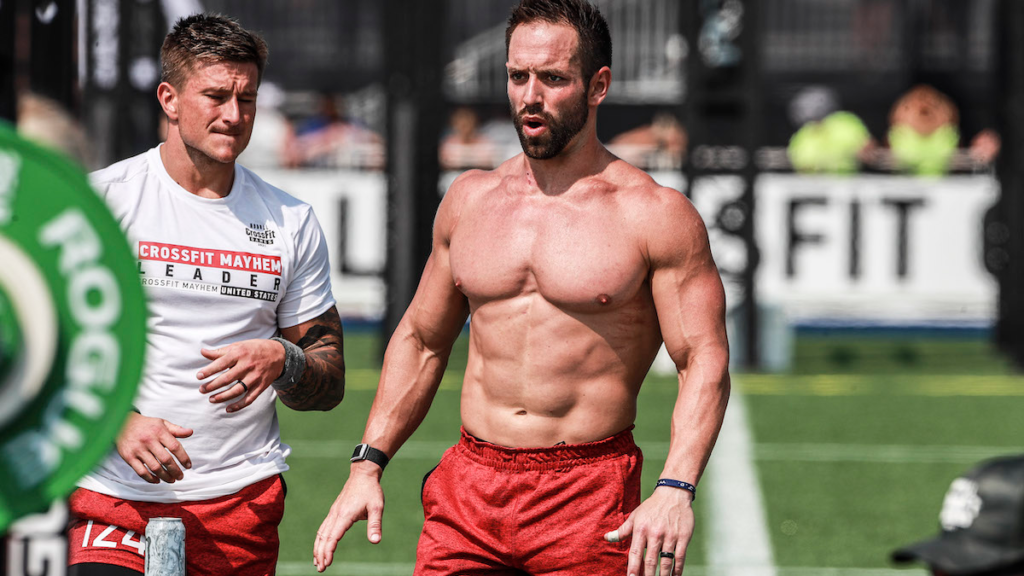
Athletes involved in gymnastics, wrestling, climbing, rowing, CrossFit, martial arts, and obstacle racing often develop substantially greater core endurance than the general population. Even so, elite coaches rarely prioritize extremely long plank holds. Instead, they emphasize stronger, more challenging variations that better replicate sporting demands.
Power athletes generally benefit more from developing stiffness, force transfer, and trunk stability under load than from static endurance lasting several minutes.
The Bottom Line
The ideal plank time depends on your age, fitness level, and goals, but one message remains consistent across scientific research. Perfect technique always matters more than chasing longer holds.
For most healthy adults under 40, holding a technically sound plank for one minute represents an excellent benchmark. Adults over 50 can maintain outstanding functional fitness with holds between 45 and 60 seconds, while older adults can achieve significant health benefits from shorter holds performed with proper alignment.
Rather than competing for the longest plank possible, focus on developing a strong, stable core that supports everyday movement, athletic performance, and lifelong health.
If you can confidently maintain excellent posture for around one minute, your core endurance is already better than that of most adults. Beyond that point, progressing to more challenging plank variations is usually a smarter investment than simply watching the stopwatch.
Key Takeaways
| Topic | Key Takeaway |
|---|---|
| Best benchmark for adults under 40 | Around 60 to 90 seconds with perfect technique |
| Best benchmark for adults over 50 | Around 45 to 60 seconds with perfect technique |
| Adults over 70 | Around 30 to 45 seconds is an excellent goal |
| Technique | Proper spinal alignment is more important than duration |
| Training frequency | Two to three sessions each week is effective for improving core endurance |
| Long holds | Benefits diminish once you can comfortably exceed one to two minutes |
| Better progression | Increase exercise difficulty instead of simply holding longer |
| Primary benefit | Improved spinal stability, posture, balance, and functional strength |
References
- Akuthota, V. and Nadler, S.F. (2004). Core strengthening. Archives of Physical Medicine and Rehabilitation, 85(Suppl. 1), S86 to S92.
- Behm, D.G., Drinkwater, E.J., Willardson, J.M. and Cowley, P.M. (2010). Canadian Society for Exercise Physiology position statement. Applied Physiology, Nutrition, and Metabolism, 35(1), 109 to 112.
- Ekstrom, R.A., Donatelli, R.A. and Carp, K.C. (2007). Electromyographic analysis of core trunk, hip, and thigh muscles during nine rehabilitation exercises. Journal of Orthopaedic and Sports Physical Therapy, 37(12), 754 to 762.
- Granacher, U., Gollhofer, A., Hortobagyi, T., Kressig, R.W. and Muehlbauer, T. (2013). The importance of trunk muscle strength for balance, functional performance, and fall prevention in older adults. Sports Medicine, 43(7), 627 to 641.
- McGill, S.M. (2010). Ultimate Back Fitness and Performance. 4th ed. Waterloo: Backfitpro Inc.
- Reed, C.A., Ford, K.R., Myer, G.D. and Hewett, T.E. (2012). The effects of isolated and integrated core stability training on athletic performance measures. Sports Medicine, 42(8), 697 to 706.
- Steib, S., Schoene, D. and Pfeifer, K. (2010). Dose response relationship of resistance training in older adults. Medicine and Science in Sports and Exercise, 42(5), 902 to 914.
- Stuart McGill, S., Childs, A. and Liebenson, C. (1999). Endurance times for low back stabilization exercises. Archives of Physical Medicine and Rehabilitation, 80(8), 941 to 944.
- Willardson, J.M. (2007). Core stability training. Applications to sports conditioning programs. Journal of Strength and Conditioning Research, 21(3), 979 to 985.