

Strength training is often associated with lifting heavy barbells, loaded dumbbells, and impressive personal records in the gym. While heavy resistance remains one of the most effective ways to maximize strength, it is not the only path. Modern exercise science has shown that people can develop meaningful strength with lighter loads when training is structured correctly.
This is good news for anyone who trains at home, has limited equipment, is recovering from an injury, is older, or simply prefers not to lift extremely heavy weights. Building strength without heavy loads requires a different approach, but it is absolutely possible.


The key is understanding how your muscles and nervous system respond to training. Once you know the principles behind strength development, you can make lighter weights, resistance bands, or even your own bodyweight surprisingly effective.
What Does Strength Actually Mean?
Strength is your ability to produce force against resistance. Although muscle size contributes to strength, it is only one part of the equation.
When you first begin resistance training, improvements in strength happen faster than increases in muscle size. This is because your nervous system becomes better at activating muscle fibers, coordinating movement, and producing force efficiently. As training continues, muscle growth becomes a more important contributor to long term strength gains.

Heavy resistance training is traditionally recommended because it places high demands on both the muscles and nervous system. However, research over the last decade has demonstrated that lighter loads can also improve strength when they are performed with sufficient effort.
The improvements may not always match those achieved with very heavy loads, especially in highly trained athletes, but they are often substantial enough to improve health, athletic performance, and daily function.
Why Heavy Weights Are Traditionally Recommended
Strength training guidelines often recommend lifting loads greater than 80 percent of one repetition maximum for maximizing strength development. This level of resistance recruits a large number of high threshold motor units, which are responsible for producing high levels of force.
Heavy lifting also teaches the nervous system to coordinate force production under demanding conditions. This explains why powerlifters, weightlifters, and strength athletes spend much of their training using relatively heavy loads.
However, heavy weights are not always practical. Equipment may be unavailable, joint pain may limit loading, or certain populations may need a safer alternative. Fortunately, muscle fibers can also be recruited through fatigue. When lighter weights are lifted close to failure, the body gradually activates more muscle fibers as the exercise becomes harder.
This principle forms the foundation of low load strength training.
Can Light Weights Really Build Strength?
The short answer is yes. Multiple studies comparing heavy and light resistance training have found that both approaches can increase muscle size when sets are performed close to muscular failure. Strength gains also occur with lighter loads, although maximal strength tends to improve more with heavy resistance because the training is more specific to testing heavy lifts.
This distinction is important. If your goal is to lift the heaviest possible squat or bench press, heavy training remains essential. If your goal is to become generally stronger, improve physical function, increase lean muscle, or support sports performance, lighter resistance can still deliver excellent results.
Researchers have repeatedly shown that lifting loads as low as 30 percent of one repetition maximum to the point where another repetition cannot be completed can stimulate muscle adaptations similar to traditional heavier training.
The Importance of Training Close to Failure
Intensity of effort matters more than the absolute weight.
When using lighter loads, stopping too early reduces muscle fiber recruitment. Finishing a set with plenty of repetitions left in reserve often fails to provide enough stimulus for meaningful strength improvements.
Training close to failure forces the nervous system to recruit larger motor units as fatigue develops. This increases mechanical tension within muscle fibers, which is one of the primary drivers of strength and muscle growth.

This does not mean every set must end in complete exhaustion. Most evidence suggests stopping within one or two repetitions of failure provides nearly the same benefits while reducing unnecessary fatigue.
For example, if you are performing push ups and could complete twenty repetitions, stopping at ten would probably be too easy. Reaching eighteen or nineteen repetitions would create a much stronger training stimulus.
Bodyweight Exercises Can Be Surprisingly Effective
Many people underestimate how challenging bodyweight exercises can become with proper progression. Push ups, pull ups, inverted rows, dips, split squats, Bulgarian split squats, pistol squats, single leg Romanian deadlifts, and handstand push up progressions all require significant force production.
The secret lies in manipulating leverage, range of motion, and stability rather than simply adding external weight. For example, standard push ups may eventually become easy, but elevating the feet, slowing the lowering phase, pausing at the bottom, or progressing toward one arm push up variations dramatically increases the challenge.
Similarly, single leg exercises effectively double the relative load placed on each limb while also improving balance and coordination. Because these exercises recruit multiple muscle groups simultaneously, they also improve movement quality and functional strength.
Resistance Bands Are More Useful Than Many People Think
Resistance bands have become increasingly popular because they are inexpensive, portable, and versatile.
Although bands provide variable resistance throughout the movement, research suggests they can produce strength improvements comparable to conventional resistance training in many populations.

Bands are particularly effective for upper body exercises such as rows, presses, curls, triceps extensions, and shoulder work. They can also add resistance to squats, lunges, hip thrusts, and deadlift variations.
Their greatest advantage is accessibility. Travelers, home exercisers, and people with limited gym access can perform effective full body workouts almost anywhere.
Slowing Down the Tempo Increases the Challenge
One way to make lighter loads more demanding is to increase time under tension. Instead of lowering a weight quickly, take three to five seconds during the lowering phase while maintaining control throughout the movement. This increases muscular effort without requiring additional weight.
Slower repetitions also improve technique and body awareness while reducing momentum. Extremely slow training is not necessarily superior for building strength, but moderate tempo manipulation can make lighter resistance significantly more challenging, especially when heavier equipment is unavailable.
The goal is controlled movement rather than artificially extending each repetition for excessive amounts of time.
Unilateral Training Builds Strength Efficiently
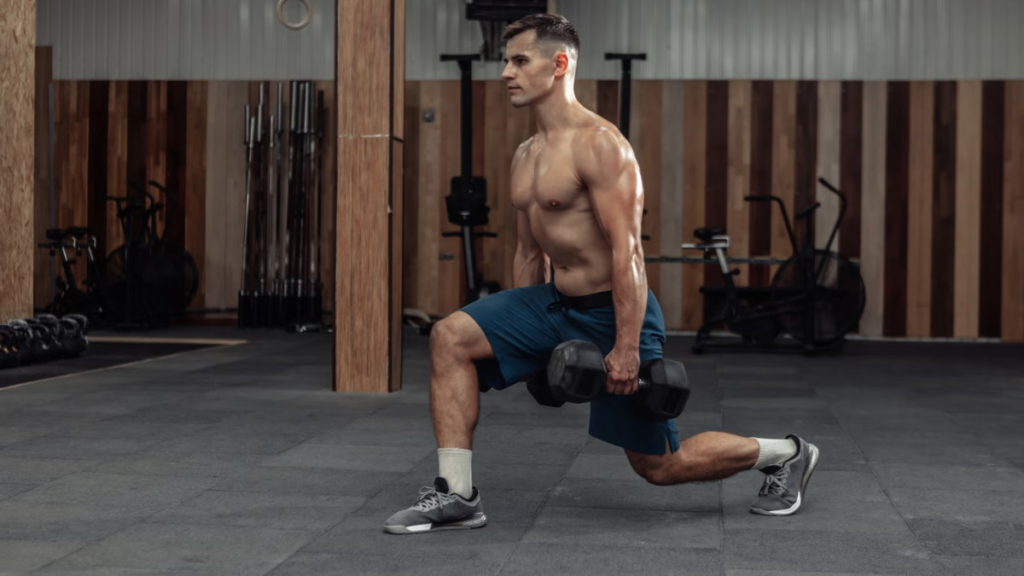
Training one limb at a time is one of the simplest ways to increase relative intensity. Single arm rows, single leg squats, walking lunges, step ups, and single arm overhead presses all force each limb to produce more force independently.
Unilateral exercises also expose side to side strength differences that bilateral exercises often hide. Improving these imbalances may reduce injury risk and enhance overall movement efficiency in sports and everyday activities.
Since each limb works harder individually, many unilateral exercises provide a significant strength stimulus without requiring heavy external loads.
Isometric Exercises Improve Strength Too
Strength does not always require movement. Isometric contractions involve generating force while maintaining a fixed joint position. Examples include wall sits, planks, mid position pull up holds, and overcoming isometrics where you push or pull against an immovable object. Research shows isometric training can significantly improve strength, particularly around the joint angles being trained.
Athletes often use isometric exercises to strengthen sticking points in lifts, while rehabilitation professionals use them to maintain strength during recovery from injury. Although dynamic training remains important, adding isometric work can complement a strength program that relies on lighter resistance.
Blood Flow Restriction Training
Blood flow restriction training has gained considerable attention over the past decade. This method uses specialized cuffs placed around the upper arms or thighs to partially restrict blood flow during exercise while using very light loads. The resulting metabolic stress allows muscles to experience adaptations similar to those seen with much heavier resistance.
Research consistently demonstrates improvements in both muscle size and strength using loads that would normally be considered too light for effective training. However, blood flow restriction training should only be performed with appropriate equipment and guidance, particularly for beginners or individuals with medical conditions.
Progressive Overload Still Matters
Regardless of how much weight you use, your body adapts to repeated stress. If your workouts never become more challenging, progress eventually stops. Progressive overload can be achieved in many different ways besides adding heavier weights.
You can perform more repetitions with the same resistance. You can increase the number of sets. You can reduce rest periods slightly. You can improve exercise technique and range of motion. You can choose more advanced exercise variations or increase training frequency.
The principle remains the same. Your muscles need a gradually increasing challenge to continue adapting.
Who Benefits Most From Training Without Heavy Weights?
Light load strength training is particularly valuable for several groups. Beginners often develop strength rapidly regardless of the load they use because almost any well designed resistance program represents a new stimulus. Older adults benefit from resistance exercise because it helps preserve muscle mass, bone health, balance, and independence. Lighter loads may feel safer while still producing meaningful improvements.
People recovering from injuries frequently need to limit joint loading while maintaining muscle strength. Carefully prescribed lighter resistance exercises often bridge the gap between rehabilitation and returning to full activity.
Busy professionals and travelers can also maintain strength using bodyweight exercises and resistance bands without relying on fully equipped gyms.
The Bottom Line
Building strength without heavy weights is not only possible, it is supported by a growing body of scientific evidence.
While heavy resistance remains the gold standard for maximizing absolute strength, lighter loads performed with high effort can produce impressive improvements in strength and muscle development. Bodyweight exercises, resistance bands, unilateral movements, tempo manipulation, and isometric training all provide effective alternatives when heavy equipment is unavailable or inappropriate.
The most important factor is not the amount of weight on the bar. It is whether your muscles are challenged enough to adapt. By training consistently, progressing over time, eating enough protein, and prioritizing recovery, you can become considerably stronger without ever needing to lift extremely heavy weights.
Key Takeaways
| Key Point | Practical Takeaway |
|---|---|
| Heavy weights are not essential | Strength can improve significantly with lighter loads when training close to failure. |
| Effort matters most | Finishing sets within one or two repetitions of failure maximizes muscle recruitment. |
| Bodyweight training works | Progressive bodyweight exercises can effectively build strength. |
| Resistance bands are valuable | Bands provide an effective alternative when traditional weights are unavailable. |
| Progressive overload remains essential | Increase difficulty over time through repetitions, exercise progression, sets, or training frequency. |
| Recovery supports adaptation | Protein intake, quality sleep, and consistent training are fundamental for long term strength gains. |
| Heavy lifting still has advantages | Maximal strength athletes benefit from regular heavy resistance training. |
References
- American College of Sports Medicine. (2009) ‘American College of Sports Medicine position stand. Progression models in resistance training for healthy adults’, Medicine & Science in Sports & Exercise, 41(3), pp. 687 to 708.
- Grgic, J., Schoenfeld, B.J., Orazem, J. and Sabol, F. (2020) ‘Effects of resistance training performed to repetition failure or non failure on muscular strength and hypertrophy: A systematic review and meta analysis’, Journal of Sport and Health Science, 11(2), pp. 202 to 211.
- Kraemer, W.J. and Ratamess, N.A. (2004) ‘Fundamentals of resistance training: Progression and exercise prescription’, Medicine & Science in Sports & Exercise, 36(4), pp. 674 to 688.
- Lasevicius, T., Schoenfeld, B.J., Silva Batista, M., Barros, T.D.S., Aihara, A.Y., Brendon, H., Longo, A.R. and Tricoli, V. (2018) ‘Muscle failure promotes greater muscle hypertrophy in low load but not in high load resistance training’, Journal of Strength and Conditioning Research, 36(2), pp. 346 to 351.
- Loenneke, J.P., Wilson, J.M., Marín, P.J., Zourdos, M.C. and Bemben, M.G. (2012) ‘Low intensity blood flow restriction training: A meta analysis’, European Journal of Applied Physiology, 112(5), pp. 1849 to 1859.
- Morton, R.W., Oikawa, S.Y., Wavell, C.G., Mazara, N., McGlory, C., Quadrilatero, J., Baechler, B.L., Baker, S.K. and Phillips, S.M. (2016) ‘Neither load nor systemic hormones determine resistance training mediated hypertrophy or strength gains in resistance trained young men’, Journal of Applied Physiology, 121(1), pp. 129 to 138.
- Phillips, S.M. and Van Loon, L.J.C. (2011) ‘Dietary protein for athletes: From requirements to optimum adaptation’, Journal of Sports Sciences, 29(S1), pp. S29 to S38.